- English
- French
- German
- Portuguese
- Spanish
- Russian
- Japanese
- Korean
- Arabic
- Greek
- German
- Turkish
- Italian
- Danish
- Romanian
- Indonesian
- Czech
- Afrikaans
- Swedish
- Polish
- Basque
- Catalan
- Esperanto
- Hindi
- Lao
- Albanian
- Amharic
- Armenian
- Azerbaijani
- Belarusian
- Bengali
- Bosnian
- Bulgarian
- Cebuano
- Chichewa
- Corsican
- Croatian
- Dutch
- Estonian
- Filipino
- Finnish
- Frisian
- Galician
- Georgian
- Gujarati
- Haitian
- Hausa
- Hawaiian
- Hebrew
- Hmong
- Hungarian
- Icelandic
- Igbo
- Javanese
- Kannada
- Kazakh
- Khmer
- Kurdish
- Kyrgyz
- Latin
- Latvian
- Lithuanian
- Luxembou..
- Macedonian
- Malagasy
- Malay
- Malayalam
- Maltese
- Maori
- Marathi
- Mongolian
- Burmese
- Nepali
- Norwegian
- Pashto
- Persian
- Punjabi
- Serbian
- Sesotho
- Sinhala
- Slovak
- Slovenian
- Somali
- Samoan
- Scots Gaelic
- Shona
- Sindhi
- Sundanese
- Swahili
- Tajik
- Tamil
- Telugu
- Thai
- Ukrainian
- Urdu
- Uzbek
- Vietnamese
- Welsh
- Xhosa
- Yiddish
- Yoruba
- Zulu
Cast Housing vs Machined Housing: Which Is Best for OEMs?
When OEM manufacturers face housing procurement decisions, the answer isn't always straightforward. Cast housing solutions deliver exceptional cost advantages in high-volume production while accommodating complex geometries that would challenge traditional machining. For industrial equipment manufacturers managing tight budgets and diverse product lines, aluminum die casting housings—particularly ADC12 alloy variants—offer a balanced approach combining strength, thermal management, and scalability. Understanding when casting outperforms machining requires examining your production volume, tolerance requirements, and total lifecycle costs rather than unit price alone.
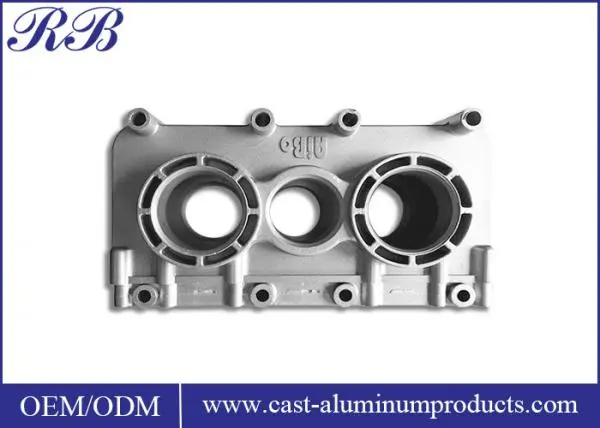
Understanding Cast Housing and Machined Housing
The Casting Process Explained
For casting, molten metal, usually aluminum alloys like ADC12, is poured into precise shapes while pressure or gravity is managed. High-pressure die casting pushes liquid metal into complicated holes at speeds of more than 100 meters per second. This makes shapes that are very accurate and repeatable. This method works well for parts like motor housings, gearbox cases, and connecting bodies that need complex mounting features or internal channels.
The process works with different wall thicknesses, built-in ribs for structural support, and curved areas that would take a long time to machine. Once the aluminum housing parts have hardened, they are shot-blasted to smooth out the surface and CNC-machined for important measurements that need to be very accurate.
How Machined Housing Differs
Solid metal billets or bars are the first step in making a machined housing. Mills and lathes that are controlled by computers cut, drill, and bore away material until the shape that is needed is achieved. With this subtractive process, you can get very accurate measurements (within ±0.01mm) and a perfect finish on the surface right from the tool.
When making small quantities, samples, or parts that need to be very precise, machining works best because it doesn't require the expensive equipment that investment casting does. The trade-off is more wasteful materials, longer production times per piece, and higher unit prices that are too high for large quantities.
Core Manufacturing Distinctions
How each process builds geometry is what makes them different. Casting makes near-net shapes in a single step, which cuts down on the work that needs to be done later. Machining is the most accurate method, but it needs to be set up, and tools changed many times. Before being finished, the surface roughness of a cast housing is usually between 6.3 and 12.5 µm, while the surface roughness of machined parts is between 0.8 and 3.2 µm right away. Because of these changes, lead times show that machining can start production within days, while casting needs 3–4 weeks for molds to be made before first-article models can be made.
Critical Factors for OEMs When Choosing Housing
Production Volume Economics
Which process makes the most financial sense depends on the volume. When you make more than 500 to 1,000 units of aluminum die casting, the cost of the tools goes down as you make more. When you make 5,000 pieces a month, the cost of each one drops below what you'd pay for similar machining. A mold investment of $3,000 to $8,000 seems like a lot of money at first. On the other hand, making 50 samples saves money because no upfront tooling costs are needed.
To find your breakeven point, divide the cost of the mold by the savings you get per unit from casting. If casting instead of milling saves $8 per house, then a $4,000 mold pays for itself after 500 units. After that point, everything else is a direct cost savings that goes to your bottom line.
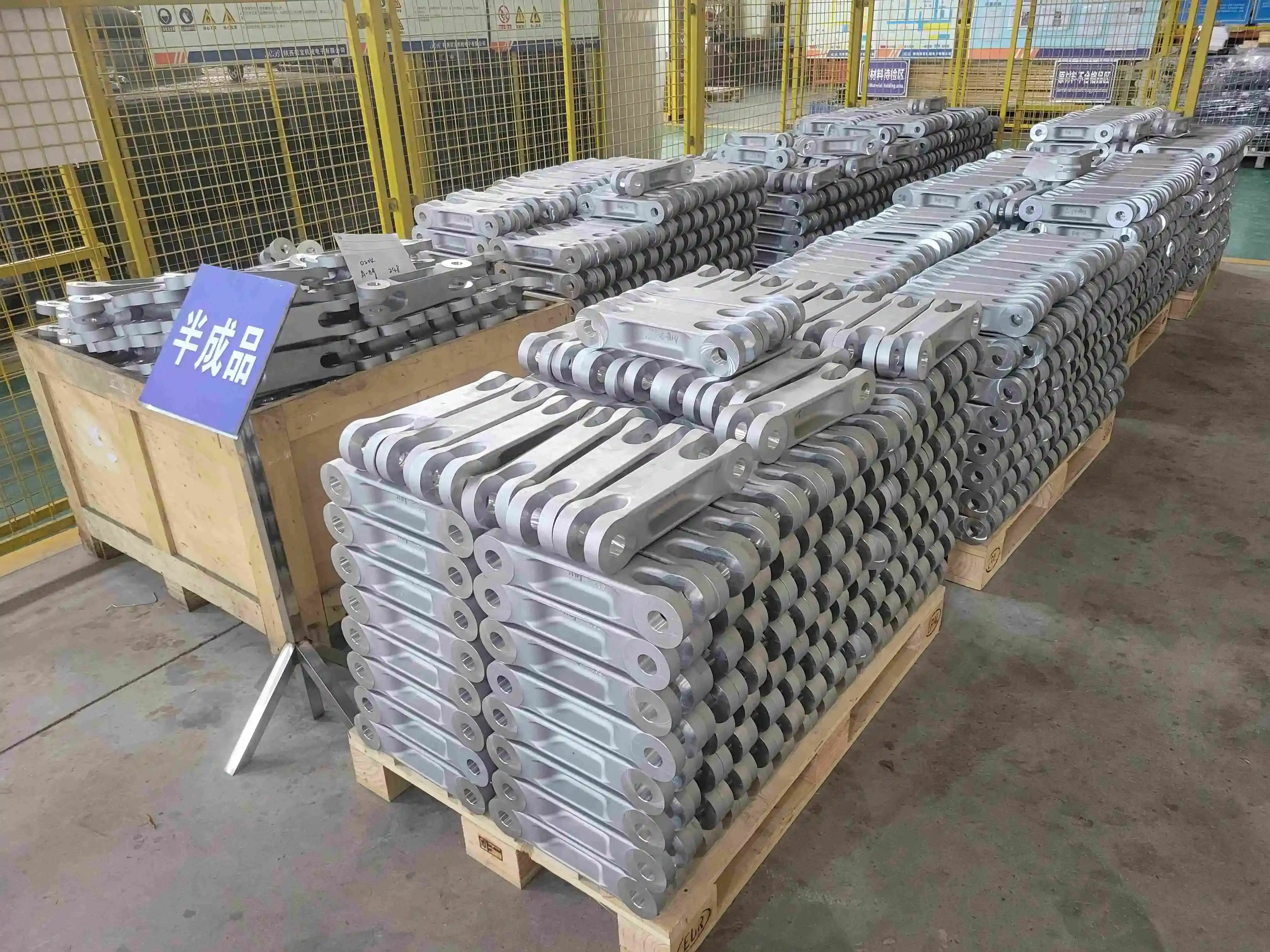
Quality Consistency Across Batches
Quality that can be predicted is important to procurement teams because production lines can't handle changes in dimensions. When controlled properly, die casting produces very consistent results from batch to batch. Modern foundries that use automated systems keep the process settings within narrow ranges. This makes it possible to make housings with consistent wall thickness, weight, and key measurements.
It is possible for casting to cause porosity, though, if the process controls fail. Reputable companies that are approved to ISO9001:2015 standards use testing procedures to find problems before they are shipped. Machining gets rid of worries about porosity, but it also adds human factors like tool wear, thermal expansion during cutting, and setup differences that skilled operators have to handle.
Delivery Timelines and Flexibility
Schedules for making equipment require reliable delivery of parts. For small orders, machining parts can be made faster; it usually takes one to two weeks from the PO to shipment. For casting, the cycle time is longer: 3–4 weeks for samples, and then 2–4 weeks for production runs once the tools are made. However, reorders are delivered within 10 to 15 days by known casting partnerships that have ready-made tools.
Think about how long you want to plan. Can your production plan handle the time it takes to set up the first casting in order to save money in the long run? Or does the mix of your products change so often that the flexibility of machining makes the higher piece prices worth it?
Design Complexity Requirements
Dramatic casting works best with complex shapes. As the casting process goes on, internal cooling channels, mounting bosses built in, undercuts, and different wall thicknesses naturally appear. To make similar features with machining, you need to do a lot of setup work, buy special tools, and spend a lot of time programming, all of which add cost.
Look over your component models. If your building has simple mirrored shapes and walls that are all the same, you can still machine it. When plans use organic curves, grid structures, or combining several parts into one casting, die casting is better from both a technical and an economic point of view.
Comparing Cast Housing and Machined Housing – Pros and Cons
Advantages of Aluminum Die Casting
Die-cast aluminum housings are great in certain situations that meet many OEM needs:
- Cost-Efficiency at Scale: Tools reduce item costs. Cast 1.5 kg ADC12 aluminum components in bulk (more than 1,000 per month) for $6–10 each instead of $15–20 each to produce. Direct pricing helps equipment manufacturers fulfill market quality and profit standards.
- Casting handles complex geometry that takes three times longer to make. Heat sinks with fin arrays, multi-plane attaching surfaces, and internal webbing for stiffness form a unit. Compared to bespoke options, consolidation minimizes building work and strengthens the structure.
- Material Properties: ADC12 aluminum alloy has good strength-to-weight ratios, motor housing thermal conductivity, and industrial corrosion resistance. These qualities make cast aluminum housings excellent for electrical covers, pump bodies, and transmission parts.
Limitations to Consider
Die making does come with problems that need to be managed:
Setup costs and minimum order sizes can make it hard for smaller manufacturers to make money. From the first request to the first release of production, the first 6 to 8 weeks require planning that not all OEMs can meet. Dimensional limits of ±0.3 to 0.5mm are fine for most uses, but they may need extra CNC work for precision bores or mounting surfaces. Even after shot blasting, the surface finish from casting is rough and needs to be coated or plated to look good.
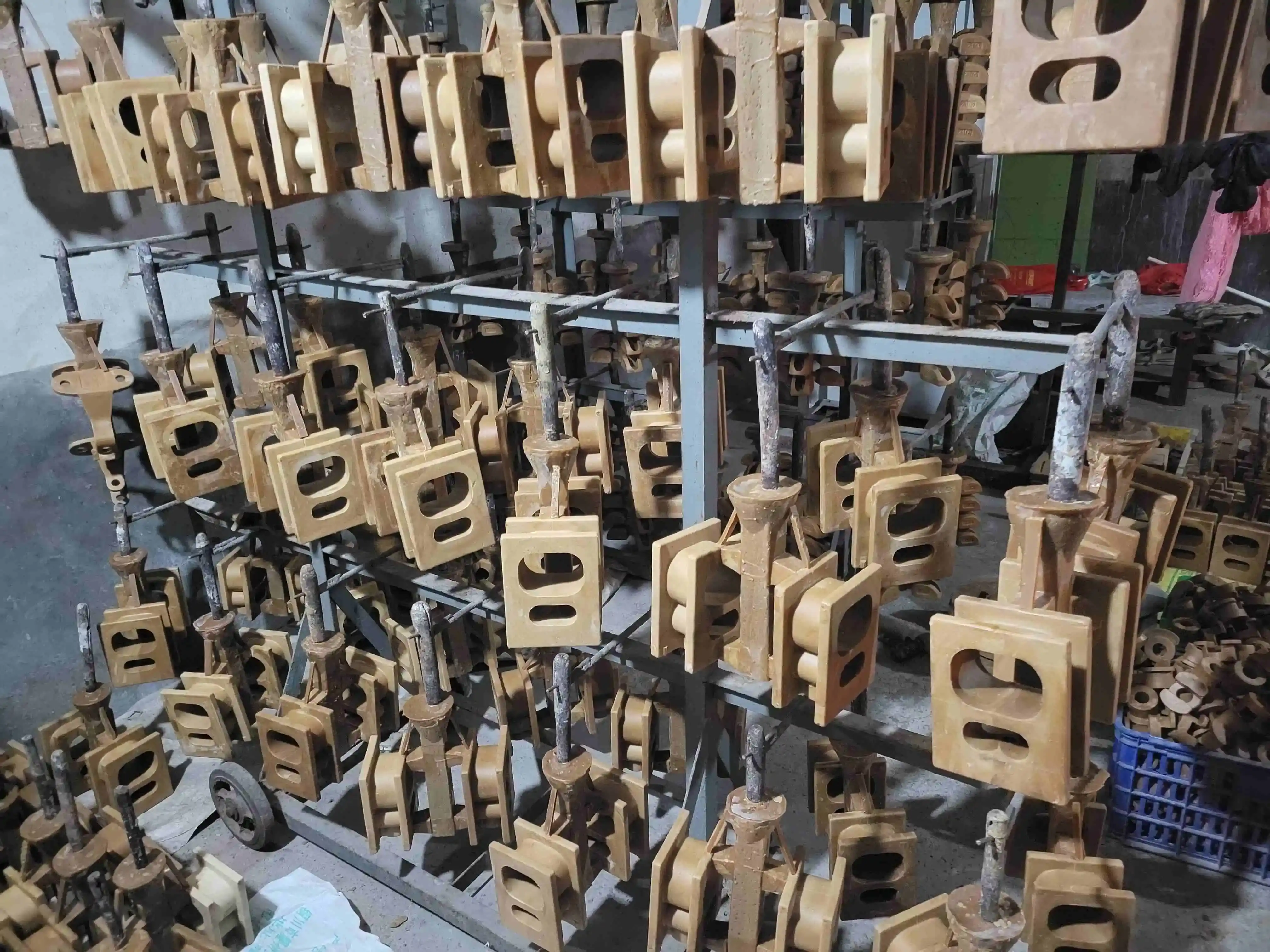
Where Machined Housing Excels
Machining has benefits in certain situations:
Machining is naturally accurate, which is good for precision tasks that need margins below ±0.05mm. By using prototypes and small amounts of specialized equipment, you can avoid having to buy expensive tools. When engineering teams can change CAD files and get new parts within days, rapid design iteration is possible. Machining can work with exotic alloys that casting processes can't, which increases the material's flexibility.
Machining Drawbacks
When making a lot of them, the cost structure becomes too high. As chips pile up around the machine base, material waste hits 40 to 60 percent. This is bought metal that has no worth. In contrast to casting, where multiple cavities make parts at the same time, each housing needs its own dedicated machine time, which drives up costs. Since production is still largely sequential, lead times grow in proportion to the size of the order.
Real-World Use Cases and Performance Comparisons
Industrial Equipment Manufacturers
Die-cast housings for gearbox enclosures and motor mounts are used a lot by companies that make conveyors, packaging machines, and material handling systems. A company in the Midwest that makes equipment switched from machined aluminum to die casting for their 1.5 kg connector housings because they could save $47,000 a year on a volume of 5,000 pieces. Their engineering team was worried at first about how well they could handle tolerances, but they found that post-cast CNC machining of key measurements gave them the accuracy they needed while still saving them money.
Automotive and Power Transmission
For mass production, all producers of automotive parts for transmissions and motor housings for electric vehicles prefer die casting. For lubrication and cooling, the process handles complicated internal passages that would need a lot of machining and assembly if they were made any other way. By switching from machined billet to die-cast aluminum for one 3.2 kg transmission housing, production costs dropped by 38%. Integrated cooling fin geometry, which is hard to machine cheaply, also improved thermal management.
Electrical Enclosure Applications
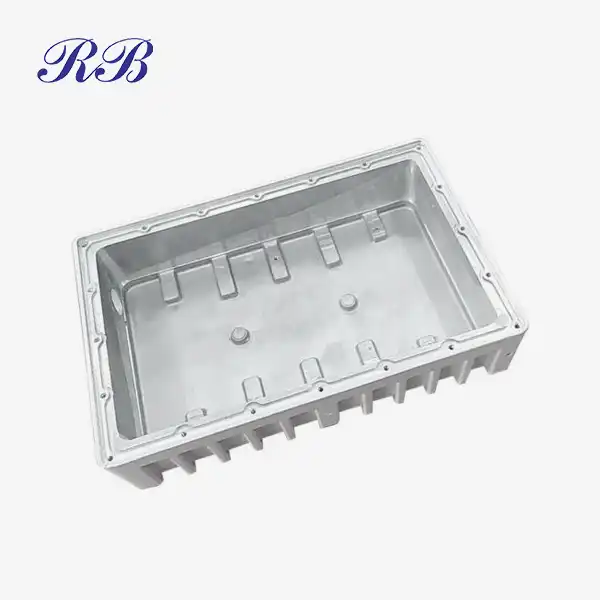
Casting is a great way for makers of industrial controls, junction boxes, and power distribution equipment to combine mounting features, EMI protection shape, and ventilation details into a single part. Surface processes like shot blasting get cast housings ready for powder coating, which protects against rust and gives them a professional look. Casting is a great choice for equipment that will be used in tough industrial settings because it can combine multiple functions and be finished.
Performance Validation Data
Field testing shows that the durability of cast aluminum housings is the same as or better than that of machined equivalents. The ADC12 die-cast motor housings had a cycle life of more than 2 million shaking cycles, which is about the same as finished 6061-T6 aluminum. Thermal cycling at temperatures ranging from -40°C to 150°C showed that the dimensions stayed the same over 1,000 cycles. These findings show that properly engineered cast parts work well and meet application needs without costing a lot more.
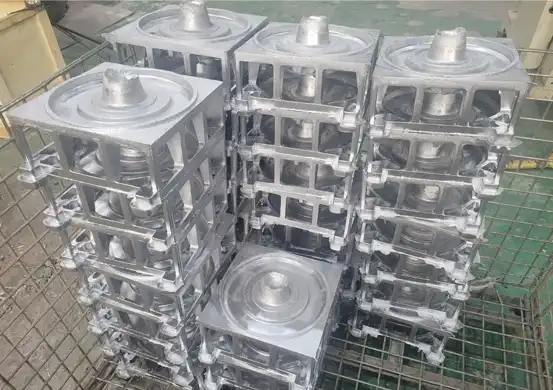
How to Decide: A Buyer's Guide for OEMs
Align Process With Production Reality
First, check your actual needs instead of your assumptions. Write down your yearly volume estimates, tolerance requirements, and budget limits. Find the total cost of ownership, which includes logistics, tooling, piece price, and secondary operations. This study usually shows that modest volumes of 2,000 to 10,000 per year are the best for casting because the savings are enough to cover the original investment.
Evaluate Supplier Manufacturing Capabilities
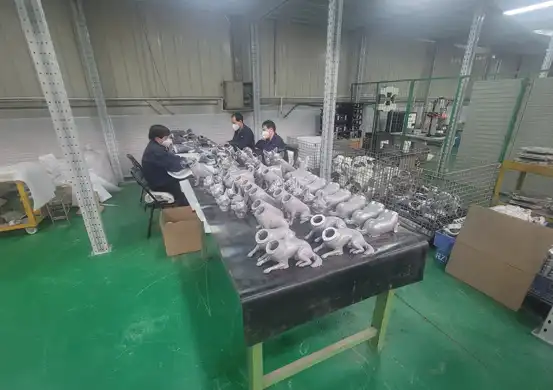
Not all casting providers provide fast or high-quality service. Consider ISO9001:2015, ISO14001, and ISO45001-certified manufacturers, which demonstrate quality management and process control. Try to find CNC machining centers for extra duties, automated die-casting machines, and coordinate measurement devices for quality monitoring. Visit factories when possible to see organization and quality control.
Request opinions on their process range and capabilities. Because they provide gravity casting, high-pressure die casting, CNC machining, and surface treatments like shot blasting, full-service manufacturers simplify your supply chain. Consolidation reduces coordination costs and ensures process integration throughout manufacturing.
Navigate the Procurement Process
To buy a house effectively, you need to go through organized steps that match the normal buying cycle:
- Request Quote: Technical drawings should include material details, yearly output, and quality standards. Separate tooling expenses from piece price in bids. Learn sample and production wait times, payment methods, and packaging requirements. Most OEMs need secure foreign shipping, and wooden boxes assist.
- Sample Evaluation: New tools should publish papers in 3–4 weeks. A spectrometer, CMM, and assembly setup should assess the material's composition, dimensions, and function. This 500-piece trial production phase optimizes the procedure before large orders.
- Production Partnership: Set communication parameters to guarantee support reacts quickly to production. Monthly orders work well when merchants provide unique tools. If expansion is expected, consider capacity planning with your manufacturer. Supply-free manufacturers with 5,000-piece monthly capacity allow you to grow your business.
Consider Hybrid Approaches
Many successful OEM projects mix casting and machining. Cast the primary housing body to save time and money. For accurate mounting faces, bearing bores, and sealing surfaces, request CNC machining. Rongbao Enterprise always employs this blended strategy to save money and achieve precise dimensions. Shot blasting removes casting imperfections and provides the surface a consistent texture for coatings.
Custom OEM/ODM solutions may match your demands, whether you wish to standardize on thermally efficient ADC12 aluminum, specify dimensions, or design unique surface treatments. Best sourcing partnerships treat suppliers like professional partners that assist with design and production, not print-order salespeople.
Conclusion
OEM manufacturing strategies use cast housing and machined housing differently. Aluminum die casting is advantageous when creating more than 500 to 1,000 pieces a year, when designs are difficult, and when price is a major factor. Machining is still ideal for samples, small quantities, and precision work. Die-cast aluminum housings, particularly CNC-machined ADC12 alloy components, provide the highest performance, affordability, and supply dependability for most industrial equipment manufacturers. You must consider production numbers, tolerances, design complexity, and supplier capabilities when making your selection. Working with skilled makers who can make tools and finish products can yield good results for OEMs.
FAQ
1. Can cast housing meet tight tolerance requirements?
Most features can be within ±0.3 to 0.5 mm when standard die casting is used. When more accuracy is needed, mixing casting with secondary CNC machining gives you ±0.05mm on key measurements while keeping the total cost of the part low. This mixed method works well for mounting faces, connecting surfaces, and bearing bores that need to be precise.
2. What volume justifies investment in casting tooling?
Depending on the complexity of the part and the different ways it can be machined, the breakeven point is usually between 500 and 1,500 units. Divide the cost of the mold by the amount of money saved per unit compared to machining. When you need to make more than 2,000 pieces a year, die casting is usually the most cost-effective option, especially for parts that weigh between 1 and 3 kg.
3. How do lead times compare between processes?
Initial orders can be turned around faster with machining—usually in one to two weeks instead of three to four weeks for first-article casts that include making the tools. But repeat casting orders from current tools ship within two to three weeks, which is about the same time it takes to machine something. Reorders don't have to wait for setup because the supplier already knows what they're doing and has the tools ready.
Partner With Rongbao Enterprise for Your Cast Housing Solutions
If you choose the wrong metal housing maker, it will affect the speed, quality, and cost of your production for years to come. Rongbao Enterprise has been die-casting parts for OEM customers in the industrial machinery, automotive, and electrical fields for 20 years. We use ISO9001:2015, ISO14001, and ISO45001 certifications at our Xi'an facility to make sure uniform quality and environmental responsibility. They allow us to do high-pressure die casting, CNC machining, and shot blasting.
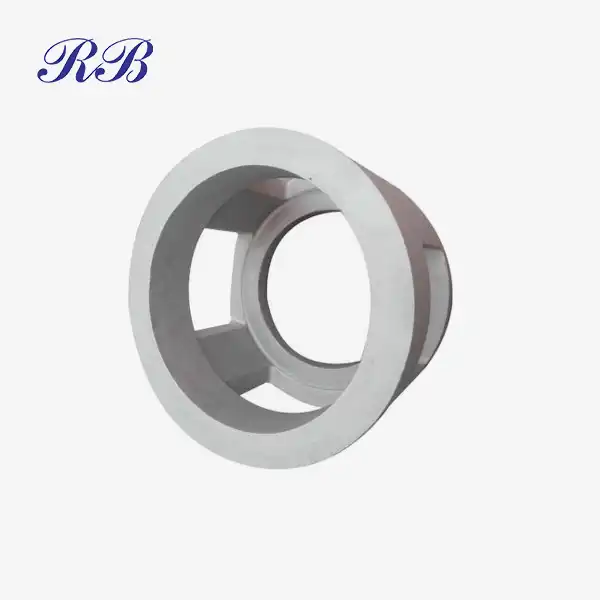
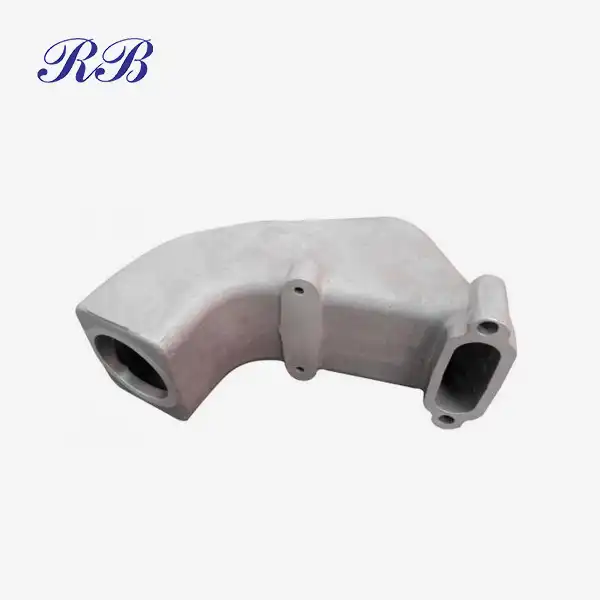
We are experts at making unique ADC12 aluminum housings that weigh between 0.5 kg and 5 kg, and we can make up to 5,000 of each part every month. Mold design, die casting, precision CNC machining, surface treatment, inspection, and safe international shipping in wooden boxes are all part of our full-chain capabilities. With this combined method, you can get everything you need in one place, which makes your supply chain easier and keeps quality control high at every stage of production.
Our technical team can help you with design optimization, cost analysis, and sampling programs that fit your procurement cycle, whether you're looking at cast housing manufacturers for the first time or trying to cut down on the number of suppliers you work with. You can email our engineering experts at steve.zhou@263.net or zhouyi@rongbaocasting.com to talk about your specific living needs, get quotes, or set up tours of the building. We want to build long-term relationships with you so that we can help you reach your equipment production goals with solid, low-cost aluminum casting options.
References
1. Smith, J.R. and Chen, M. (2021). "Aluminum Die Casting: Process Optimization and Quality Control in High-Volume Manufacturing." Journal of Manufacturing Processes, Vol. 65, pp. 234-247.
2. Anderson, K.L. (2020). "Comparative Cost Analysis of Cast Versus Machined Components in OEM Applications." International Journal of Production Economics, Vol. 228, Article 107735.
3. Mueller, T. and Zhang, W. (2022). "Material Properties and Performance Characteristics of ADC12 Aluminum Alloy in Die Casting Applications." Materials Science and Engineering: A, Vol. 843, pp. 143-156.
4. Roberts, D.A. (2019). "Supply Chain Strategies for OEM Housing Procurement: Volume-Based Decision Models." Production Planning & Control, Vol. 30, No. 12, pp. 1045-1059.
5. Liu, H. and Thompson, P.J. (2023). "Dimensional Accuracy and Surface Quality Comparison: Die Casting with Secondary Machining Versus Direct CNC Production." Precision Engineering, Vol. 79, pp. 89-102.
6. Williams, S.C. (2021). "Industrial Equipment Housing Design: Material Selection and Manufacturing Process Integration." Journal of Industrial Engineering and Management, Vol. 14, No. 3, pp. 567-583.
Learn about our latest products and discounts through SMS or email