- English
- French
- German
- Portuguese
- Spanish
- Russian
- Japanese
- Korean
- Arabic
- Greek
- German
- Turkish
- Italian
- Danish
- Romanian
- Indonesian
- Czech
- Afrikaans
- Swedish
- Polish
- Basque
- Catalan
- Esperanto
- Hindi
- Lao
- Albanian
- Amharic
- Armenian
- Azerbaijani
- Belarusian
- Bengali
- Bosnian
- Bulgarian
- Cebuano
- Chichewa
- Corsican
- Croatian
- Dutch
- Estonian
- Filipino
- Finnish
- Frisian
- Galician
- Georgian
- Gujarati
- Haitian
- Hausa
- Hawaiian
- Hebrew
- Hmong
- Hungarian
- Icelandic
- Igbo
- Javanese
- Kannada
- Kazakh
- Khmer
- Kurdish
- Kyrgyz
- Latin
- Latvian
- Lithuanian
- Luxembou..
- Macedonian
- Malagasy
- Malay
- Malayalam
- Maltese
- Maori
- Marathi
- Mongolian
- Burmese
- Nepali
- Norwegian
- Pashto
- Persian
- Punjabi
- Serbian
- Sesotho
- Sinhala
- Slovak
- Slovenian
- Somali
- Samoan
- Scots Gaelic
- Shona
- Sindhi
- Sundanese
- Swahili
- Tajik
- Tamil
- Telugu
- Thai
- Ukrainian
- Urdu
- Uzbek
- Vietnamese
- Welsh
- Xhosa
- Yiddish
- Yoruba
- Zulu
5-Step Aluminum Casting Guide for Rapid Prototype Development
When we develop robotic systems at our facility, prototype aluminum casting becomes the bridge between initial design concepts and production-ready components. This manufacturing approach uses controlled pressure to inject molten aluminum alloys into precision molds, creating functional metal parts that combine structural integrity with rapid turnaround times. Unlike 3D printing, which builds parts layer by layer, or CNC machining that removes material, aluminum casting forms near-net-shape components directly from liquid metal—reducing waste while delivering mechanical properties that mirror production parts. For robot integrators working with demanding specifications, this process offers dimensional accuracy within CT6-CT8 tolerances while maintaining the material strength required for structural applications.
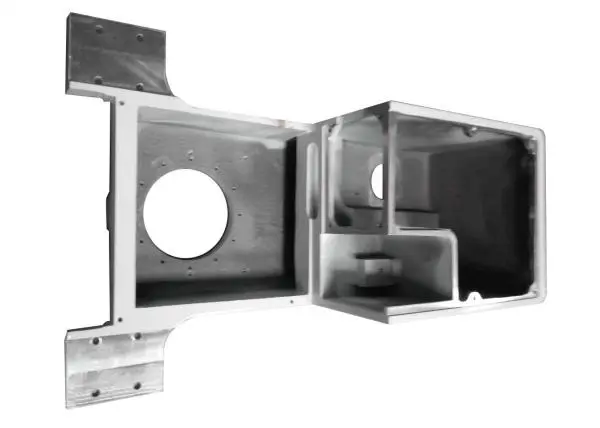
Step 1 – Understanding Prototype Aluminum Casting and Its Benefits
Traditional methods are very different from prototype aluminum casting because it imitates real production conditions at smaller numbers. Because it can be made easily and be heated to T6 levels, A356 alloy is usually what our team uses when we work with robot makers. This material has yield strengths higher than 230 MPa after being heated, which is important for robotic arm supports and structural housings that are loaded and unloaded over and over again.
Why Choose Aluminum Alloys for Functional Prototypes
The choice of material has a direct effect on the validity of the sample. As A356 aluminum solidifies, it doesn't shrink much, which means it stays the same size even when it's in complicated shapes. This metal is also easy to weld and machine, which lets design teams make changes to samples while they are being tested. For robotic uses that need very thin walls—sometimes as little as 3mm—the flexibility of liquid A356 makes sure that the mold is filled all the way without any cold shuts or misruns that would hurt the performance of the structure.
Speed and Cost Advantages Over Alternative Methods
With low-pressure casting methods, the first samples can be made in four to six weeks, which includes the time it takes to make the mold. Even though injection molding might seem like it would be easier, plastic parts can't match the stiffness or ability to conduct heat that is needed for robot casings that are exposed to motor vibration and heat. Because we can make 5,000 pieces at once, prototypes can go straight into pilot production without needing to be retooled. This gets rid of the usual problem where good prototypes need to have the whole process redesigned before they can be scaled up.
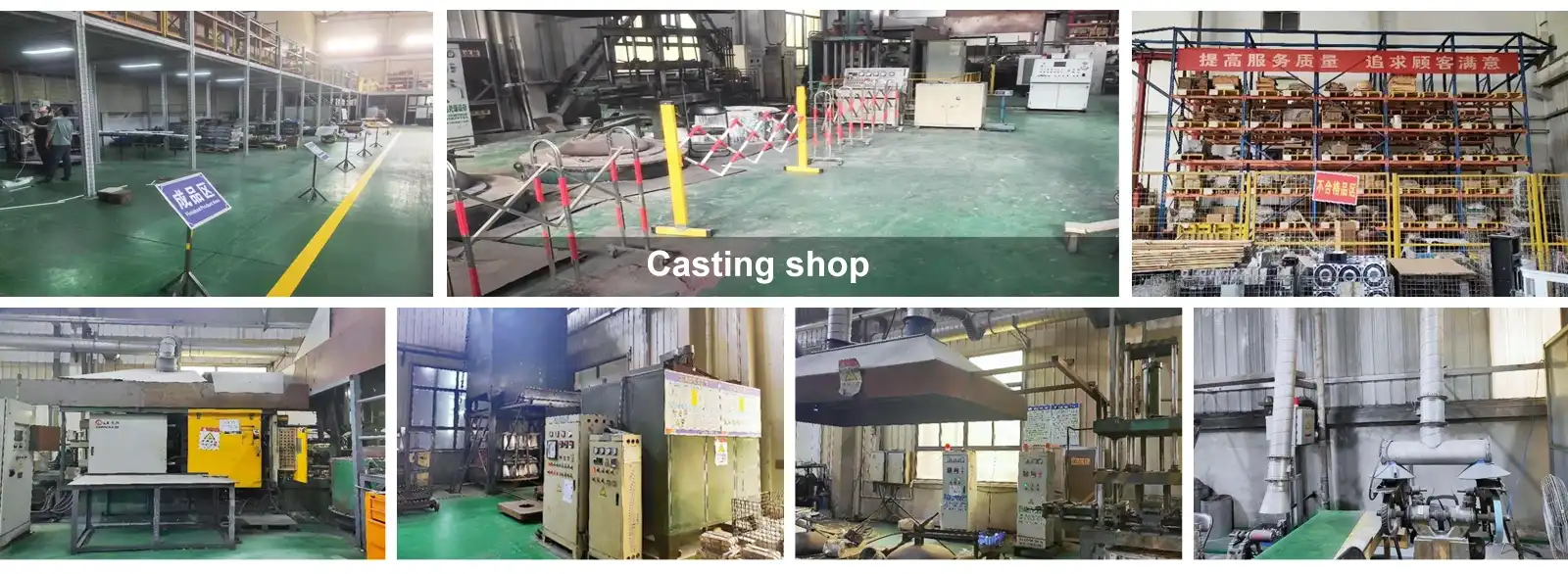
Step 2 – Detailed Prototype Aluminum Casting Process Explained
Instead of just gravity, the low-pressure prototype aluminum casting method we use in Xi'an is based on controlled pressure differences. By lowering turbulence during mold filling, this method directly lowers porosity and oxide inclusions, two common flaws that make structural castings less strong.
Mold Preparation and Design Considerations
Designing the mold is what determines success before any metal flows. We work closely with our our facility to look over their 3D CAD files and find problems like undercuts that make it harder to remove parts or differences in wall thickness of more than 1 mm that cause different cooling rates. Draft angles between 1-3 degrees let the part come off smoothly while still following the design purpose. The mold has cooling ducts that control the rate of heat drainage for robot shells that weigh 16.7 kg. This keeps the shells from warping when the geometry isn't straight.
Controlled Metal Delivery and Solidification
Our low-pressure systems keep the molten aluminum in a sealed holding furnace below the mold cavity at a temperature between 710°C and 730°C. Liquid metal is forced into the mold through a ceramic riser tube by controlled pressure, which is usually between 0.3 and 0.8 bar. This slow filling from the bottom to the top lets gases escape through venting channels instead of getting stuck in the holes. During solidification, the pressure stays the same, which helps the material shrink and keeps thick parts sound. When the pressure is released, the unused metal is sent back to the furnace. This makes the best use of the materials.
Post-Casting Operations: CNC Machining and Surface Treatment
To meet final requirements, raw casts need to be finished. CNC machining centers cut away extra material from parting lines and make sure that critical mating surfaces are machined to within 0.05 mm of their original size. We treat the surfaces of robot enclosures with shot blasting, which gives them a uniform Ra 3.2 finish and gets rid of oxide scale. This mixture helps coatings stick better for people who want to anodize or powder coat. When compared to sand casting, which needs a lot of finishing, low-pressure casts have smoother areas right out of the mold, which cuts down on the time needed for extra processing by about 30%.
Step 3 – Comparing Prototype Aluminum Casting to Other Rapid Prototyping Methods
To choose the best prototype aluminum casting method, you need to know what each technology does best in different types of situations. Our choices are weighed against each other based on their mechanical qualities, accuracy in measurements, surface finish, lead time, and ability to be scaled up to production levels.
Aluminum Casting Versus Die Casting for Prototypes
High-pressure die casting makes surfaces that are smooth and accurate, but it needs pricey steel dies that are only useful for quantities above 5,000 pieces. Often, the cost of the tools is more than $30,000, which slows the start of the project and raises the financial risk during the development stages. For low-pressure casting, permanent molds are used, which are 40–60% cheaper but still provide enough accuracy for functional testing. When robot designs become stable and production rates go over our 5,000-piece limit, switching to die casting becomes economically possible without having to change the shape of the parts.
3D Printing: Design Freedom with Performance Limitations
Additive manufacturing is great at making parts with complicated internal shapes that can't be made with traditional casting. But printed metal parts have uneven qualities (strength changes depending on the direction of the build) and surface holes that make them less pressure-tight. Cast aluminum has a uniform grain structure and predictable mechanical behavior, making it a good choice for robot structural parts that are loaded in more than one direction. A recent aerospace client put both ways of making a mounting bracket to the test. The cast version could handle 40% more cyclic loads before it broke from fatigue.
CNC Machining: Precision with Material Waste
When using billet aluminum for subtractive manufacturing, very tight tolerances are reached, but 60–80% of the material is wasted as chips. Starting from a 70-kilogram block is too expensive for more than one prototype of a 16.7-kilogram robot shell. Casting makes parts that are almost perfectly round and only need two to three kilograms of stock to be removed during cutting. This greatly increases the use of materials. Casting is best for large shapes, and cutting is best for small details. Using both methods together saves money and improves performance.
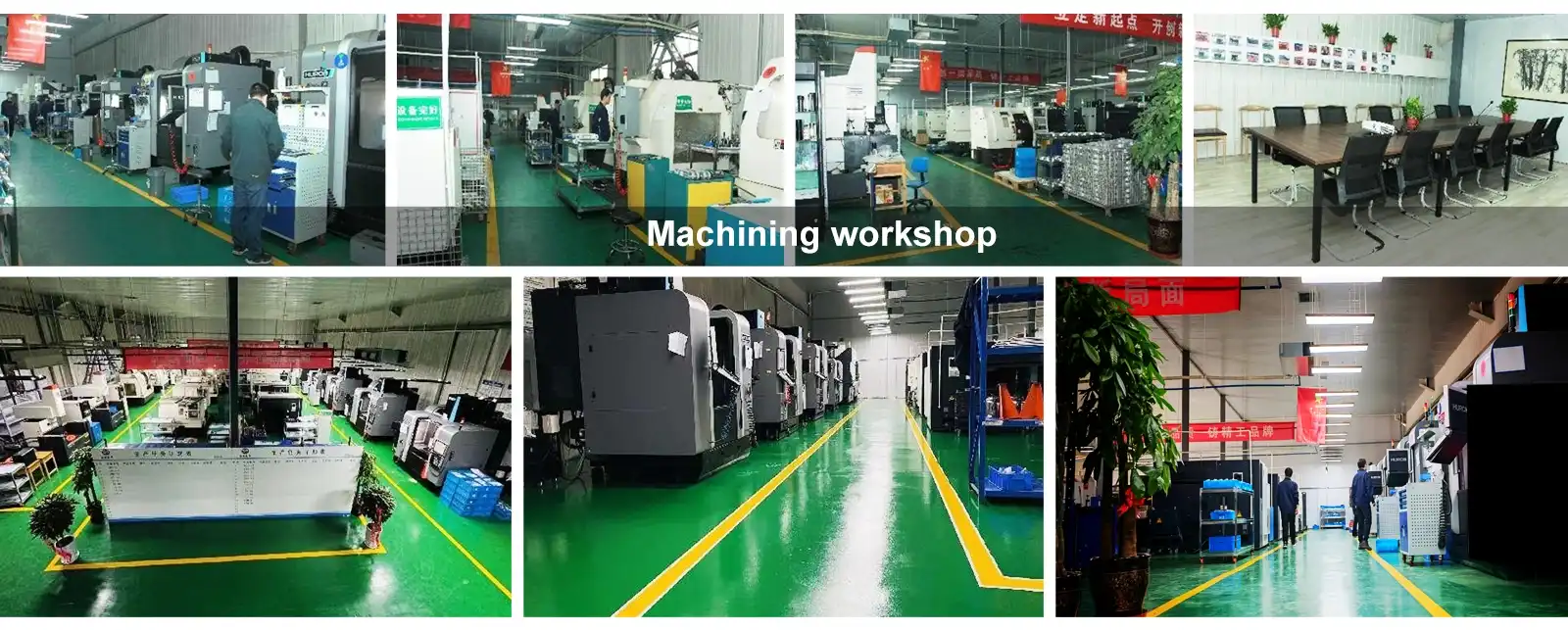
Step 4 – How to Source and Procure Prototype Aluminum Casting Services
The choice of prototype aluminum casting supplier affects whether samples are delivered on time and meet requirements. We suggest that procurement teams look at foundries using more than just price quotes. They should also look at specialized skills and quality processes.
Evaluating Manufacturing Certifications and Capabilities
While ISO 9001:2015 certification shows that quality management processes are in place, robot manufacturers should also check that they meet ISO 14001 standards for the environment and ISO 45001 standards for worker safety. These certifications show that the organization is mature and stable in how it runs. In addition to looking at the paperwork, you should also check the foundry's equipment. For example, does it have automated melting systems with spectroscopic analysis to make sure that the alloy composition stays the same? Can they show that they have statistical process control for how the dimensions of different production batches are maintained?
Understanding Pricing Structures and Hidden Costs
Low-pressure casting quotes usually list the piece prices separately from the costs of the tools. Depending on how complicated it is, a fixed mold for a robot housing could cost between $8,000 and $12,000. For orders of 100 to 500 units, each piece costs between $45-85. Make it clear what's included: does the price include CNC machining of the mating surfaces, or just the raw castings? Do you provide dimensional inspection reports and material certifications, or do you charge extra for them? Clear pricing keeps budget shocks from happening during the project's completion.
Communication Protocols for Technical Success
Messages that aren't clear about specifications can cost a lot of money. If you can, send full 3D STEP files instead of 2D drawings. These days, foundries use CAD models to make molds and program machines. Instead of using general tolerance blocks, use geometric dimensioning and tolerancing to set the key dimensions. For robot use, figure out which surfaces need to be perfectly flat for sealing and which ones can have standard as-cast finishes. We send regular project updates to steve.zhou@263.net via email, so design teams know what's going on as prototypes move through the production stages.
Step 5 – Leveraging Prototype Aluminum Casting for Competitive Advantage
Using prototype aluminum casting in a smart way speeds up the development process while keeping the design flexible. Companies that use casting early on in the product development process shorten the time it takes to get a product on the market by testing designs in real-world settings instead of just using simulations.
Rapid Iteration Through Flexible Tooling
With permanent molds, changes to the design can be made by switching out the inserts instead of having to completely retool. When a robot maker needed to change where the mounting bosses were placed after the first tests, we were able to make new inserts in just one week instead of the six weeks it would take to make brand-new molds. This adaptability helps agile development methods use prototypes to guide further design improvements.
Building Strategic Supplier Partnerships
Having long-term ties with casting experts gives you access to process knowledge that goes beyond basic manufacturing. With 20 years of experience in aluminum casting, Rongbao Enterprise can often spot potential design problems during quoting, such as section thickness changes that could cause hot tearing, before investing in new tools. These consultative conversations keep redesigns from being too expensive and speed up the process of fixing problems. Because we offer customized OEM/ODM services, robot integrators get parts that are already put together instead of partially finished castings that need more vendor management.
Scaling from Prototypes to Production
The path from validating the prototype aluminum casting to mass production determines how well the business does. Our 5,000-piece yearly capacity per part number helps with both trial production and bringing a new product to market. Because we make prototypes using processes that are the same as those used in production, parts that are tested during development have the same properties as parts that are used in production. This consistency gets rid of the common situation where production parts fail certification testing even though the prototype worked well. When we get too many orders, our process paperwork makes it easy to send them to foundries that can handle more without lowering the quality.
Conclusion
When it comes to making working samples that accurately predict how well a product will work in production, prototype aluminum casting is the perfect way to get from quickly validating an idea to mass production. Robot manufacturers and equipment integrators can use the five-step framework to make smart sourcing decisions: understand the benefits, master the process details, compare alternatives, choose qualified suppliers, and take advantage of strategic advantages. When you use A356 alloy in low-pressure casting, you get the mechanical properties, precise dimensions, and high-quality surface needed for demanding structural applications while still keeping the flexibility you need during the development stages. When procurement teams work with experienced foundries that have ISO 9001, ISO 14001, and ISO 45001 certifications, they get access to not only production capacity but also technical teamwork that speeds up innovation and lowers risk.
FAQ
What lead times should I expect for aluminum cast prototypes?
It usually takes four to six weeks to make the first prototypes, which include making a permanent mold. This schedule includes designing the mold, making the tool, doing the first casting tests, and making any mold changes that are needed. After the tooling is checked and approved, the next prototype batches can be made in two to three weeks. For urgent jobs, rush services may be able to shorten plans by 30 to 40 percent, but they usually charge more for this. When an order is confirmed, 100 to 500 pieces are normally shipped within two to three weeks.
Can aluminum casting handle complex geometries like internal channels?
Low-pressure casting can handle modest physical complexity, such as features with bosses, ribs, and recesses. But internal cooling lines or undercuts usually need core plugs, which raise the cost and difficulty of the mold. When the internal geometry is very complicated, a mixed method that casts the basic structure and then machines the complex features works well. This mix makes the best use of both manufacturing efficiency and design needs, without the performance issues that come with 3D printing.
How does casting cost compare with additive manufacturing?
Even though the initial investment in tools is higher, the cost of each part makes casting above about 15 to 20 units more appealing. A metal 3D-printed robot body that costs $850 might cost $12,000 to make the mold and an extra $65 for each casting. At 200 units, the total cost of casting is $25,000. For printing, it's $170,000, so casting saves 85%. Casting also has better mechanical qualities and less porosity, which makes it a better choice for structure parts that hold weight.
Partner with Rongbao Enterprise for Precision Aluminum Casting Solutions
Rongbao Enterprise specializes in low-pressure prototype aluminum casting for companies that make robotics and automation equipment and need accurate, dependable, and quick service. Our Xi'an facility has processes that are ISO 9001:2015, ISO 14001, and ISO 45001 certified, and it has 20 years of experience working with aluminum alloys. It can make anything from prototypes to 5,000-piece production runs. We offer full turnkey services, including mold creation, casting, CNC machining, shot blasting, and special OEM/ODM solutions, so you don't have to deal with a bunch of different vendors. Our team works together closely from the design review stage to the final delivery, whether you need A356 robot shells, structural frames, or custom cases. To talk about your prototype aluminum casting needs, please email our technical experts at steve.zhou@263.net or zhouyi@rongbaocasting.com. As a reliable prototype aluminum casting provider, we can turn your CAD ideas into precise metal parts that help you get your product to market faster. You can see all of our services and get a detailed quote for your next robotics project at rongbaocasting.com.
References
- Campbell, J. (2015). Complete Casting Handbook: Metal Casting Processes, Metallurgy, Techniques and Design. Butterworth-Heinemann.
- Kaufman, J.G., & Rooy, E.L. (2004). Aluminum Alloy Castings: Properties, Processes, and Applications. ASM International.
- Bonollo, F., Urban, J., Bonatto, B., & Botter, M. (2005). Gravity and Low Pressure Die Casting of Aluminium Alloys: A Technical and Economical Benchmark. Materials Science Forum.
- Bralla, J.G. (1998). Design for Manufacturability Handbook. McGraw-Hill Professional.
- Jorstad, J.L., & Apelian, D. (2009). Pressure-Assisted Processes for High-Integrity Aluminum Castings. International Journal of Metalcasting.
- Ravi, B., & Srinivasan, M.N. (1990). Decision Criteria for Computer-Aided Parting Surface Design. Computer-Aided Design.
Learn about our latest products and discounts through SMS or email