- English
- French
- German
- Portuguese
- Spanish
- Russian
- Japanese
- Korean
- Arabic
- Greek
- German
- Turkish
- Italian
- Danish
- Romanian
- Indonesian
- Czech
- Afrikaans
- Swedish
- Polish
- Basque
- Catalan
- Esperanto
- Hindi
- Lao
- Albanian
- Amharic
- Armenian
- Azerbaijani
- Belarusian
- Bengali
- Bosnian
- Bulgarian
- Cebuano
- Chichewa
- Corsican
- Croatian
- Dutch
- Estonian
- Filipino
- Finnish
- Frisian
- Galician
- Georgian
- Gujarati
- Haitian
- Hausa
- Hawaiian
- Hebrew
- Hmong
- Hungarian
- Icelandic
- Igbo
- Javanese
- Kannada
- Kazakh
- Khmer
- Kurdish
- Kyrgyz
- Latin
- Latvian
- Lithuanian
- Luxembou..
- Macedonian
- Malagasy
- Malay
- Malayalam
- Maltese
- Maori
- Marathi
- Mongolian
- Burmese
- Nepali
- Norwegian
- Pashto
- Persian
- Punjabi
- Serbian
- Sesotho
- Sinhala
- Slovak
- Slovenian
- Somali
- Samoan
- Scots Gaelic
- Shona
- Sindhi
- Sundanese
- Swahili
- Tajik
- Tamil
- Telugu
- Thai
- Ukrainian
- Urdu
- Uzbek
- Vietnamese
- Welsh
- Xhosa
- Yiddish
- Yoruba
- Zulu
The Ultimate Guide to Cast Impeller Failure Analysis and Preventive Maintenance
When equipment downtime threatens production schedules and profitability, understanding cast impeller failures becomes mission-critical. A cast impeller serves as the rotating heart of pumps, turbines, and compressors across industries from high-speed rail systems to wind energy generation. These precision-engineered components transfer energy to fluids by accelerating them outward from the center, making their reliability non-negotiable. Failure analysis reveals that most breakdowns stem from preventable issues—internal casting defects, material fatigue, and inadequate maintenance protocols. This guide walks you through proven diagnostic techniques and strategic maintenance practices that extend operational life while reducing unexpected failures. We've compiled insights from decades of manufacturing experience to help procurement professionals and technical managers make informed decisions when sourcing critical components.
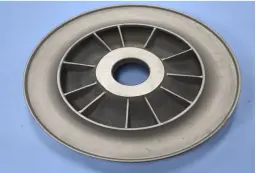
Understanding Cast Impeller Failures
Impellers are put through a lot of work in train transit and commercial settings. This makes them vulnerable in certain ways that need extra care. When you're choosing materials for parts like wind turbine gearboxes or cooling systems for high-speed trains, they are the first thing that keeps you from breaking down too soon.
Material Properties and Design Vulnerabilities
Due to its high strength-to-weight ratio and resistance to rust, A356 aluminum alloy has become the material of choice for large-scale cast impeller uses. After going through the T6 heat process, this alloy gets the right mechanical qualities for parts that will be loaded and unloaded over and over again. The 15 kg impellers used in high-speed rail show how improved low-pressure casting methods can make parts with complicated shapes and few flaws inside. When molds are filled with low-pressure processes instead of gravity casting methods, there is less turbulence, which means there are fewer problems with gas trapping and porosity.
Design flaws often show up where there is a lot of stress, like at blade roots, hub transitions, and places where the thickness changes quickly. When these places are exposed to vibration, changing temperatures, or corrosive environments, they become places where failures start.
Common Casting Defects and Their Consequences
Shrinkage porosity is still the worst flaw in big metal casts because it leaves holes below the surface that weaken the structure. Under situations of stress loading, these internal flaws cause cracks to start. X-ray inspection methods are now common because looking at the surface alone can't find these hidden problems. Teams in charge of buying things should make sure that the suppliers they work with use radiographic testing that meets the standards set by ASTM E155.
Gas porosity has the same risks, but they come from different places, usually hydrogen uptake during melting or not properly degassing the material. Surface treatments with shot blasting make things last longer by adding good compression loads, but they can't fix flaws below the surface that get missed by quality control.
Inspection Methodologies for Early Detection
The first way to evaluate something is to look at it visually. This will show you any surface cracks, weathering patterns, or rust damage. But using only visual methods means that important problems below the surface can't be found. Non-destructive testing methods give more information about the health of a component. Ultrasonic testing goes deep into a material to find breaks inside it, while magnetic particle screening finds cracks that break through the top of ferromagnetic materials.
Coordinate measuring tools are needed to check the sizes of CNC-machined areas on cast parts to make sure that the geometric tolerances stay within the limits. Regular checks for balance should be done because working wear can change the distribution of mass and cause breakdowns related to vibration.
Setting up baseline inspection data during commissioning makes it possible to look at trends. When procurement teams work with ISO9001:2015-certified manufacturers, they can access quality records that help with plans for preventative maintenance.
Root Cause Analysis of Cast Impeller Failures
Systematic failure study stops problems from happening again and helps people make better buying decisions. When an impeller breaks down too soon, it costs more than just to replace it. There are also production losses, emergency logistics, and the chance of a safety incident.
Structured Diagnostic Approaches
A thorough failure report that includes working conditions at the time of failure, service hours, maintenance records, and environmental factors is the first step to an effective root cause analysis. By studying failed parts using metallurgical methods, we can find out if the material properties met the requirements and how the failure spread. Cracks from fatigue usually start at stress peaks and spread slowly, leaving beach marks that can be seen under a microscope. Sudden overload failures have different fracture characteristics, like rough surfaces with few places where cracks can spread.
Testing the material makes sure that the heat treatment methods got the qualities that were wanted. When processed correctly, A356-T6 aluminum should have a yield strength of more than 160 MPa and an elongation of more than 3%. If these numbers are not matched, it means there are problems with the processes that slow it down.
Material Performance Comparisons
Depending on the needs of the product, different alloy methods offer different benefits. Thanks to their low weight and resistance to rust, aluminum alloys are perfect for moving equipment that needs to cut down on mass to save energy. Stainless steel types are stronger and can handle higher temperatures better, but they are heavier. Bronze alloys work great in slurry applications that are rough and need to resist erosion.
During the decision process, working environments and mechanical needs should be weighed against each other. The low density of aluminum makes it better for high-speed spinning parts because it lowers rotational pressures. Corrosive chemical processing environments may be worth the extra cost of stainless steel's longer life.
Industry-Specific Failure Patterns
When used for wind energy, cast impellers are constantly loaded and unloaded, and there aren't many chances to do upkeep. Most of the problems in these installations are caused by fatigue caused by vibration. Two problems that are unique to rail transit systems are that the power motors heat up and cool down a lot, and people who use them are also exposed to environmental pollution. Gearbox cooling impellers have to keep working even when they are contaminated with oil and the running temperature is high.
When system pressure goes below vapor pressure limits, cavitation damage is the main way that water treatment plants fail. The resulting bubble burst wears away at the surfaces of materials, leading to failure in the long run. Knowing your specific operational profile helps you choose the right materials and figure out how often to do maintenance.
Preventive Maintenance Strategies to Extend Cast Impeller Lifespan
Proactive maintenance programs pay for themselves by making parts last longer and cutting down on unplanned downtime. Regular inspections don't cost nearly as much as repairs that need to be done right away and lost production.
Routine Inspection and Cleaning Protocols
Setting regular maintenance times that work with working hours stops small problems from getting worse and leading to catastrophic breakdowns. We suggest that parts that work in clean environments be visually checked every three months, and parts that work in harsh conditions with rough particles or chemicals that eat away at metal should be checked every month. Cleaning gets rid of the building of contaminants that speeds up wear and causes conditions of imbalance. Periodic cleaning with non-abrasive ways that protect the designed surface finish is good for shot-blasted surfaces.
When sealed pump systems are put together, lubrication control is often forgotten, but bearing wear often leads to secondary impeller damage. Keeping an eye on sound signatures can find signs of imbalance before they cause damage to the structure. During launching, baseline readings are taken to use as comparison points for trend analysis.
Balancing and Alignment Verification
Dynamic balancing keeps things running smoothly and stops stress buildsups caused by vibration-induced loading. Even parts that were made correctly can become unbalanced over time due to wear and tear, rust, or the buildup of material. Checking the balancing of important spinning tools once a year should become normal practice. When vibration monitoring systems see that amplitudes are rising, they balance the system right away to avoid a catastrophic failure.
Alignment checks make sure that linked equipment keeps the shafts in the right place. Misalignment causes bearing loads that speed up wear and cause rotational twisting stresses in cast impeller parts.
Documentation and Performance Tracking
Detailed records of maintenance turn reactive troubleshooting into proactive action. Findings from inspections, measured parameters, corrective steps, and the past of parts replacement should all be recorded by tracking systems. This information shows trends that help you figure out the best time to do maintenance based on your working conditions. Digital maintenance management systems make it easier to look at trends and make schedules automatically. They also keep records that can be checked to meet quality management standards.
Procurement teams should ask for material certifications, dimensional inspection reports, and non-destructive testing documentation when they are looking for replacement parts. These records make sure that new parts meet specifications before they are installed. This keeps expensive rework cycles from happening.
FAQs
How often should cast impellers undergo inspection to prevent unexpected failures?
How often you inspect relies on how hard the operation is and how important the parts are. Visual checks should be done every three months, and full reviews should be done once a year, including vibration analysis and dimensional proof. Applications with a lot of duty cycle that are used in rough or corrosive environments need to be checked every month. Setting up condition-based maintenance programs with vibration sensors lets you act before problems happen, instead of just following the schedules that come with the calendar.
Can minor casting defects be repaired, or does detection require complete replacement?
Controlled grinding and mixing can sometimes fix small surface flaws, as long as the amount of material removed doesn't hurt the structure or the way it moves air. But if subsurface porosity is found by X-ray inspection, the part usually has to be replaced because repair methods can't get to the inside defects without breaking the part. Material certifications and evidence of non-destructive tests help procurement teams set acceptance standards that balance the need for dependability with the cost of the product.
What indicators signal that impeller replacement should occur before complete failure?
Vibrations that get worse over time, visible erosion patterns, changes in size from what was planned, and a drop in performance are all signs that the life of the part is almost up. When you plot these parameters against the starting points, you can see rates of wear and tear that support replacement during planned repair times instead of emergency situations. Working with suppliers who keep stock and offer fast delivery cuts down on downtime when parts need to be replaced.
Partner with Rongbao Enterprise for Reliable Cast Impeller Solutions
To make tools more reliable, you need more than just high-quality parts. You also need manufacturing partners who understand the problems you face in your business. Rongbao Enterprise sells precision-cast impellers and has a history of producing them and getting certifications for them. With our knowledge of low-pressure casting, we can make A356 aluminum parts that meet strict quality standards for use in rail transit and industry. With a full ISO certification and a capacity of up to 5,000 units per year, we offer the supply chain stability that procurement professionals need. Get in touch with our team at steve.zhou@263.net or zhouyi@rongbaocasting.com to talk to our engineering experts about your needs. We offer excellent production that increases the life of equipment and lowers the total cost of ownership, whether you need OEM parts or help with joint design. You can learn more about what we can do as your trusted cast impeller supplier by going to rongbaocasting.com.
Conclusion
Effective failure analysis and preventive maintenance change the dependability of a cast impeller from fixing problems after they happen to managing assets in a planned way. When you know about the properties of materials, how they are made, and the things that can go wrong during use, you can make smart purchasing choices that balance the costs of the original purchase with the performance over time. Systematic inspection protocols find problems early on, before they become expensive failures, and documented maintenance practices find the best times to step in and fix things. Partnering with suppliers based on technical know-how, quality certifications, and quick support gives you a competitive edge that goes beyond just buying parts. This guide gives procurement workers and technical managers useful information on how to make equipment more reliable, cut down on downtime, and get the most out of investments in a wide range of industry settings.
References
- Davis, J.R. (2001). Aluminum and Aluminum Alloys. ASM International Handbook Committee, Materials Park, Ohio.
- Campbell, J. (2015). Complete Casting Handbook: Metal Casting Processes, Metallurgy, Techniques and Design. Butterworth-Heinemann, Oxford.
- Gülich, J.F. (2020). Centrifugal Pumps, Fourth Edition. Springer International Publishing, Cham, Switzerland.
- ASM International Handbook Committee (2008). Casting Design and Performance. ASM International, Materials Park, Ohio.
- Moubray, J. (1997). Reliability-Centered Maintenance, Second Edition. Industrial Press Inc., New York.
- Boyer, H.E. (1986). Atlas of Fatigue Curves. ASM International, Materials Park, Ohio.
Learn about our latest products and discounts through SMS or email