- English
- French
- German
- Portuguese
- Spanish
- Russian
- Japanese
- Korean
- Arabic
- Greek
- German
- Turkish
- Italian
- Danish
- Romanian
- Indonesian
- Czech
- Afrikaans
- Swedish
- Polish
- Basque
- Catalan
- Esperanto
- Hindi
- Lao
- Albanian
- Amharic
- Armenian
- Azerbaijani
- Belarusian
- Bengali
- Bosnian
- Bulgarian
- Cebuano
- Chichewa
- Corsican
- Croatian
- Dutch
- Estonian
- Filipino
- Finnish
- Frisian
- Galician
- Georgian
- Gujarati
- Haitian
- Hausa
- Hawaiian
- Hebrew
- Hmong
- Hungarian
- Icelandic
- Igbo
- Javanese
- Kannada
- Kazakh
- Khmer
- Kurdish
- Kyrgyz
- Latin
- Latvian
- Lithuanian
- Luxembou..
- Macedonian
- Malagasy
- Malay
- Malayalam
- Maltese
- Maori
- Marathi
- Mongolian
- Burmese
- Nepali
- Norwegian
- Pashto
- Persian
- Punjabi
- Serbian
- Sesotho
- Sinhala
- Slovak
- Slovenian
- Somali
- Samoan
- Scots Gaelic
- Shona
- Sindhi
- Sundanese
- Swahili
- Tajik
- Tamil
- Telugu
- Thai
- Ukrainian
- Urdu
- Uzbek
- Vietnamese
- Welsh
- Xhosa
- Yiddish
- Yoruba
- Zulu
2025 Robot Arm Trends: How Custom Aluminum Die Casting Drives Precision & Efficiency
The dilemma for makers of robot arms is a hard engineering one: improve accuracy, increase payload capacity and lower energy consumption without making the equipment more costly to construct. Joint housings, motor mounts, structural linkages, end-effector brackets – all part of the final finish. The choice of material and the manufacturing techniques then largely dictate the behavior of a robot during its service life. customized aluminum die casting robot arm parts is a realistic method to combine light-weight constructions with complex geometry and reproducible manufacture. Depending on the alloy and casting process, manufacturers are able to add mounting features, strengthening ribs, cable channels and heat dissipation structures in a single component. This can reduce the amount of distinct pieces and make them easier to assemble. But casting doesn’t promise accuracy or reliability. From the very earliest stages of product development, engineers need to consider load distribution, dimensional tolerances, material quality, machining requirements and inspection processes. This information can help robot makers choose components that satisfy their performance demands without increasing the manufacturing cost.
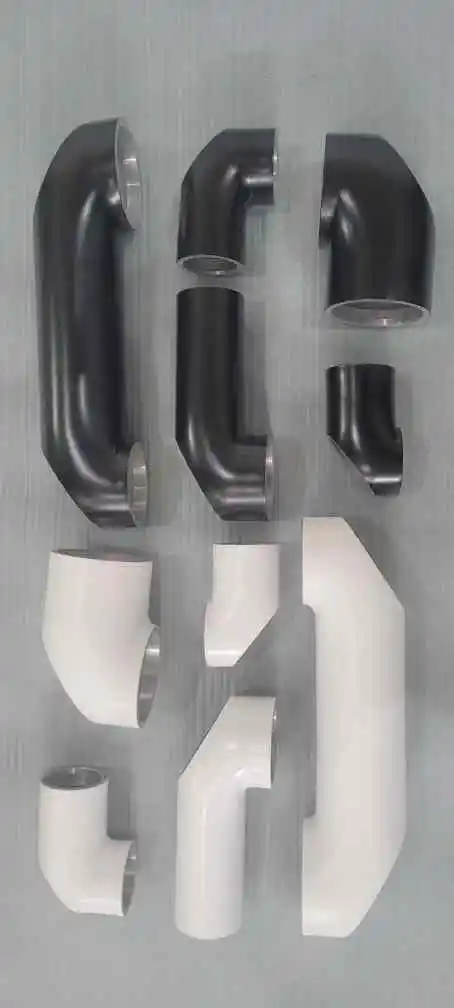
Why Robot Arm Design Depends on Component Quality?
A robot arm is an integrated mechanical system; therefore, a defect at any individual joint might impact the position of the end effector. If the mounting surface is not perfectly aligned or the bearing seat is out of tolerance or the housing deforms under pressure, the accuracy of the whole assembly is reduced.
So the requirements on the component have to be stated according to the application where the robot is going to work. The construction required for a compact collaborative robot to handle electrical components is different from that required for a welding robot carrying a heavy tool. The former can highlight minimum moving mass, small overall size, and smooth outer surfaces. The latter may require more rigidity, resilience to recurrent loads, and strong mounting interfaces.
Aluminum castings can be used for either type of application, but the geometry and alloy must be adequate for the service conditions. Engineers have to evaluate the forces exerted on each component, including acceleration, deceleration, vibration, and stresses due to the tooling attached. Repeated movement also causes fatigue damage in locations of mounting holes, sharp edges, and changes in wall thickness.
Dimensional Accuracy Begins with the Casting Design
The size of the casting determines the quantity of machining and the ease in assembly of the parts. But the accuracy of a finished robot arm part is not only the mold. Shrinkage of the alloy, cooling conditions, die temperature, part geometry, and heat treatment after forming might affect the final dimensions.
So identifying essential interfaces prior to tooling is important. Following casting, the bearing bores, locating features, gearbox mounting faces, and joint alignment surfaces can be CNC machined. Less critical outer surfaces can normally be left as cast or polished to suit the application.
Also, it is important to differentiate between the accuracy of components and the precision of robot positioning. In addition to a casting with accurate mounting properties, the performance of the finished robot depends on bearings, transmissions, encoders, control systems, calibration, and thermal behavior. The engineers need to establish suitable tolerances for each interaction and should not use unduly tight tolerances for every surface.
Stiffness Matters as Much as Low Weight
One technique to cut down on the bulk of a moving arm is to cut down on the inertia that motors have to accelerate and decelerate. This can help increase cycle times or enable a robot to accomplish a given payload with less demanding drive needs. However, the removal technique ignores the stiffness, which could cause large deflection and vibration.
Custom casting allows engineers to place material where it will have the most impact on structural performance. Stiffening can be achieved via ribs, curved transitions, and locally reinforced mounting portions without the necessity for a uniform wall thickness. This is especially convenient for joint housings or connecting structures that are required to absorb concentrated loads.
It is not simply the decrease of the weight of each component that is the purpose. The objective is to get the balance of mass stiffness, fatigue life, manufacturability, and cost right.
Choosing the Right Aluminum Casting Process
Aluminum die casting is a term used to describe multiple industrial processes. The selected approach impacts tooling investment, production rate, dimensional uniformity, and the characteristics achievable for the part. High-pressure die casting and gravity die casting are not the same procedure. Suitability is determined by part geometry, alloy requirements, expected production volume, and mechanical demands of the application.
When Gravity Die Casting Makes Sense?
Gravity die casting is the process of pouring molten aluminum into a reusable metal mold by gravity. The process does not require the quick and high-pressure injection as in conventional high-pressure die casting and may therefore be used for structural components with moderate wall thicknesses and severe mechanical requirements.
Gravity casting is a good balance between tooling expense, the freedom of design, and the option of subsequent heat treatment for selected robot arm components. It can be utilized for motor mounts, joint housings, structural brackets, and other applications where strength and dimensional stability are important.
The procedure still needs careful control of the mold temperature, of the purity of the metal, of the filling and of the solidification. A poor gating design or uneven cooling might cause shrinkage defects, insufficient mold filling, or dimensional variation. We have to offset these hazards via casting simulation, tooling design, and factory inspection.
Gravity die casting might also be of interest in the development of customized aluminum die casting robot arm parts, with annual demand not justifying the tooling expense of a high-volume method.
When High-Pressure Die Casting Is More Suitable?
In the high-pressure die casting process, molten aluminum is forced at high pressure and speed into a steel die. It is often well suited for large production runs where fast cycle times, repeatability, and complex thin-wall geometries are required.
When the tooling investment is amortized over enough production volume, high-pressure die casting can lower the unit manufacturing cost for robot manufacturers who create significant volumes of standard housings or coverings. Also, it can make detailed external features that would normally require more machining.
The procedure has its limits. The existence of trapped gas and the level of porosity are important in determining the structural integrity, pressure tightness, and suitability for different heat treatments. The final choice should be dictated by the actual performance requirements, not by the belief that one casting method is inherently superior.
Engineers assessing the two approaches should consider wall thickness, internal geometry, mechanical property targets, finishing requirements, annual volume, and tooling costs in total. However, a low-quoted part price process may not be the lowest total cost process if a large amount of machining, inspection, or rework is necessary.
Designing Customized Aluminum Die Casting Robot Arm Parts
The best castings are made before the mold is made. A review of a part by a team of design engineers and casting experts enables the identification of characteristics that promote metal flow and easier machining while reducing the chance of faults.
Select an Alloy for the Actual Operating Conditions.
Another alternative for engineers is a structural component constructed from an aluminum-silicon-magnesium casting alloy like A356. It can be cast and heat-treated and has benefits in applications needing a combination of strength and relatively low density. But its properties are dependent on the casting process, section thickness, heat-treatment condition, and test method.
The study indicates that heat treatment and section size may influence the microstructure and mechanical performance of A356 castings. Manufacturers should therefore check the requisite alloy designation, temper, and mechanical qualities against the applicable material specification and the actual manufacturing conditions. ### A review on heat treatment and mechanical characteristics of A356.
Other aluminum alloys may be the superior choice if corrosion resistance, thermal performance, castability, or high-volume production are the key requirements. That choice should be made with the foundry, not on a blanket statement that one alloy is good for every robot arm, but on documented criteria.
Use Wall Thickness and Ribs to Control Deflection
A constant wall thickness can help to encourage a predictable filling and solidification. However, the correct shape will be dependent on the alloy and casting procedure. Rapid changes from thick to thin create uneven cooling and also increase the chance of shrinkage issues.
You can put ribs on a housing or connecting component when additional stiffness is needed. That means that part can maintain the same thickness. Effects on metal flow, mold filling, and tool release should be addressed, as should their height, thickness, spacing, and direction.
Large filets at inside corners allow the metal to flow smoothly and prevent local stress concentrations. Where required, draft angles should be provided for release of the component from the mold. These items may be little in a CAD model but can affect tooling complexity, casting quality, and production cost.
Integrate Features Without Making the Part Difficult to Cast
Custom casting allows for the incorporation of numerous functionalities into one part, including customized aluminum die-casting robot arm parts. For example, a motor housing can contain mounting bosses, strengthening ribs, channels for running cables, and heat dissipation features.
Functional integration can minimize the number of fasteners, assembly stages, and individual parts. But whatever feature you add will impact the mold design and metal flow. The presence of narrow passages, deep pockets, isolated thick sections, and inaccessible surfaces may enhance the complexity of the tooling or generate defects difficult to examine.
Design evaluations need to differentiate between cast and machined features. For instance, a threaded hole or precision bearing seat can be more reliable if finished with CNC machining. It combines casting to get the basic shape with machining for the precision needed at the crucial intersections.
How Precision Machining and Finishing Improve Performance?
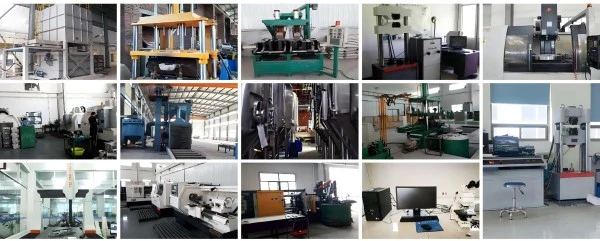
“Very few castings can meet all manufacturing requirements. Generally, the components inside robot arms need to be properly aligned with bearings, gearboxes, motors, sensors, and other structural items. After casting, these surfaces can be machined in a controlled manner using CNC.
Machine Critical Interfaces to the Drawing
Machining plans will include datum surfaces and relationships among critical features. Mounting faces can be ground to be flat, parallel or perpendicular. Bearings bores could be fixed diameters. Correct requirements depend on the assembly design and the tolerances of mating parts.
Generally, not all surfaces have to be machined to the same amount. Over-machining will improve robot performance but will increase the cycle time, tool consumption and expense. Non-critical surfaces may be kept in the as-cast state to maintain production efficiency, while precision procedures are applied to the functional interfaces.
The drawing alteration, dimensions inspection technique and acceptance criteria should be negotiated between buyer and supplier before manufacturing. If a tolerance is really challenging, provider should check feasibility before installation of tools and machining plan.
Choose Surface Treatments According to the Environment
Surface finishing may enhance appearance and provide additional protection against exposure to the environment. Depending on the alloy, operating environment and functional requirements, powder coating, appropriate paint systems and other conversion or coating processes may be evaluated.
When selecting your choices consider moisture, cleaning chemicals, temperature changes, abrasion and interaction with other materials. Coatings can also change dimensions and electrical activity. After coating , bearing seats , grounding points , threaded holes and other critical contacts may require additional masking or polishing .
In general it is not to be anticipated that any surface treatment will make an aluminum casting corrosion-proof. The correct standard depends on the actual environment and should be checked where corrosion resistance is important.
Conclusion
The cost of customized aluminum die casting robot arm parts is determined by how well the parts meet the structural, dimensional and manufacturing standards of a certain robotic system. Aluminum casting has the potential for lightweight designs, integrated features, and reproducible manufacturing. However, realizing these benefits depends on selecting the correct alloy and method, designing for manufacturability, and controlling downstream machining and finishing.
Best move: Define functional demands before you commit to tooling. Robot manufacturers. Meet with supplier to discuss critical interfaces, loading conditions, projected production volumes and inspection requirements throughout design phase. Robot arms are simpler to create, more consistent to manufacture and more suited to their intended purposes when unique components are made by merging casting, machining and quality assurance into one process.
FAQ
1: What advantages does A356 aluminum alloy offer for robot arm components?
A356 aluminum alloy delivers an exceptional combination of properties for robotic applications. The alloy contains silicon and magnesium as primary alloying elements, which enhance both castability and mechanical performance. After proper heat treatment, A356 achieves tensile strengths between 240-310 MPa with elongation values of 3-8%. This balance of strength and ductility prevents brittle failure under dynamic loading conditions common in robot operation. The alloy also exhibits excellent corrosion resistance in most industrial atmospheres. Its thermal conductivity supports effective heat dissipation from motors and electronics. Perhaps most importantly, A356 casts with minimal porosity and hot tearing tendency, enabling production of thin-walled, complex geometries that modern robot designs require.
2: How does gravity casting differ from high-pressure die casting for robot parts?
Gravity casting fills molds using only gravitational force rather than high-pressure injection. This gentler filling process reduces turbulence and gas entrapment within the molten metal. The result produces castings with superior mechanical properties and fewer internal defects. Wall thickness typically ranges from 3-15mm, ideal for robot structural components. The process accommodates heat treatment to further enhance mechanical properties, which high-pressure die cast parts cannot always tolerate. Tooling costs run lower than high-pressure die casting, making gravity casting economical for production volumes between 1,000-50,000 units annually. Surface finish quality exceeds sand casting while dimensional accuracy approaches investment casting standards. For robot arms requiring both strength and precision, gravity casting represents the optimal balance of performance, quality, and cost.
3: Why do robot manufacturers specify CNC machining after casting?
CNC machining refines critical surfaces to tolerances that casting alone cannot achieve economically. Bearing mounting surfaces require flatness within 0.02mm and surface finishes below 1.6 Ra. Bolt hole patterns need positional accuracy within ±0.05mm. Shaft bores demand cylindricity and concentricity that ensure proper alignment throughout the robot's kinematic chain. While casting produces near-net-shape components, selective machining brings these critical features to final specification. Modern CNC equipment removes material efficiently with minimal setup time. Five-axis machining centers can complete all operations in a single setup, maintaining tight tolerances between features. This combination approach leverages the strengths of both processes: casting creates the basic geometry economically, while machining adds precision where performance demands it.
Customized Aluminum Die Casting Robot Arm Parts Supplier: Rongbao Enterprise
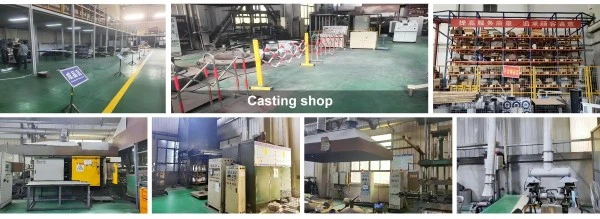
Selecting the right manufacturing partner determines success in competitive robotics markets. Rongbao Enterprise brings decades of specialized experience in precision aluminum casting for industrial automation applications. The company's Xi'an, China facility combines advanced metallurgical expertise with modern quality control systems. Engineers at Rongbao work collaboratively with customers from initial design concept through full-rate production. This partnership approach often uncovers opportunities to optimize component designs for both performance and manufacturability.
Rongbao's production capabilities align perfectly with robot arm component requirements. The facility specializes in gravity casting of A356 aluminum alloy, producing components weighing from 0.45kg to 1.5kg. These weight ranges encompass the majority of robot arm structural components including joint housings, linkage arms, and motor mounts. In-house CNC machining centers provide complete secondary operations without outsourcing delays. Surface preparation and powder coating lines deliver finished components ready for assembly. This vertical integration reduces lead times and maintains quality control throughout the entire manufacturing sequence.
Connect with Rongbao Enterprise today to discuss your specific requirements for customized aluminum die casting robot arm parts. Contact Steve Zhou at steve.zhou@263.net or Zhou Yi at zhouyi@rongbaocasting.com to begin a conversation about how precision aluminum casting can enhance your robot arm performance. Discover how partnering with an experienced, certified supplier transforms component procurement from a sourcing challenge into a competitive advantage. Your next-generation robot arm deserves components manufactured to the highest standards of quality, precision, and reliability.
References
- Grand View Research. (2024). "Die Casting Market Size, Share & Trends Analysis Report By Process, By Application, By Region, And Segment Forecasts, 2024-2030." Market Research Report.
- Zhang, L., Wang, Y., & Liu, H. (2023). "Surface Treatment Effects on Corrosion Resistance of A356 Aluminum Alloy Castings." Journal of Manufacturing Processes, 87, 245-256.
- The Aluminum Association. (2023). "Lifecycle Assessment of Aluminum Casting versus Machined Components in Industrial Applications." Technical White Paper.
- McKinsey & Company. (2024). "Digital Manufacturing: Transforming Production Through Connected Technologies." Industry Report.
- Rodriguez, M., Kumar, S., & Chen, X. (2024). "Hybrid Manufacturing Approaches for Complex Metal Components: Cost and Performance Analysis." International Journal of Advanced Manufacturing Technology, 130(3), 1567-1582.
Learn about our latest products and discounts through SMS or email