- English
- French
- German
- Portuguese
- Spanish
- Russian
- Japanese
- Korean
- Arabic
- Greek
- German
- Turkish
- Italian
- Danish
- Romanian
- Indonesian
- Czech
- Afrikaans
- Swedish
- Polish
- Basque
- Catalan
- Esperanto
- Hindi
- Lao
- Albanian
- Amharic
- Armenian
- Azerbaijani
- Belarusian
- Bengali
- Bosnian
- Bulgarian
- Cebuano
- Chichewa
- Corsican
- Croatian
- Dutch
- Estonian
- Filipino
- Finnish
- Frisian
- Galician
- Georgian
- Gujarati
- Haitian
- Hausa
- Hawaiian
- Hebrew
- Hmong
- Hungarian
- Icelandic
- Igbo
- Javanese
- Kannada
- Kazakh
- Khmer
- Kurdish
- Kyrgyz
- Latin
- Latvian
- Lithuanian
- Luxembou..
- Macedonian
- Malagasy
- Malay
- Malayalam
- Maltese
- Maori
- Marathi
- Mongolian
- Burmese
- Nepali
- Norwegian
- Pashto
- Persian
- Punjabi
- Serbian
- Sesotho
- Sinhala
- Slovak
- Slovenian
- Somali
- Samoan
- Scots Gaelic
- Shona
- Sindhi
- Sundanese
- Swahili
- Tajik
- Tamil
- Telugu
- Thai
- Ukrainian
- Urdu
- Uzbek
- Vietnamese
- Welsh
- Xhosa
- Yiddish
- Yoruba
- Zulu
ZL104 Aluminum Low-Pressure Casting for Lift Lifting Control Cylinder
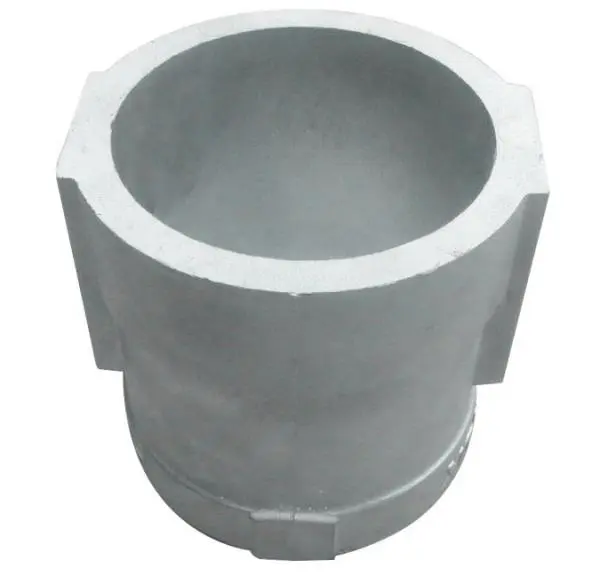
When a lift system’s control cylinder needs stable response, the casting quality and the material choice matter more than most people realize. Rongbao Enterprise focuses on producing a Zl104 casting cylinder using ZL104 aluminum low-pressure casting, targeting applications like lift lifting control cylinders where dimensional consistency, machinability, and production traceability are expected.
Below, we connect the dots between alloy characteristics, the low-pressure casting workflow, and the practical design details that influence performance in hydraulic cylinder use—so you can better understand what “fit” looks like for your project.
ZL104 Aluminum Alloy Characteristics (Compatible with Hydraulic Cylinders)
A lifting control cylinder lives in a demanding environment: repeated cycling, hydraulic pressure changes, and frequent assembly and maintenance. For aluminum cylinder components, the question is not whether aluminum is “good” or “bad,” but whether it supports the specific requirements of the hydraulic design—especially when parts must be machined to working dimensions.
ZL104 aluminum alloy is widely used in cast aluminum components because it offers a balance that many manufacturers need for hydraulic-related hardware. In practical terms, it is typically selected for its castability, reasonable machining behavior after casting, and suitability for production that demands consistent output from batch to batch. When the goal is a Zl104 casting cylinder body for a lift control application, these “production-friendly” traits can reduce downstream surprises during CNC machining.
Another angle is compatibility with hydraulic cylinder workflows. Even if the alloy itself is only one part of the cylinder system, the casting still has to be reliable where it connects to other components—such as ports, mounting interfaces, and sealing surfaces that depend on accurate machining. That is why Rongbao Enterprise does not treat casting and machining as separate topics; instead, the process is planned so that the final part can meet functional expectations after processing.
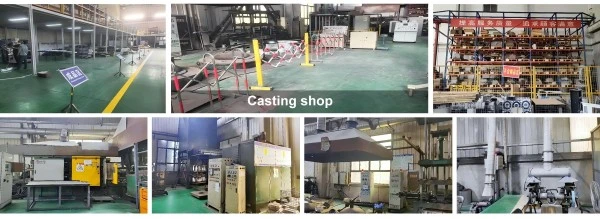
If you’re evaluating an aluminum casting for a control cylinder, you’ll also want to consider how the material behaves through the full sequence: casting → rough and finish machining → surface preparation. Rongbao’s production line includes CNC machining and shot blasting as part of the finishing workflow. That combination helps ensure the casting surface is prepared for further handling and assembly steps, rather than leaving issues to be discovered only at the end of the project.
Low-Pressure Casting Process (for hydraulic cylinders)
Low-pressure casting is chosen for a reason: it helps control how metal enters the mold and how it solidifies. Compared with some higher-turbulence casting approaches, low-pressure filling is commonly associated with improved casting integrity and more stable internal quality. In cylinder-related parts, that matters because internal defects can show up later during machining, pressure testing, or long-term operation.
For a lift lifting control cylinder component, the cast body must provide enough consistency to support precision work afterward. Rongbao Enterprise’s production uses low pressure casting to manufacture the ZL104 aluminum casting structure. While the exact settings depend on the specific tooling and part geometry, the overall goal stays the same: maintain controlled filling, reduce turbulence-related defects, and produce a casting that is practical for CNC machining.
The difference you feel as a customer often appears after the casting stage—when machining time, yield rate, and dimensional stability become more predictable. A component that is “easy to machine” is not only about tool life; it also links to how the casting responds to finishing processes. Because Rongbao includes CNC machining after casting, the workflow is designed around turning the cast form into the functional cylinder component, with preparation steps like shot blasting supporting surface readiness.
Production planning also matters. The specification for many cylinder parts is not one fixed drawing but a customized target based on mounting layout, port position, and assembly requirements. That is reflected in Rongbao’s ability to provide customized specifications and OEM/ODM support. In other words, the casting method is only part of the story—the production approach must also be flexible enough to fit your design intent.
Even the “simple” information like mass can influence how casting and machining are managed. For the lift lifting control cylinder application described here, the component weight is 8.6kg. That kind of target weight is typically aligned with the part’s geometry and allowances for machining, which again reinforces why the casting process should be planned together with finishing steps rather than treated as an isolated stage.
Key Design Considerations for Lifting Control Cylinder Castings
In real cylinder projects, design success is often decided by details that do not fit neatly into a single sentence on a quote. For a lift lifting control cylinder casting made from ZL104, the key considerations usually cluster around geometry, machining allowances, and how the Zl104 casting cylinder body interfaces with the rest of the system.
First, casting design needs to support CNC machining without excessive rework. That means wall thickness should be consistent where possible, and key features that require accuracy—such as mounting areas and port-related surfaces—must be accounted for in the casting layout. If a design asks for tight tolerances after machining, the casting should be produced in a way that reduces distortion risk. Rongbao’s approach supports this by using a production workflow that connects low-pressure casting with machining rather than passing the casting to downstream steps without coordination.
Second, the assembly interfaces must be reliable. Lift systems typically depend on alignment and consistent fit when connecting the control cylinder to the rest of the lifting hardware. Even if your system uses seals and fasteners to bridge minor gaps, you still want the cast body to provide stable reference surfaces. That is also where surface preparation becomes part of the “design conversation.” Rongbao uses shot blasting as a surface treatment step, which can help create a more consistent surface condition prior to assembly and handling.
Third, customization is not only about changing dimensions; it’s also about matching your practical requirements. Rongbao supports OEM/ODM: Customized production and provides Specification: Customized solutions. In lift and hydraulic control environments, customers often come with different interface standards, different mounting schemes, and varying maintenance expectations—so a supplier that can work from your drawing package and translate it into a manufacturable casting plan tends to reduce project friction.
Quality and compliance also deserve a direct mention, especially for projects where supply chain requirements are strict. Rongbao Enterprise operates with certifications including ISO9001:2015, ISO14001, and ISO45001. These systems are not just documents on a shelf; they reflect how the factory manages quality control, environmental responsibilities, and occupational health and safety in everyday production activities.
For logistics and customer handling, the product is packed in a wooden box, designed to protect the cast and machined components during transport. That matters when components are shipped to ongoing build sites, where receiving damage can delay assembly. On production scale, Rongbao’s stated capacity is 5000 pieces, which suits many ongoing supply needs while still allowing customized runs when the project requires variation.
The origin is also relevant for planning and communication: the supply comes from Xi'an, China. If you’re managing procurement across regions, knowing where manufacturing is based helps in setting expectations for communication time, shipping coordination, and production scheduling.
In conclusion, choosing a ZL104 aluminum low-pressure casting option for a Zl104 casting cylinder can be a practical path when you want a casting that is compatible with hydraulic-cylinder workflows and ready to be brought to final form through CNC machining and surface preparation. With low pressure casting, CNC machining, and shot blasting included in the production approach, Rongbao Enterprise is set up to support customized Zl104 casting cylinder projects—while maintaining quality management practices under ISO9001:2015, ISO14001, and ISO45001.
If you’d like to confirm fit for your lift lifting control cylinder, share your drawings or key requirements and request a quotation. You can reach Rongbao Enterprise at steve.zhou@263.net or zhouyi@rongbaocasting.com. Tell us your Zl104 casting cylinder interfaces, target tolerances, and annual quantity, and we’ll help you align the ZL104 casting plan with your manufacturing and assembly goals.
References
- ASM International, ASM Handbook, Volume 15: Casting.
- John Campbell, The Complete Casting Handbook (casting principles and process fundamentals).
- ISO, ISO 9001:2015 — Quality management systems — Requirements (official standard overview).
- ISO, ISO 14001 — Environmental management systems — Requirements (official standard overview).
- ISO, ISO 45001 — Occupational health and safety management systems — Requirements (official standard overview).
Learn about our latest products and discounts through SMS or email