- English
- French
- German
- Portuguese
- Spanish
- Russian
- Japanese
- Korean
- Arabic
- Greek
- German
- Turkish
- Italian
- Danish
- Romanian
- Indonesian
- Czech
- Afrikaans
- Swedish
- Polish
- Basque
- Catalan
- Esperanto
- Hindi
- Lao
- Albanian
- Amharic
- Armenian
- Azerbaijani
- Belarusian
- Bengali
- Bosnian
- Bulgarian
- Cebuano
- Chichewa
- Corsican
- Croatian
- Dutch
- Estonian
- Filipino
- Finnish
- Frisian
- Galician
- Georgian
- Gujarati
- Haitian
- Hausa
- Hawaiian
- Hebrew
- Hmong
- Hungarian
- Icelandic
- Igbo
- Javanese
- Kannada
- Kazakh
- Khmer
- Kurdish
- Kyrgyz
- Latin
- Latvian
- Lithuanian
- Luxembou..
- Macedonian
- Malagasy
- Malay
- Malayalam
- Maltese
- Maori
- Marathi
- Mongolian
- Burmese
- Nepali
- Norwegian
- Pashto
- Persian
- Punjabi
- Serbian
- Sesotho
- Sinhala
- Slovak
- Slovenian
- Somali
- Samoan
- Scots Gaelic
- Shona
- Sindhi
- Sundanese
- Swahili
- Tajik
- Tamil
- Telugu
- Thai
- Ukrainian
- Urdu
- Uzbek
- Vietnamese
- Welsh
- Xhosa
- Yiddish
- Yoruba
- Zulu
Why is silicon added to aluminum casting alloys?
Aluminum casting alloys are indispensable in modern manufacturing, prized for their lightweight nature, corrosion resistance, and versatility across industries ranging from automotive to aerospace. Yet, pure aluminum alone lacks the properties required for many casting applications; its high melting point, poor fluidity in molten form, and limited strength make it unsuitable for complex shapes or high-stress components. This is where alloying elements, particularly silicon, play a transformative role. Silicon is the most common and critical alloying element in aluminum alloys, accounting for 5% to 25% of their composition in many cases.
Enhancing Castability
One of the primary reasons silicon is added to aluminum casting alloys is its profound effect on castability, the ease with which molten metal can fill a mold, solidify uniformly, and form complex shapes without defects. Pure aluminum has a relatively high melting point (660°C) and poor fluidity when molten, meaning it struggles to flow into intricate mold cavities, especially those with thin walls or tight corners. This often results in incomplete fills, known as "misruns," or porous structures due to trapped gases. Silicon addresses these issues by lowering the alloy's melting point and increasing its fluidity.
Silicon forms a eutectic system with aluminum, meaning there is a specific composition (approximately 12% silicon) where the alloy melts at a lower temperature (577°C) than either pure aluminum or pure silicon. This eutectic point is critical because it creates a molten mixture that flows more easily. The lower melting temperature reduces the energy required for melting and extends the time the metal remains in a fluid state, allowing it to fully penetrate even the most complex mold designs. Additionally, silicon particles in the molten alloy act as a "lubricant" of sorts, reducing friction between the metal and the mold walls, further enhancing flow.
Beyond fluidity, silicon helps minimize common casting defects like shrinkage and hot cracking. When molten aluminum solidifies, it undergoes volumetric shrinkage, which can create voids or cracks if the metal cannot feed into the shrinking areas. Silicon's presence modifies the solidification process: the eutectic mixture solidifies more uniformly, and the silicon particles act as nucleation sites, promoting finer grain formation. This finer grain structure reduces the risk of shrinkage by distributing the contraction more evenly. Hot cracking, which occurs when solidifying metal is stressed by thermal gradients, is also mitigated because the eutectic phase provides ductility during the final stages of solidification, allowing the material to withstand minor stresses without fracturing.
For manufacturers, these improvements in castability translate to higher production yields, lower scrap rates, and the ability to produce more intricate components—from automotive cylinder heads with complex coolant passages to delicate aerospace fittings, with consistent quality.
Balancing Strength, Hardness, and Wear Resistance
While castability is critical, the mechanical properties of the final component, such as strength, hardness, and wear resistance, determine its functionality in real-world applications. Silicon significantly enhances these properties, making aluminum casting alloys suitable for load-bearing and high-wear environments.
Silicon improves strength through a mechanism known as "dispersion strengthening." When the alloy solidifies, silicon forms small, hard particles (typically 1–10 micrometers in size) that are evenly distributed throughout the aluminum matrix. These particles resist deformation under stress, acting as barriers to the movement of dislocations (atomic-scale defects that cause plastic deformation in metals). The result is increased tensile strength and hardness compared to pure aluminum. For example, a common casting alloy like A356 (which contains 6.5–7.5% silicon) has a tensile strength of 220–280 MPa, far exceeding pure aluminum's 90 MPa.
Wear resistance is another key benefit. Many industrial components, such as engine blocks, pistons, or gear housings, are subject to friction and abrasion. Silicon's hard particles (silicon has a Mohs hardness of 7, compared to aluminum's 2.5) create a wear-resistant surface. When the alloy is in contact with other materials, the silicon particles bear much of the load, reducing wear on the softer aluminum matrix. This is particularly valuable in automotive applications, where engine components must withstand continuous friction from moving parts like pistons and valves.
Critically, silicon allows for a balance between strength and ductility. While high silicon content (above the eutectic point, known as hypereutectic alloys) maximizes hardness and wear resistance, it can reduce ductility, making the material more brittle. However, by adjusting the silicon content (e.g., 5–10% in hypoeutectic alloys), manufacturers can tailor the alloy to meet specific needs. For instance, hypoeutectic alloys like A413 (9.5–11.5% silicon) offer good ductility for components requiring some flexibility, while hypereutectic alloys like 390 (16–18% silicon) prioritize wear resistance for high-friction applications.
Silicon also interacts synergistically with other alloying elements, such as copper, magnesium, or zinc, to further enhance mechanical properties. For example, adding magnesium to a silicon-aluminum alloy creates precipitates (Mg2Si) that strengthen the material through heat treatment, a process widely used in high-performance alloys like A357.

Practical Applications
Silicon-aluminum casting alloys are essential in many sectors because they are easier to cast and have better mechanical qualities. Their versatility, from lightweight structural components to wear-resistant parts, stems directly from silicon's tailored effects, which allow manufacturers to match alloy compositions to specific application demands.
The automotive industry is the largest consumer of silicon-aluminum casting alloys. Components like cylinder heads, engine blocks, intake manifolds, and transmission cases rely on these alloys for several reasons: their light weight reduces fuel consumption (or extends battery life in electric vehicles), their high thermal conductivity dissipates engine heat effectively, and their wear resistance withstands the rigors of engine operation. For example, cylinder heads require complex internal passages for coolant and oil, demanding excellent castability—properties delivered by silicon's fluidity enhancement. Meanwhile, piston skirts use hypereutectic alloys to resist wear from constant contact with cylinder walls.
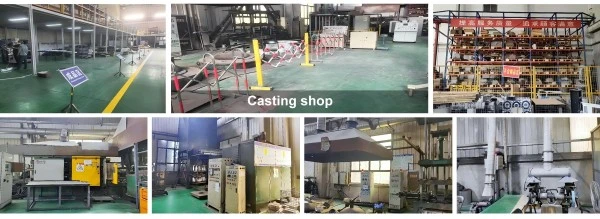
At Rongbao Enterprise, we use our deep knowledge in metallurgy to make better aluminium alloy parts. Our company has been around since 2003 and specialises in casting aluminium alloys and precision machining.
For more information about our aluminum alloy casting solutions or to discuss your specific needs, please don't hesitate to contact us at selinazhou@xianrongbao.com or steve.zhou@263.net.
References
- ASM International. (2008). Casting Design and Performance. ASM International.
- Campbell, J. (2003). Castings. Butterworth-Heinemann.
- Kaufman, J. G., & Rooy, E. L. (2004). Aluminum Alloy Castings: Properties, Processes, and Applications. ASM International.
- Davis, J. R. (Ed.). (1993). Aluminum and Aluminum Alloys. ASM International.
- Warmuzek, M. (2004). Aluminum-Silicon Casting Alloys: Atlas of Microfractographs. ASM International.
Learn about our latest products and discounts through SMS or email