- English
- French
- German
- Portuguese
- Spanish
- Russian
- Japanese
- Korean
- Arabic
- Greek
- German
- Turkish
- Italian
- Danish
- Romanian
- Indonesian
- Czech
- Afrikaans
- Swedish
- Polish
- Basque
- Catalan
- Esperanto
- Hindi
- Lao
- Albanian
- Amharic
- Armenian
- Azerbaijani
- Belarusian
- Bengali
- Bosnian
- Bulgarian
- Cebuano
- Chichewa
- Corsican
- Croatian
- Dutch
- Estonian
- Filipino
- Finnish
- Frisian
- Galician
- Georgian
- Gujarati
- Haitian
- Hausa
- Hawaiian
- Hebrew
- Hmong
- Hungarian
- Icelandic
- Igbo
- Javanese
- Kannada
- Kazakh
- Khmer
- Kurdish
- Kyrgyz
- Latin
- Latvian
- Lithuanian
- Luxembou..
- Macedonian
- Malagasy
- Malay
- Malayalam
- Maltese
- Maori
- Marathi
- Mongolian
- Burmese
- Nepali
- Norwegian
- Pashto
- Persian
- Punjabi
- Serbian
- Sesotho
- Sinhala
- Slovak
- Slovenian
- Somali
- Samoan
- Scots Gaelic
- Shona
- Sindhi
- Sundanese
- Swahili
- Tajik
- Tamil
- Telugu
- Thai
- Ukrainian
- Urdu
- Uzbek
- Vietnamese
- Welsh
- Xhosa
- Yiddish
- Yoruba
- Zulu
Why Does Gravity Die Casting Ensure Greater Precision for Aluminum Parts?
Gravity die casting makes aluminum parts more precise by controlling the flow of metal, building molds that last, and keeping temperatures fixed. Gravity casting parts benefit from reusable steel molds that keep dimensional accuracy over thousands of cycles, unlike sand casting where uneven mold density adds variability. The gentle filling process reduces turbulence and air trapping to a level below 2%, which is important for businesses that need strong structures. Because it can achieve limits of just ±0.3mm, this method is essential for parts used in cars, airplanes, and electrical transmissions, where accuracy directly affects safety and performance.
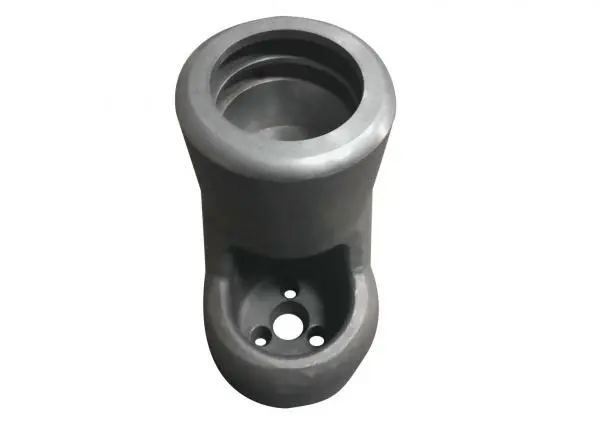
Gravity Die Casting Precision Advantages
How Gravity Die Casting Works
The basic idea behind gravity die casting is simple: melted metal runs into a permanently heated mold only through gravity, without any outside pressure. The process starts by heating the steel mold to between 250°C and 350°C. This stops the material from solidifying too quickly or experiencing thermal shock. A356 aluminum alloy is poured into the mold cavity through a gating system that is meant to reduce turbulence. This alloy is widely used because it is very fluid and has good mechanical qualities. Controlled solidification makes a thick substructure with few flaws as the metal cools slowly from the mold walls inward.
Permanent Molds Deliver Consistency
The main difference between gravity casting parts molds and sand casting is that gravity casting molds can be used more than once. Steel molds keep their shape for 50,000 to 100,000 casting cycles, while sand molds break down after just one use and add irregularities into the grain pattern. This longevity directly translates into accuracy in dimensions; parts made in the thousandth cycle are within microns of matching the parts made in the first cycle. This uniformity is very helpful for automotive gearbox housings and electrical conductor parts because it gets rid of the batch-to-batch difference that happens with sand-cast alternatives.
Key Factors Behind Precision in Gravity Die Casting
Material Selection and Alloy Characteristics
Because it has a proper mix of 7% silicon and 0.3% magnesium, A356 aluminum alloy is the best material for precision gravity casting. This mixture has great fluidity when poured, which lets metal exactly copy mold features that are very complicated. The alloy's ability to solidify in a way that prevents hot tearing, which is a common problem with aluminum casting, while still having the same mechanical qualities as forged parts. After heat treatment, the tensile strength usually hits 220 to 280 MPa, which meets the needs of car and aerospace structures. Because they have a low density of 2.68 g/cm³, these parts are perfect for uses where less weight means more energy economy.
Mold Design and Thermal Management
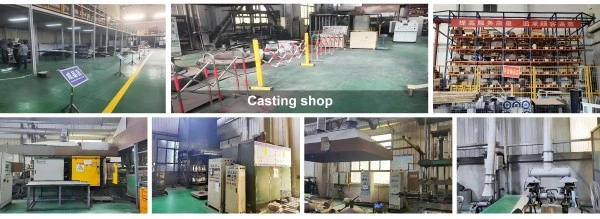
Whether a gravity casting part is as precise as it can be depends on how well the mold is designed. Designers use smart cooling pathways to control the rate at which heat is extracted, which keeps the material from warping and accumulating stress. To make sure that the solidification is even, temperature differences across the mold must stay within 20°C. The placement of the gate system determines the fill patterns. Bad design leads to early freezing or cold shuts that weaken the structure. Before they machine the first mold, our mold development team at Rongbao Enterprise uses modeling software to predict how the metal will move and find possible defect zones. This cuts down on the number of iterations needed and speeds up the time it takes to make the mold.
Process Controls and Quality Assurance
Following the ISO9001:2015 rules makes sure that every step of the production process is done according to written steps with records that can be tracked. The pour temperature is kept within ±5°C by operators, who keep the A356 metal between 700 and 720°C for the best flow without too much oxidation. Embedded thermocouples keep an eye on the temperature of the mold all the time and make adjustments when numbers change too much. Post-casting inspection includes checking the dimensions with coordinate measuring tools (CMM) that are exact to 0.01 mm, using X-rays to find internal holes, and putting sample castings through mechanical tests. This multilayered quality method keeps defect rates below 50 parts per million, which is the level that Tier 1 car providers require.
Choosing the Right Gravity Die Casting Supplier for Precision Aluminum Parts
Certification and Quality Systems Verification
Suppliers with a good reputation show their dedication to quality by getting widely recognized certificates. Systematic quality management, which includes paperwork, process controls, and ongoing growth, is approved by ISO9001:2015. Environmental responsibility is a big part of ISO14001 approval, which is important because sustainability factors affect buying choices. ISO45001 makes sure that worker safety is taken care of, which lowers worries about responsibility and stops production when accidents happen at work. Suppliers who don't have these licenses may offer good prices, but they also pose a risk because their quality may vary and the supply chain could be interrupted. Our triple certification status shows that our processes have been improved over many years and gives buying teams faith in the reliability of our deliveries.
Production Capacity and Scalability Assessment
It's not enough to just look at a supplier's claimed output numbers; you also need to look at how well-trained their staff is and how advanced their equipment is. Automated pouring systems are used in modern gravity casting sites to make the process more consistent while lowering the amount of variation caused by operators. With accuracy down to the nano level, CNC machining centers can do additional tasks like making holes and smoothing the surface. A testing system with spectrometers for metal verification, hardness testers, and non-destructive examination tools shows a strong commitment to quality. While auditing suppliers, buying teams should check to see if the claimed capacity matches the actual equipment that is on hand and if staff members show technical knowledge by how they answer process questions.

OEM Customization Capabilities
Standardized parts don't always meet the exact needs of complex uses in the car, aircraft, or electricity transmission industries. Suppliers who offer real OEM customization work with engineers during the design phase to suggest changes that are easy to make and don't affect the usefulness of the product. Our team helps customers with design for manufacturability (DFM) studies, which find problems with the casting before production starts. This collaborative method even goes to packing solutions. Any changes to the specifications can be made to fit the exact size needs, surface finish standards, and mechanical property goals of each application.
Conclusion
Controlled metal flow, constant mold consistency, and structured quality controls make gravity die casting the best way to make very precise aluminum parts. The method's benefits are especially clear in situations where tight tolerances, structural stability, and production scalability are needed, like in high-voltage electrical lines and car powertrains. When you choose materials based on the A356 aluminum alloy and use advanced mold design and temperature management, you can make parts that meet the strictest requirements. As manufacturing technologies improve and become more automated and monitored in real time, gravity casting keeps getting more precise while staying cost-effective for making medium to large amounts of things.
Partner with Rongbao Enterprise for Precision Gravity Casting Parts
Rongbao Enterprise offers precise gravity casting services and has been making high-quality products for 20 years and has three ISO certifications. Our Xi'an plant uses advanced permanent mold technology along with CNC machining and shot blasting to regularly make parts that are within ±0.3mm of the original size. We have won the trust of automakers, aerospace companies, and industrial equipment makers in Europe, the US, and Japan by always delivering high-quality products on time. We have been making gravity casting parts for a long time and can fully customize everything from the original design advice to the final packaging in protective wooden boxes.
Connect with our technical team to discuss your aluminum component requirements. Steve Zhou welcomes inquiries at steve.zhou@263.net or zhouyi@rongbaocasting.com. Whether you need 500 prototype pieces or 5,000-unit production runs, our engineering expertise and manufacturing capacity deliver precision gravity casting parts that exceed expectations. Visit rongbaocasting.com to explore our comprehensive capabilities and request a detailed quotation tailored to your specifications.
FAQ
What distinguishes gravity die casting from high-pressure die casting in terms of precision?
Gravity die casting uses the power of gravity to fill molds, making a smooth flow of metal that has very few holes (less than 2%). When high-pressure methods are used to inject aluminum at speeds higher than 40 m/s, they cause turbulence that holds air and makes microporosity. High-pressure casting is great for making thin-wall parts quickly, but gravity casting gives you better control over the mechanical properties and better interior quality, which are important for structural and electrical uses.
What lead times should procurement teams expect for custom gravity casting projects?
Standard wait times include making the mold, making the first item, inspecting it, and getting approval. With expedited development, this time frame can be cut down to two to three weeks for easy shapes when production slots allow it. Once the quality has been checked, deliveries are made every three to five days for orders under 1,000 pieces, and once a week for long-term orders. Our monthly capacity of 5,000 pieces meets large production needs without requiring longer wait times.
Do gravity casting suppliers meet automotive quality standards like IATF16949?
Gravity casting suppliers with a good reputation use ISO9001:2015 as their quality control system, and many are also working toward IATF16949 for their automotive customers. This standard calls for strict process controls, statistical quality tracking, and methods for preventing defects that are in line with what the car industry expects. Suppliers should be able to show that they can meet our standards for gravity casting parts with defect rates below 50 parts per million and on-time delivery rates above 98%. We regularly meet these standards through organized quality practices and capacity planning.
References
- Campbell, J. (2015). Complete Casting Handbook: Metal Casting Processes, Metallurgy, Techniques and Design. Butterworth-Heinemann Publishing.
- American Foundry Society. (2018). Aluminum Casting Technology: Principles and Applications for Permanent Mold Processes. AFS Technical Publications.
- Kaufman, J.G., & Rooy, E.L. (2004). Aluminum Alloy Castings: Properties, Processes, and Applications. ASM International Materials Park.
- International Organization for Standardization. (2015). ISO 9001:2015 Quality Management Systems - Requirements. ISO Standards Catalogue.
- Davis, J.R. (1993). Aluminum and Aluminum Alloys: ASM Specialty Handbook. ASM International Publishing.
- Bonollo, F., Urban, J., Bonatto, B., & Botter, M. (2005). Gravity and Low-Pressure Die Casting of Aluminium Alloys: A Technical and Economic Analysis. La Metallurgia Italiana Journal.

Learn about our latest products and discounts through SMS or email