- English
- French
- German
- Portuguese
- Spanish
- Russian
- Japanese
- Korean
- Arabic
- Greek
- German
- Turkish
- Italian
- Danish
- Romanian
- Indonesian
- Czech
- Afrikaans
- Swedish
- Polish
- Basque
- Catalan
- Esperanto
- Hindi
- Lao
- Albanian
- Amharic
- Armenian
- Azerbaijani
- Belarusian
- Bengali
- Bosnian
- Bulgarian
- Cebuano
- Chichewa
- Corsican
- Croatian
- Dutch
- Estonian
- Filipino
- Finnish
- Frisian
- Galician
- Georgian
- Gujarati
- Haitian
- Hausa
- Hawaiian
- Hebrew
- Hmong
- Hungarian
- Icelandic
- Igbo
- Javanese
- Kannada
- Kazakh
- Khmer
- Kurdish
- Kyrgyz
- Latin
- Latvian
- Lithuanian
- Luxembou..
- Macedonian
- Malagasy
- Malay
- Malayalam
- Maltese
- Maori
- Marathi
- Mongolian
- Burmese
- Nepali
- Norwegian
- Pashto
- Persian
- Punjabi
- Serbian
- Sesotho
- Sinhala
- Slovak
- Slovenian
- Somali
- Samoan
- Scots Gaelic
- Shona
- Sindhi
- Sundanese
- Swahili
- Tajik
- Tamil
- Telugu
- Thai
- Ukrainian
- Urdu
- Uzbek
- Vietnamese
- Welsh
- Xhosa
- Yiddish
- Yoruba
- Zulu
What type of steel is used in drive shafts?
Drive shafts represent a critical mechanical component in power transmission systems across automotive, industrial, and aerospace applications. The selection of appropriate steel grades directly influences durability, performance efficiency, and operational longevity. Among the various materials employed in modern drive shaft manufacturing, carbon steel dominates due to its favorable strength-to-cost ratio, while chromoly steel offers enhanced toughness for high-performance applications. However, the stainless steel drive shaft has emerged as a specialized solution where corrosion resistance and longevity under harsh environmental conditions become paramount. Grades like 304 and 316 stainless steel deliver exceptional resistance to oxidation and chemical attack, making them indispensable in marine, food processing, and chemical handling industries where conventional materials would degrade rapidly.
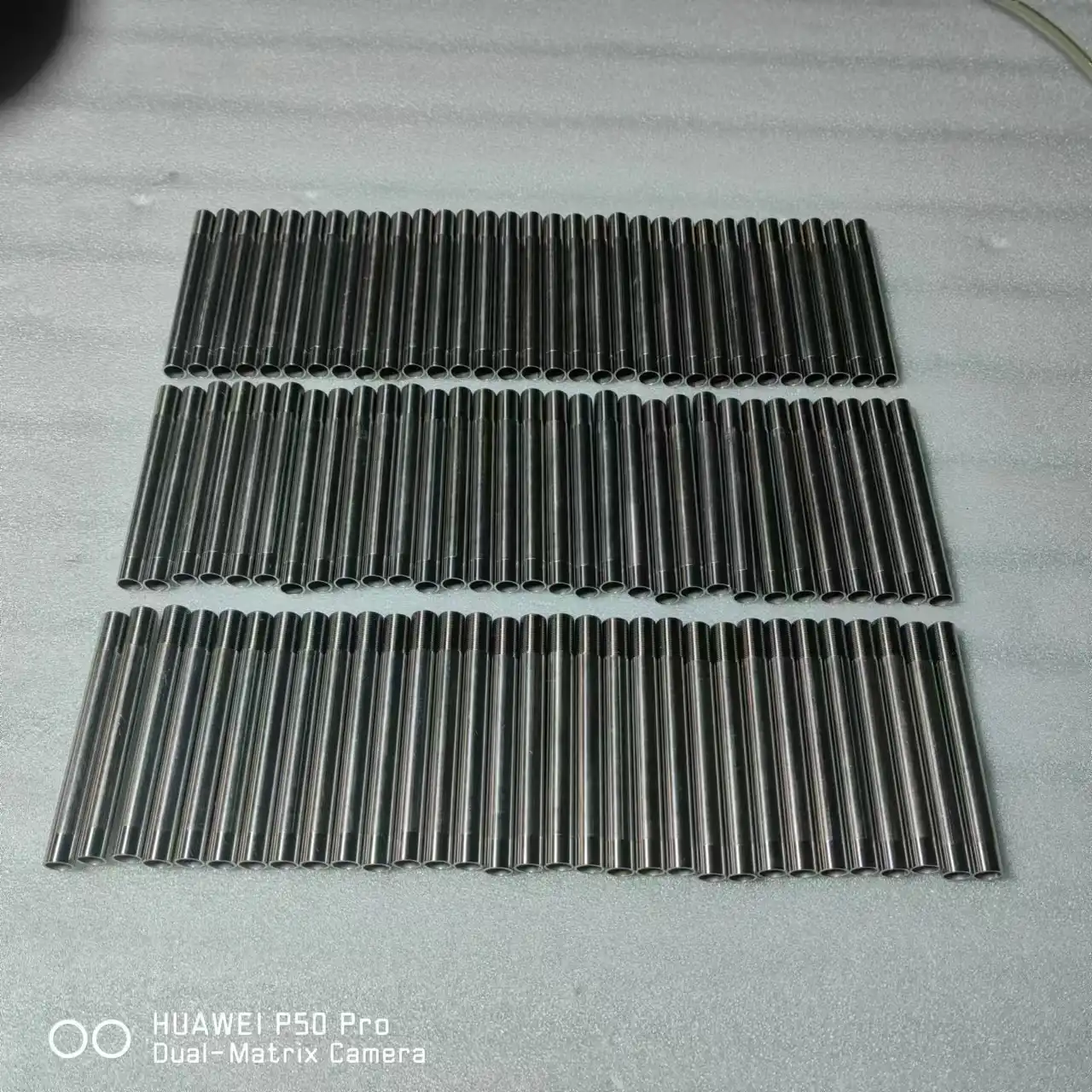
Types of Steel Used in Drive Shafts
When a professional person chooses the material for a drive shaft, they have to think about how well it will work and how much it will cost. The material's qualities determine not only how well the shaft can move torque, but also how well it can stand up to normal use, damage from the environment, and failure.
Carbon Steel: The Industry Standard
For making a lot of cars and industrial equipment, carbon steel is still the best choice. Grades 1040 to 1050 carbon steel generally have a tensile strength of 570 to 700 MPa, and they are still a cheap choice for mass production. Surfaces are made even more sturdy through induction hardening and other manufacturing methods. This makes them last longer under normal use conditions. Drive shafts made of carbon steel work best in controlled environments where they don't get wet and where they are regularly maintained so that the surface doesn't rust. Being easy to make speeds up CNC operations, shortens wait times in production, and supports plans for making a lot of things—often more than 5,000 pieces in a single run.
Chromoly Steel: Performance Engineering
Because they are exactly alloyed, chromium-molybdenum alloy steels, which are often called 4130 or 4140, are better at moving. It is harder to wear because it has 0.8 to 1.1% chromium in it, and it is stronger and tougher at high temperatures because it has 0.1 to 0.25 % molybdenum in it. Because of these features, chromoly steel is best for high-performance cars, parts for spacecraft, and race cars that need to lose weight without losing power. It is possible to heat treat metals in ways like cooling and hardening to get tensile strengths of more than 900 MPa. This meets the needs for sending a lot of power. The people who buy things from Tier 1 suppliers for cars often need chromoly for engine parts that need expert help and strict IATF16949 compliance at the same time.
Stainless Steel: Corrosion-Resistant Excellence
You can tell the difference in value between stainless steel grades based on how long they last in the environment rather than how well they work mechanically. At least 18% chromium makes an inactive oxide layer that keeps growing back. This naturally protects against rust without the need for extra treatments. Because metals are made this way, they last longer between fixes and cost less over their whole life when they are around chemicals, work in saltwater, or have to meet high cleanliness standards. 18% chromium and 8% nickel make stainless steel 304 easy to shape and weld. A stainless steel drive shaft also doesn't rust too much, so it's a good choice for most industrial settings. The 316 grade has 2–3% molybdenum added to it, which makes it much more resistant to attack by chloride and the acidic conditions that are common in chemical processes and the ocean.
Alternative Materials: Specialized Applications
Aluminum alloys (6061-T6, 7075-T6) are also used, along with regular steel grades, when weight reduction supports higher material costs, such as in airplanes and racing. Titanium metals (Ti-6Al-4V) are very strong for their weight and don't wear down easily. However, they are very expensive and can only be used in defense and aerospace applications that are certified by AS9100D. Carbon fiber carbon drive shafts are the newest choice for very fast cars, but they are hard to make and not easy to fix, so not many people use them yet. Each different material improves performance in a different way, but steel versions are still the most popular because they are simple to make, their behavior can be expected, and they are cheap at all production levels.
Stainless Steel Drive Shafts: Characteristics and Benefits
Carbon and alloy steel and stainless steel are made in very different ways, so the way a stainless steel drive shaft works is also very different. Procurement workers can choose products that meet business needs and stay within budget if they know these differences.
Metallurgical Properties of Stainless Steel 304
About 18% of stainless steel 304 is chromium, 8% is nickel, and less than 0.08% is carbon. It is an austenitic chromium-nickel metal. The tensile strength of this mixture is between 515 and 620 MPa, and it is very flexible, so it can be made in a number of ways, such as by CNC cutting and cold working. The crystal structure of austenitic steel stays the same across a wide temperature range. Its mechanical properties stay the same from very cold temperatures to about 870°C. When you treat the surface with something like shot blasting, you add good compression loads that make it more resistant to wear and rust. Precision CNC cutting is used at our plant in Xi'an, China, to get tolerances of less than 0.05 mm. This is small enough to meet the strict size requirements for mechanical processing. The ISO9001:2015, ISO14001, and ISO45001 standards are used to make sure that the quality of every stainless steel part is very high. This makes sure that the metal keeps its shape and properties.

Enhanced Corrosion Resistance
Stainless steel surfaces are protected from rust, chemical attack, and galvanic corrosion by a layer of passive chromium oxide. In the same conditions, these things quickly break down carbon steel. When used in naval applications, chloride-containing saltwater sprays hit drive shafts and eat away at protective layers on carbon steel. This causes pitting rust to form, which hurts the structure. If you don't protect steel surfaces when you put acidic or alkaline process streams on chemical processing equipment, they will damage them. The things that are used to make food must be clean and not rust when they come in contact with the organic acids in food. In the winter, heavy-duty trucking companies in the north have to deal with road salt, which makes the air very acidic. When this happens, stainless steel drive shafts save you the cost of regular maintenance like cleaning the surface, putting on protective coats, and replacing parts too soon. This makes the total cost of ownership much cheaper, even though the materials cost more at first.
Extended Service Life and Reduced Maintenance
When corrosion protection and mechanical steadiness work together, service times get longer. This means that less downtime and maintenance costs. For acidic environments, carbon steel drive shafts should be checked every three to six months and their protective coats should be changed every twelve to eighteen months. This will keep the structure from breaking down. When you use stainless steel instead, you can check it every 12 to 24 months, and the top only needs a little work. Keeping things in good shape and covering them costs less because of this. Getting rid of rust is especially important in places that make medicines and food, where iron particles can hurt the quality of the product and make it harder to follow rules. We can make one-of-a-kind items that meet OEM/ODM standards, and we can make up to 5,000 pieces at once, so we can help with both making prototypes and making lots of them. Parts stay in good shape while being shipped abroad when they are packed in strong wooden boxes. This helps make sure that measurements are correct and the finish is smooth all along the supply chain.
Conclusion
What the drive shaft is made of has a big effect on how well it works, how often it needs to be serviced, and how much it costs to own in a number of different field. Carbon steel is a cheap option for controlled environments. Chromoly steel is best for high-performance uses that need better mechanical properties. Stainless steel drive shaft solutions are best when long-lasting strength and resistance to rust are important. The stainless steel drive shaft solves important operational issues in tough industrial settings, such as those that work with chemicals, make food, work on ships, or are otherwise in places where things break down quickly. When making a buy decision, one shouldn't just look at the price. They should also think about the item's mechanical strength, weight, environmental stability, and the total cost of ownership over its whole life. When you work with certified manufacturers that offer expert support, the ability to customize goods, and a dependable supply chain infrastructure, you can get the best part specs, as well as regular quality and shipping performance that helps your business do well.
Partner with Rongbao Enterprise for Premium Stainless Steel Drive Shaft Solutions
For 20 years, Rongbao Enterprise has been making precise parts out of stainless steel. They use quality systems that are matched with IATF16949 to serve the medical device, airplane, car, and industrial equipment industries. There are many things we can make. We are skilled at high-pressure die casting, gravity casting, accurate CNC cutting, and high-tech surface treatments such as shot blasting and electropolishing. We are a trustworthy stainless steel drive shaft manufacturer. We can make products that are exactly what you need and have limits of only 0.05 mm. Our ISO9001:2015, ISO14001, and ISO45001 certifications make sure that our quality is always the same and that we follow the law. Being able to make up to 5,000 pieces in a run works for both testing ideas and making a lot of them. 70% of the things that are made in Xi'an are sent to markets in Europe, Japan, and North America. This shows that people all over the world know how good our products are. Email Steve Zhou at steve.zhou@263.net or zhouyi@rongbaocasting.com to talk about your needs for a stainless steel drive shaft, get detailed specs, or begin working together on a unique project. Find out how our full-chain manufacturing, strict quality control, and engineering teamwork have made the performance of parts, the stability of the supply chain, and the cost of ownership all better.
FAQs
Which Stainless Steel Grade Works Best for Drive Shaft Applications?
The grade is chosen based on the environment and the needs of the machinery. Stainless steel 304 can handle minor rust in places like outdoors, with food, and in general industrial settings. The price is fair, and it has good mechanical qualities. Grade 316 is needed near the coast, in chemical processes, or in places with salt because it has more molybdenum, which stops pitting and fissure rusting. Precipitation-hardening 17-4 PH stainless steel is used in high-stress situations that need to protect against rust and have a mechanical strength above 1100 MPa. However, it can only be used in certain situations because it costs more and needs to be heat treated.
How Does Stainless Steel Corrosion Resistance Compare to Coated Carbon Steel?
The inactive chromium oxide layer on stainless steel drive shafts keeps them from rusting. This means it doesn't need any coats on the outside that get worn off over time from being hit by objects, chemicals, or the weather. Coated carbon steel has a buffer that wears away over time because of chips, scratches, or the coating coming off. This lets rust start to spread in places where the covering is still intact. The coating wears off faster in marine and chemical environments, so it needs to be changed more often. This adds up to big costs that are higher than the price of stainless steel over a regular 5–10 year service life.
Can Drive Shafts Be Customized for Specific Applications?
Full customization takes into account things like size needs, interface features, surface treatments, and material properties. CNC machining can work with parts of many forms, sizes, keyway configurations, and mounting connections. Surface treatments like shot blasting make things last longer and wear better. Electropolishing, on the other hand, makes things last longer and rust better while also making them easier to clean for health reasons. When choosing custom materials, the environment, the budget, and the scientific needs are all taken into account. Our OEM/ODM manufacturing helps with the creation of prototypes all the way up to mass production. This lets us tailor the parts to specific uses, making them work better than normal stock parts.
References
- Davis, J.R. (2000). Alloy Selection for Service in Corrosive Environments. ASM International Materials Park, Ohio.
- Bhadeshia, H.K.D.H. & Honeycombe, R.W.K. (2017). Steels: Microstructure and Properties (4th ed.). Butterworth-Heinemann Elsevier.
- Boyer, H.E. (1987). Atlas of Fatigue Curves. American Society for Metals, Metals Park, Ohio.
- Sedriks, A.J. (1996). Corrosion of Stainless Steels (2nd ed.). John Wiley & Sons, New York.
- Campbell, F.C. (2008). Elements of Metallurgy and Engineering Alloys. ASM International Materials Park, Ohio.
- Smallman, R.E. & Ngan, A.H.W. (2014). Modern Physical Metallurgy (8th ed.). Butterworth-Heinemann Elsevier, Oxford.
Learn about our latest products and discounts through SMS or email