- English
- French
- German
- Portuguese
- Spanish
- Russian
- Japanese
- Korean
- Arabic
- Greek
- German
- Turkish
- Italian
- Danish
- Romanian
- Indonesian
- Czech
- Afrikaans
- Swedish
- Polish
- Basque
- Catalan
- Esperanto
- Hindi
- Lao
- Albanian
- Amharic
- Armenian
- Azerbaijani
- Belarusian
- Bengali
- Bosnian
- Bulgarian
- Cebuano
- Chichewa
- Corsican
- Croatian
- Dutch
- Estonian
- Filipino
- Finnish
- Frisian
- Galician
- Georgian
- Gujarati
- Haitian
- Hausa
- Hawaiian
- Hebrew
- Hmong
- Hungarian
- Icelandic
- Igbo
- Javanese
- Kannada
- Kazakh
- Khmer
- Kurdish
- Kyrgyz
- Latin
- Latvian
- Lithuanian
- Luxembou..
- Macedonian
- Malagasy
- Malay
- Malayalam
- Maltese
- Maori
- Marathi
- Mongolian
- Burmese
- Nepali
- Norwegian
- Pashto
- Persian
- Punjabi
- Serbian
- Sesotho
- Sinhala
- Slovak
- Slovenian
- Somali
- Samoan
- Scots Gaelic
- Shona
- Sindhi
- Sundanese
- Swahili
- Tajik
- Tamil
- Telugu
- Thai
- Ukrainian
- Urdu
- Uzbek
- Vietnamese
- Welsh
- Xhosa
- Yiddish
- Yoruba
- Zulu
Why Choose OEM Gravity Casting Parts to Save Time and Cost?
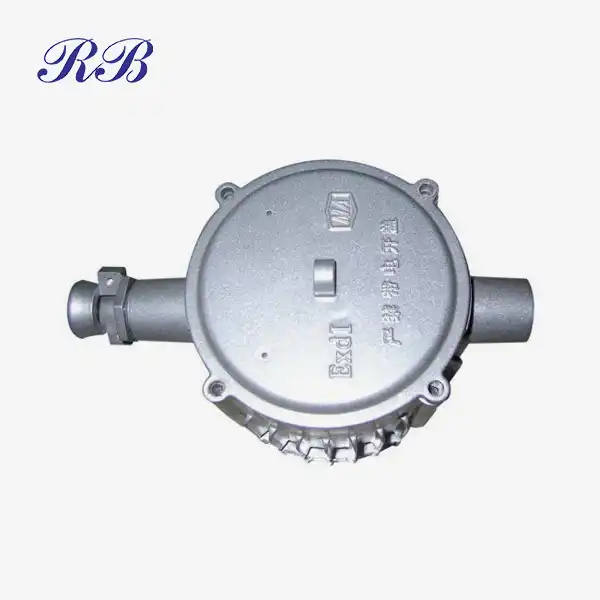
OEM gravity cast parts offer a compelling answer to two persistent manufacturing pressures: time and cost. By allowing molten metal to fill a permanent mold through gravity alone, this process eliminates the complex hydraulic systems required in pressure die casting, which directly shortens cycle preparation time. For fire pump manufacturers sourcing critical components like pump housings, impellers, and valve bodies, a well-executed gravity casting part delivers dimensional consistency and internal soundness that pressure-based alternatives struggle to match at comparable tooling investment levels. That combination of process simplicity and output reliability is why procurement engineers keep returning to it.

Understanding Gravity Casting and Its Role in OEM Manufacturing
Gravity casting looks very simple: molten metal flows into a metal die that can be used again and again, and the only force acting on it is gravity. No rams for shot. No pockets of pressure. But this ease of use makes parts with smooth surfaces, tight precision in dimensions, and few holes inside, all of which are very important in safety-critical equipment.
Core Working Principles of Gravity Casting
Different from high-pressure die casting that relies on hydraulic propulsion and compressed air to force molten metal into molds, gravity casting adopts a natural filling mode. The molten aluminum alloy flows into preheated reusable steel molds purely under gravitational force, with no external pressure intervention throughout the pouring process. This low-turbulence filling mode effectively avoids violent metal flow and air entrainment, laying a solid foundation for producing high-quality gravity casting part with minimal internal defects. After cooling, solidification and demolding, the finished cast blanks with stable structures and smooth surfaces are obtained, which greatly reduces the difficulty of subsequent processing.
Unique Advantages for Safety-Critical OEM Components
For fire pumps, industrial valves and other safety-critical equipment, component stability and pressure resistance are the core performance indicators. Gravity casting’s stable solidification process forms a fine and uniform metal grain structure, endowing gravity casting parts with excellent mechanical strength and airtightness. Compared with sand casting with disposable molds and unstable dimensional accuracy, reusable permanent steel molds ensure consistent product specifications in batch production. Meanwhile, the internal compact structure of gravity cast parts effectively avoids hidden dangers such as air holes and shrinkage cavities, ensuring that fire pump components can stably withstand long-term hydraulic pressure and meet industrial safety certification standards.
Why ZL101A Aluminum Is a Preferred Alloy for Fire Pump Components
When making a decision about gravity casting, the alloy choice is very important. ZL101A is a hypoeutectic aluminum-silicon alloy that is widely used in foundries in China and around the world. It has a tensile strength of about 205 MPa and great fluidity at pouring temperature, which makes it better at preventing incomplete-fill defects in complex shapes like pump volute housings. Because it doesn't rust, it can also be used in fire pump systems where water is present.
Superior Mechanical and Process Performance of ZL101A
ZL101A aluminum-silicon alloy has balanced mechanical properties and excellent casting process adaptability. Its excellent fluidity at optimal pouring temperatures enables the molten metal to fully fill complex mold cavities, perfectly adapting to the irregular structural design of fire pump impellers, volute housings and valve bodies, and effectively eliminating incomplete filling, cold shut and other common casting defects. With a stable tensile strength of 205 MPa and good toughness, the alloy can resist structural deformation and damage caused by water pressure impact during the operation of fire pump equipment, making it the ideal material for durable gravity casting part. In addition, the alloy has outstanding corrosion resistance, can resist long-term erosion of water and humid air in fire water supply systems, and prolong the service life of equipment components.
Adaptability to Permanent Mold Gravity Casting
Permanent steel dies used in gravity casting bear repeated thermal cycling of high-temperature molten metal and cooling treatment. ZL101A alloy has low thermal shrinkage rate and stable solidification characteristics, which can well adapt to the working environment of reusable steel molds. It can maintain highly consistent dimensional tolerances in batch production, ensuring that cast pump housings and other gravity casting parts can perfectly match CNC-machined mating surfaces in assembly line operations. Compared with other aluminum alloys, ZL101A has more stable solidification performance, fewer internal residual stresses after molding, and is not easy to deform during subsequent processing and use, which fully meets the high-precision assembly requirements of OEM fire pump equipment.

How OEM Gravity Cast Parts Reduce Production Time
A lot of the time, procurement workers don't realise how much production time a decision about the casting process saves or costs before the assembly floor. As a low-threshold, high-efficiency and flexible manufacturing process, gravity casting optimizes the whole production link from mold preparation, batch production to sample trial production, greatly shortening the overall production cycle of OEM parts and helping manufacturers accelerate product launch and order delivery.
Shorter Mold Preparation and Cycle Times
High-pressure die casting tooling is more difficult to set up than gravity casting dies. Hydraulic clamping, shot sleeve maintenance, and vacuum line management are all parts of a typical high-pressure die casting machine that make setup windows longer. Because gravity casting setups are physically easier, foundries can switch between part configurations more quickly and get back to work after repair with less downtime. Independent studies on manufacturing have shown that producing a qualified aluminium gravity casting part weighing between 3 and 6 kg takes about 3 to 5 minutes per shot, which is about the same as low-pressure casting but requires a lot less capital equipment.
In addition, shot blasting as a post-casting surface treatment further optimizes the follow-up process efficiency. The shot-blasted parts have clean and uniform surface texture, no burrs and oxide layers, eliminating a large number of manual finishing processes. The CNC machining program can run continuously without frequent shutdown adjustment, effectively improving the processing efficiency of subsequent procedures. For fire pump manufacturers with stable monthly orders, this process consistency can save a lot of effective working time every week and greatly improve overall production efficiency.
Faster Sampling Cycles for New Product Development
Before new fire pump models are officially put into mass production, prototype cast parts need to complete strict dimensional inspection and hydrostatic pressure testing to meet industry certification standards. Tooling cost is a key factor restricting the progress of new product trial production. Die casting tooling costs are extremely high, while the cost of aluminum gravity casting dies is only 30–50% of that of equivalent die casting equipment, which greatly reduces the upfront investment risk for OEM manufacturers developing custom gravity casting part prototypes.
Benefiting from low tooling costs and simple mold opening processes, procurement teams can quickly approve sample tooling plans. The whole cycle from drawing confirmation to sample delivery is only 3–4 weeks, which is nearly half shorter than the 6–8 weeks cycle of traditional die casting. This efficient sampling capability helps fire pump manufacturers quickly complete product testing and certification, seize market opportunities, and gain a first-mover advantage in product iteration and upgrading.

Cost Reduction Benefits of OEM Gravity Casting
When making fire pumps, cost management starts with the casting supply chain, since cast parts usually make up 20 to 30 percent of the total unit cost. Gravity casting solves that problem in more than one way. It optimizes costs from multiple dimensions including upfront investment, production loss, and supply chain logistics, helping OEM manufacturers comprehensively reduce the comprehensive production cost of fire pump components.
Lower Upfront Tooling and Capital Investment
Gravity casting dies cost substantially less than pressure die casting equivalents, reducing upfront capital commitment and making design revisions financially manageable during the product development cycle. Different from high-pressure die casting which requires expensive hydraulic equipment, vacuum systems and professional supporting facilities, gravity casting has simple equipment structure and low daily maintenance costs, lowering the overall manufacturing cost of every gravity casting part. For OEM manufacturers, especially small and medium-sized enterprises in the growth stage, this low-capital investment model avoids excessive fund occupation, and the saved funds can be invested in product research and development and market expansion.
Moreover, the reusable permanent steel molds have a long service life and can adapt to prototype trial production, small-batch test production and mass production scenarios. When product engineering design needs to be adjusted and mold modification is required, the modification cost of gravity casting molds is far lower than that of die casting molds, which greatly reduces the iteration cost of product upgrading.
Reduced Scrap, Rework and Comprehensive Logistics Costs
The controlled, low-turbulence fill characteristic of gravity casting minimizes entrapped gas porosity. Foundries using process-optimized gating systems routinely achieve internal defect rates below 2% for every gravity casting part, which directly cuts the hydrostatic test failure rate that plagues fire pump assembly lines. Compared with the 5–7% scrap rate of traditional casting processes, gravity casting greatly reduces the waste of raw materials and the time cost of rework and repair, and effectively improves the yield of finished products.
In addition, professional integrated gravity casting suppliers integrate casting, CNC precision machining, shot blasting and other processes in one factory. This one-stop processing mode eliminates redundant links such as cross-factory transportation, repeated incoming inspection and scheduling coordination, greatly reduces logistics and management costs in the supply chain, and fundamentally reduces the total landed cost of OEM fire pump parts.

Selecting the Right OEM Gravity Casting Supplier
Because of these benefits, there is a leaner model for buying things that protects margins without forcing smaller makers to commit to volumes they can't keep. Choosing a high-quality gravity casting supplier is crucial to giving full play to the advantages of gravity casting in time saving and cost reduction, and ensuring the stable quality of fire pump components.
Standardized Certification System Ensures Supply Chain Stability
It is just as important to look at a gravity casting supplier's technical profile as it is to look at their price. Having ISO 9001:2015, ISO 14001, and ISO 45001 certifications means that the foundry's quality, environmental, and workplace safety management systems meet internationally audited standards. This is a must for fire safety equipment supply chains that need to be able to track every gravity casting part and keep records of the manufacturing process to support national certification applications. Standardized management systems can effectively avoid quality fluctuations in batch production and ensure the consistency and traceability of fire pump component quality.
Regional Supply Chain and Logistics Advantages
Location also affects the economics of the supply chain. Foundries in China's manufacturing corridors, like Xi'an in Shaanxi Province, can use well-established logistics networks to get to coastal ports and manufacturing clusters in East and North China that make fire equipment. For heavy gravity casting part over 4kg, professional wooden box packaging can effectively avoid collision and damage during multi-modal transportation, reduce product damage and rework costs caused by logistics problems, and ensure on-time delivery of orders.
Future of Gravity Casting in OEM Production
The global aluminium casting market maintains a steady growth trend, which fully verifies the broad application prospects of gravity casting in OEM industrial manufacturing. The global aluminium casting market was worth about USD 69.5 billion in 2023, and it's expected to keep growing at a rate of 6.1% per year until 2030, thanks mostly to uses in safety systems and industrial equipment.
With the continuous upgrading of industrial manufacturing and the increasing demand for high-precision, low-cost and high-reliability industrial components, gravity casting technology is also constantly optimized. The combination of numerical simulation technology and gravity casting process further improves the precision of mold design and process parameter control, realizing higher dimensional accuracy and lower defect rate of cast parts. For OEM manufacturers, long-term cooperation with professional gravity casting suppliers can continuously obtain optimized process solutions, achieve higher production efficiency and tighter product tolerances, and create sustained competitive advantages for enterprises.
Conclusion
OEM gravity casting parts have irreplaceable advantages in time saving and cost reduction in the production of fire pump components and industrial safety equipment. Relying on simple and efficient production processes, low tooling investment costs, low defect scrap rate and flexible production modes, gravity casting effectively solves the dual pain points of long cycle and high cost in traditional casting production. The matching application of high-performance ZL101A aluminum alloy further ensures the safety, stability and durability of finished parts.
For procurement engineers and manufacturing enterprises in the fire equipment industry, selecting standardized and professional OEM gravity casting suppliers is not only a short-term cost-saving choice, but also a long-term strategic layout to optimize the supply chain, improve production efficiency and enhance product competitiveness.
FAQ
What is the typical lead time for OEM gravity cast aluminum parts?
Standard production wait times for known part geometries with existing tools are 3–5 weeks, based on the number of orders and the level of finishing needed for each gravity casting part. Usually, 3–4 weeks are added to that baseline for making new tools for a custom pump housing. Suppliers who do their own CNC cutting and shot blasting can shorten the cycle time by not having to move parts from one plant to another.
How does gravity casting control porosity in fire pump components?
Controlling the filling speed, making the gate design better, and managing the die's heat all work together to lower the turbulent fill that creates gas holes in any gravity casting part. The silicon in ZL101A metal helps the mould fill well without using too high of filling temperatures. This also limits the amount of shrinkage porosity in bigger cross-sections.
What certifications should a fire pump casting supplier hold?
For providers who work with companies that make fire equipment, ISO 9001:2015 for quality management, ISO 14001 for environmental management, and ISO 45001 for worker safety are the standards that must be met. These certifications help meet the national requirements for fire safety certification paperwork for every exported gravity casting part.
Is gravity casting suitable for complex impeller geometries?
In fact, it works best when used with CNC machining as a secondary process. Gravity casting makes nearly net-shaped impeller blanks for each gravity casting part with straight wall sections, and CNC finish machining gets the hydraulic profile tolerances needed for fire pump performance standards.
Partner with Rongbao Enterprise for Reliable Gravity Cast Fire Pump Components
If you are looking for high-quality, cost-effective and fast-delivery OEM gravity casting fire pump parts, Rongbao Enterprise is your ideal partner. We provide one-stop customized gravity casting services including mold development, casting production, CNC precision machining and surface treatment. With standardized production management, strict quality inspection system and rich experience in fire equipment component manufacturing, we can effectively reduce your procurement cost and production cycle.
Feel free to contact us for customized solutions and free quotation! Email: steve.zhou@263.net & zhouyi@rongbaocasting.com
References
1. ASM International. ASM Handbook, Volume 2: Properties and Selection: Nonferrous Alloys and Special-Purpose Materials. ASM International, 1990.
2. Campbell, J. Castings. 2nd ed. Butterworth-Heinemann, 2003.
3. Bonollo, F., & Odorizzi, S. Numerical Simulation of Foundry Processes. SGEditoriali, 2001.
4. Stefanescu, D.M. Science and Engineering of Casting Solidification. 3rd ed. Springer, 2015.
5. Apelian, D. Aluminum Cast Alloys: Enabling Tools for Improved Performance. North American Die Casting Association, 2009.
6. Grand View Research. Aluminum Casting Market Size, Share & Trends Analysis Report, 2024–2030. Grand View Research, 2024.
Learn about our latest products and discounts through SMS or email