- English
- French
- German
- Portuguese
- Spanish
- Russian
- Japanese
- Korean
- Arabic
- Greek
- German
- Turkish
- Italian
- Danish
- Romanian
- Indonesian
- Czech
- Afrikaans
- Swedish
- Polish
- Basque
- Catalan
- Esperanto
- Hindi
- Lao
- Albanian
- Amharic
- Armenian
- Azerbaijani
- Belarusian
- Bengali
- Bosnian
- Bulgarian
- Cebuano
- Chichewa
- Corsican
- Croatian
- Dutch
- Estonian
- Filipino
- Finnish
- Frisian
- Galician
- Georgian
- Gujarati
- Haitian
- Hausa
- Hawaiian
- Hebrew
- Hmong
- Hungarian
- Icelandic
- Igbo
- Javanese
- Kannada
- Kazakh
- Khmer
- Kurdish
- Kyrgyz
- Latin
- Latvian
- Lithuanian
- Luxembou..
- Macedonian
- Malagasy
- Malay
- Malayalam
- Maltese
- Maori
- Marathi
- Mongolian
- Burmese
- Nepali
- Norwegian
- Pashto
- Persian
- Punjabi
- Serbian
- Sesotho
- Sinhala
- Slovak
- Slovenian
- Somali
- Samoan
- Scots Gaelic
- Shona
- Sindhi
- Sundanese
- Swahili
- Tajik
- Tamil
- Telugu
- Thai
- Ukrainian
- Urdu
- Uzbek
- Vietnamese
- Welsh
- Xhosa
- Yiddish
- Yoruba
- Zulu
Are Twelve-Way Alarm Control Boxes Essential for Your Industrial Alarm System?
If you manage safety infrastructure across multiple zones, the answer is almost certainly yes. A twelve-way alarm control box gives industrial facilities the capacity to monitor up to twelve independent alarm circuits from a single, centralized enclosure. Whether your operation involves gas detection, fire suppression triggers, or perimeter intrusion alerts, consolidating those signals into one robust housing eliminates the chaos of scattered wiring and disconnected panels. For procurement managers and engineers evaluating alarm device parts, this control box represents a measurable upgrade in both system reliability and operational clarity.
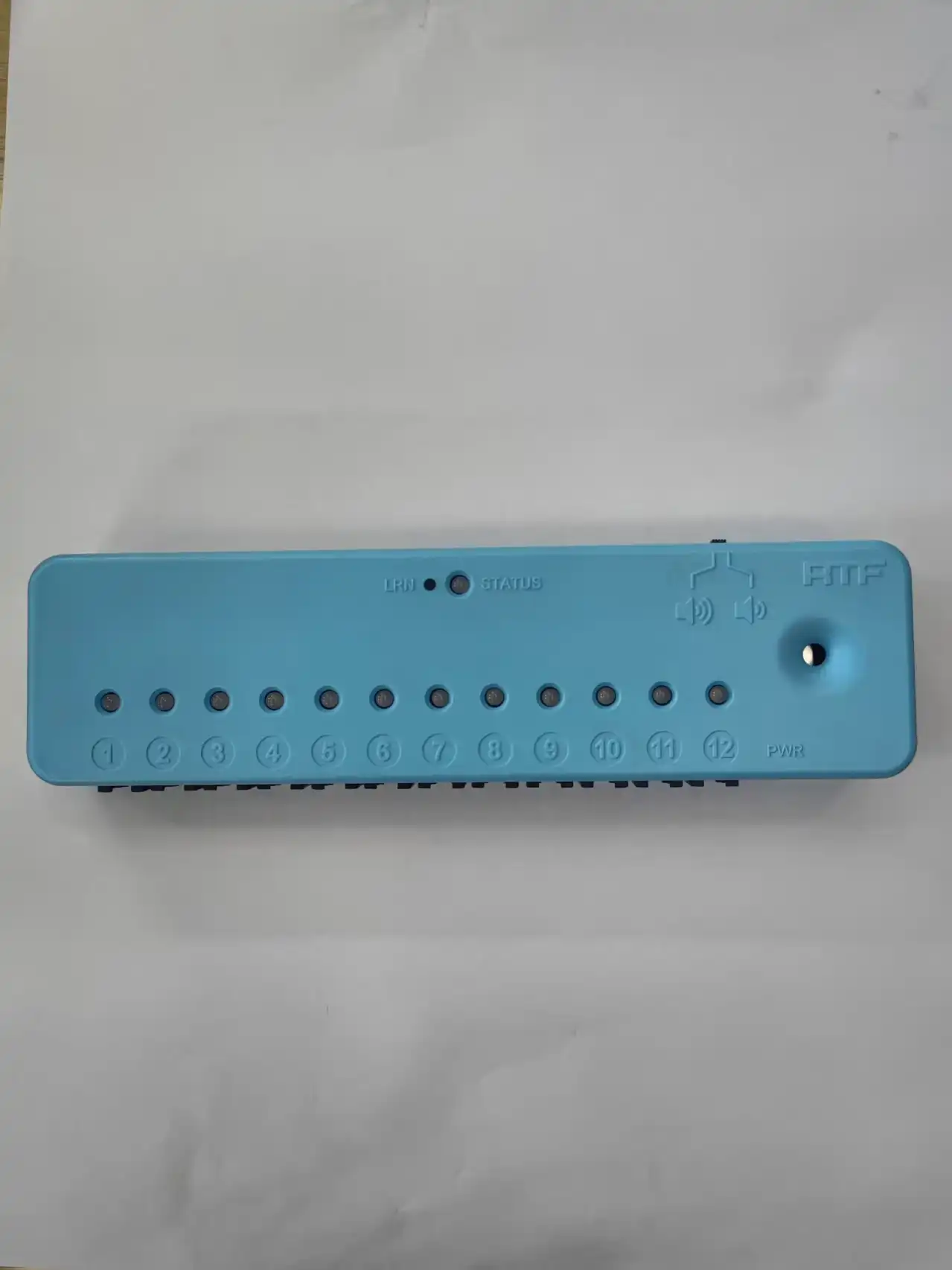
Understanding Twelve-Way Alarm Control Boxes: Features and Functionality
What Sets Twelve-Channel Enclosures Apart
Standard eight-way boxes are sufficient for limited indoor spaces with few monitoring points, but they struggle to meet the expanding safety monitoring demands of modern industrial sites. A professional twelve-way alarm control box supports more signal inputs without expanding panel installation space, realizing efficient multi-zone monitoring in a compact structure. Its internal circuit design is compatible with both normally open (NO) and normally closed (NC) circuit modes, enabling universal matching with various field sensors including motion detectors, smoke detectors, and gas leak sensors.
Industrial-grade models adopt die-cast aluminum alloy as the core material, delivering excellent electromagnetic shielding performance and long-term corrosion resistance. The National Fire Protection Association’s 2022 edition of NFPA 72 clearly stipulates that centralized alarm control equipment must maintain stable signal integrity under long-term load operation. Ordinary polymer enclosures often fail to meet this rigorous standard, while die-cast aluminum housings for the twelve-way alarm control box perfectly comply with industrial continuous operation requirements.
Real-World Applications Across Industrial Sectors
In core industrial scenarios such as manufacturing factories, power plants, and petrochemical refineries, centralized signal collection and alarm distribution are essential for safety management. The durable structure of the twelve-way alarm control box adapts to harsh on-site environments, resisting chemical corrosion from industrial gases and mechanical vibration generated by operating equipment.
With twelve independent monitoring zones, facility engineers can cover the safety monitoring of entire floors or regional equipment without deploying cascaded multiple control units. This structural advantage greatly reduces on-site installation workload, simplifies overall system layout, and effectively lowers equipment failure points caused by excessive wiring and overlapping devices, improving the overall stability of industrial safety alarm systems.

Core Benefits of Twelve-Way Alarm Control Boxes
Multi-zone alarm enclosures stand out in industrial safety systems thanks to their comprehensive coverage, high operational efficiency, and outstanding durability. The core advantages of equipping industrial systems with a twelve-way alarm control box are summarized as follows:
-
Expanded independent zone coverage: Equipped with twelve discrete circuits, the enclosure supports real-time monitoring of twelve separate alarm zones from a single mounting position. For industrial facilities with complex spatial layouts and scattered monitoring points, it completely avoids the need for multiple auxiliary sub-panels and redundant inter-panel wiring, simplifying the overall system framework.
-
Optimized and simplified wiring architecture: Centralized signal input and processing greatly shortens the total cable laying length, reduces complex cable channels on site, and significantly cuts installation time and labor costs. More concise wiring also minimizes hidden dangers such as line aging and short circuits, effectively reducing false alarm failures caused by wiring problems.
-
Full industrial safety compliance: Qualified enclosures support IP65 ingress protection and meet Ex d IIB T6 explosion-proof grades, fully complying with IEC 60079-0 international standards for electrical equipment in explosive atmospheres. The standardized and compliant design enables the twelve-way alarm control box to be directly applied to high-risk flammable and explosive industrial scenarios without additional modification and certification.

How to Select a Qualified Twelve-Way Alarm Control Box?
Match Product Specifications to On-Site System Requirements
Before selecting a twelve-way alarm control box, the engineering team must clarify core on-site parameters to avoid specification mismatch. First, confirm the signal voltage range of matching sensors to ensure compatibility with the enclosure’s 12V and 24V DC standard input interfaces. Second, define the installation environment temperature range and environmental characteristics; ordinary household-grade enclosures cannot adapt to high-temperature, corrosive and vibration-intensive industrial scenarios such as petrochemical plants.
In addition, it is necessary to confirm whether the site requires explosion-proof and waterproof certification. Only products with complete IP65 and Ex d IIB T6 qualification reports can meet the long-term stable operation requirements of industrial safety systems and pass official safety inspections and certifications.
Evaluate OEM and Custom Manufacturing Supplier Strength
Excellent supplier strength determines the quality consistency and after-sales reliability of customized twelve-way alarm control box products. When screening manufacturers, priority should be given to suppliers with independent mold development, die-cast processing and precision assembly capabilities, who can support personalized customization of enclosure structure, interface layout and installation dimensions according to enterprise drawings and actual needs.
At the same time, verify the supplier’s complete quality management system certifications including ISO9001:2015 and ISO45001, as well as third-party test reports for explosion-proof and waterproof performance. Professional OEM manufacturers can provide stable sample delivery cycles and batch production capacity, meeting the needs of new product trial production and large-scale facility renovation.
Installation, Wiring and Troubleshooting Guidance
Pre-Installation Checks to Avoid Subsequent Failures
Standardized pre-installation inspection is the key to ensuring the stable performance and protection effect of the twelve-way alarm control box. Before formal installation, check whether the mounting surface can bear the long-term weight of the equipment and resist on-site vibration interference. Verify the alignment of conduit entry points and on-site wiring paths to avoid wiring distortion and extrusion.
Focus on inspecting the integrity of the enclosure gasket and sealing surface; damaged gaskets and flawed sealing structures are the main cause of IP65 protection test failure in actual use, in line with the specification requirements of BS EN 60529 for enclosure ingress protection grades.
Common Fault Troubleshooting Skills
If the twelve-way alarm control box generates abnormal alarms after installation, do not directly judge sensor failure. Most intermittent abnormal signals are caused by incomplete grounding of circuits. Priority should be given to checking the grounding loop of all twelve independent circuits to ensure unified and reliable grounding.
For complex and recurring fault problems, timely docking with the supplier’s professional technical team can greatly shorten the fault diagnosis and repair cycle, avoid long-term system downtime, and ensure the continuous and stable operation of industrial safety monitoring systems.

Professional Procurement Channels and Packaging Protection
Optimal Procurement Methods for Industrial Enclosures
Industrial buyers have two mainstream procurement channels for twelve-way alarm control box products: third-party trading platforms and direct manufacturer cooperation. Platform procurement can quickly compare market prices, but it has obvious limitations in personalized customization, technical docking and after-sales service.
Direct cooperation with formal manufacturers supports in-depth specification matching, fast sample customization and flexible OEM services. Manufacturers can provide targeted technical solutions according to system iteration and on-site upgrading needs, with more guaranteed product consistency and after-sales response efficiency, which is more suitable for long-term batch procurement of industrial enterprises.
Professional Transit Packaging Protection
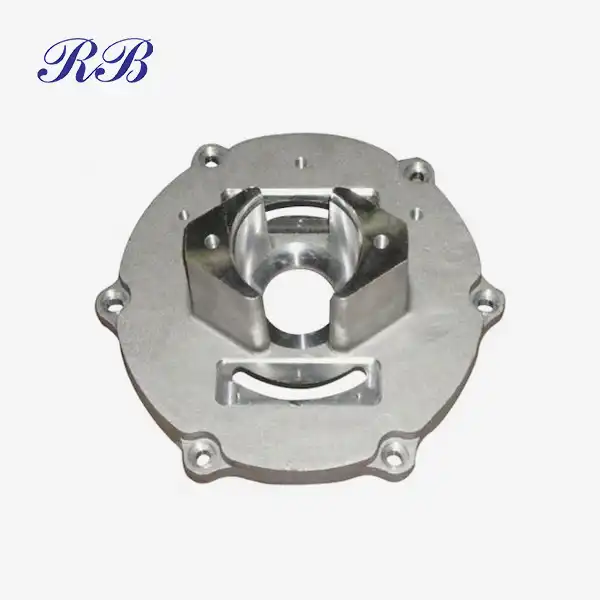
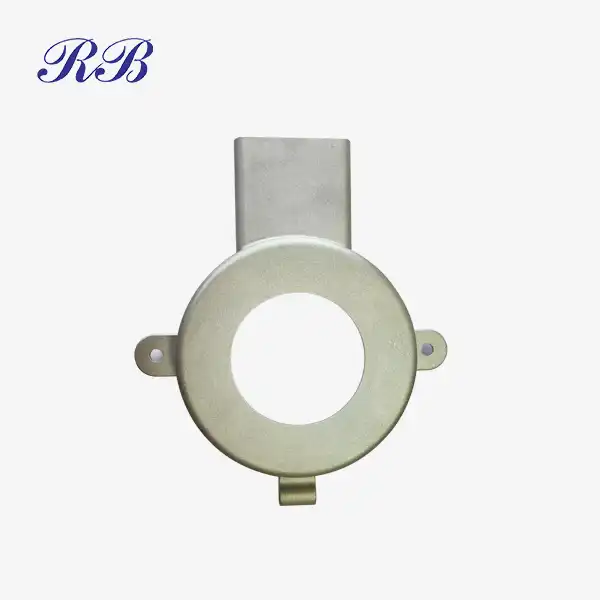
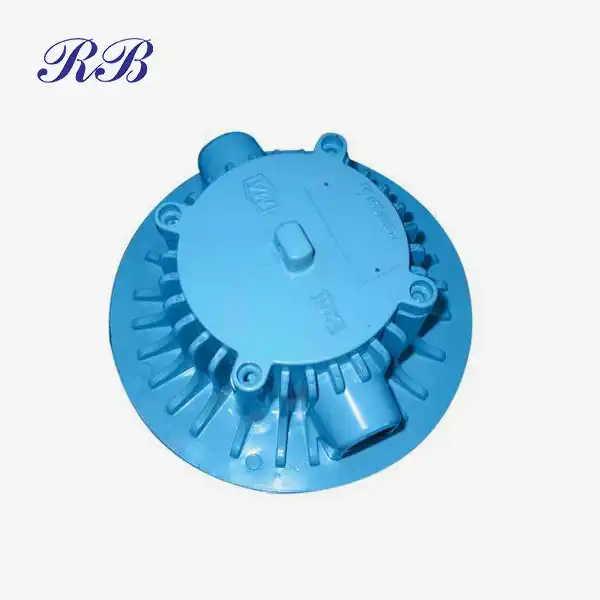
Die-cast aluminum twelve-way alarm control box has high requirements for surface finish and structural integrity. In international cross-border transportation, qualified manufacturers adopt carton + wooden box double-layer packaging, with professional cushioning and anti-collision structures inside. This standardized packaging method effectively avoids surface scratches, structural deformation and sealing part damage during long-distance transportation, ensuring that the products pass incoming inspection with zero defects.
Conclusion
The twelve-way alarm control box is an essential core component for medium and large industrial safety alarm systems. It solves the pain points of scattered wiring, redundant equipment and unstable signals of traditional multi-panel combination schemes through multi-zone integrated monitoring, simplified wiring and industrial-grade compliant design. For growing industrial enterprises, deploying twelve-channel enclosures in advance can reserve expansion space for subsequent system upgrading, avoid repeated equipment replacement, and reduce long-term operational and renovation costs.
Selecting standardized, certified and customizable manufacturer products is not only the basis for ensuring the safe and stable operation of alarm systems, but also an important guarantee for enterprises to meet industrial safety compliance standards.
FAQ
Can a twelve-way alarm control box integrate with existing alarm systems?
Yes. Most industrial twelve-way alarm control box models are equipped with standard 12V and 24V DC input interfaces, compatible with mainstream NO/NC circuit types on the market. It can be perfectly integrated with most existing sensor networks and alarm systems. It is recommended to verify the system voltage and terminal matching parameters before procurement to ensure seamless docking.
What maintenance does a multi-zone alarm enclosure require?
Regular annual maintenance is required for long-term stable operation. The core inspection items include gasket tightness, terminal fastening force and internal dust cleaning to prevent dust accumulation from affecting electrical performance. For explosion-proof graded twelve-way alarm control box products, secondary sealing performance inspection is required after internal maintenance to meet regional safety management specifications.
Is this type of enclosure suitable for small-scale operations?
It depends on the monitoring scale and development plan. For small-scale sites with only 6 or fewer monitoring zones, an eight-way enclosure is more cost-effective. However, for small and medium enterprises with business expansion and system upgrading plans, the twelve-way alarm control box with redundant capacity can avoid subsequent panel replacement and secondary investment, with higher long-term cost performance.
What certifications should I require from my supplier?
Procurement needs to require suppliers to provide complete valid qualification documents, including ISO 9001:2015 quality management system certification, IP65 ingress protection test reports, Ex d IIB T6 explosion-proof certification, and UL 864 fire alarm system equipment standard certification, to ensure that the products meet international industrial safety and export compliance requirements.
Partner With Rongbao Enterprise for Your Alarm Enclosure Needs
If you are looking for high-quality, certified and customizable twelve-way alarm control box products for industrial safety systems, Rongbao Enterprise is your reliable long-term OEM cooperative partner. We integrate independent mold development, die-cast aluminum molding, precision processing and standardized assembly, with complete ISO quality and safety system certifications. We support personalized OEM/ODM customization, fast sample delivery and stable batch supply, helping customers optimize system layout, reduce comprehensive costs and meet industrial safety compliance standards.
Feel free to contact us for customized solutions and free quotation! Email: steve.zhou@263.net & zhouyi@rongbaocasting.com
References
National Fire Protection Association. NFPA 72: National Fire Alarm and Signaling Code. 2022 Edition.
International Electrotechnical Commission. IEC 60079-0: Explosive Atmospheres – Part 0: Equipment – General Requirements. 2017.
British Standards Institution. BS EN 60529: Degrees of Protection Provided by Enclosures (IP Code). 2004, updated 2013.
International Organization for Standardization. ISO 9001:2015: Quality Management Systems – Requirements. 2015.
International Organization for Standardization. ISO 45001:2018: Occupational Health and Safety Management Systems. 2018.
Underwriters Laboratories. UL 864: Standard for Control Units and Accessories for Fire Alarm Systems. 10th Edition.
Learn about our latest products and discounts through SMS or email