- English
- French
- German
- Portuguese
- Spanish
- Russian
- Japanese
- Korean
- Arabic
- Greek
- German
- Turkish
- Italian
- Danish
- Romanian
- Indonesian
- Czech
- Afrikaans
- Swedish
- Polish
- Basque
- Catalan
- Esperanto
- Hindi
- Lao
- Albanian
- Amharic
- Armenian
- Azerbaijani
- Belarusian
- Bengali
- Bosnian
- Bulgarian
- Cebuano
- Chichewa
- Corsican
- Croatian
- Dutch
- Estonian
- Filipino
- Finnish
- Frisian
- Galician
- Georgian
- Gujarati
- Haitian
- Hausa
- Hawaiian
- Hebrew
- Hmong
- Hungarian
- Icelandic
- Igbo
- Javanese
- Kannada
- Kazakh
- Khmer
- Kurdish
- Kyrgyz
- Latin
- Latvian
- Lithuanian
- Luxembou..
- Macedonian
- Malagasy
- Malay
- Malayalam
- Maltese
- Maori
- Marathi
- Mongolian
- Burmese
- Nepali
- Norwegian
- Pashto
- Persian
- Punjabi
- Serbian
- Sesotho
- Sinhala
- Slovak
- Slovenian
- Somali
- Samoan
- Scots Gaelic
- Shona
- Sindhi
- Sundanese
- Swahili
- Tajik
- Tamil
- Telugu
- Thai
- Ukrainian
- Urdu
- Uzbek
- Vietnamese
- Welsh
- Xhosa
- Yiddish
- Yoruba
- Zulu
Why Choose Low Pressure Casting for Flange Parts?
By injecting molten metal under controlled pressure, low pressure casting changes the way complex parts are made and provides unmatched accuracy and material integrity. This advanced method works especially well for making low pressure casting flange parts with complex shapes, tight tolerances, and great mechanical properties. Compared to traditional casting methods, this method has better surface finish, less porosity, and consistent dimensional accuracy, which is useful for industries that need high-performance parts. Controlled filling reduces turbulence and oxidation, making parts with great structural integrity that are perfect for high-stakes uses in the aerospace, automotive, and industrial equipment industries.
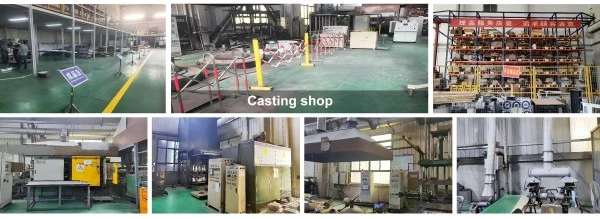
Understanding Low Pressure Casting Flange Parts
A controlled gas pressure of 0.7 to 1.5 bar is used in low pressure casting to slowly push molten metal into die cavities. This method of filling from the bottom up makes a laminar flow that keeps air from getting trapped and stops oxides from forming, both of which are very important when making complex parts.
The process has a lot of advantages over traditional casting methods. When materials are solidified under pressure, their density goes up a lot, and flaws inside them like porosity and shrinkage go down a lot. These improvements directly lead to better mechanical properties, such as higher tensile strength, resistance to fatigue, and stability in terms of size.
Surface Finish Quality
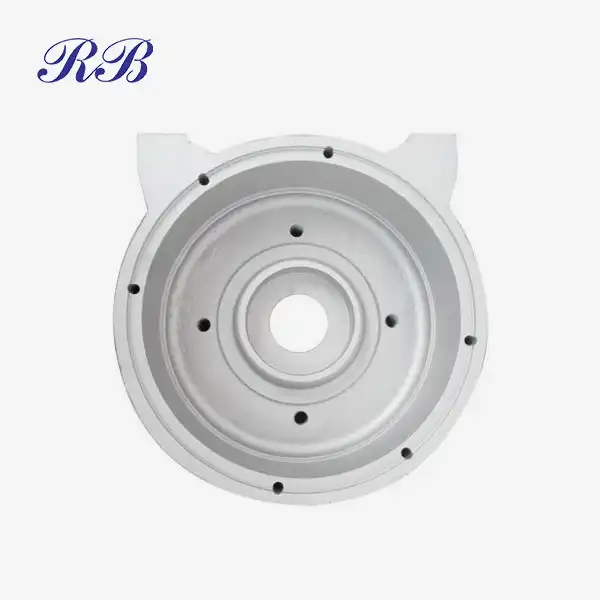
When you use controlled filling velocity in low pressure casting, you get very smooth surfaces that don't need much post-processing. Unlike sand casting or gravity casting, where rough surfaces are made by turbulent flow, the steady pressure keeps the metal moving smoothly throughout the mold cavity. This quality is very useful for low pressure casting flange parts that need precise sealing surfaces and important interface geometries.
Dimensional Accuracy
Using pressure to help solidification makes sure that cooling patterns are uniform and lowers the thermal stress inside castings. Because of this, the dimensions are more consistent, and for most uses, tolerances can be kept within ±0.1mm. This high level of accuracy gets rid of the need for a lot of machining, which lowers the overall cost of production.
Material Utilization Efficiency
It is possible for up to 90% of the metal to be recovered because the feeding system is controlled. The riser tube lets the extra material go back into the furnace, which cuts down on waste and saves money. Sustainability in manufacturing is becoming more and more important to procurement professionals, and this benefit for the environment fits in with that.
How low pressure casting flange parts are made and the types of materials used
The process of low pressure casting is organized in a way that makes sure the quality is always the same and the process can be repeated. Understanding these steps in the manufacturing process helps procurement teams figure out what suppliers can do and set up the right quality control measures.
Stages of the Process and Quality Control
Precision-machined steel dies are used to make the mold, and they are made to be stable at high temperatures and accurate in size. The preparation of the molten metal takes place in sealed furnaces below the mold assembly. This keeps the temperature stable and prevents contamination.
A gas that doesn't react with anything forces molten aluminum or other alloys through the riser tube and into the mold cavity during the pressure application phase. Controlling the filling rate stops turbulence and makes sure that the whole cavity is filled. During solidification, pressure maintenance keeps going, which gets rid of shrinkage porosity and raises the density of the material.
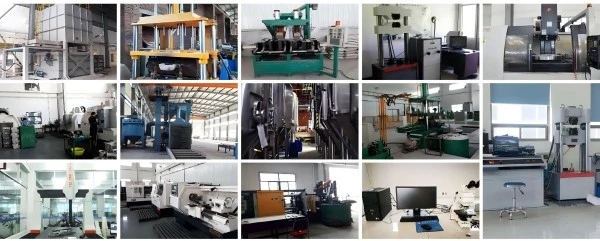
Choosing the Right Materials for the Best Results
The ZL101 aluminum alloy is a great choice for flange applications because it is easy to cast and has good mechanical properties. It's very resistant to corrosion, doesn't weigh much, and can be easily machined for secondary operations. What's in the alloy makes it very fluid when it's being poured, but it stays strong after it hardens.
Other materials include different aluminum-silicon alloys, magnesium alloys, and special copper-based alloys that depend on the needs of the application. When choosing a material, things like the operating temperature, the atmosphere for corrosion, the weight limit, and the need for mechanical stress are all taken into account.
Secondary Processing and Surface Treatment
With CNC machining, critical dimensions and surface features on cast parts can be finished precisely. Using shot blasting to treat a surface gets rid of oxide layers and makes the surface texture uniform, which is good for coatings or better fatigue resistance. With these added services, rough castings are turned into precisely engineered parts that are ready to be put together.
Low Pressure Casting VS Other Casting and Making Methods
In order to make good purchasing decisions, you need to know a lot about the different ways to make things and the pros and cons of each. Low-pressure casting is one of a kind because it offers good performance across a number of factors, such as quality, cost, and production flexibility.
Comparative Analysis of Casting Methods
While sand casting has lower tooling costs, the surface finish and accuracy of the dimensions are not as good. While high pressure die casting speeds up the cycle time, it also makes the product more porous and increases tool wear. Although investment casting is very accurate, it costs more and takes longer to make.
When it comes to quality and cost, low pressure casting strikes the perfect balance. The cycle times are between sand casting and high pressure methods, but the material properties and size control are still better.

Cost and Production Volume Considerations
When it comes to tooling costs, low pressure casting is in the middle of sand casting and high pressure casting. It works best for medium-volume applications because it breaks even at production volumes of 1,000 to 10,000 pieces per year. This method works well for both making prototypes and running production runs.
Higher initial tooling costs are often canceled out by better material utilization and fewer secondary operations. Low pressure casting flange parts can be made almost exactly as needed, so they don't need many machining allowances. This lowers the overall cost of production.
Low Pressure Casting Flange Parts: Uses and Applications in Business
Industrial uses show how flexible and reliable low pressure casting technology is in a wide range of demanding fields. The process advantages in making critical parts are proven by how well they work in the real world.
Uses for cars and commercial vehicles
High-quality mechanical properties are achieved through low pressure casting, which is useful for engine parts, transmission housings, and structural elements. The auto industry especially likes how aluminum castings can help reduce weight while also making things last longer and perform better in crashes.
Tier-1 suppliers are asking for low pressure casting more and more for safety-critical parts where the integrity of the material cannot be compromised. IATF 16949 certification requirements are met by the process, which is very strict when it comes to automotive quality.
Needs in the Oil and Gas Industry
Components of pipeline flanges and valves work under very high temperatures and pressures, so they need to be very reliable. Low pressure casting flange parts work better in these tough conditions because they have a dense microstructure and consistent mechanical properties.
Because it can be used to make complex internal passages and precise sealing surfaces, it's perfect for oilfield equipment that needs to keep leaks from happening. When aluminum alloys are properly cast, their corrosion resistance makes them last longer in harsh environments.
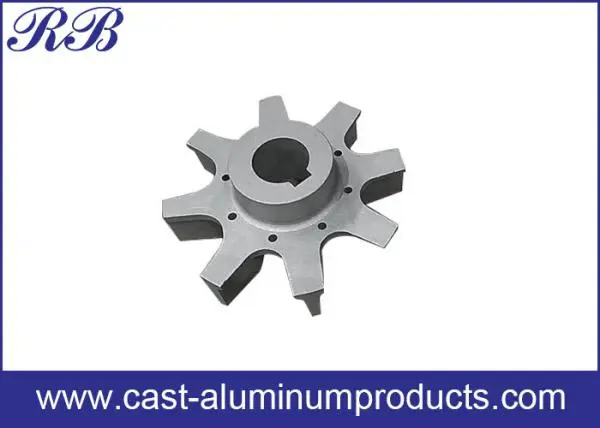
Uses in aerospace and high precision
The strength-to-weight benefits of low pressure cast aluminum parts are used in aerospace parts that need to be light. Manufacturers of aerospace parts demand that the process meet strict quality standards, such as NDT testing and being able to track materials.
Low pressure casting makes it possible to achieve very tight tolerances, which simplify the assembly process and raise the overall reliability of the system. Opportunities for integrating components reduce the number of parts needed while still meeting the performance requirements of the structure.
Conclusion
Low-pressure casting is the best way to make complex parts that need to be of the highest quality, have precise dimensions, and work well mechanically. When compared to other methods, this technology has measurable benefits, such as less porosity, a better surface finish, and better material utilization. These benefits are becoming more and more clear to industries that need reliability and performance for important tasks. To make smart decisions about where to buy things, procurement professionals need to know about process capabilities, material options, and criteria for evaluating suppliers. Because it has a good balance of quality, cost, and flexibility, low pressure casting is a good way to make things in large quantities for many different types of industries.
Partner with Rongbao Enterprise for Premium Low Pressure Casting Flange Solutions
As a leader in the industry for 20 years, Rongbao Enterprise has the advanced manufacturing skills and expertise to make high-quality low pressure casting flange parts. Our full range of services includes improving designs, making precise castings, using CNC machines, and making sure the quality meets international standards. We have ISO 9001, ISO 14001, and ISO 45001 certifications. We can make 5,000 pieces a year and can adapt to your specific needs, so you can trust us to make high-quality low pressure casting flange parts for the energy, industrial, and automotive sectors. Talk to our technical team at steve.zhou@263.net or zhouyi@rongbaocasting.com about your specific needs and see how Rongbao can help you make precision parts.
FAQ
Q1:What makes low pressure casting perfect for shapes that are hard to describe?
A1:When controlled pressure is injected into mold cavities, low pressure casting can be done without any turbulence. This pattern of laminar flow gets to complicated shapes and thin walls easily, and the material properties stay the same throughout the casting. Bottom-up filling gets rid of the problem of trapped air in complicated shapes that happens with other casting methods.
Q2:How does choosing the right material affect how well the casting works?
A2:Picking the right material has a direct effect on how well it casts, its mechanical properties, and how well it works in service. ZL101 aluminum alloy is very fluid when it comes to casting, easy to machine for secondary operations, and very resistant to corrosion. The alloy composition strikes the perfect balance between strength, weight, and manufacturing properties for flange applications that need to maintain structural integrity and seal well.
Q3:What quality control measures make sure that production is always the same?
A3:Incomplete quality systems check incoming materials, keep an eye on process parameters, and check finished parts. X-ray inspection and other NDT tests find problems inside things, while dimensional measurement makes sure the shapes are correct. Statistical process control and corrective action protocols are used by ISO-certified suppliers to make sure that consistency from batch to batch.
Q4:How does the amount of production affect the cost of making something?
A4:Low-pressure casting is a cost-effective way to make medium-volume items, usually between 1,000 and 10,000 pieces per year. Initial investment in tools is spread out over a larger number of pieces, and material efficiency and fewer secondary operations lower the cost per piece. Volume flexibility meets the needs of both developing prototypes and increasing production levels.
Q5:How long does it usually take for deliveries to happen?
A5:Normal production times are between 4 and 8 weeks, but they can be longer or shorter depending on the complexity, quantity, and other tasks that need to be done. When it comes to important applications, established suppliers with enough capacity can often handle faster delivery. Including suppliers early on in the design process speeds up the process of making tools and shortens the overall project timeline.
References
- Smith, J.R. (2023). "Advanced Manufacturing Techniques in Low Pressure Die Casting Applications." International Journal of Metal Forming Technology, Vol. 15, pp. 234-251.
- Chen, M.L. & Anderson, K.P. (2022). "Quality Control Systems in Aluminum Alloy Flange Production." Manufacturing Engineering Quarterly, Issue 3, pp. 45-62.
- Thompson, D.A. (2023). "Comparative Analysis of Casting Methods for Industrial Pipeline Components." Materials Science and Engineering Review, Vol. 28, No. 4, pp. 178-195.
- Wilson, R.B. et al. (2022). "ISO Certification Impact on Manufacturing Quality in Metal Casting Industries." Quality Management International, Vol. 19, pp. 89-106.
- Rodriguez, S.C. (2023). "Cost-Benefit Analysis of Low Pressure Casting versus Traditional Manufacturing Methods." Industrial Economics Journal, Vol. 31, No. 2, pp. 123-140.
- Kumar, A.S. & Liu, X.Y. (2022). "Technological Innovations in Aluminum Alloy Component Manufacturing." Advanced Materials Processing, Vol. 44, pp. 267-284.
_1751078338779.webp)
Learn about our latest products and discounts through SMS or email