- English
- French
- German
- Portuguese
- Spanish
- Russian
- Japanese
- Korean
- Arabic
- Greek
- German
- Turkish
- Italian
- Danish
- Romanian
- Indonesian
- Czech
- Afrikaans
- Swedish
- Polish
- Basque
- Catalan
- Esperanto
- Hindi
- Lao
- Albanian
- Amharic
- Armenian
- Azerbaijani
- Belarusian
- Bengali
- Bosnian
- Bulgarian
- Cebuano
- Chichewa
- Corsican
- Croatian
- Dutch
- Estonian
- Filipino
- Finnish
- Frisian
- Galician
- Georgian
- Gujarati
- Haitian
- Hausa
- Hawaiian
- Hebrew
- Hmong
- Hungarian
- Icelandic
- Igbo
- Javanese
- Kannada
- Kazakh
- Khmer
- Kurdish
- Kyrgyz
- Latin
- Latvian
- Lithuanian
- Luxembou..
- Macedonian
- Malagasy
- Malay
- Malayalam
- Maltese
- Maori
- Marathi
- Mongolian
- Burmese
- Nepali
- Norwegian
- Pashto
- Persian
- Punjabi
- Serbian
- Sesotho
- Sinhala
- Slovak
- Slovenian
- Somali
- Samoan
- Scots Gaelic
- Shona
- Sindhi
- Sundanese
- Swahili
- Tajik
- Tamil
- Telugu
- Thai
- Ukrainian
- Urdu
- Uzbek
- Vietnamese
- Welsh
- Xhosa
- Yiddish
- Yoruba
- Zulu
How to compare different casting methods for robot arms?
Choosing the right casting process is an important step in manufacturing reliable, cost-effective robot arm components. For buyers sourcing custom-cast robot arms, the decision affects more than the initial part price. It also affects the structural strength, dimensional precision, machining needs, lead time of production, and the long-term consistency of manufacturing. Each of sand casting, gravity die casting, low-pressure custom casting robot arms, and investment casting robot arms has its benefits. The optimal method relies on the shape of the component, the aluminum alloy, the operating loads, the yearly order volume, and the necessary tolerances. Engineering teams should examine whole production needs rather than choosing a method based on a single specification. Here is a guide to the distinctions and what customers should look at before asking for a quote.
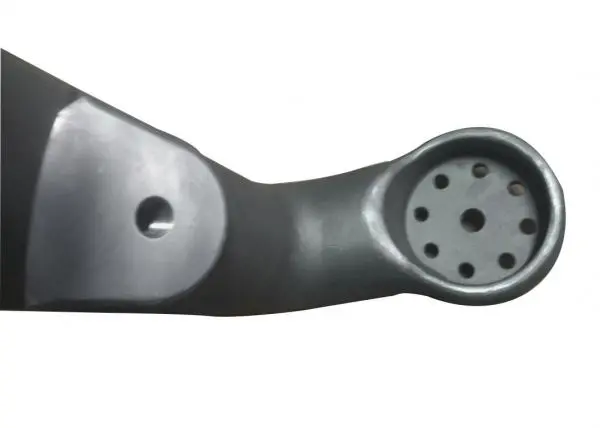
Start with the Robot Arm's Design Requirements
Before comparing the casting processes, specify the function and operating circumstances of each component. Even within the same robotic system, a huge structural arm, a servo motor housing, and a tiny joint bracket may have various production techniques.
Evaluate geometry and wall thickness
Robot arm elements often include mounting holes, ribs, curved surfaces, internal chambers, and parts with varying wall thicknesses. These properties affect the filling and solidification of the molten metal in the mold.
Sand casting gives a lot of freedom to make huge or complicated parts without the high cost of a permanent metal mold. However, more machining may be necessary to improve the surface finish and dimensional uniformity.
Gravity die casting uses a reusable metal mold for repeating forms. It may be well suited for parts with moderate geometric complexity and generally predictable manufacturing needs.
In low-pressure casting, the molten metal is forced into the mold by a regulated pressure of gas. This method may provide controlled filling and directed solidification, assuming the mold and procedure are well constructed.
Investment casting employs a disposable pattern and ceramic shell to duplicate the detailed intricacies. It may be beneficial for smaller robot arm components with complicated shapes. Tooling, shell preparation, and manufacturing costs must be addressed.
The important issue is not which technique can make the most intricate form. It is the procedure that can reliably produce the appropriate geometry at an acceptable overall cost.
Identify the critical load-bearing areas
A robot arm has to sustain its own weight and withstand operating stresses, vibration, and repetitive motion. Thus, joints, mounting interfaces, and actuator housings may need a greater degree of technical review than non-critical external surfaces.
First, locate the load-bearing or assembly-alignment locations. Then, choose a casting process. The engineers should check the wall thickness, the location of the ribs, the transitions between sections, and any stress concentrations.
If light-weight designs are to be used, then the thickness of the material should not be reduced without testing the stiffness; excessive deflection may occur. The possibility of casting should be considered along with structural analysis, machining allowances, and the desired operating cycle.
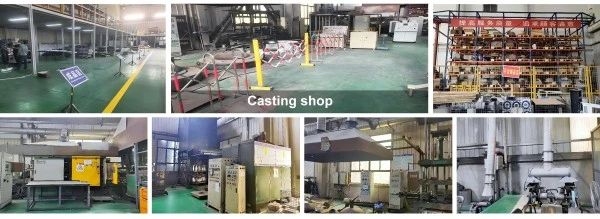
Compare the Four Main Casting Processes
Each process of casting has a distinct balance of tooling investment, attainable geometry, surface polish, and production efficiency. If purchasing teams understand these distinctions, they may avoid buying into a process that seems cheap up front but causes greater downstream expenses.
Sand casting for flexible production requirements
Sand casting: The mold is made from prepared sand. Usually, a fresh mold is used for each casting. It may support a wide variety of item sizes, and may be feasible for prototypes, specialist components, and relatively low volume purchases.
The benefit is flexibility. Tooling costs could be cheaper than for permanent metal molds, especially if ideas are still in flux.
The trade-off is that the surface roughness, dimensional fluctuation, and finishing needs may not be as good as some other methods. Depending on the design, the completed product may need a lot of CNC machining.
For custom casting robot arms that are somewhat big, the order volume is small, or design flexibility is important, sand casting is a good choice. Buyers should question how the supplier manages mold preparation, shrinkage, porosity, and machining allowances.
Gravity die casting for repeatable aluminum components
Gravity die casting fills a reusable metal mold by gravity rather than pressure provided from outside. The metal mold has a stable cavity surface and may be used for consistent production if temperature management and maintenance of the mold are well handled.
In the right application, gravity die casting may provide a superior surface polish and dimensional repeatability vs. sand casting. It might also lead to a more uniform manufacturing procedure for repeat orders.
But the initial cost for the mold is usually more expensive. Mold design must include parting lines, draft angles, metal flow, solidification, and the removal of the final casting.
For medium volume manufacturing of aluminum robot arm housings, brackets and structural components, gravity die casting may provide a pragmatic trade-off between tooling cost and reproducibility.
Buyers should check projected mold life, cycle time, material parameters and machining requirements before comparing prices.
Low-pressure casting for controlled filling and structural consistency
Low-pressure casting is a process that employs controlled pressure to push molten metal into the mold. Depending on the mold design and the process settings, the technique may optimize the filling behavior and allow regulated solidification.
These properties are beneficial for aluminum components that need reasonably homogeneous wall sections and dependable mechanical performance. Real advantages rely on alloy selection and gating design, temperature control, and process control.
Low pressure casting is not always better than gravity die casting in all applications. Some components may not warrant the increased expense in terms of equipment or process, while others may benefit from the resultant production control.
The question for purchasers interested in customized casting robot arms is whether the method can fulfill the mechanical, dimensional, and manufacturing needs of the part with fewer faults and less finishing.
Request vendors to describe their process control, internal quality checks if required, and process validation before mass manufacturing.
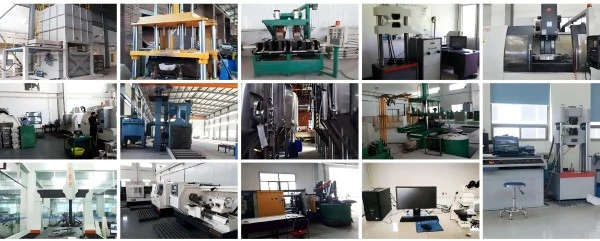
Investment casting for intricate component designs
Investment casting produces a disposable pattern, generally covered with some ceramic substance to produce the mold. The design is then removed, and molten metal is poured into the empty space.
It can replicate complicated forms, exquisite detail, and complex curves. This makes it worthwhile to evaluate chosen joint components, brackets, and other pieces when the geometry is difficult to create inexpensively by conventional casting processes.
However, investment casting is a multi-step preparatory process and may have a higher unit price for certain aluminum parts. The appropriateness is a function of part size, material compatibility, quantity needed, as well as the skill of the provider.
It should not be picked only because the design is intricate. The design assessment may indicate that a cheaper solution is possible using gravity die casting or low-pressure casting coupled with selective CNC machining.
Assess Strength, Weight, and Dimensional Accuracy
A casting process must satisfy the robot arm's functional requirements, not simply produce a visually acceptable part.
Verify mechanical properties and casting quality
The mechanical performance of a cast component depends on the alloy, on the solidification circumstances, on the heat treatment if performed, and on the existence of defects like porosity or inclusions.
Aluminum alloys such as A356 are utilized in situations where a good strength-to-weight ratio is critical. But nNonetheless choice of the alloy must correspond to the real load, environmental circumstances, and performance requirements.
Casting alone cannot guarantee strength or fatigue resistance. Buyers should require material certifications, suitable mechanical test reports, and agreed inspection reports. The quality plan for key components may need radiographic inspection or other acceptable nondestructive testing.
Define tolerances before requesting a quote
Custom casting robot arms tolerances depend on the part’s size, shape, tools, alloy, and manufacturing circumstances. It should not be assumed that one single tolerance value is attainable for all casting processes.
For custom casting robot arm assemblies, determine the dimensions that directly impact alignment and movement. These might be bearing bores, shaft interfaces, actuator mounting faces, and joint connections.
Identify tolerances on engineering drawings. Distinguish between as-cast and machined measurements. The supplier should verify feasibility during design review and not presume all features can be held to the final tolerance straight from the mold.
Even with strong dimensional consistency of the casting, CNC machining is typically required for precise interfaces.
Balance lightweight design with stiffness
Thinner walls are not necessarily preferable, but reducing component weight may make the overall design of a robot arm more efficient. The over-removal of material may also influence the stiffness, vibration behavior, and load distribution.
Engineers should consider the link between wall thickness, ribs, and internal geometry with the forces exerted. The selected casting process should be able to cast the designed component without unacceptable filling or solidification difficulties.
An examination of manufacturability before tooling may find locations where simple modifications to the design might increase casting dependability or decrease machining costs.
Compare Total Manufacturing Cost, Not Just Part Price
The lowest casting quotation does not necessarily represent the lowest total production cost. Buyers should compare tooling, unit pricing, finishing, inspection, scrap rates, and logistics together.
| Cost factor | What buyers should check |
|---|---|
| Tooling | Mold design, initial cost, expected service life, and modification charges |
| Unit price | Material consumption, production volume, and process cycle time |
| Machining | Required operations, tolerances, fixtures, and machining allowances |
| Quality control | Inspection frequency, testing methods, and documentation |
| Production planning | Sample lead time, mass-production schedule, and reorder consistency |
| Delivery | Packaging, shipping terms, freight, and export documentation |
For low-volume orders, a process with modest tooling costs may be more economical despite additional finishing. For recurring production, a reusable mold may offer better unit economics if the expected order volume justifies the initial investment.
Request quotations based on the same drawings, material grade, inspection requirements, annual quantity, and delivery terms. This makes supplier comparisons more meaningful.
Choosing a Supplier for Custom Robot Arm Castings
Process capacity of the custom casting robot arms provider is as crucial as the chosen production technique. A supplier should be able to describe how it turns engineering drawings into a repeatable procedure in manufacturing.
Review engineering and quality capabilities
First, verify the manufacturer’s expertise with similar components and aluminum alloys. Evidence that is relevant might include sample parts, machining capability, dimensional inspection reports, material traceability records, and documented quality processes.
Ask about the supplier’s design-for-manufacturing review process, mold-flow concerns (if applicable), defect prevention, and remedial measures. If the part has rigorous internal quality requirements, ensure that sufficient inspection equipment or competent external testing services are accessible.
Certifications may be important indicators of a company’s management processes, but should be checked against current paperwork and the scope of the certification.
Consider Rongbao Enterprise for project evaluation
Rongbao Enterprise is a maker of aluminum alloy castings and precision components. It was established in 2003. Company data supplied for this article includes production capabilities, including gravity casting, low-pressure die casting, high-pressure die casting, CNC machining, and surface treatment.
The organization also has management system certifications for quality, environmental, and occupational health and safety. Buyers must check the latest certificate versions, issuing authorities, and suitable manufacturing locations during supplier qualification.
The next practical step for organizations sourcing custom casting robot arms is determining if Rongbao’s existing techniques and technical resources align with the desired component. Request a study of the 3D Model, essential dimensions, material requirements, projected order volume, and inspection parameters.
A good supplier should be able to explain why it recommends a procedure, what the expected cost drivers are, and how it intends to approve samples and oversee production quality.
Conclusion
Comparing casting processes for custom casting robot arms is not as simple as comparing surface polish or initial production cost. Sand casting is versatile. Gravity die casting may enable consistent production. Low-pressure casting allows for regulated filling. Investment casting can handle sophisticated geometries. All are suited for certain applications.
The correct decision is dependent on part design, alloy, mechanical requirements, dimensional tolerances, production quantities, and the overall manufacturing cost. For many applications, the most practical answer is a suitable casting method, along with selective CNC machining and a well-defined inspection plan.
Prior to placing a manufacturing order, present your supplier with your engineering drawings, anticipated volumes, essential tolerances, and quality criteria. This enables the manufacturer to evaluate viability and suggest a technique based on the real project rather than broad assumptions.
If you are considering a new robot arm project, please reach out to us at Rongbao Enterprise to discuss your casting needs, explore production possibilities, and get a quote for your unique part design.
If you're looking for a reliable partner for your custom casting robot arm needs, consider reaching out to Rongbao Enterprise. Their team of experts is ready to assist you in selecting the optimal casting method and material for your specific application. For more information or to discuss your project requirements, contact Steve Zhou at steve.zhou@263.net or Zhou Yi at zhouyi@rongbaocasting.com.
References
1. Campbell, J. (2015). Complete Casting Handbook: Metal Casting Processes, Techniques and Design. Butterworth-Heinemann.
2. Groover, M. P. (2020). Fundamentals of Modern Manufacturing: Materials, Processes, and Systems. John Wiley & Sons.
3. ASM International. (2008). ASM Handbook, Volume 15: Casting. ASM International.
4. Ndaliman, M. B., & Shuaib-Babata, Y. L. (2012). Influence of Casting Methods on the Properties of Aluminum Alloy. International Journal of Scientific & Engineering Research, 3(3), 1-7.
5. Ravi, B. (2005). Metal Casting: Computer-Aided Design and Analysis. PHI Learning Pvt. Ltd.
Learn about our latest products and discounts through SMS or email