- English
- French
- German
- Portuguese
- Spanish
- Russian
- Japanese
- Korean
- Arabic
- Greek
- German
- Turkish
- Italian
- Danish
- Romanian
- Indonesian
- Czech
- Afrikaans
- Swedish
- Polish
- Basque
- Catalan
- Esperanto
- Hindi
- Lao
- Albanian
- Amharic
- Armenian
- Azerbaijani
- Belarusian
- Bengali
- Bosnian
- Bulgarian
- Cebuano
- Chichewa
- Corsican
- Croatian
- Dutch
- Estonian
- Filipino
- Finnish
- Frisian
- Galician
- Georgian
- Gujarati
- Haitian
- Hausa
- Hawaiian
- Hebrew
- Hmong
- Hungarian
- Icelandic
- Igbo
- Javanese
- Kannada
- Kazakh
- Khmer
- Kurdish
- Kyrgyz
- Latin
- Latvian
- Lithuanian
- Luxembou..
- Macedonian
- Malagasy
- Malay
- Malayalam
- Maltese
- Maori
- Marathi
- Mongolian
- Burmese
- Nepali
- Norwegian
- Pashto
- Persian
- Punjabi
- Serbian
- Sesotho
- Sinhala
- Slovak
- Slovenian
- Somali
- Samoan
- Scots Gaelic
- Shona
- Sindhi
- Sundanese
- Swahili
- Tajik
- Tamil
- Telugu
- Thai
- Ukrainian
- Urdu
- Uzbek
- Vietnamese
- Welsh
- Xhosa
- Yiddish
- Yoruba
- Zulu
Which is better, high or low pressure?
When manufacturing professionals have to choose between high-pressure and low-pressure die casting technologies in low pressure casting, the answer depends on the unique production needs and quality goals. Low-pressure casting is the best option for jobs that need very good mechanical qualities, very little porosity, and very accurate dimensional precision. This regulated process uses gas pressure between 0.3 and 1.5 bar to slowly push molten aluminum up through a riser tube. This makes parts in low pressure casting with better interior structure integrity and less waste than high-pressure methods.
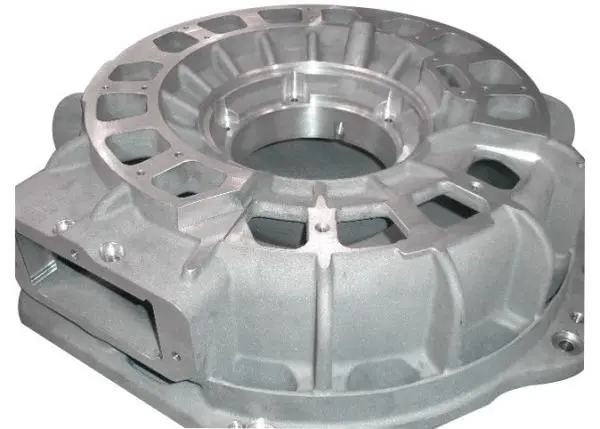
High Pressure vs Low Pressure Die Casting Fundamentals
Modern production depends a lot on advanced casting methods that can keep costs down while still making high-quality products. The choice of different pressure-based casting procedures has a big effect on the qualities of the final component, the cost of production, and the time it takes to make it.
What is High Pressure Die Casting?
High-pressure die casting works by quickly injecting molten metal into steel molds under very high pressure, between 1,500 and 30,000 PSI. In this technique, hydraulic or mechanical devices push liquid aluminum into mold holes at speeds of more than 60 meters per second. To make the parts, you need strong die casting machines that can create strong clamping forces, precision-engineered steel dies, and advanced cooling systems to handle quick heat loss.
When materials flow through high-pressure systems, they create turbulent filling patterns that can trap air and make the inside of the material porous. The quick solidification process makes fine-grained microstructures with a great surface finish, which makes this technology perfect for cosmetic parts that don't need much extra work after they are made.
What is Low Pressure Die Casting?
Low pressure casting is a precise way to make things that uses controlled gas pressure between 3 and 15 PSI to slowly fill mold cavities from below. The mechanics of the process include a sealed holding furnace that is placed behind the casting mold and connected to it by a vertical riser tube that moves molten aluminum up into the cavity. Some of the equipment specifications are gas systems with pressure control, crucibles with refractory lining, and furnaces with temperature control that keep the quality of the metal the same throughout the manufacturing cycle.
The controlled filling method has many benefits, including laminar flow patterns that keep oxides from forming and lower the number of internal flaws. This method of pouring from the bottom up gets rid of the turbulence that comes with pouring from the top down. This makes parts with better mechanical qualities and stronger structures.
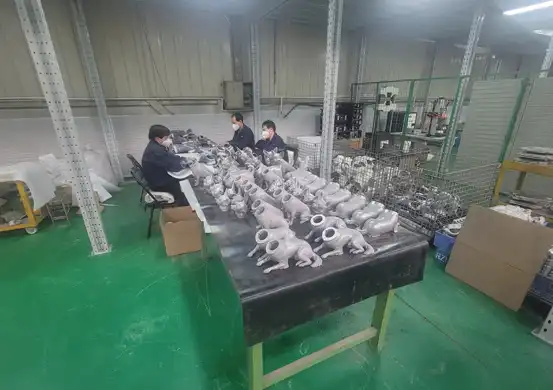
Key Technical Differences Between the Two Methods
The key difference between these approaches is when they apply pressure. High-pressure systems apply force instantly during injection, while low-pressure systems keep steady pressure during filling and solidification. In high-pressure systems, the flow is fast and turbulent, while in low-pressure systems, the flow is regulated and laminar. This makes a big difference in how molds fill.
The characteristics of solidification are very different. High-pressure casting cools quickly by forcing the metal to flow, whereas low-pressure methods allow for controlled directed solidification that gets rid of shrinkage porosity and makes the material stronger.
Comprehensive Performance Comparison Analysis
When looking at casting techniques for large-scale production environments, efficiency in manufacturing and quality of parts are two very important things to think about. Procurement professionals may make smart choices that are in line with operational goals and quality standards if they know how to use performance metrics.
Production Speed and Cycle Time Comparison
High-pressure casting systems provide higher cycle efficiency, with typical production rates of 30 to 90 seconds per part, depending on how intricate the part is and how thick the wall is. The quick injection and cooling process makes it possible to make a lot of products at once, which is great for cars and consumer electronics, where maximizing throughput is key to making money.
The production speeds for low-pressure casting range from 2 to 5 minutes per cycle. This is because the filling and solidification times must be carefully regulated to provide the best quality parts. Individual cycle times are longer than those of high-pressure alternatives, but the elimination of secondary operations and lower scrap rates often make up for the longer production cycles.
Mold complexity, material specifications, and quality standards are all things that can affect throughput in each process. High-pressure methods work best on basic shapes with cosmetic needs, whereas low-pressure techniques work best on complex structural parts that need better mechanical qualities.
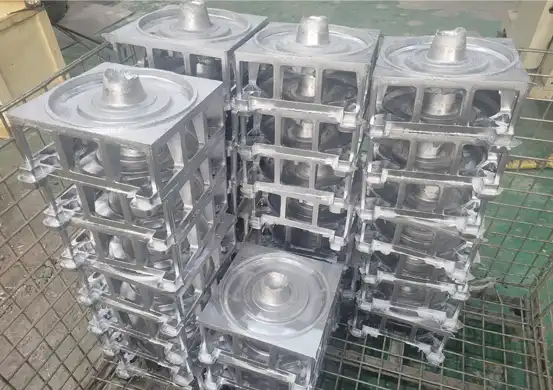
Part Quality and Surface Finish Evaluation
Different processes have different levels of dimensional accuracy. For example, high-pressure casting can achieve tolerances of ±0.1 to 0.2mm by injecting metal with a lot of power and carefully controlling the mold. Standards for surface roughness usually range from Ra 1.6 to 3.2μm, which means that further finishing is frequently not needed for aesthetic uses.
Low-pressure casting makes things with dimensions that are accurate to within ±0.2 to 0.3 mm and surfaces that are smooth to within Ra 3.2 to 6.3 μm. For structural applications, the trade-off of needing more processing for a better surface finish is frequently worth it because of the better interior structure integrity and mechanical qualities.
When comparing the integrity of internal structures, there are big disparities. Low-pressure methods make parts with porosity levels below 2%, while high-pressure methods can make parts with porosity levels between 3% and 8%, depending on the process parameters and the shape of the part.
Defect Patterns and Quality Control Considerations
High-pressure casting sometimes has problems including porosity from trapped air, flash creation from high injection pressures, and cold shuts from solidifying too soon during quick filling. These flaws need thorough quality control measures, such as pressure testing, dimensional inspection, and visual inspection.
When pressure settings need to be optimized, low-pressure casting defect profiles usually show partial fills. When cycle lengths are long, oxidation can often cause inclusions. But the controlled filling procedure cuts down on defects by a lot compared to other ways.
Different inspection criteria are used for quality control procedures for each process. For example, high-pressure parts need to be checked for porosity using X-rays, while low-pressure parts need to be checked for mechanical properties and dimensions.
Application Suitability and Industry Use Cases
Different industries have different needs when it comes to the performance of components, quality standards, and manufacturing quantities. Manufacturers may choose the best casting techniques that meet industry needs and customer expectations by knowing the benefits of different applications.
Automotive Industry Applications
High-pressure casting is the most common way to make engine parts because it lets manufacturers make decisions based on quick cycles and low costs. High-pressure technologies can make parts like engine blocks, transmission housings, and structural brackets quickly and with consistent dimensions.
Low pressure casting is great for structural vehicle parts that need to be strong and resistant to wear and tear. Suspension parts, wheel assemblies, and pieces that are important for safety all use the better material qualities and lower porosity that come with controlled pressure filling techniques.
Case studies from top car makers show that both methods can work well. For example, tier-one suppliers often use low-pressure technologies to make high-end vehicle parts when the performance justifies the higher costs of manufacturing.
Aerospace and High-Performance Applications
Key parts of aerospace need to be very reliable and have mechanical qualities that are very similar to those of low-pressure casting. The controlled filling technique and strong internal structure exceed strict aerospace quality standards and provide for design flexibility for complicated shapes.
When it comes to material properties, it is important to have a consistent grain structure and as few imperfections as possible, which can be done with low-pressure processes. Controlled solidification techniques make microstructures that are more homogeneous, which is better for fatigue life requirements and stress concentration sensitivity.
In aerospace applications, certification and quality standards frequently need a lot of documentation and traceability of material properties. Low-pressure casting has advantages in these sectors because it allows for predictable process control and consistent component attributes.
Consumer Electronics and Industrial Components
An study of precision requirements shows that different casting procedures are better for different functions and quality standards. High-pressure casting's great surface finish and dimensional accuracy are good for consumer electronics housings, but for industrial parts, mechanical strength and longevity are more important.
When choosing a method, you should think about how many units you need to make. High-pressure processes are better for making millions of units, whereas low-pressure methods are better for medium-volume applications where quality premiums make longer cycle durations worth it.
To get the best cost-performance ratio, you need to carefully look at all of the costs of making a product, including secondary operations, quality control, and warranty issues. Low-pressure casting is frequently the best choice for applications that need long-term durability since it has a lower total cost of ownership.
Conclusion
The decision to use high-pressure or low-pressure die casting is based solely on the needs of the manufacturing process, the quality goals, and the cost of production. Low pressure casting has many benefits for applications that need strong mechanical qualities, few internal flaws, and environmentally friendly manufacturing methods. High-pressure procedures are best for making a lot of parts quickly and with a great surface polish. Low-pressure methods, on the other hand, are best for optimizing structural components where performance and dependability are more important than speed. Manufacturing professionals should consider all of their needs, such as the complexity of the components, the quality standards, the production volumes, and the long-term strategic goals, in order to choose the best casting method that will give them long-term competitive advantages and keep customers happy.
Partner with Rongbao Enterprise for Superior Low Pressure Casting Solutions
Rongbao Enterprise stands as your trusted low pressure casting manufacturer with over 20 years of proven expertise in delivering precision aluminum components that exceed international quality standards. Our advanced systems deliver the superior mechanical properties and dimensional accuracy that discerning manufacturers demand for critical applications. With 70% of our production exported to premium markets across Europe, America, and Japan, we have demonstrated our capability to meet the most stringent quality requirements while maintaining competitive pricing and reliable delivery schedules.
Experience the Rongbao advantage through our integrated approach that combines cutting-edge technology, standardized quality systems, and responsive customer service. Contact our technical specialists at steve.zhou@263.net or zhouyi@rongbaocasting.com to discuss your specific requirements and discover how our low pressure casting expertise can optimize your component performance and manufacturing efficiency.
FAQ
①What are the minimum order quantities typically required for high pressure vs low pressure die casting?
Low pressure die casting typically offers more flexibility for smaller batch sizes ranging from 500 to 5,000 pieces, making it economically viable for medium-volume production runs. High pressure die casting becomes economically viable at higher volumes exceeding 5,000 pieces due to higher tooling costs and setup requirements that require substantial volume to justify the initial investment.
②How do lead times compare between high and low pressure casting methods?
High pressure die casting generally offers faster production cycles ranging from 30 to 90 seconds per part but may require longer initial setup times for complex tooling development. Low pressure casting has longer individual cycle times of 2 to 5 minutes but often achieves shorter overall lead times for prototypes and small batches due to simpler tooling requirements and faster mold development processes.
③Which method provides better dimensional accuracy for precision components?
High pressure die casting typically achieves tighter tolerances of ±0.1 to 0.2mm due to forceful metal injection and precise mold control systems. Low pressure casting offers good dimensional accuracy of ±0.2 to 0.3mm with superior internal quality due to controlled filling and reduced turbulence that minimizes internal defects and improves long-term dimensional stability.
④Can both methods handle complex geometries and thin-walled sections?
High pressure die casting excels at thin walls ranging from 0.5mm to 1.5mm and complex surface features due to rapid cavity filling and high injection pressures. Low pressure casting performs better with thicker sections from 2mm to 10mm and parts requiring excellent mechanical properties, though it can accommodate moderate complexity through proper mold design and core systems.
⑤What are the typical surface finish capabilities of each method?
High pressure die casting produces excellent surface finishes with roughness values of Ra 1.6 to 3.2μm, often requiring minimal post-processing for cosmetic applications. Low pressure casting achieves good surface quality with Ra 3.2 to 6.3μm and may require additional finishing operations depending on application requirements, but provides superior subsurface quality with minimal porosity.
References
1. Campbell, John. "Complete Casting Handbook: Metal Casting Processes, Techniques and Design." Second Edition, Butterworth-Heinemann, 2015.
2. Schlesinger, Mark E. "Aluminum Recycling: Second Edition." CRC Press, 2014.
3. Bonollo, Franco, et al. "Gravity and Low Pressure Die Casting of Aluminium Alloys: A Technical and Economical Benchmark." La Metallurgia Italiana, 2005.
4. Kaufman, J. Gilbert and Elwin L. Rooy. "Aluminum Alloy Castings: Properties, Processes, and Applications." ASM International, 2004.
5. Apelian, Diran. "Aluminum Cast Alloys: Enabling Tools for Improved Performance." North American Die Casting Association, 2009.
6. Jorstad, John L. "Semi-Solid Metal Processing: The High Integrity Die Casting Process." Die Casting Engineer Magazine, 2004.
Learn about our latest products and discounts through SMS or email