Understanding the Key Properties for Motor Housing Alloys
Before diving into the specifics of each alloy, it's essential to understand why strength and thermal conductivity are so critical for motor housings:
The Importance of Strength in Motor Housing Design
Motor housings are subjected to considerable mechanical stresses arising from continuous vibration, sudden torque reactions, and external physical impacts. Ensuring adequate strength through aluminum alloy die casting in the housing design is critical to maintaining long-term structural integrity, which directly safeguards internal components such as the rotor and stator.Smooth functioning is further facilitated by a sturdy casing, which maintains exact alignment and tolerances between components. Without sufficient strength, the motor becomes prone to premature failure, resulting in higher maintenance frequency, operational downtime, and a significantly shortened service life.
The Role of Thermal Conductivity in Motor Efficiency
During operation, electric motors generate heat due to electrical losses and friction, which must be effectively dissipated to avoid overheating. A housing material with high thermal conductivity facilitates efficient heat transfer from the motor windings to the exterior environment.This constant heat dissipation contributes to the maintenance of ideal operating temperatures, which improves motor performance, lowers energy waste, and stops insulation and windings from thermally degrading. Therefore, better thermal management guarantees constant performance across a range of load circumstances and prolongs the motor's lifespan.
Comparing A380, ADC12, and A356 Aluminum Alloys
Now, let's examine each alloy in detail to assess its suitability for motor housing applications:
A380: The Versatile Workhorse
A380 is a widely used aluminum-silicon alloy known for its excellent castability and good balance of properties:
- Strength: Moderate to high (Ultimate Tensile Strength: 300-350 MPa)
- Thermal Conductivity: Moderate (96-99 W/m·K)
- Advantages: Good wear resistance, pressure tightness, and machinability
- Limitations: Lower ductility compared to some alternatives
A380 is often the go-to choice for many die casting applications, including motor housings.It is appropriate for a broad variety of motor sizes and kinds due to its balanced characteristics.
ADC12: The Heat-Dissipation Champion
ADC12, also known as A413 or LM6, is an aluminum-silicon aluminum alloy die casting material with a slightly different composition than A380:
- Strength: Moderate (Ultimate Tensile Strength: 280-330 MPa)
- Thermal Conductivity: High (120-130 W/m·K)
- Advantages: Excellent fluidity, good corrosion resistance, and superior heat dissipation
- Limitations: Lower strength compared to A380
ADC12's standout feature is its high thermal conductivity, making it an excellent choice for motors that generate significant heat or operate in high-temperature environments.
A356: The Strength-to-Weight Ratio King
A356 is a premium aluminum-silicon-magnesium alloy known for its exceptional mechanical properties:
- Strength: High (Ultimate Tensile Strength: 260-320 MPa)
- Thermal Conductivity: Moderate (150-170 W/m·K)
- Advantages: Excellent ductility, high strength-to-weight ratio, and good fatigue resistance
- Limitations: Higher cost, more challenging to cast than A380 or ADC12
A356 is often used in high-performance applications where weight savings and superior mechanical properties are critical.
Selecting the Optimal Alloy for Your Motor Housing Needs
Choosing the best alloy for a specific motor housing application requires careful consideration of various factors:
Application-Specific Requirements
The selection of an optimal alloy is highly influenced by the motor’s specific type, operational conditions, and performance targets. For instance, high-speed motors often require materials with exceptional mechanical strength and fatigue resistance, making A356 a preferred option. Because of its exceptional thermal conductivity, which promotes heat dissipation and preserves motor stability in high-temperature environments, ADC12 stands out. For general-purpose applications, A380 is frequently chosen as it delivers a balanced combination of castability, mechanical properties, and cost efficiency, meeting standard performance demands without unnecessary expense.
Manufacturing Considerations
The manufacturability of an alloy, including its casting and machining characteristics, directly affects production efficiency and part quality. Alloys like A380 and ADC12 are known for their excellent aluminum alloy die castingperformance, enabling high production rates and reduced manufacturing costs. In contrast, A356, though potentially requiring more advanced casting methods such as squeeze or low-pressure casting, offers superior surface finish, dimensional accuracy, and improved mechanical properties.Because of this, it can be used in situations where accuracy and high integrity are essential.
Economic Factors
Cost considerations play a decisive role in material selection, especially under budget constraints and large-volume production scenarios. For high-volume production, the A380 is typically the most cost-effective choice, providing a good mix of price and performance. ADC12 provides a mid-range solution with good durability and thermal properties at a moderate cost. While A356 is typically more expensive due to enhanced properties and processing requirements, its use can be justified in high-performance or specialized applications where reliability and extended service life are paramount.
Aluminum Alloy Die Casting Supplier: Rongbao Enterprise
For manufacturers seeking a reliable partner in aluminum alloy die casting for motor housings and other applications, Rongbao Enterprise stands out as a leading solution provider.Rongbao was founded in 2003 and has since become a specialist company in precise processing and casting of aluminum alloys.
By using cutting-edge manufacturing techniques including gravity casting, high-pressure die casting, low-pressure die casting, and precision machining, Rongbao Enterprise provides complete aluminum alloy component solutions.They are knowledgeable on a variety of items, such as:
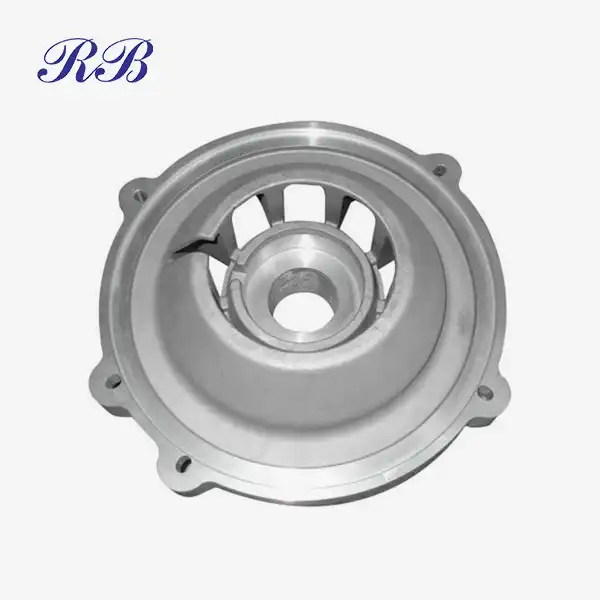
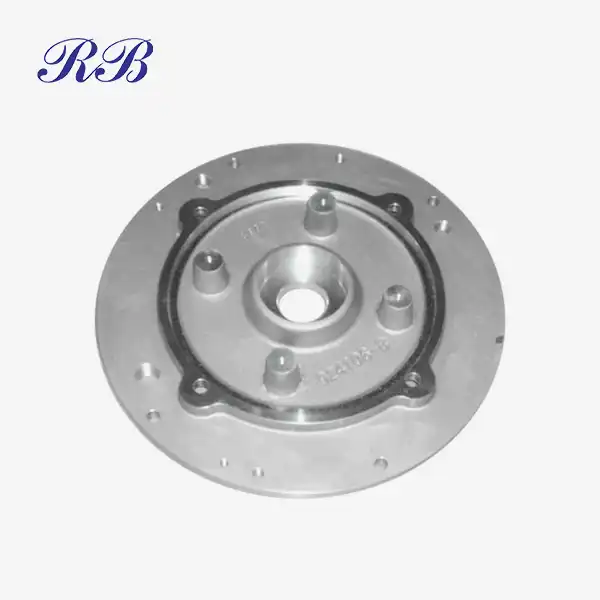
- Casting motor end covers
- Sensor covers for oil tank protection in mining machinery vehicles
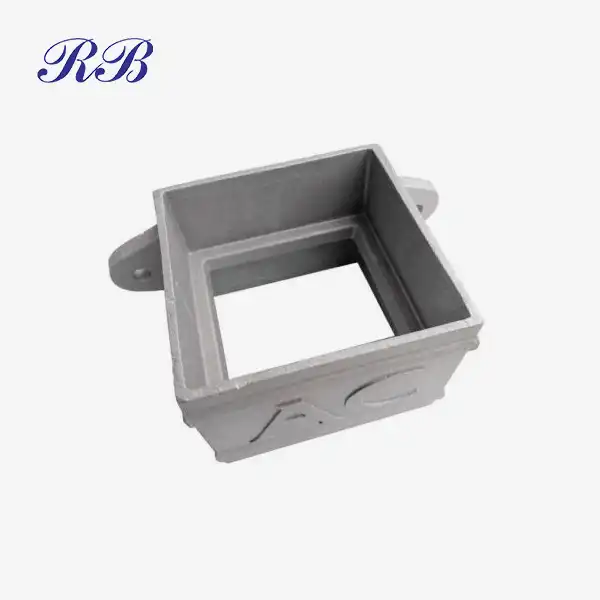
- Cast housings for connectors
- Casting agitator base parts
- Cast sink filters for bearing end covers
- Casting accessories for natural gas control valves
With a strong commitment to quality, Rongbao Enterprise maintains certifications in ISO 9001:2016 for Quality Management, ISO 14001 for Environmental Management, and ISO 45001 for Occupational Health and Safety Management. This dedication to excellence has enabled Rongbao to export 70% of its products to markets in the United States, Europe, Japan, and beyond.
For manufacturers in the automotive, aerospace, medical equipment, and electrical/electronic industries seeking high-quality aluminum alloy die casting solutions, Rongbao Enterprise offers competitive pricing, stable delivery, and exceptional after-sales service. To explore how Rongbao can meet your specific aluminum alloy die casting needs, reach out to their team at steve.zhou@263.net or zhouyi@rongbaocasting.com for a free sample and consultation.