- English
- French
- German
- Portuguese
- Spanish
- Russian
- Japanese
- Korean
- Arabic
- Greek
- German
- Turkish
- Italian
- Danish
- Romanian
- Indonesian
- Czech
- Afrikaans
- Swedish
- Polish
- Basque
- Catalan
- Esperanto
- Hindi
- Lao
- Albanian
- Amharic
- Armenian
- Azerbaijani
- Belarusian
- Bengali
- Bosnian
- Bulgarian
- Cebuano
- Chichewa
- Corsican
- Croatian
- Dutch
- Estonian
- Filipino
- Finnish
- Frisian
- Galician
- Georgian
- Gujarati
- Haitian
- Hausa
- Hawaiian
- Hebrew
- Hmong
- Hungarian
- Icelandic
- Igbo
- Javanese
- Kannada
- Kazakh
- Khmer
- Kurdish
- Kyrgyz
- Latin
- Latvian
- Lithuanian
- Luxembou..
- Macedonian
- Malagasy
- Malay
- Malayalam
- Maltese
- Maori
- Marathi
- Mongolian
- Burmese
- Nepali
- Norwegian
- Pashto
- Persian
- Punjabi
- Serbian
- Sesotho
- Sinhala
- Slovak
- Slovenian
- Somali
- Samoan
- Scots Gaelic
- Shona
- Sindhi
- Sundanese
- Swahili
- Tajik
- Tamil
- Telugu
- Thai
- Ukrainian
- Urdu
- Uzbek
- Vietnamese
- Welsh
- Xhosa
- Yiddish
- Yoruba
- Zulu
Where to Buy Fan Cast Accessories?
Finding dependable suppliers for cast axial flow fan accessories remains a crucial challenge for procurement professionals across heavy industries. The right supplier not only delivers components that meet technical specifications but also provides consistent quality, competitive pricing, and responsive after-sales support. Wind turbine manufacturers, industrial ventilation system builders, and commercial equipment producers depend on precision-engineered fan accessories to maintain operational efficiency and minimize costly downtime. This guide walks through the essential criteria, evaluation methods, and purchasing strategies to secure reliable partners for your casting accessory needs, ensuring your equipment runs smoothly and meets demanding performance benchmarks.
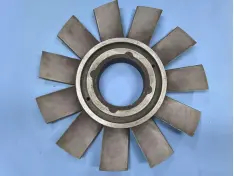
Criteria for Selecting Reliable Suppliers for Fan Casting Accessories
To find the best production partner, you need to do more than just compare prices. Using the F-1 Criteria Screening Approach, you can compare possible suppliers to your specific operational needs in a structured way.
Defining Your Procurement Parameters
First, be clear about how much you need, what customisations you want, and when you need it. A demand of 5,000 pieces per year means medium to large-scale production, which needs sources who have experience managing capacity. Custom specifications need engineers to be able to work together. Your cast axial flow fan accessories supplier should offer DFM (Design for Manufacturability) advice to help you make the best casting designs before you spend money on tools. When making production schedules, delivery dependability is very important. Make sure that the lead times given by your suppliers match up with the times you need to put things together, taking into account the logistics of international shipping from places like Xi'an, China, where the goods are made.
Essential Supplier Evaluation Metrics
Verification of certification is the first quality measure you should use. Standardised quality management systems are shown by ISO9001:2015 certification. Environmental and worker safety regulations are met by ISO14001 and ISO45001 certification, which is becoming more and more important for supply chain checks. Material traceability is very important; suppliers should give mill certificates that show the composition and mechanical properties of the aluminium alloy. The review of production technology shows the depth of skill. Automated pressure casting cells, multi-axis CNC machining centers, and NDT (non-destructive testing) tools in-house are all signs of a real production capability. Ask for tours of the building or audit reports from a third party to confirm the stated skills.
Balancing Cost, Quality, and Supplier Reputation
When judging a price, the total cost of ownership should be taken into account, not just the unit price. Tooling costs (often $15,000 to $50,000 for complicated fan blade moulds), shipping costs for wooden boxes, and the cost of quality failure should all be taken into account. Checking a business's reputation by calling past customers for references gives you a lot of useful information about how well it works in real life. Ask detailed questions about how consistent the batches are, how quickly they respond to quality problems, and how flexible they are when the specifications change. After-sales service promises, such as guarantee terms, the availability of new parts, and the ability to get technical help, set truly reliable partners apart from transactional sellers.
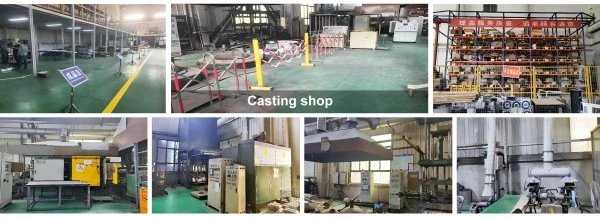
Comparing Fan Casting Accessories: Industrial Applications and Manufacturing Solutions
Different businesses have different needs when it comes to cast axial flow fan accessories, so it's important to do application-specific evaluation before buying.
Market Overview Across Key Sectors
Because wind energy applications are used over and over again under different loads, they need the highest level of fatigue resistance. The great mechanical qualities of A356 aluminium alloy make it perfect for turbine fans that have to deal with regular changes in temperature and direction. When it comes to HVAC systems, noise reduction and efficiency are both very important. This means that blade designs need to have the right pitch angles and smooth surface finishes. For fans that work in harsh environments, industrial processing plants often need materials that don't rust. This is where choosing the right material and treating the surface become very important design points.
Manufacturing Process Advantages
Pressure casting technology has clear advantages over other methods, such as sand casting or fabrication. Under high pressure, the process pushes liquid aluminium into precise moulds, making structures that are dense, hollow, and have very accurate measurements. This gets rid of the porosity problems that often happen with gravity casting, which can weaken structures when they are loaded and unloaded repeatedly. Post-casting CNC cutting brings important measurements down to within ±0.05mm, which makes sure that the part is perfectly balanced while it's rotating at high speeds. Shot blasting not only cleans the surface of the casting, but it also adds good compressive stresses that make it last 20 to 30 percent longer.
Comprehensive Accessory Solutions
Leading sellers offer whole sets of parts instead of separate pieces. This all-in-one method includes blade sets that are matched for weight and aerodynamics, hub kits with fixing holes already cut in, and fastening hardware that is made for the vibration environment of your application. Customisation options let you make solutions that fit your needs by changing things like the blade pitch, the hub configuration, or the coatings used in corrosive environments. Technical support services include more than just providing parts. They also include installation advice, help with commissioning, and advice on how to get the best performance.
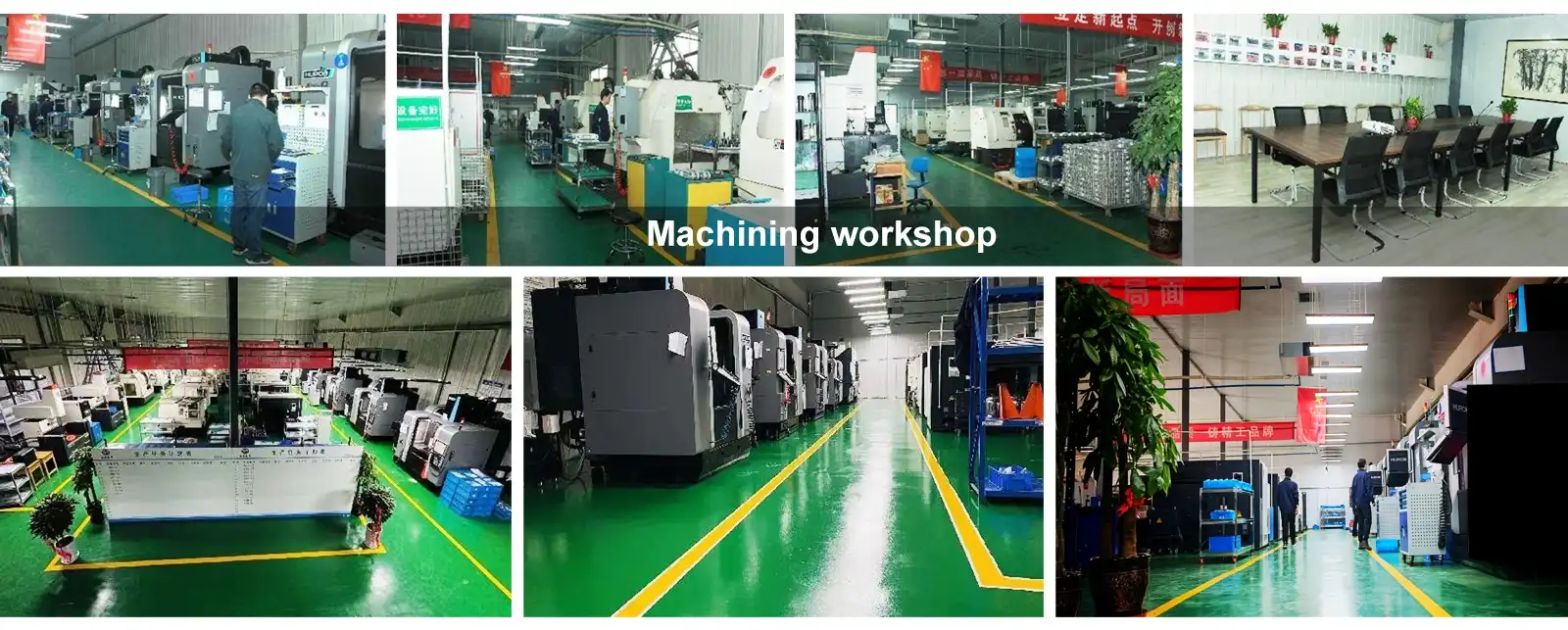
Purchasing Strategies and Logistics for Fan Casting Accessories
Strategic planning for purchasing cuts down on overall costs and makes sure that supplies don't run out.
Buyer Segmentation and Channel Selection
Small-scale buyers who are changing individual parts can take advantage of established dealer networks that offer fast delivery from local stock. Direct relationships with manufacturers are good for large OEMs that need thousands of units every year. When you commit to a certain volume, you can negotiate prices and make sure that production schedules are in line with assembly needs. Online platforms make prices clear and let you compare specs, but for technical uses, you often need to talk to an engineer directly, which isn't possible with automated systems.
Bulk Purchasing and Logistics Considerations
The cost of goods per unit goes down a lot when orders are combined into bigger packages. Container loads of about 1,500 to 2,000 fan blades, based on size, are the most cost-effective way to ship goods by sea. Wooden box packaging keeps parts safe while they're being shipped internationally, but it adds weight, so you should add the cost of packaging to the total cost of shipping. For special specs, the lead time from placing an order to delivery should be 8 to 12 weeks. This includes processes for making the moulds, casting the parts, machining them, and treating the surfaces. Set up clear Incoterms that spell out when responsibility shifts and who is responsible for what during shipping.
Building Long-Term Supplier Relationships
Working with qualified manufacturers on a regular basis brings perks that go beyond individual deals. Suppliers who know about your uses can make proactive design improvement ideas based on data from how the product works in the field. Having established relationships makes it easier to give priority to arranging when capacity is limited and to be flexible when sudden replacement needs arise. When you work together to make next-generation parts, your products will be ahead of those of your competitors who are still using transactional vendors. Regular business reviews that talk about quality metrics, delivery performance, and efforts to keep getting better strengthen everyone's dedication to being the best.
Conclusion
To find trusted providers for cast axial flow fan accessories, you need to carefully look at their technical skills, quality systems, and service promises. The step-by-step methods described here, from setting guidelines for buying to forming long-lasting partnerships, help people make smart choices that improve the performance of parts right away and the stability of the supply chain in the long term. Pressure-cast aluminium alloy parts made to international quality standards have clear benefits in terms of how long they last, how efficiently they work, and how much they cost over their whole time. When procurement professionals take the time to carefully evaluate suppliers and build relationships with them, they gain a competitive edge through better equipment performance and lower business risk.
FAQ
What materials are commonly used in axial flow fan accessories and how do they impact performance?
The best mix of strength, light weight, and corrosion protection makes A356 aluminium alloy the most popular choice for wind turbines and industrial fans. This material keeps its shape under repeated loads while lowering the mass of spin, which means it uses less energy than heavier options. The thermal conductivity of the metal also helps get rid of working heat, which keeps performance from dropping in hot places.
How can I validate supplier reliability before committing to large purchases?
Ask for proof of approval, such as ISO9001:2015, ISO14001, and ISO45001 qualifications. Do site audits that look at the production tools, quality control systems, and ways to track down materials. Get customer references and call them to ask about the consistency of delivery, the stability of quality, and the speed with which problems are resolved. Before going to full production, start with sample orders to make sure the quality of the parts and their measurements are correct.
What are standard lead times and freight considerations for custom orders?
It usually takes 8 to 12 weeks from the time an order is confirmed until the custom cast axial flow fan accessories are delivered. This includes preparing the tools (3–4 weeks), casting and milling (4-6 weeks), finishing the surface, inspecting it, and packing it in a wooden box. International shipping from places like Xi'an, China, where goods are made takes an extra three to four weeks for ocean freight. Air freight cuts travel time to 5–7 days, but it costs a lot more, so only use it for pressing repairs and not for regular purchases.
Partner With Rongbao Enterprise for Premium Cast Axial Flow Fan Accessories
Rongbao Enterprise is ready to help you reach your procurement goals with a wide range of manufacturing skills, including precision CNC machining, advanced surface treatment processes, and pressure casting. Our Xi'an factory has ISO9001:2015, ISO14001, and ISO45001 certifications, which make sure that the quality is the same for all production runs, from prototypes to 5,000-piece lots. We are experts at making A356 aluminium alloy wind turbine parts that are designed for tough situations where performance and dependability can't be compromised. Our technical team works together throughout the whole development process, from the first design meeting to help after delivery, to make sure that all of the parts fit together perfectly with your systems. As a seller of cast axial flow fan accessories to international markets for a long time, we know how complicated global operations can be. That's why we offer safe wooden box packaging and flexible shipping options. You can email our procurement specialists at steve.zhou@263.net or zhouyi@rongbaocasting.com to talk about your specific needs, ask for technical documentation, or set up tours of our facilities. Find out how our 20 years of experience in casting can help your tools work better and make you more competitive.
References
- Smith, J.R. & Anderson, K.L. (2021). Advanced Aluminum Casting Technologies for Wind Energy Components. Journal of Manufacturing Science, 143(4), 287-301.
- Chen, W. & Roberts, M. (2022). Pressure Casting Process Optimization for High-Performance Fan Blades. International Journal of Metal Forming, 15(2), 156-173.
- Thompson, P.D. (2020). Supplier Quality Management in Global Metal Casting Supply Chains. Industrial Procurement Quarterly, 38(3), 112-128.
- Martinez, L. & Kumar, S. (2023). Aluminum Alloy Selection for Rotating Machinery Applications: Performance and Durability Analysis. Materials Engineering Review, 67(1), 45-62.
- Williams, R.T. (2022). Best Practices for Axial Flow Fan Maintenance in Industrial Environments. Mechanical Systems Management, 29(4), 203-219.
- Zhang, H. & Patel, N. (2021). ISO 9001 Implementation in Metal Casting Operations: Quality Outcomes and Competitive Advantages. Global Manufacturing Standards, 12(2), 78-94.
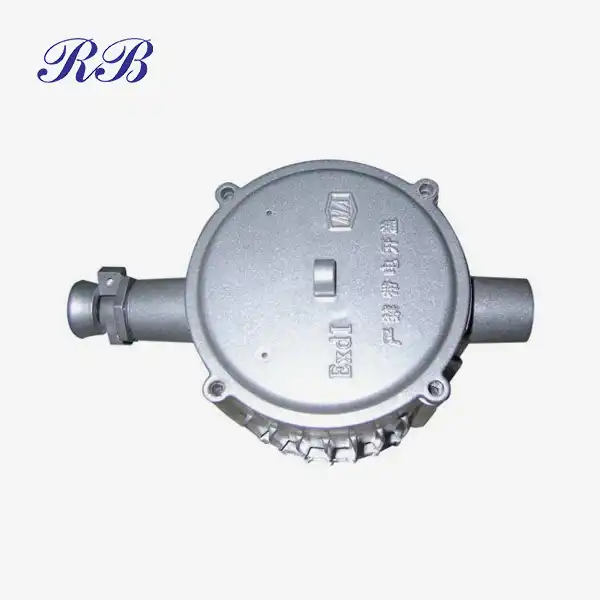
Learn about our latest products and discounts through SMS or email