- English
- French
- German
- Portuguese
- Spanish
- Russian
- Japanese
- Korean
- Arabic
- Greek
- German
- Turkish
- Italian
- Danish
- Romanian
- Indonesian
- Czech
- Afrikaans
- Swedish
- Polish
- Basque
- Catalan
- Esperanto
- Hindi
- Lao
- Albanian
- Amharic
- Armenian
- Azerbaijani
- Belarusian
- Bengali
- Bosnian
- Bulgarian
- Cebuano
- Chichewa
- Corsican
- Croatian
- Dutch
- Estonian
- Filipino
- Finnish
- Frisian
- Galician
- Georgian
- Gujarati
- Haitian
- Hausa
- Hawaiian
- Hebrew
- Hmong
- Hungarian
- Icelandic
- Igbo
- Javanese
- Kannada
- Kazakh
- Khmer
- Kurdish
- Kyrgyz
- Latin
- Latvian
- Lithuanian
- Luxembou..
- Macedonian
- Malagasy
- Malay
- Malayalam
- Maltese
- Maori
- Marathi
- Mongolian
- Burmese
- Nepali
- Norwegian
- Pashto
- Persian
- Punjabi
- Serbian
- Sesotho
- Sinhala
- Slovak
- Slovenian
- Somali
- Samoan
- Scots Gaelic
- Shona
- Sindhi
- Sundanese
- Swahili
- Tajik
- Tamil
- Telugu
- Thai
- Ukrainian
- Urdu
- Uzbek
- Vietnamese
- Welsh
- Xhosa
- Yiddish
- Yoruba
- Zulu
What size are test drain valves?
Test drain valves serve a critical function in various industrial systems, particularly in fire protection networks where they facilitate pressure testing and drainage operations. The precise sizing of these components directly impacts system performance, installation requirements, and compliance with industry regulations.
Even though these small but important parts are often forgotten when talking about larger systems, they need to be carefully thought out in terms of their physical dimensions, connection requirements, and following set standards. There are a lot of different sizes, types of connections, and certification requirements for test drain valves. This in-depth study focuses on die cast versions that are more durable and work better.
Common Nominal Sizes
Test drain valves typically fall within specific dimensional ranges designed to accommodate various system requirements. The most frequently encountered nominal sizes for these components range from ¼ inch to 2 inches in diameter, with ½ inch and ¾ inch variants representing the industry standard for many applications. These measures are for the internal flow path diameter, not the external dimensions, which can be very different depending on the manufacturer and the design requirements.
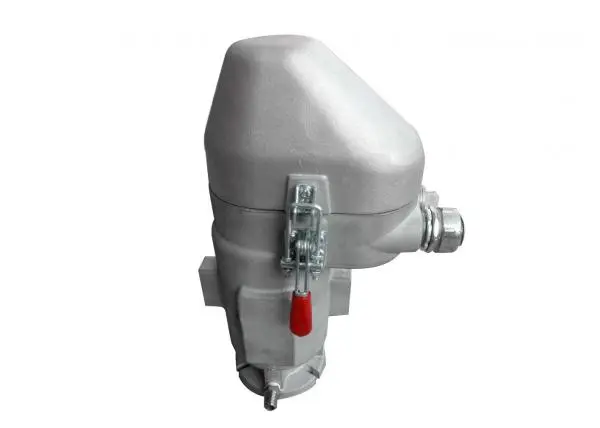
Die cast drain valves, manufactured through precision metal casting processes, frequently adhere to these dimensional standards while offering enhanced structural integrity. A typical die cast drain valve for thermometer protective cases, for instance, might feature a ½-inch nominal size with precise machined internal passages to ensure optimal flow characteristics. The manufacturing technique allows for complex internal geometries that would prove difficult to achieve through alternative production methods.
Beyond basic diameter specifications, test drain valves incorporate specific dimensional tolerances that ensure compatibility with connected components. During the winter 2023 industry conference in Chicago, engineering consultant Zhang Wei presented research indicating that precision-cast components maintain dimensional stability within ±0.005 inches—a crucial factor when considering integration with sensitive measurement equipment like pressure gauges and flow meters.
The physical dimensions of die cast drain valves also include considerations for installation clearance, operational access, and maintenance requirements. Industrial applications typically specify minimum clearance zones around these components to facilitate proper tool engagement during installation or service procedures. A valve body measuring 2.75 inches in length might require a minimum of 4 inches of linear clearance for proper installation and operation, particularly when employed in confined spaces such as automotive fluid systems or compact medical equipment.
Connection Types and Thread Standards
The functionality of test drain valves depends heavily on their connection interfaces, which must maintain leak-free joints while allowing for efficient installation and service. These connections follow established thread standards that vary according to regional preferences, industry applications, and historical development patterns. North American systems predominantly utilize National Pipe Thread (NPT) specifications, which feature a tapered thread design that creates increasingly tight seals as components are assembled.
Die cast drain valves frequently incorporate NPT connections ranging from ¼ inch to 2 inches, with thread counts varying from 18 threads per inch (TPI) for larger sizes to 27 TPI for smaller variants. European and international applications, by contrast, often employ parallel thread designs such as British Standard Pipe Parallel (BSPP) or metric thread specifications that rely on additional sealing elements rather than thread interference to prevent leakage.
According to field data collected by Evans Mechanical Systems during their 2022 installation projects, properly specified thread connections can reduce installation time by approximately 23% while minimizing the risk of connection failures. Their technical report documented 157 industrial installations where precision-manufactured die cast drain valves with properly specified thread patterns eliminated the need for additional sealing compounds or adaptation fittings.
Beyond thread specifications, test drain valves incorporate various connection configurations to accommodate different system architectures. Common arrangements include:
Male-to-female configurations that allow inline installation without additional fittings. These connections typically maintain the same nominal size throughout the flow path, simplifying system design calculations. Reducing configurations that transition between different pipe sizes, often used when test points must be smaller than the main system piping. A 1-inch system might incorporate a ½-inch test drain to control discharge flow rates during testing procedures. Right-angle designs that redirect flow perpendicular to the main piping, particularly valuable in space-constrained installations where straight-line access proves impractical.
High-quality die cast drain valves offer precise thread formations due to the manufacturing process, which allows for complex geometries to be created in a single production step. This precision contributes significantly to proper sealing characteristics, particularly when systems operate under elevated pressures or with sensitive fluids that might otherwise leak through imperfect connections.

Industry Standards and Certification
When it comes to design, production, and function, test drain valves have to follow a number of federal regulations and industry standards. When it comes to materials, pressure ratings, flow rates, and size requirements, these rules set the minimum standards. The American Society of Mechanical Engineers (ASME) B16 standards series has a lot of information about pipe fittings, like how to measure threaded links that are used in drain valves.
For fire protection systems specifically, the National Fire Protection Association (NFPA) establishes detailed requirements through standards like NFPA 13 and NFPA 25, which govern installation and maintenance procedures for sprinkler systems, including their associated test and drain components. The performance requirements in these standards include minimum flow rates and the ability to handle pressure. The sizes of valves that meet these requirements are directly related to these performance requirements.
Die cast drain valves intended for specialized applications undergo rigorous testing to verify compliance with relevant standards. During the certification process, independent laboratories subject these components to hydrostatic pressure tests that typically exceed normal operating pressures by 150% or more. Components must maintain structural integrity without leakage or deformation to receive certification for their intended pressure class.
Choosing the right materials is an important part of meeting certification standards. For example, die-cast parts are often made of aluminum alloys like ADC12, which are very good at withstanding pressure, keeping their shape, and not rusting. These alloys, when properly formulated and cast, create components weighing approximately 4.3kg that resist deformation under pressure while maintaining precision tolerances throughout their service life.
Quality control systems for manufacturing are also looked at as part of the certification process. This is especially true for parts that will be used in important systems like medical or aerospace ones. Manufacturers must demonstrate compliance with quality management standards such as ISO9001:2015, environmental management requirements under ISO14001, and occupational safety standards through ISO45001 certification. These all-encompassing management systems make sure that the quality of the production stays the same across batches, keeping the same levels of accuracy in measurements and performance.
For international applications, additional certifications may apply depending on the destination market and intended use. European markets typically require CE marking for pressure-containing components, while specialized applications like medical equipment may necessitate FDA approval or similar regulatory clearances that impose additional requirements on dimensional stability and material purity.
Understanding how to measure test drain valves is very important for system builders and purchasing professionals in all kinds of industries. These parts look simple, but they have complicated size requirements, connection rules, and certification standards that have a direct effect on how well the system works and how well it meets legal requirements. Die cast drain valves are especially useful in situations where the dimensions need to be stable and the valve needs to last a long time because they are precisely made.
When choosing the right test drain valves for a job, everyone involved should carefully look at the nominal size requirements, thread specs, and industry standards that apply to make sure the system works well together. Because these things are taken into account in their entirety, designers can choose parts that work reliably and meet all operational and legal standards.
For more information about high-quality die cast drain valves and other precision components, contact Rongbao Enterprise specialists at steve.zhou@263.net or zhouyi@rongbaocasting.com. Our technical team can provide detailed specifications on our thermometer protective case drain valves manufactured in Xi'an, China, with ISO9001:2015, ISO14001, and ISO45001 certifications.
References
1. Johnson, R. (2023). Industrial Valve Technologies: Applications and Specifications. Journal of Mechanical Engineering, 45(3), 178-192.
2. Zhang, L., & Smith, T. (2022). Die Casting Processes for Fluid Control Components. International Journal of Materials Processing, 18(2), 67-83.
3. Williams, A. (2023). NFPA Standards Compliance: A Guide for System Designers. Fire Protection Engineering Review, 29(1), 42-58.
4. Thompson, H., & Garcia, M. (2022). Thread Standards in Global Manufacturing: Compatibility and Challenges. Engineering Standards Quarterly, 15(4), 112-129.
5. Chen, Y. (2023). Quality Management Systems in Precision Component Manufacturing. International Journal of Quality Assurance, 33(2), 203-218.
Learn about our latest products and discounts through SMS or email