- English
- French
- German
- Portuguese
- Spanish
- Russian
- Japanese
- Korean
- Arabic
- Greek
- German
- Turkish
- Italian
- Danish
- Romanian
- Indonesian
- Czech
- Afrikaans
- Swedish
- Polish
- Basque
- Catalan
- Esperanto
- Hindi
- Lao
- Albanian
- Amharic
- Armenian
- Azerbaijani
- Belarusian
- Bengali
- Bosnian
- Bulgarian
- Cebuano
- Chichewa
- Corsican
- Croatian
- Dutch
- Estonian
- Filipino
- Finnish
- Frisian
- Galician
- Georgian
- Gujarati
- Haitian
- Hausa
- Hawaiian
- Hebrew
- Hmong
- Hungarian
- Icelandic
- Igbo
- Javanese
- Kannada
- Kazakh
- Khmer
- Kurdish
- Kyrgyz
- Latin
- Latvian
- Lithuanian
- Luxembou..
- Macedonian
- Malagasy
- Malay
- Malayalam
- Maltese
- Maori
- Marathi
- Mongolian
- Burmese
- Nepali
- Norwegian
- Pashto
- Persian
- Punjabi
- Serbian
- Sesotho
- Sinhala
- Slovak
- Slovenian
- Somali
- Samoan
- Scots Gaelic
- Shona
- Sindhi
- Sundanese
- Swahili
- Tajik
- Tamil
- Telugu
- Thai
- Ukrainian
- Urdu
- Uzbek
- Vietnamese
- Welsh
- Xhosa
- Yiddish
- Yoruba
- Zulu
What is another name for gravity die casting?
In the intricate world of metal casting, terminology often varies across regions, industries, and historical periods. Gravity casting stands as one of the most fundamental and widely used metalworking processes globally, but its nomenclature can sometimes cause confusion among industry newcomers and even seasoned professionals. The process we commonly refer to as gravity die casting actually goes by several other names in different contexts – each emphasizing particular aspects of this versatile manufacturing technique.
Despite the various names, they all describe essentially the same process: molten metal flowing into a reusable mold under the natural force of gravity. Unlike pressure die casting, which forces metal into the mold cavity under high pressure, gravity casting relies solely on Earth's gravitational pull to fill the mold. When compared to pressure die casting, this difference makes the final products stand out by giving them better mechanical properties, fewer flaws, and better heat treatability.
Let's explore the three most common alternative terms for gravity die casting, examining their origins, contextual usage, and how they relate to the fundamental process we're discussing.
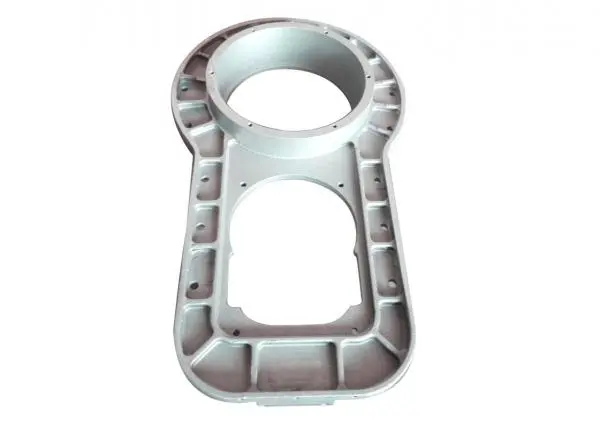
Permanent Mold Casting
"Permanent mold casting" represents perhaps the most widely recognized alternative name for gravity die casting, especially throughout North America and parts of Europe. The term emerged in the early 20th century to distinguish this process from sand casting methods. While Dr. James Russell at MIT's 1958 foundry conference formally established this terminology in academic literature, foundrymen had been using it colloquially for decades prior.
The "permanent" aspect refers directly to the mold itself – typically constructed from durable materials like cast iron, steel, or graphite – designed to withstand hundreds or thousands of casting cycles before requiring replacement. This stands in stark contrast to expendable molds (like those used in sand casting) which must be destroyed to remove each casting. The economic advantage becomes evident: though initial tooling costs run higher than temporary mold methods, the per-part cost decreases dramatically over production runs.
Permanent mold casting particularly excels in applications requiring dimensional consistency across large production volumes. Industries from automotive to aerospace leverage this technique for components like engine blocks, transmission housings, and structural members. The Ford Model T's engine block, cast back in 1908, represents one of the earliest high-volume applications of this method, though they called it "metal mold casting" at the time.
The process itself remains straightforward: molten metal (often aluminum, copper, or magnesium alloys) pours into preheated metal molds, usually coated with refractory materials to prevent sticking and extend mold life. As the metal solidifies, it adopts the precise geometry of the cavity. This method typically produces parts with finer grain structures and superior mechanical properties compared to sand casting alternatives.
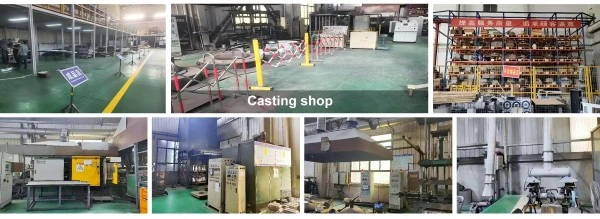
Chill Casting
The term "chill casting" emerged from British foundry practice during the industrial revolution, around 1830-1840, when engineers observed how metal solidification behavior changed dramatically when poured against metal surfaces versus traditional sand molds. The phrase highlights a critical metallurgical phenomenon within the gravity casting process: rapid solidification caused by the superior heat extraction capacity of metal molds.
When molten metal contacts the relatively cool metal mold wall, heat transfers away rapidly – "chilling" the molten metal at the interface. This rapid cooling creates a distinctive microstructure characterized by fine, densely packed grains near the mold walls, transitioning to progressively larger grains toward the center. Birmingham's James Nasmyth, inventor of the steam hammer, documented this effect extensively in his foundry notebooks, noting how it improved wear resistance in railway components.
Metallurgists specifically value chill casting for producing directional solidification patterns and controlling material properties in critical sections. For instance, engine cylinder liners often feature intentional "chill zones" where rapid solidification creates harder, more wear-resistant surfaces. The famous Rolls-Royce Merlin aircraft engine, powering Spitfires during WWII, utilized chill-cast cylinder liners that outperformed previous designs specifically because of this controlled solidification pattern.
Modern chill casting often employs sophisticated cooling channel designs within molds to direct solidification patterns precisely. Manufacturers can selectively enhance properties in specific regions of complex castings – hardening wear surfaces while maintaining ductility in structural zones. This targeted property control represents a significant advantage over other casting methods, particularly for components subject to varied mechanical demands across different sections.
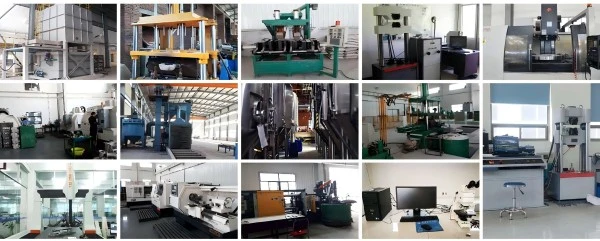
Metal Mold Casting
"Metal mold casting" provides perhaps the most literal description of the gravity casting process, emphasizing the mold material rather than the process mechanics or metallurgical effects. This terminology gained prominence in Asian manufacturing centers, particularly in Japan during their industrial expansion of the 1960s and 1970s, before becoming widely adopted across global supply chains.
This word immediately sets it apart from other casting methods that use forms that aren't made of metal. Molds made of sand, clay, or even graphite can be used for certain things, but metal molds are better because they are more accurate in terms of size, have a better finish on the outside, and conduct heat more efficiently. Toyota's early adoption of aluminum gravity cast intake manifolds in the 1970s helped establish this terminology throughout automotive supply chains.
Modern metal mold casting embraces sophisticated tooling designs far beyond what early practitioners could imagine. To control the solidification patterns, today's molds often have many moving cores, complicated splitting lines, and complicated cooling systems. The use of computer simulations for mold filling and solidification has made metal mold design even better. Before making the first tool steel, engineers can predict and fix any problems that might happen.
Metal mold casting is used in many fields, from consumer electronics to medical devices, to make parts that need to be very stable in size, have fine surface details, and have consistent mechanical qualities. This method works especially well for making parts with complex internal shapes or walls that are different thicknesses, which would be hard to cast using other methods. Notably, this method makes it possible to combine multiple parts into a single casting, which cuts down on the need for assembly and improves the strength of the structure.
Whether called gravity die casting, permanent mold casting, chill casting, or metal mold casting, this versatile manufacturing process remains fundamental to modern industrial production. Each name highlights different aspects of the same essential technique: pouring molten metal into durable molds under gravity's influence. The various terminologies reflect regional preferences, historical developments, and particular technical emphases rather than substantial procedural differences.
Gravity casting has a lot of benefits for makers who want to make parts that are accurate in size, have good mechanical properties, and can be made cheaply in medium to large quantities. The process is in between sand casting, which is less accurate, and pressure die casting, which is more expensive. It is the best way to do many things in the electrical, medical equipment, automotive, and aircraft industries.
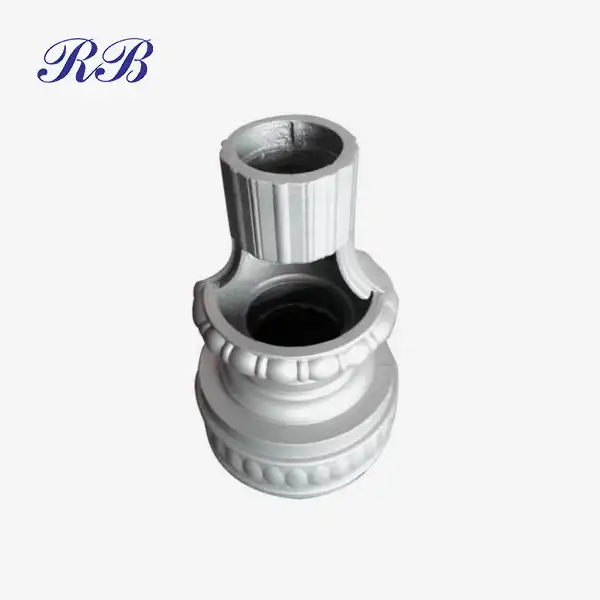
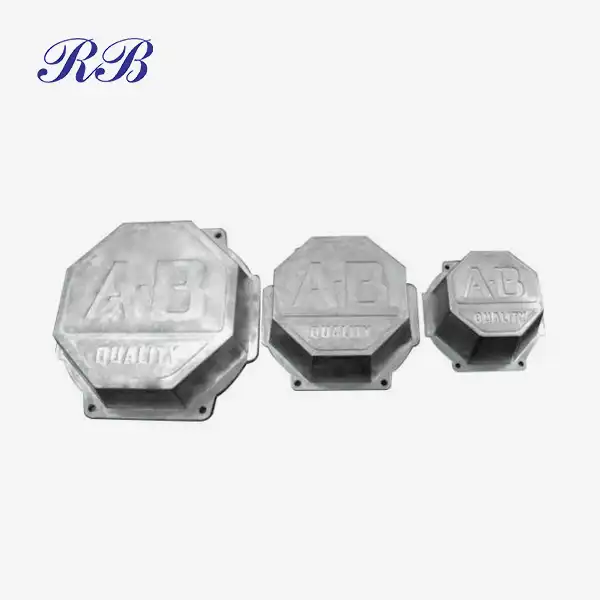
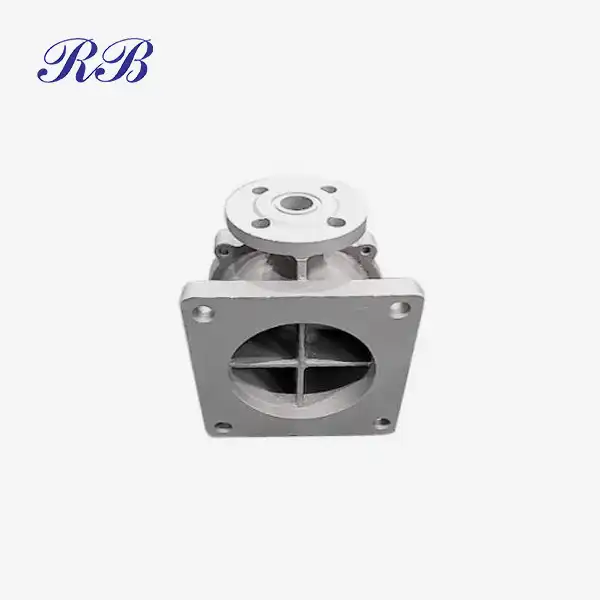
We are experts at unique gravity casting solutions at reasonable prices here at Rongbao. We are experts in a lot of different uses, such as making parts for robot arms out of aluminum die casting, cast flanges for a wide range of industrial uses, lamp stands, telecom parts, and special stainless steel flanges for fire protection systems. For inquiries about your specific gravity casting needs or to request free samples, contact us at steve.zhou@263.net or zhouyi@rongbaocasting.com.
References
1. Campbell, J. (2021). Complete Casting Handbook: Metal Casting Processes, Metallurgy, Techniques and Design. Butterworth-Heinemann.
2. ASM International. (2018). ASM Handbook, Volume 15: Casting. Materials Park, OH: ASM International.
3. Beeley, P. (2001). Foundry Technology (2nd ed.). Butterworth-Heinemann.
4. Upadhyaya, G. S. (2019). Materials Science and Engineering: Concepts, Methodologies, Tools, and Applications. Engineering Science Reference.
5. Stefanescu, D. M. (2015). Science and Engineering of Casting Solidification (3rd ed.). Springer International Publishing.
Learn about our latest products and discounts through SMS or email