- English
- French
- German
- Portuguese
- Spanish
- Russian
- Japanese
- Korean
- Arabic
- Greek
- German
- Turkish
- Italian
- Danish
- Romanian
- Indonesian
- Czech
- Afrikaans
- Swedish
- Polish
- Basque
- Catalan
- Esperanto
- Hindi
- Lao
- Albanian
- Amharic
- Armenian
- Azerbaijani
- Belarusian
- Bengali
- Bosnian
- Bulgarian
- Cebuano
- Chichewa
- Corsican
- Croatian
- Dutch
- Estonian
- Filipino
- Finnish
- Frisian
- Galician
- Georgian
- Gujarati
- Haitian
- Hausa
- Hawaiian
- Hebrew
- Hmong
- Hungarian
- Icelandic
- Igbo
- Javanese
- Kannada
- Kazakh
- Khmer
- Kurdish
- Kyrgyz
- Latin
- Latvian
- Lithuanian
- Luxembou..
- Macedonian
- Malagasy
- Malay
- Malayalam
- Maltese
- Maori
- Marathi
- Mongolian
- Burmese
- Nepali
- Norwegian
- Pashto
- Persian
- Punjabi
- Serbian
- Sesotho
- Sinhala
- Slovak
- Slovenian
- Somali
- Samoan
- Scots Gaelic
- Shona
- Sindhi
- Sundanese
- Swahili
- Tajik
- Tamil
- Telugu
- Thai
- Ukrainian
- Urdu
- Uzbek
- Vietnamese
- Welsh
- Xhosa
- Yiddish
- Yoruba
- Zulu
Advantages of using die casting accessories in the Explosion-proof box
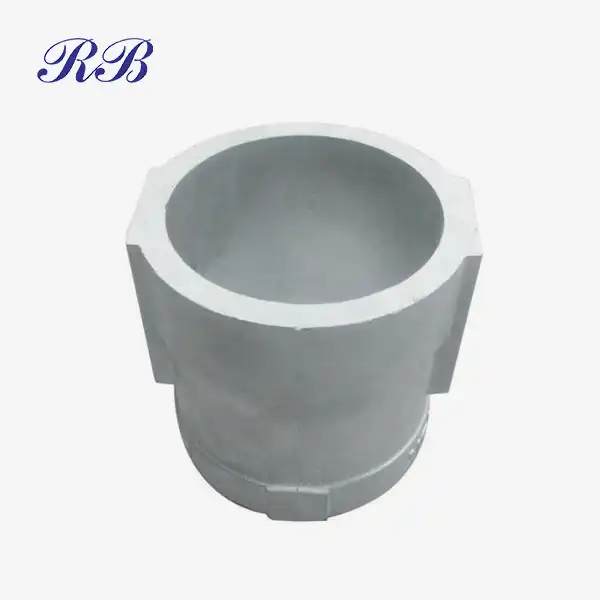
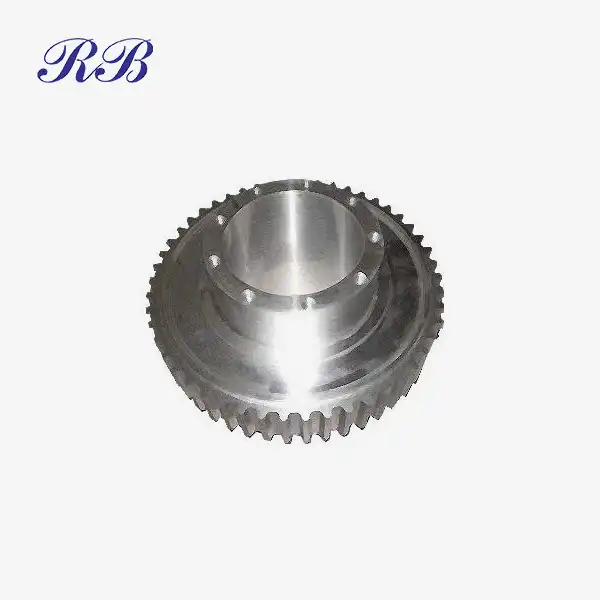
Explosion-proof boxes safeguard electrical and control equipment in settings where flammable gases, vapors, dust, moisture, or corrosive materials may be present. The enclosure is only one aspect of the system. Mounting brackets, coverings, connections, supports, and other metal components also must fit well and endure the environment in which the equipment is used. Die casting accessories can be useful for these applications because casting allows manufacturers to produce complex metal components with integrated structural features. Alloy, casting process, machining, and inspection requirements may be carefully set to allow precise assembly and repeatable manufacturing for these products. The advantage of die casting accessories should not be taken as a guarantee of explosion-proof performance in itself. The last level of protection is up to the general design of the enclosure, standards, testing, certification, installation, and operational circumstances. The true significance of a well-made casting attachment is that it offers the necessary mechanical interface and dimensional uniformity within that larger system.

Why die casting fits enclosure component production
Often, enclosures for explosion-proof applications include three-dimensional characteristics such as mounting bosses, ribs, flanges, holes, and curved portions. All these things might mean more cutting, welding, and assembly if you make them from flat sheet metal or separate machined blocks.
Casting may integrate multiple of these properties into one component, given the right shape.
Complex shapes can be integrated into one part
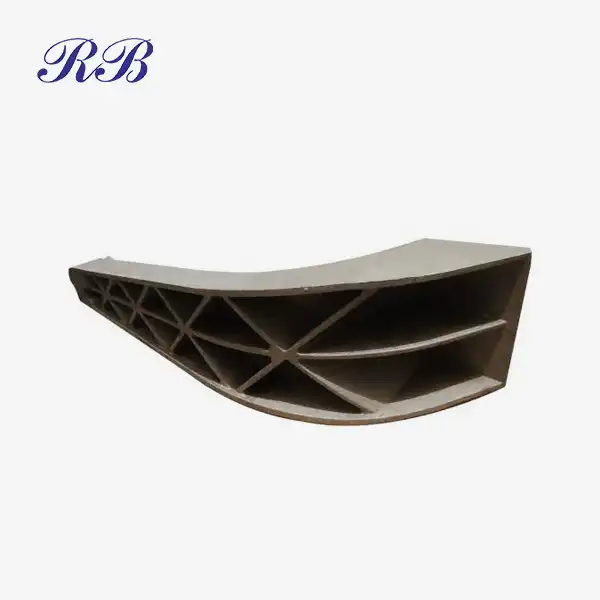
Ribs, mounting points, bosses, and other structural characteristics may all be built into the same body of a die cast or gravity-cast part. This may decrease the number of separate parts that need to be assembled.
This versatility is especially important for building bespoke enclosures. A mounting accessory may need a specialized internal architecture and may not have the hole placements or overall dimensions of a conventional catalog item.
Rather than having to change the enclosure to fit a standard accessory, engineers may collaborate with a manufacturer to design the casting to the exact assembly needs.
Casting can reduce secondary assembly work
Where numerous structural functions may be combined in one casting, the number of welded or independently affixed elements may be decreased.
That doesn’t imply casting removes the need for machining or assembly. Critical holes, mounting faces, and interfaces may still have to be CNC machined after casting.
However, merging appropriate features at the die casting accessories stage may reduce the production path and facilitate handling of the completed component in the enclosure assembly.
Material selection should follow the application
Aluminum alloys are typically utilized for enclosure accessories where weight, castability, and corrosion requirements must be balanced. In the manufacturing details of Rongbao, there are several die-casting accessory alloys, such as aluminum alloy A356.
The material should also be chosen according to the actual working environment. A material that is well suited for an indoor industrial enclosure may not be the greatest choice for offshore equipment or an installation exposed to hostile chemicals.

Consider the working environment
Before picking an alloy, engineers should take into account such aspects as:
- mechanical loading;
- vibration;
- operating temperature;
- moisture; salt exposure;
- chemical contact;
- needed surface treatment;
- weight constraints;
- anticipated service conditions.
These criteria dictate the selection of materials and finishing needs.
For example, an accessory used on offshore equipment may need more attention to surface preparation and corrosion protection than a similar part used within a dry facility.
Material is only one part of the safety equation
Enclosure of A356 or other comparable aluminum alloy does not always provide explosion-proof characteristics.
The material must be compatible with the enclosure design, mounting technique, joint configuration, sealing arrangement, and other components. If the finished enclosure is covered by IECEx, ATEX, or another certification scheme, the purchaser should check the criteria for the whole approved product.
This difference becomes crucial when buying the separate casting equipment. The supplier must provide a material certificate or ISO management certification; however, this must not be used in place of product certification.
CNC machining improves critical interfaces
The fundamental form of the item is produced by casting, but certain dimensions may need to be controlled more tightly than is possible by the die casting accessories process itself.
CNC machining is therefore often utilized for important surfaces and holes.
Machined holes improve assembly accuracy
Mounting holes are particularly crucial when an accessory needs to fit with a certain enclosure body or internal structure.
The engineering sketch would include the hole diameter, location, thread specs, and other parameters. These features may then be finished to the appropriate tolerances using CNC machining.
The same applies to the location of surfaces and other interfaces. Instead of applying a single tolerance to the whole component, engineers should decide which dimensions are functionally essential.
Design review should happen before tooling
The artwork should be reviewed before manufacturing by a die-casting accessories-experienced vendor.
The review could cover:
- Wall thickness.
- Drafting requirements.
- Seam line.
- Machining allowances.
- Radii on castings.
- Interior cavities.
- Mounting bosses.
- Potential shrinkage regions.
If applicable, casting simulation or mold-flow analysis may uncover possible filling and solidification difficulties before finalizing the mold or tooling.
An early evaluation may help avoid needless equipment adjustments and minimize the danger of manufacturing a casting that will be difficult to process.
Surface treatment supports long-term use
Depending on the environment of operation, the component may need surface preparation or coating after casting and machining.
Shot blasting may eliminate remaining surface impurities and provide a more uniform surface for further finishing. The project may specify the application of additional coatings.
Coating requirements depend on the environment
An item utilized in the sea environment is exposed to salty air and moisture. Chemical plant components may be exposed to diverse circumstances.
Therefore, the selection of the coating should be made according to the real environment, rather than the coating that is often used.
Where appropriate, the buyer must state—
- surface preparation;
- kind of coating;
- thickness of coating;
- color;
- corrosion resistance criteria;
- inspection procedure.
If salt-spray or other environmental testing is needed, the approved test technique and acceptance criteria should be used before manufacturing.
What should buyers provide to a casting supplier?
The quality of a made-to-measure attachment very much relies on the information given before creation.
Normally, a procurement or engineering team should supply the supplier with:
- 2D engineering drawings;
- 3D CAD files where available;
- material requirements;
- overall dimensions;
- critical tolerances;
- mounting hole positions;
- machining requirements;
- surface treatment requirements;
- estimated quantity;
- inspection requirements;
- packaging requirements;
- destination and compliance requirements.
The supplier uses this information to judge the castability of the design and to identify those elements that will need to be machined.

Check the complete manufacturing route
When purchasing customized die casting accessories, it is useful to ask whether the supplier can manage more than the casting stage.
A complete production route may include:
design review → tooling → casting → trimming → CNC machining → surface treatment → inspection → packaging
Having these processes coordinated by one supplier can reduce communication problems between different subcontractors.
It also gives the buyer one main point of contact for dimensional issues, production changes, and quality documentation.
Quality documents should match the project
Material certificates, dimensional inspection reports, casting inspection records, or other quality paperwork may be requested by the customer depending on the application.
ISO 9001:2015 might suggest a supplier has a documented quality management system. ISO 14001 and ISO 45001 are standards for environmental management and health and safety in the workplace.
These credentials are helpful in evaluating a supplier but should be taken into account along with actual manufacturing and inspection abilities.
Rongbao Enterprise for customized die casting accessories
Rongbao Enterprise is an industrial component custom casting and machining business situated in Xi'an, China. According to the manufacturing details, the firm uses A356 aluminum alloy and other casting materials as per project specifications.
Rongbao can coordinate casting, CNC machining, and surface finishing for bespoke die casting accessories. Machining of critical mounting holes, machined surfaces, and other required features may be performed per client designs.
The firm asserts that it is certified to ISO 9001:2015, ISO 14001, and ISO 45001. These certifications might be part of a larger supplier assessment including manufacturing capabilities, inspection processes, sample approval, and project-specific quality criteria.
Rongbao also offers OEM and ODM services for bespoke parts. For an explosion-proof enclosure project, the buyer may send the enclosure layout, drawings of accessories, material specifications, important tolerances, quantity, and finishing details to the engineering team before production for inspection and approval of the manufacturing process.
Packaging should also be addressed at the quoting stage for overseas orders. Wooden box packing might be appropriate for safeguarding cast and machined parts during overseas transit. The final packaging technique will be chosen according to the size and weight of the components, the circumstances of transportation, and the needs of the client.
Conclusion
The main advantages of the use of die-casting accessories in an explosion-proof box are design flexibility, repeatability of manufacture, and compatibility with subsequent machining.
Casting: Where the design allows, ribs, bosses, mounting points, and other features may be included in one part. You may have more precise control of crucial connections with CNC machining and fulfill environmental regulations with the correct surface treatment.
However, explosion-proof functioning cannot be achieved based on the die casting accessories attachment alone. The overall level of protection provided by an enclosure is a function of the whole system of design, construction, testing, certification, and installation.
Buyers should be presented with complete engineering data before production. Vendors should be evaluated based on their real manufacturing route. Having a source that can cast, machine, polish, inspect, and pack makes handling custom enclosure projects easier and gives a more direct approach from drawing approval to completed parts.
FAQ
Q1: What makes A356 aluminum ideal for explosion-proof applications?
A: A356 aluminum offers excellent casting capabilities, high strength-to-weight ratio, and corrosion resistance. It allows complex molding and reliable mechanical performance, which make it ideal for explosion-proof enclosure components under heavy use.
Q2: What's the advantage of gravity die casting over high-pressure casting in this context?
A: Gravity casting produces parts with lower porosity and a denser structure compared to high-pressure die casting. This makes them more durable and reliable for high-load or sealed environments, like explosion-proof boxes.
Q3: Does Rongbao produce custom-shaped components based on customer blueprints?
A: Yes. Rongbao offers full OEM/ODM service. Whether it’s a brand-new design or adaptation of an existing part, we customize dimensions, shape, hole placements, and surface finish based on CAD or 3D models received from clients.
Q4: How are the components packaged to avoid damage during transport?
A: Each batch is packed in high-strength wooden boxes, with cushioning materials to prevent vibration or impact during international or long-distance shipping.
Q5: Can Rongbao support bulk and recurring orders?
A: Absolutely. Our facilities can handle orders from prototypes up to 5000 parts with consistent quality and delivery timelines. We also manage inventory planning and scheduled shipments for repeat orders.
Die Casting Accessories Supplier: Rongbao Enterprise
Rongbao Enterprise in Xi'an, China's industrial center, manufactures the highest-quality safety-critical die casting accessories. Our manufacturing process starts with approved A356 aluminum preparation, gravity die casting accessories for structural density, and CNC machining for precise tolerances (±0.05mm in certain situations).
Explosion-proof box attachments are our specialty for low maintenance and safety. We produce 5000 OEM goods for Europe, Central Asia, and the Middle East annually.
All shipping parts are tested for porosity, load-bearing resistance, and coating adhesion. On request, we supply 3D CAD models, simulation data, salt fog resistance tests, and mold flow analysis. Since our workshop is ISO9001:2015 (quality), ISO14001 (environment), and ISO45001 (occupational safety), client procurement meets engineering and sustainability standards.
Our technicians perform size shifting, mounting accessories, and box-housing kits. Support continues after production. Rongbao's real-time updates and end-to-end transportation logistics skills ensure delivery and price accuracy.
Interested in starting your custom project or requesting drawings? Contact us via email at steve.zhou@263.net or zhouyi@rongbaocasting.com. Share your design files or project vision, and we will respond within 24 hours. Get in touch now.
References
1. North American Die Casting Association (NADCA)
2. AZoM - A356 Aluminum Alloy Properties and Applications
3. Exhida - Guide to Explosion-Proof Technology
4. Engineering.com - Die Casting for Electrical Enclosures
5. ISO Official Site - Certification Standards
_1750923522843.webp)
Learn about our latest products and discounts through SMS or email