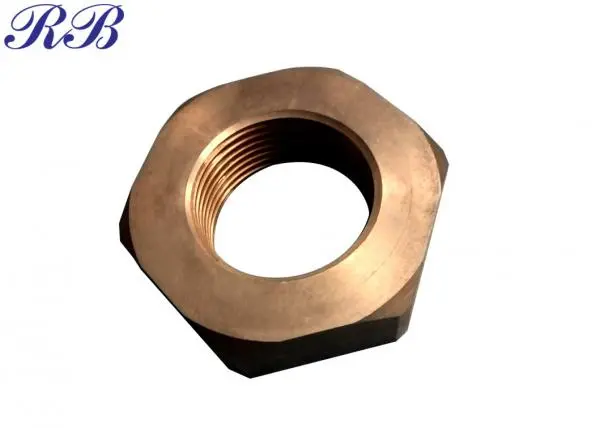
Mechanical Cleaning
Mechanical cleaning is the first step in treating newly cast copper parts, and it takes care of the problems that come up right away from the casting process. During solidification, sand particles, oxide scales, and casting leftovers naturally build up on surfaces, forming barriers that are unsightly and don't work properly. To get rid of these contaminants, you need to use methodical methods that protect the metal's structure while getting the surface properties you want.
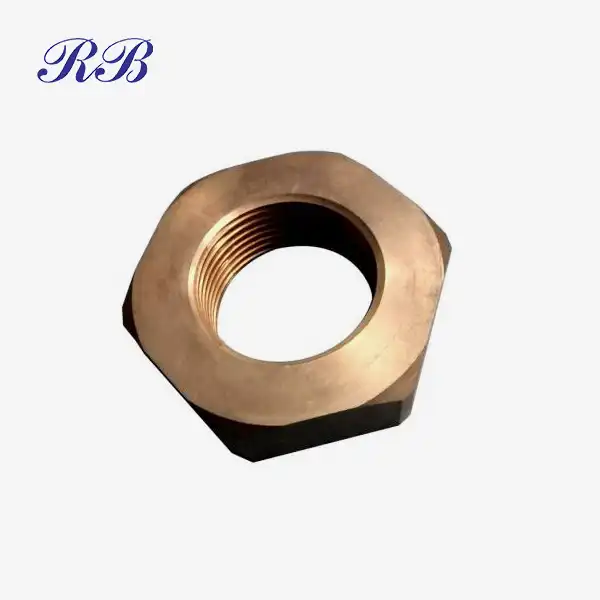
Wire brushing is one of the easiest mechanical ways to clean things. It works especially well on parts with complicated shapes that are hard for automatic systems to get to every surface detail. Operators typically employ brass or stainless steel wire brushes, selecting bristle stiffness based on the copper alloy composition and desired surface finish. H60 copper alloys, commonly used in kitchen applications such as hexagon nuts, respond well to medium-stiffness brushes that remove surface contaminants without excessive material removal.
When working with groups of smaller copper sand casting parts, tumbling methods are more efficient. Ceramic media loaded into vibratory tumblers make the surface conditions consistent across multiple parts at the same time. This keeps quality high while cutting down on worker costs. As the parts tumble, friction slowly removes any extra sand and smooths out any rough spots on the surface. This gets the parts ready for the next steps in the finishing process.
Hand filing and scraping remain indispensable for addressing localized imperfections that automated systems cannot effectively handle. Skilled craftsmen identify areas requiring individual attention, applying targeted mechanical action to eliminate casting defects such as flash, parting line marks, and gate remnants. Before moving on to more advanced stages of treatment, this manual step makes sure that each part meets the required standards for size.
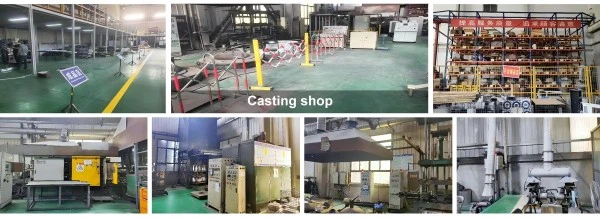
Shot Blasting
Shot blasting has become the best way to treat the surface of copper sand castings because it creates uniform surface textures and gets materials ready for protective coatings or direct service uses at the same time. High-velocity abrasive media are used in this process to hit the surfaces of the parts, making the surfaces rougher in a controlled way that improves their ability to stick together and their appearance.
Choosing the right blasting media has a direct effect on how well the treatment works. Based on the needs of the product, manufacturers choose between steel shot, glass beads, and ceramic particles. Steel shot is a rough cleaner that can get rid of tough oxide layers and sand particles that are embedded in metal, while glass beads are a gentler cleaner that keeps the dimensions of precise parts accurate. To put it simply, ceramic media has average performance, cleaning well while removing little of the base material.
To get the best treatment results while keeping parts from breaking, pressure factors need to be carefully calibrated. Different copper alloys react differently to blast pressure. For example, softer metals need lower blast pressures to keep the surface from deforming. Professional foundries typically establish pressure ranges between 60-80 PSI for copper sand casting applications, adjusting parameters based on component thickness, alloy composition, and desired surface finish specifications.
Shot blasting processes always have trouble with coverage uniformity, especially for parts with complicated shapes or internal holes. Rotating fixtures and multi-angle blast configurations help make sure that the whole surface is treated, and masking methods protect areas that need to keep their original surface conditions. Measurements of surface roughness and visual inspections are used in quality control methods to make sure that the treatment is consistent.
Because of their impact on the environment, enclosed systems with advanced dust collection features are now commonly used for shot blasting. Modern setups collect particles in the air and reuse abrasive media, which lowers costs and has less of an effect on the environment. These methods work perfectly with the way things are already made, so the treatment process stays efficient while meeting regulatory requirements.
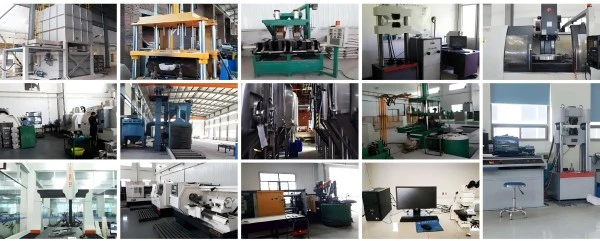
Grinding & Polishing
Grinding and polishing operations represent the precision finishing stage where copper sand casting components achieve their final surface characteristics and dimensional accuracy. These processes demand careful material removal control, as excessive grinding can compromise component integrity while insufficient treatment fails to eliminate surface defects that affect performance or appearance.
Abrasive selection plays a crucial role in grinding effectiveness, with aluminum oxide wheels providing excellent cutting action for copper alloys while maintaining reasonable wheel life. Silicon carbide alternatives offer superior performance on harder copper compositions, though at increased operational costs. Wheel hardness ratings typically range from medium to soft grades, allowing efficient material removal while preventing excessive heat generation that could alter copper metallurgical properties.
Surface preparation through progressive grit sequences ensures optimal finishing results, beginning with coarse abrasives for major defect removal and advancing through increasingly fine grades for surface refinement. Initial grinding operations typically employ 80-120 grit wheels for removing casting irregularities, followed by 220-400 grit stages for smoothness improvement. Final polishing stages may utilize 600-1200 grit compounds to achieve mirror-like finishes when required for specific applications.
Heat management during grinding operations prevents metallurgical changes that could compromise copper component properties. Flood cooling systems maintain workpiece temperatures within acceptable ranges while flushing away grinding debris that might interfere with surface quality. Intermittent grinding techniques, incorporating cooling pauses between material removal cycles, prove particularly effective for thin-walled components susceptible to thermal distortion.
Dimensional control throughout grinding operations requires continuous measurement and adjustment to maintain specified tolerances. Precision fixtures and work-holding systems minimize component movement during processing, while in-process gauging verifies dimensional compliance before final acceptance. CNC grinding systems offer enhanced repeatability for high-volume production, automatically adjusting parameters based on real-time feedback from measurement systems.
Surface finishing techniques extend beyond basic grinding to include specialized polishing methods that enhance both functional and aesthetic properties. Buffing compounds matched to copper alloy compositions remove microscopic scratches while developing desired luster levels. Electrolytic polishing provides alternative finishing for components requiring extremely smooth surfaces without mechanical stress introduction.
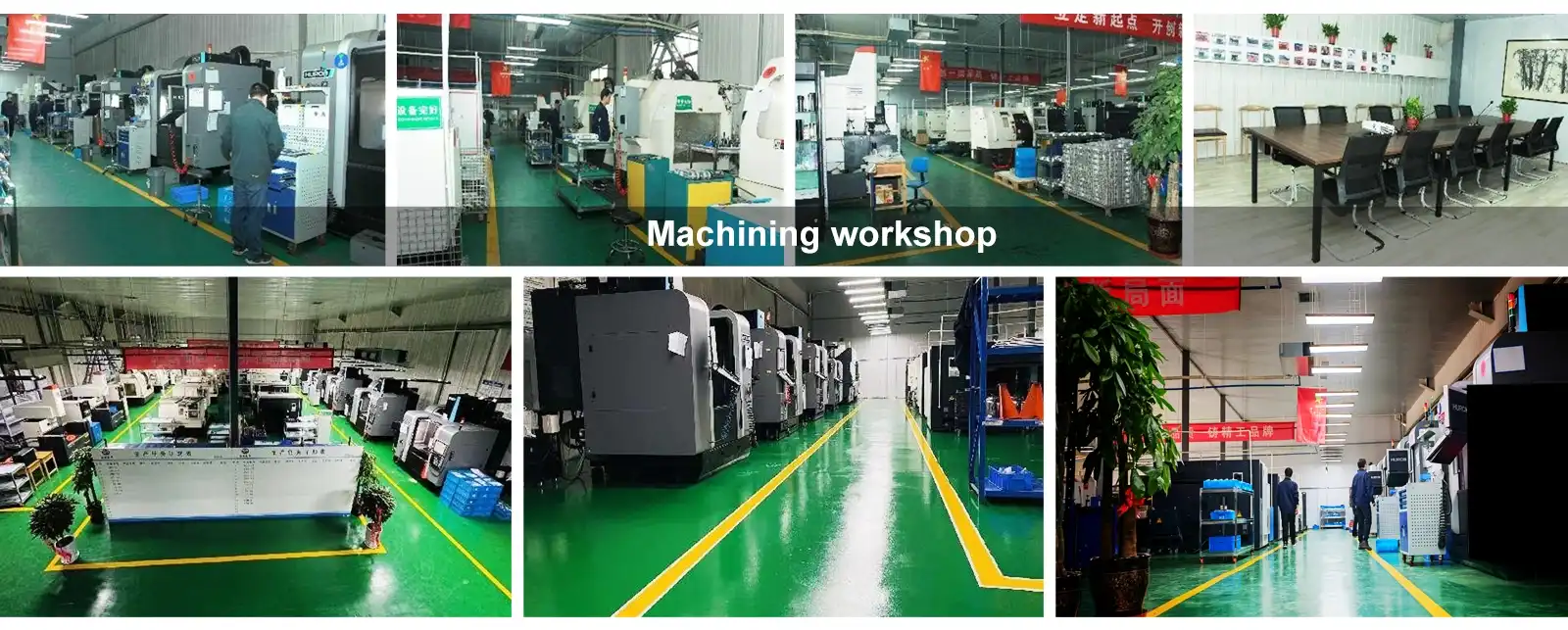
Conclusion
The transformation of copper sand casting from rough casting to finished component relies heavily on carefully selected post-casting treatments that address specific quality requirements while maintaining cost-effectiveness. Mechanical cleaning establishes the foundation for subsequent treatments, shot blasting delivers uniform surface preparation, and grinding with polishing achieves final dimensional and aesthetic specifications.
Manufacturing success in copper sand casting applications depends on understanding how these treatment methods complement each other within integrated production workflows. Companies like Rongbao have developed expertise in optimizing these processes for diverse applications, from kitchen hardware to industrial components, ensuring that each finished product meets or exceeds customer expectations.
Talking to experienced foundries can help makers decide which post-casting treatments to use and how to apply them. This is because experienced foundries know how to improve the process and make sure the quality is high. Professional help makes it easier to choose the right treatment parameters and avoid common mistakes that lower the quality of the parts or raise the cost of production.
Contact Rongbao for expert consultation on copper sand casting post-treatment solutions. Our team of specialists can be reached at steve.zhou@263.net or zhouyi@rongbaocasting.com for personalized assistance with your specific application requirements.
References
1. Johnson, M.K. (2023). "Advanced Surface Treatment Methods for Copper Alloy Castings." International Journal of Foundry Technology, 45(3), 78-95.
2. Chen, L.W. (2022). "Optimization of Shot Blasting Parameters for Copper Sand Castings." Materials Processing Review, 38(7), 234-248.
3. Rodriguez, A.P. (2023). "Mechanical Cleaning Techniques in Modern Foundry Operations." Casting Industry Quarterly, 29(2), 112-128.
4. Thompson, R.J. (2022). "Grinding and Polishing Best Practices for Non-Ferrous Castings." Surface Finishing Technology, 41(9), 67-82.
5. Liu, X.H. (2023). "Quality Control in Post-Casting Treatment of Copper Components." Manufacturing Excellence Today, 52(4), 189-204.