In the manufacturing world, metal casting processes play a crucial role in producing components for various industries. Among these processes, gravity casting and pressure die casting stand as two fundamental yet distinctly different techniques. Knowing the differences between them helps manufacturers choose the best way for each job, taking into account things like cost, quality, and production volume.
Filling Mechanism
The most fundamental difference between gravity casting and pressure die casting lies in how molten metal fills the mold cavity. In gravity casting, as the name suggests, the process relies solely on gravitational force. Molten metal is poured from a ladle into the mold's sprue, and gravity pulls it downward to fill the cavity naturally. This relatively gentle filling process occurs at atmospheric pressure and allows the metal to flow at its own pace.
The filling speed in gravity casting typically ranges between 0.5 to 1.5 meters per second. This slower fill rate means less turbulence during the process, which reduces the likelihood of entrapping gases or forming oxides within the final casting. The natural flow also means less mechanical stress is introduced to the metal during solidification.
In contrast, pressure die casting uses mechanical force to inject molten metal into the mold cavity. High-pressure machines force the metal in at pressures typically ranging from 7 to 140 MPa. This creates filling speeds between 20 to 80 meters per second—dramatically faster than gravity casting. The fast injection makes it possible for the metal to fill thin-walled areas quickly before it hardens, which lets more complicated shapes be made with thinner walls.
But this high-speed input can make turbulence, which could trap air and make the final product less porous. Modern pressure die casting methods can lessen these problems by using vacuum help or controlled injection profiles, but they are still problems that need to be dealt with because they are part of the process.
Mold Design & Requirements
The differences in filling mechanisms between these casting methods necessitate substantially different approaches to mold design and construction. Gravity casting typically employs permanent molds made from materials like cast iron, steel, or graphite. These molds are simpler in design and less expensive to produce compared to pressure die casting tools.
Gravity casting molds incorporate generous draft angles, typically between 3° to 7°, to facilitate easy removal of the solidified casting. The gating system in gravity molds features wider channels with carefully calculated cross-sections to maintain laminar flow and prevent turbulence during filling. Since the metal flows naturally, these molds don't need to withstand the extreme pressures associated with pressure die casting.
The cooling system for gravity molds often consists of simple air cooling or water channels strategically placed to control solidification rates. This allows manufacturers to influence the microstructure and mechanical properties of the final product by manipulating cooling rates in different sections of the casting.
In contrast, pressure die casting requires sophisticated, high-strength tool steel molds designed to withstand repeated exposure to high injection pressures and thermal cycling. These molds must maintain tight tolerances despite the mechanical stresses and temperature variations they experience. The initial investment for pressure die casting molds can be 2-5 times higher than comparable gravity casting tooling.
Pressure die casting molds feature much smaller draft angles, typically 0.5° to 2°, allowing for greater dimensional precision. They have complicated systems for ejecting metal, cooling channels, venting systems, and gates that are precisely designed to control the flow of metal at high speeds. The complex design of these molds is a big reason why the cost of the tools used in pressure die casting is higher, but it makes it possible to make thin-walled, complicated parts that are very accurate in their dimensions.
Suitable Metals/Alloys
The selection of appropriate metals and alloys for each casting method depends largely on their flow characteristics, melting temperatures, and intended application. Gravity casting accommodates a wider range of metals with varying melting points and viscosities due to its gentler filling mechanism.
Aluminum alloys are commonly processed through gravity casting, particularly those from the A356 and A357 families. These metals are very fluid and work well with gravity casting, which lets you control the rates at which they fill up and harden. This method makes castings with better mechanical properties and fewer flaws than other ways for these metals.
Gravity casting also handles copper-based alloys effectively, including various bronzes and brasses. The process works well with zinc alloys and can even accommodate certain magnesium alloys when proper safety measures are implemented. For specialized applications, gravity casting can process low-melting-point alloys containing lead, tin, or bismuth.
Pressure die casting, by comparison, works best with non-ferrous metals having lower melting points. Aluminum alloys in the 380, 383, and 413 series are particularly common in pressure die casting due to their excellent fluidity and die-filling capabilities under pressure. Zinc alloys (particularly ZAMAK 3 and 5) are also frequently processed using pressure die casting, as are magnesium alloys like AZ91D and AM60B.
The high pressures and rapid filling in pressure die casting make it unsuitable for alloys with high melting points or those prone to excessive oxidation during processing. The process typically cannot handle alloys with melting temperatures above 1000°C effectively due to the thermal stress limitations of die materials and lubricants.
Practically, gravity casting works better for parts that need to have good mechanical qualities, be resistant to pressure, and be able to be heated and shaped. Most of the time, gravity casting is a good way to make parts for cylinder heads, medical tools, and aircraft parts. On the other hand, pressure die casting is great for making complicated, thin-walled parts that fit together perfectly in automotive, electronic, and consumer goods uses.

Conclusion
In the end, the project needs, like how many parts need to be made, how difficult they are, how accurate they need to be in terms of size, and the budget will determine which method to use. Others are gravity casting and pressure die casting. A structure's stability is very important, and gravity casting is the best way to make it happen because it has better mechanical properties, less porosity, and lower tooling costs. Pressure die casting has advantages in the ability to make parts with complicated shapes, thin walls, and high production volumes.
Gravity casting is often the best option for makers who want to make high-quality parts with great mechanical properties. This is especially true for uses that are very important in the car, medical equipment, and aerospace industries. Castings with uniform properties and few flaws are made through controlled filling and solidification processes.
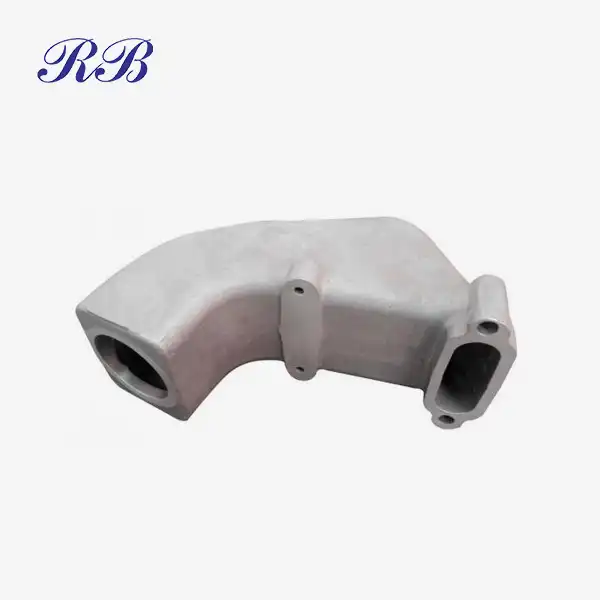
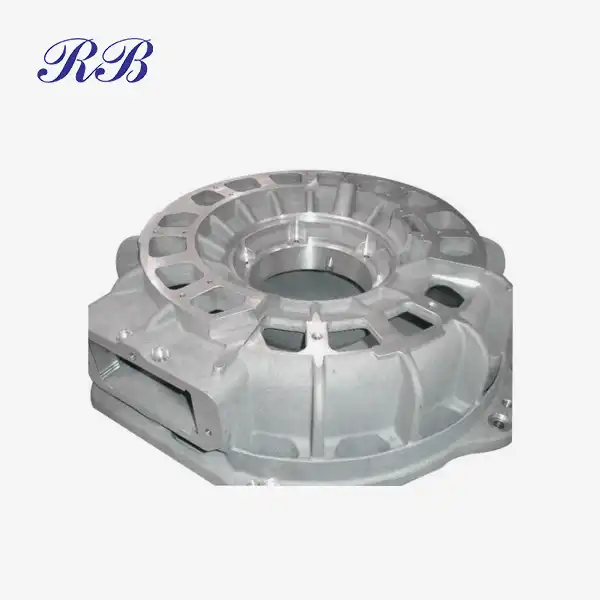
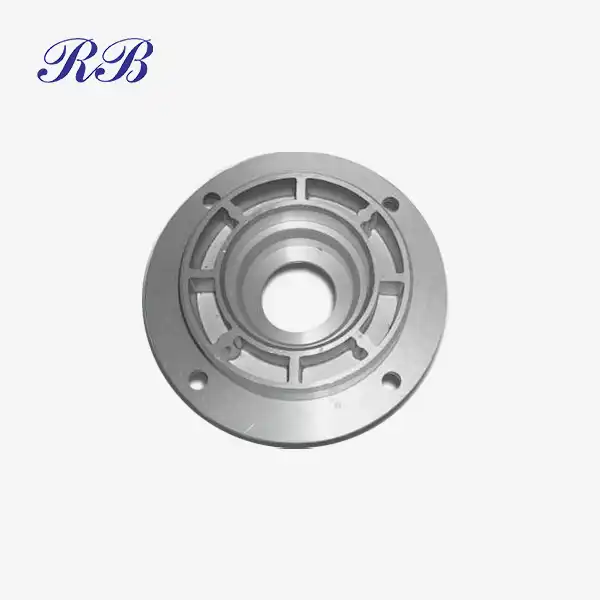
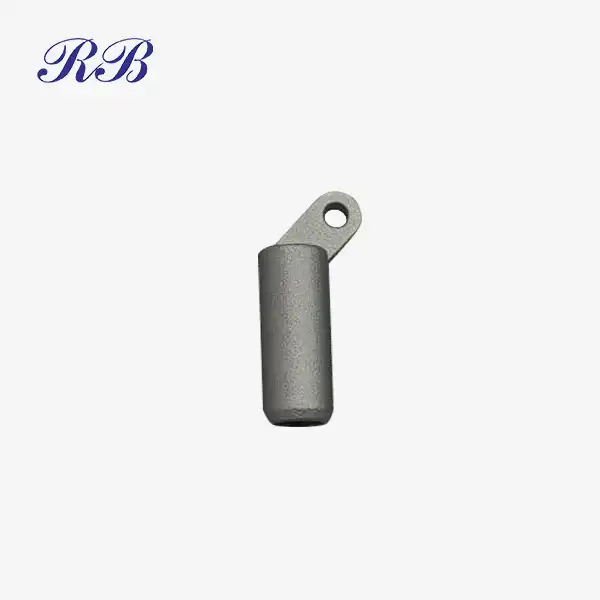
At Rongbao, we are experts in professional gravity casting manufacturing and have a lot of experience making custom solutions for a wide range of businesses. Our gravity casting capabilities include aluminum robot arm parts for industrial applications, aluminum gravity cast flanges for covers, custom aluminum cast coupling flanges for fire pump bearing covers, threaded floor flanges for food machinery installation, casting lamp holders for roman columns, cast coupling flanges for telecom support, and stainless steel flanges for fire protection connecting brackets.
For inquiries about our gravity casting services or to request a free sample, please contact us at steve.zhou@263.net or zhouyi@rongbaocasting.com.
References
1. Campbell, J. (2023). Complete Casting Handbook: Metal Casting Processes, Metallurgy, Techniques and Design. Butterworth-Heinemann.
2. Beeley, P. (2021). Foundry Technology. Butterworth-Heinemann.
3. International Journal of Metalcasting, Volume 16, Issue 2, April 2022.
4. American Foundry Society. (2023). Casting Process Comparison Guide. AFS Technical Publications.
5. Kaufman, J.G. & Rooy, E.L. (2022). Aluminum Alloy Castings: Properties, Processes, and Applications. ASM International.