- English
- French
- German
- Portuguese
- Spanish
- Russian
- Japanese
- Korean
- Arabic
- Greek
- German
- Turkish
- Italian
- Danish
- Romanian
- Indonesian
- Czech
- Afrikaans
- Swedish
- Polish
- Basque
- Catalan
- Esperanto
- Hindi
- Lao
- Albanian
- Amharic
- Armenian
- Azerbaijani
- Belarusian
- Bengali
- Bosnian
- Bulgarian
- Cebuano
- Chichewa
- Corsican
- Croatian
- Dutch
- Estonian
- Filipino
- Finnish
- Frisian
- Galician
- Georgian
- Gujarati
- Haitian
- Hausa
- Hawaiian
- Hebrew
- Hmong
- Hungarian
- Icelandic
- Igbo
- Javanese
- Kannada
- Kazakh
- Khmer
- Kurdish
- Kyrgyz
- Latin
- Latvian
- Lithuanian
- Luxembou..
- Macedonian
- Malagasy
- Malay
- Malayalam
- Maltese
- Maori
- Marathi
- Mongolian
- Burmese
- Nepali
- Norwegian
- Pashto
- Persian
- Punjabi
- Serbian
- Sesotho
- Sinhala
- Slovak
- Slovenian
- Somali
- Samoan
- Scots Gaelic
- Shona
- Sindhi
- Sundanese
- Swahili
- Tajik
- Tamil
- Telugu
- Thai
- Ukrainian
- Urdu
- Uzbek
- Vietnamese
- Welsh
- Xhosa
- Yiddish
- Yoruba
- Zulu
What materials are best for casting lamp holder bodies?
Architectural lighting components demand materials that balance structural integrity with aesthetic requirements, particularly when these fixtures serve decorative purposes in classical architectural elements. Lamp holder assemblies installed on Roman columns and similar ornamental structures face unique challenges: they must support considerable weight while resisting environmental degradation over extended service periods. The selection of casting materials for these applications involves evaluating multiple performance characteristics, from initial casting behavior through decades of outdoor exposure. Among aluminum alloys available for gravity casting processes, A356 has emerged as a preferred choice for producing lamp holder bodies weighing 25kg or more, though understanding why requires examining both its composition and resulting properties.
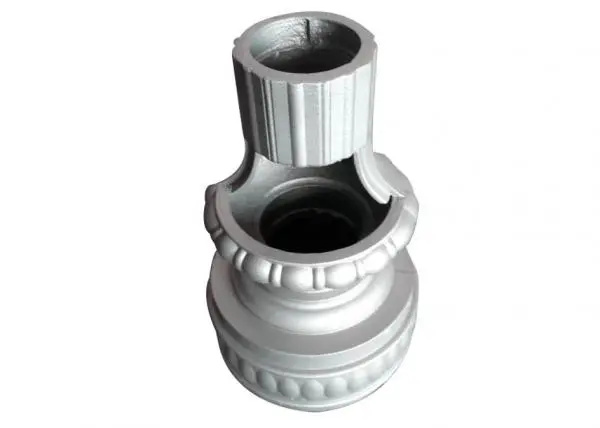
Material: A356
A356 aluminum alloy belongs to the aluminum silicon magnesium family, a designation that immediately signals its foundry characteristics to metallurgists familiar with casting operations. The alloy emerged from systematic development efforts during the mid twentieth century when aerospace manufacturers needed castings that combined fluidity during pouring with strength after heat treatment. Unlike some aluminum casting alloys developed specifically for automotive or marine applications, A356 found adoption across diverse industries precisely because its balanced composition avoided the compromises inherent in more specialized materials.
The gravity casting process used for producing lamp holder assemblies exploits A356's excellent fluidity, a property that becomes critical when filling complex mold cavities without pressurized assistance. Foundries in Xi'an, China have documented that this alloy fills thin sections and reproduces fine decorative details more reliably than alternatives such as 319 or 413 aluminum alloys. When molten A356 enters a mold designed for Roman column lamp fixtures, its flow characteristics allow complete cavity filling before premature solidification can trap voids or create cold shuts at section junctions. This behavior stems directly from the alloy's silicon content, which depresses the liquidus temperature while maintaining adequate superheat throughout the pouring sequence.
Heat treatment response distinguishes A356 from cast aluminum alloys that remain in the as-cast condition. The T6 temper, achieved through solution heat treatment followed by artificial aging, transforms the relatively soft as-cast structure into a material with mechanical properties approaching those of wrought aluminum products. This transformation occurs because magnesium and silicon atoms, initially distributed randomly throughout the aluminum matrix, precipitate as Mg2Si particles during the aging cycle. These precipitates impede dislocation movement, the microscopic mechanism underlying plastic deformation, thereby strengthening the alloy substantially compared to its as-cast state.
Manufacturers producing casting lamp holder assembly components under ISO9001:2015 certification have observed that A356 accommodates the dimensional tolerances required for decorative architectural hardware without excessive machining. The alloy's moderate shrinkage rate, approximately 1.3 percent linear, allows pattern makers to predict final dimensions accurately when designing tooling. This predictability reduces the material removal required during CNC machining operations, lowering production costs while maintaining the surface quality necessary for subsequent shot blasting treatments. Components cast from A356 also respond well to these surface finishing processes, developing uniform texture that enhances paint adhesion or anodizing uptake depending on the specified final treatment.
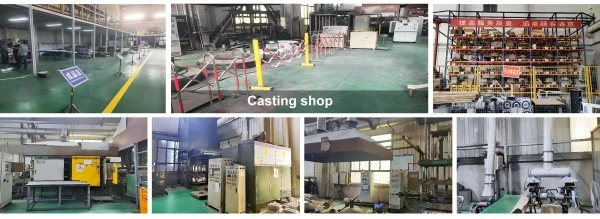
Main Ingredients and Physical Properties
The American Aluminum Association designates A356 composition within specific ranges: silicon content between 6.5 and 7.5 percent, magnesium from 0.25 to 0.45 percent, with iron, copper, manganese, zinc, and titanium limited to trace levels. Silicon serves as the primary alloying element, forming a eutectic structure during solidification that interrupts the continuous aluminum matrix. This microstructural feature explains why A356 castings fracture differently than pure aluminum; the silicon particles act as crack initiation sites but simultaneously prevent catastrophic crack propagation by forcing fracture paths to navigate around these hard phases.
Magnesium addition enables precipitation hardening, though its concentration requires careful control. Insufficient magnesium yields castings that respond poorly to heat treatment, while excessive amounts promote porosity and hot cracking during solidification. The narrow specification range reflects decades of production experience across numerous foundries, each contributing data that refined the optimal composition window. Copper content remains intentionally low in A356, typically under 0.20 percent, because this element reduces corrosion resistance in marine or industrial atmospheres. Lamp holders installed on exterior Roman columns benefit directly from this compositional choice, as copper-lean alloys maintain protective oxide films more reliably when exposed to rain, humidity, or coastal salt spray.
Density measurements for A356 consistently fall near 2.68 grams per cubic centimeter, roughly one third that of steel or bronze. This characteristic proves advantageous when mounting 25kg lamp assemblies on architectural features not originally designed to support modern electrical fixtures. The reduced dead load compared to traditional materials allows installation on historic structures without reinforcing underlying supports, preserving architectural authenticity while meeting contemporary lighting requirements for lamp holder assemblies. Thermal expansion coefficients for A356 measure approximately 21.5 micrometers per meter per degree Celsius, a value that designers must account for in assemblies spanning temperature ranges from winter cold to summer heat or artificial lighting warmth.
Electrical conductivity in A356 reaches about 40 percent that of pure aluminum, sufficient for many grounding applications though not optimal for current-carrying components. Casting lamp holder assembly designs typically accommodate this limitation by incorporating dedicated copper conductors for power delivery while using the cast body primarily for structural and grounding functions. Thermal conductivity, measuring around 150 watts per meter-kelvin, facilitates heat dissipation from lamp sources, preventing localized overheating that might degrade insulation materials or distort thin casting sections. Foundries producing components for wood box packaging and international shipment have noted that A356's thermal properties also influence cooling rates during solidification, affecting the feeding strategy required to produce sound castings free from shrinkage porosity.

Mechanical Properties and Corrosion Resistance
Tensile strength values for A356-T6 typically range from 230 to 280 MPa depending on section thickness, casting method, and heat treatment parameters. These figures represent substantial improvement over as-cast properties, which rarely exceed 160 MPa. The strength increase accompanying T6 heat treatment allows designers to reduce wall thickness compared to as-cast designs, optimizing material usage while maintaining adequate safety factors. Yield strength, the stress level initiating permanent deformation, measures between 160 and 210 MPa for properly processed material. This property determines whether lamp assemblies will maintain dimensional stability under installation torques or wind loading when mounted on exposed Roman column locations.
Elongation at fracture provides insight into material ductility, measuring how much a sample stretches before breaking. A356-T6 typically exhibits 3 to 5 percent elongation, modest compared to wrought aluminum products but adequate for cast components experiencing primarily static loading. The limited ductility reflects the alloy's microstructure: silicon particles and precipitation hardening phases that strengthen the material simultaneously restrict its ability to deform plastically. Design engineers account for this behavior by avoiding stress concentrations in critical areas and ensuring that loading conditions remain well within elastic limits during normal service.
Fatigue properties become relevant for acasting lamp holder assembly experiencing vibration from wind or mechanical disturbances. A356-T6 demonstrates endurance limits around 90 MPa for fully reversed bending, meaning components stressed below this threshold should survive indefinitely under cyclic loading. However, surface defects, porosity, or machining marks concentrate stresses locally, potentially initiating cracks at lower nominal stress levels. Shot blasting surface treatment, standard for architectural castings, actually improves fatigue resistance by inducing beneficial compressive stresses in surface layers while removing stress risers left by pattern parting lines or machining operations.
Corrosion resistance in aluminum alloys depends primarily on the stability of surface oxide films that form spontaneously when fresh metal contacts air. A356 develops protective alumina layers measuring nanometers thick but remarkably impervious to further oxidation under neutral conditions. This passive film explains why aluminum architectural components survive decades outdoors without paint, gradually developing the characteristic matte patina resulting from repeated wetting and drying cycles. Chloride ions, present in coastal atmospheres or deicing salts, can compromise oxide stability, though A356's low copper content provides better resistance than alloys like 2024 or 7075 aluminum.
Galvanic corrosion concerns arise when dissimilar metals contact in the presence of electrolytes. A356 casting lamp holder assembly fastened to steel supports require electrical isolation or protective coatings to prevent accelerated attack of the aluminum component, which acts as anode in this electrochemical cell. Conversely, copper wiring contacting A356 bodies creates less severe galvanic couples due to smaller potential differences, though best practices still recommend insulating electrical connections. Production facilities maintaining ISO14001 and ISO45001 certifications have implemented surface treatments that enhance corrosion resistance beyond native oxide films, including anodizing processes that grow thick, hard, porous oxide layers capable of absorbing dyes or sealants.
Contact Information
Rongbao specializes in manufacturing architectural casting components, including lamp holder assemblies for Roman columns and decorative structures. Our Xi'an facility produces customized OEM/ODM castings through gravity casting processes, with complete secondary operations including CNC machining and shot blasting. Production capabilities support projects requiring 5000 pieces or more, packaged in wood boxes for secure international shipping. For technical specifications, material certifications, or to discuss your architectural lighting requirements, reach our engineering team at steve.zhou@263.net or zhouyi@rongbaocasting.com.
Material selection for casting lamp holder assembly components involves evaluating competing requirements: castability during manufacturing, mechanical properties in service, and durability under environmental exposure. A356 aluminum alloy addresses these demands through a composition refined over decades of foundry practice and engineering application. Its silicon content ensures mold filling characteristics suitable for complex decorative geometries, while magnesium enables heat treatment responses that elevate mechanical properties substantially above as-cast conditions. The resulting material exhibits strength adequate for structural applications, corrosion resistance sufficient for outdoor exposure, and density low enough to simplify installation on existing architectural features. Understanding these properties allows designers to specify A356 confidently for lamp holder bodies and similar architectural castings where performance expectations extend across decades of service.
References
- Kaufman, J. G., & Rooy, E. L. (2004). Aluminum Alloy Castings: Properties, Processes, and Applications. ASM International, Materials Park, Ohio.
- Davis, J. R. (1993). Aluminum and Aluminum Alloys. ASM Specialty Handbook, ASM International, Materials Park, Ohio.
- Mondolfo, L. F. (1976). Aluminum Alloys: Structure and Properties. Butterworths, London, United Kingdom.
- Polmear, I. J. (2006). Light Alloys: From Traditional Alloys to Nanocrystals, Fourth Edition. Butterworth-Heinemann, Oxford, United Kingdom.
- Campbell, J. (2015). Complete Casting Handbook: Metal Casting Processes, Metallurgy, Techniques and Design. Butterworth-Heinemann, Oxford, United Kingdom.
Learn about our latest products and discounts through SMS or email