- English
- French
- German
- Portuguese
- Spanish
- Russian
- Japanese
- Korean
- Arabic
- Greek
- German
- Turkish
- Italian
- Danish
- Romanian
- Indonesian
- Czech
- Afrikaans
- Swedish
- Polish
- Basque
- Catalan
- Esperanto
- Hindi
- Lao
- Albanian
- Amharic
- Armenian
- Azerbaijani
- Belarusian
- Bengali
- Bosnian
- Bulgarian
- Cebuano
- Chichewa
- Corsican
- Croatian
- Dutch
- Estonian
- Filipino
- Finnish
- Frisian
- Galician
- Georgian
- Gujarati
- Haitian
- Hausa
- Hawaiian
- Hebrew
- Hmong
- Hungarian
- Icelandic
- Igbo
- Javanese
- Kannada
- Kazakh
- Khmer
- Kurdish
- Kyrgyz
- Latin
- Latvian
- Lithuanian
- Luxembou..
- Macedonian
- Malagasy
- Malay
- Malayalam
- Maltese
- Maori
- Marathi
- Mongolian
- Burmese
- Nepali
- Norwegian
- Pashto
- Persian
- Punjabi
- Serbian
- Sesotho
- Sinhala
- Slovak
- Slovenian
- Somali
- Samoan
- Scots Gaelic
- Shona
- Sindhi
- Sundanese
- Swahili
- Tajik
- Tamil
- Telugu
- Thai
- Ukrainian
- Urdu
- Uzbek
- Vietnamese
- Welsh
- Xhosa
- Yiddish
- Yoruba
- Zulu
How do sand casting vs investment casting compare for prototypes?
When it comes to creating prototypes for complex parts, manufacturers often find themselves choosing between sand casting and investment casting. Both methods have their merits, but understanding their differences is crucial for selecting the right process for your prototype aluminum casting needs.In this detailed tutorial, we'll look at the similarities and differences between investment casting and sand casting in terms of surface polish, accuracy, and the complexity of the parts.
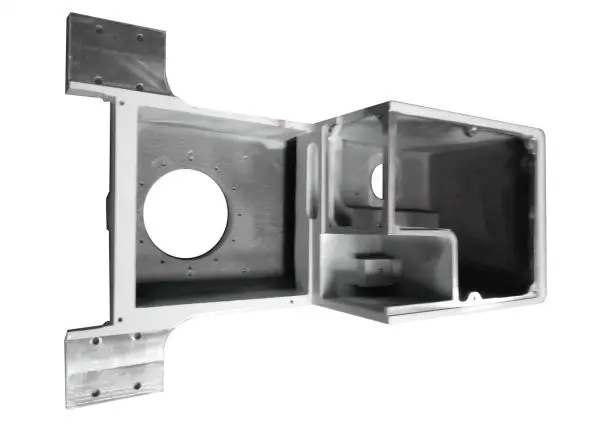
Part Complexity: Navigating Intricate Designs
The complexity of a part plays a significant role in determining which casting method is most suitable. Sand casting, with its versatility, can handle a wide range of part complexities. However, investment casting truly shines when it comes to intricate designs.
Sand casting utilizes a sand mold that's formed around a pattern. Bigger components with less complex geometry work well with this approach.The sand mold can be easily modified, making it ideal for iterative design processes where changes might be frequent.
On the other hand, investment casting, also known as lost-wax casting, excels in producing parts with complex geometries and fine details.Making a mold requires first making a wax design, and then coating it with ceramic material. Intricate interior pathways, thin walls, and complicated exterior features may be created using this approach, which is not possible with sand casting.
For prototype aluminum casting projects that demand high levels of detail, investment casting often proves to be the superior choice.Industries like as aerospace, which rely on complex, lightweight components, greatly benefit from its ability to capture fine characteristics.
Precision: Achieving Tight Tolerances
Precision is another critical factor when comparing sand casting and investment casting for prototypes. The level of accuracy required can often dictate which method is more appropriate.
Sand casting, while versatile, generally offers lower precision compared to investment casting. The nature of the sand mold means that there can be some dimensional variability between castings. Typical tolerances for sand casting range from ±0.8 mm to ±2.0 mm, depending on the size and complexity of the part.
Investment casting, however, is renowned for its ability to achieve tighter tolerances. For more consistent dimensions when casting, choose a ceramic mold that is as stiff as possible. Tolerances as tight as ±0.1 mm can be achieved with investment casting, making it an excellent choice for prototype aluminum casting projects that require high precision.
Prototyping components for sectors such as medical devices or high-performance automotive components, where accurate dimensions are important, is where investment casting really shines due to its accuracy advantage.However, it's important to note that achieving these tight tolerances often comes with higher costs and longer lead times compared to sand casting.
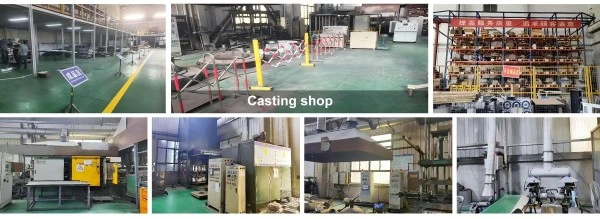
Surface Finish: Enhancing Aesthetics and Functionality
The aesthetic value and practical characteristics of a prototype are highly affected by its surface treatment.In this aspect, investment casting generally outperforms sand casting.
Sand casting typically produces parts with a rougher surface finish. The texture of the sand used in the mold is imparted onto the cast part, resulting in a surface roughness that can range from 250 to 900 μin Ra (Root Mean Square). This rougher finish may require additional post-processing if a smoother surface is needed.
Investment casting, by contrast, can achieve much smoother surface finishes right out of the mold. The ceramic mold used in this process can produce surface finishes as smooth as 32 to 63 μin Ra.In addition to making the prototype seem better, this high-quality finish may improve its functional features, including making the moving components less frictional or the channels more fluid-flowing.
For prototype aluminum casting projects where surface finish is a critical factor, investment casting often proves to be the better option. Its ability to produce parts with minimal surface imperfections can reduce the need for extensive post-processing, potentially saving time and resources in the prototyping phase.
Prototype Aluminum Casting Supplier: Rongbao Enterprise
Rongbao Enterprise is the undisputed market leader in high-quality aluminum prototype casting. Rongbao provides first-rate prototype services with an emphasis on accuracy and originality. They can advise you on the optimal method for your needs because to their extensive knowledge of both investment casting and sand casting.
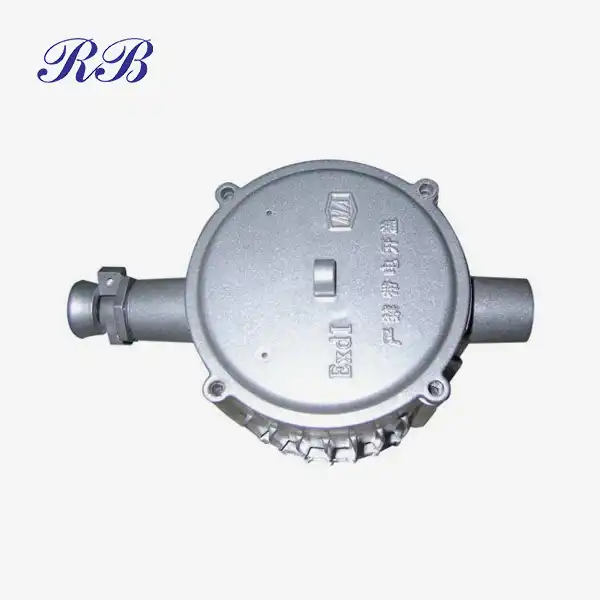
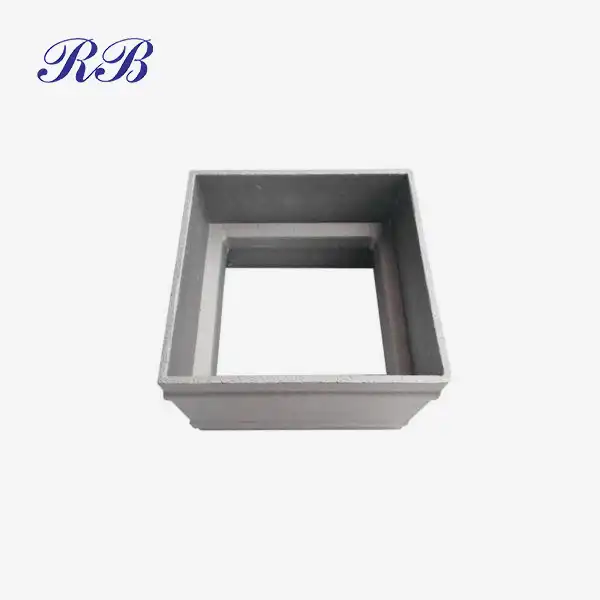
Rongbao Enterprise specializes in crafting durable prototype aluminum castings, such as those made from A356 alloy. Their advanced low-pressure casting process ensures both precision and strength, meeting rigorous quality standards certified by ISO9001:2015, ISO14001, and ISO45001. With capabilities including CNC machining for exact dimensions and shot blasting for refined surface finishes, Rongbao can deliver prototypes that meet the most exacting specifications.
Whether you need a single prototype or a production run of up to 5,000 pieces, Rongbao Enterprise has the capacity to meet your needs. They offer OEM and ODM customization, ensuring that your prototype aluminum casting is tailored to your exact requirements. For more information or to discuss your project, reach out to their expert team at steve.zhou@263.net or zhouyi@rongbaocasting.com.
FAQ
1. Which casting method is more cost-effective for prototyping?
Generally, sand casting is more cost-effective for prototyping, especially for larger parts or smaller production runs. Investment casting can be more expensive due to the tooling costs, but it may be more economical for complex parts or when high precision is required.
2. How do lead times compare between sand casting and investment casting for prototypes?
Sand casting typically offers shorter lead times compared to investment casting. Sand molds can be produced quickly, often within a few days. Investment casting requires more time to create the wax pattern and ceramic mold, which can extend lead times to several weeks.
3. Can both methods be used for prototype aluminum casting?
Yes, both sand casting and investment casting can be used for prototype aluminum casting. The choice depends on factors such as part complexity, required precision, surface finish needs, and project timeline.
References
1. Campbell, J. (2015). Complete Casting Handbook: Metal Casting Processes, Metallurgy, Techniques and Design. Butterworth-Heinemann.
2. ASM International. (2008). ASM Handbook, Volume 15: Casting. ASM International.
3. Beeley, P. (2001). Foundry Technology. Butterworth-Heinemann.
4. Groover, M. P. (2010). Fundamentals of Modern Manufacturing: Materials, Processes, and Systems. John Wiley & Sons.
5. Kalpakjian, S., & Schmid, S. R. (2014). Manufacturing Engineering and Technology. Pearson.
Learn about our latest products and discounts through SMS or email