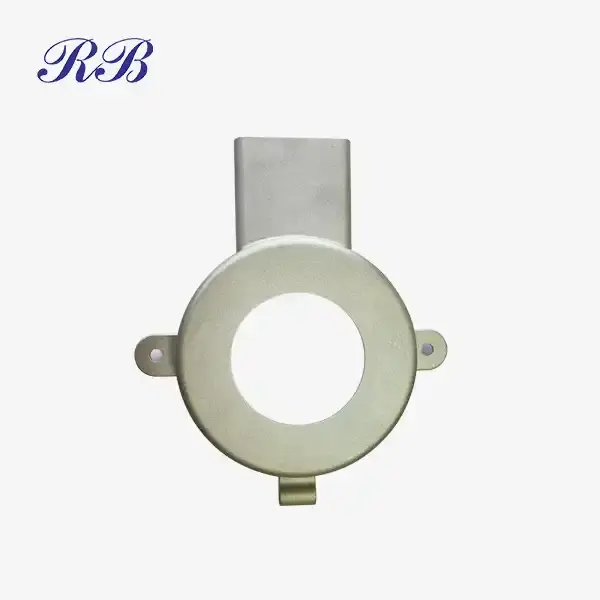
Common Aluminum Alloys for Die Casting Housing
A380: The Versatile Workhorse
When it comes to die casting housings, A380 is often the go-to aluminum alloy. Its well-balanced strength, fluidity, and affordability are the main reasons for its appeal.A380 contains roughly 8.5% silicon and 3.5% copper, which contribute to its excellent castability and good resistance to corrosion.In the automobile sector, this alloy is especially used for parts like engine blocks and gearbox cases.
However, A380 isn't without its limitations. Its relatively high copper content can make it susceptible to hot cracking during the solidification process. This is why experienced die casters, like those at Rongbao Enterprise, carefully control the casting parameters to mitigate these risks and ensure high-quality outputs.
ADC12: The High-Pressure Performer
ADC12 aluminum alloy die casting, also known as A383 in some regions, is another popular choice for die casting housings, especially when high pressure tightness is required. This alloy contains about 10-12% silicon and lower copper content compared to A380.It is perfect for casting intricate and thin-walled designs because of the improved fluidity caused by the higher silicon.
One of ADC12's most prominent highlights is its momentous resistance to weight spillage, which makes it an amazingalternative for lodgings that require to have a tight seal. This characteristic is especially supportive in applications like pressure driven valve bodies or car gearbox cases where anticipating liquid spills is basic.
A356: The Heat-Treatable Option
For applications that demand higher strength and ductility, A356 comes into play. This combination is recognized by its heat-treatable nature, permitting for noteworthy changes in mechanical properties post-casting.With about 7% silicon and 0.3% magnesium, A356 offers a good balance of castability and mechanical strength.
The ability to heat-treat A356 makes it particularly suitable for housings that may be subjected to higher stresses or require enhanced fatigue resistance.It's important to keep in mind, though, that the heat treatment procedure adds a stage to the production process, which might raise lead times and prices.
Thermal Conductivity: Keeping Cool Under Pressure
The Cooling Conundrum in Die Casting
In die casting housing design, thermal conductivity is an important consideration, particularly for situations where heat dissipation is essential.Aluminum alloys, in general, offer excellent thermal conductivity compared to other common engineering materials like steel or plastic.Because of this characteristic, die-cast aluminum housings are especially well-suited for parts that produce heat while in use.
For instance, in the electrical and electronic industry, where Rongbao Enterprise has significant expertise, aluminum die cast housings are often used for LED lighting fixtures, motor casings, and power supply enclosures.Aluminum's strong thermal conductivity aids in rapid heat dissipation, avoiding overheating and prolonging the life of the enclosed components.
Alloy-Specific Thermal Properties
It's important to note that thermal conductivity can vary between different aluminum alloys. Pure aluminum has a thermal conductivity of about 237 W/m·K, but alloying elements typically reduce this value. For example:
- A380 has a thermal conductivity of around 96-109 W/m·K
- ADC12 ranges from 92-100 W/m·K
- A356 offers about 151-170 W/m·K
These differences, while seemingly small, can have significant impacts on heat dissipation in critical applications. Engineers and designers must consider these thermal properties when selecting the appropriate aluminum alloy die casting for their specific housing requirements.
Innovative Cooling Solutions
At Rongbao Enterprise, we've seen an increasing demand for housings with integrated cooling features. By leveraging the design flexibility of die casting, it's possible to incorporate cooling channels or fins directly into the housing structure.More compact and effective designs result from this method of improving heat dissipation without requiring extra parts.
Precision and Complexity: Pushing the Boundaries of Design
Achieving Tight Tolerances
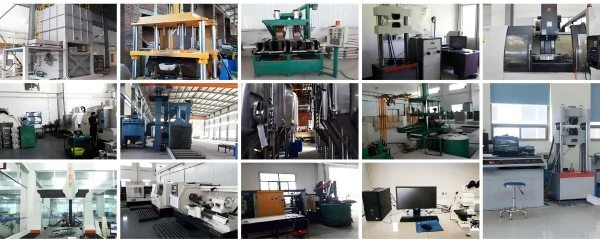
One of the most significant advantages of aluminum alloy die casting is the ability to produce complex shapes with high precision. Modern die casting techniques, especially those employed by industry leaders like Rongbao Enterprise, can achieve tolerances as tight as ±0.1mm for certain features.
For housings that must maintain certain clearances or communicate with other components, this degree of accuracy is very important.For example, in the automotive industry, transmission housings require extremely precise dimensions to ensure proper gear alignment and smooth operation.
Embracing Complexity in Design
The aluminum alloy die casting process allows for the creation of intricate geometries that would be difficult or impossible to achieve with other manufacturing methods.This feature creates new opportunities for home design, allowing engineers to:
- Integrate multiple functions into a single component
- Reduce the overall part count in assemblies
- Optimize weight distribution and structural integrity
- Incorporate complex internal passages for cooling or wiring
For instance, in the medical equipment industry, where Rongbao Enterprise has made significant inroads, aluminum alloy die cast housings for diagnostic devices often feature intricate internal structures to accommodate various sensors, circuit boards, and optical components – all while maintaining a sleek and ergonomic external design.
The Role of Advanced Simulation in Achieving Precision
Achieving high precision and complexity in die casting is not just about the physical process – it starts long before the first drop of molten aluminum is poured.Sophisticated simulation software is essential for casting process optimization. Engineers can use these tools to:
- Predict and eliminate potential defects like porosity or shrinkage
- Optimize gating and runner systems for improved metal flow
- Analyze solidification patterns to ensure uniform cooling
- Fine-tune process parameters for consistent results
By leveraging these technologies, manufacturers like Rongbao Enterprise can push the boundaries of what's possible in aluminum die casting, delivering housings that meet increasingly demanding specifications.

In Conclusion
Aluminum alloy die casting stands out as a versatile and efficient method for producing high-quality housings across various industries.From the determination of fitting amalgams to the optimization of warm properties and the accomplishment of exact, complex plans, this fabricating handle offers a riches of conceivable outcomes for engineers and creators.
As we've explored, different alloys like A380, ADC12, and A356 each bring their unique strengths to the table, catering to diverse application requirements.Aluminum alloys are perfect for housings that require efficient heat dissipation due to their exceptional thermal conductivity, and die casting's ability to achieve accuracy and complexity opens up new design possibilities.
Working with a skilled die casting manufacturer is essential for people in sectors like electronics, medical equipment, automotive, and aerospace to fully take advantage of these benefits.Rongbao Enterprise, with its long-standing expertise and commitment to quality, stands ready to bring your housing designs to life.
Aluminum Alloy Die Casting Supplier: Rongbao Enterprise
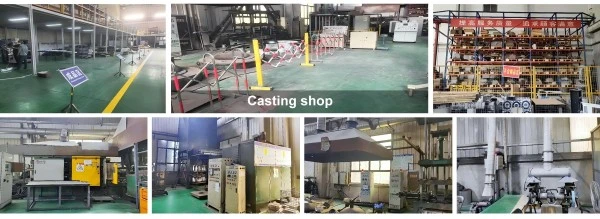
Rongbao Endeavor, established in 2003, has set up itself as a driving producer specializing in aluminum amalgamcasting and accuracy handling. With a center on conveying coordinates component supply arrangements, Rongbao offers a comprehensive extend of administrations counting high-pressure pass on casting, low-pressure kick the bucketcasting, gravity casting, and accuracy machining.
Our commitment to quality is evident through our certifications:
- ISO 9001:2016 Quality Management System
- ISO 14001 Environmental Management System
- ISO 45001 Occupational Health and Safety Management System
Rongbao's expertise extends to a wide array of aluminum alloy die casting products, including:
- Casting motor end covers
- Sensor covers for oil tank protection in mining machinery vehicles
- Cast housings for connectors
- Casting agitator base parts
- Cast sink filters for bearing end covers
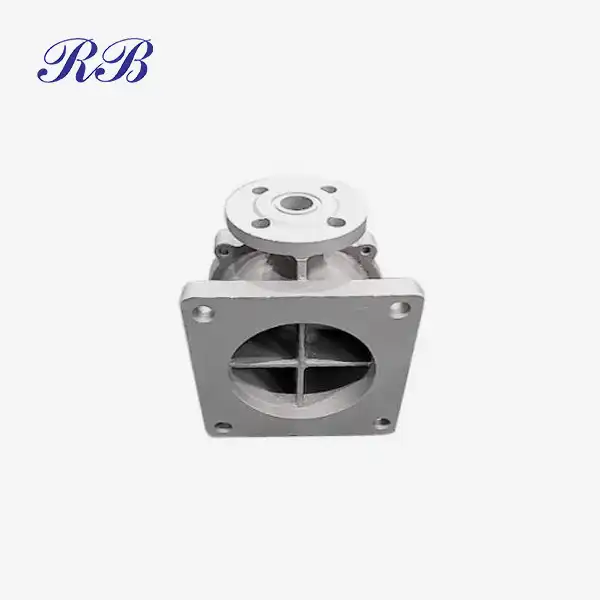
- Casting accessories for natural gas control valves
With 70% of our products exported to markets in the United States, Europe, Japan, and beyond, Rongbao has built a strong global presence. We pride ourselves on our ability to provide customized aluminum alloy die casting solutions at competitive prices, backed by our commitment to environmental sustainability, innovation, and precision.
Ready to elevate your housing designs with high-quality aluminum alloy die casting? Contact Rongbao Enterprise today for a free sample and expert consultation. Reach out to us at steve.zhou@263.net or zhouyi@rongbaocasting.com to discuss how we can bring your projects to life with our advanced die casting solutions.