Effect on Fluidity
Enhancing Flow Characteristics
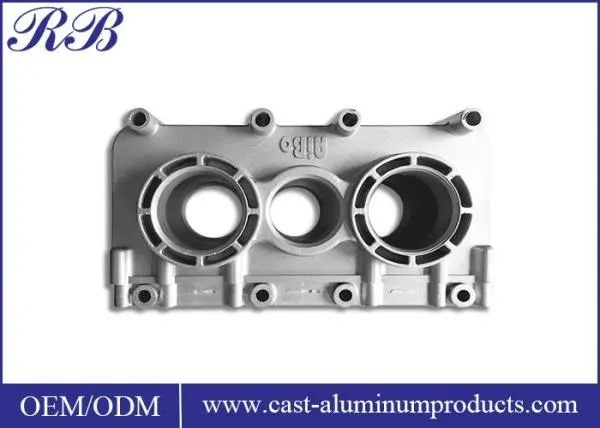
Silicon content significantly influences the fluidity of aluminum alloys during the die casting process. As the percentage of silicon increases, the overall fluidity of the molten metal improves. This enhanced flow characteristic is primarily attributed to the formation of a eutectic composition, which occurs at approximately 12.6% silicon in aluminum-silicon alloys.
In aluminum alloy die casting, the improved fluidity allows the molten metal to fill complex mold cavities more easily, resulting in better detail reproduction and reduced risk of misruns or incomplete fills.When casting complicated or thin-walled components, such those used in automotive and aerospace applications, this is very beneficial.
Optimizing Casting Parameters
While increased silicon content generally enhances fluidity, it's important to note that the relationship is not linear. Achieving the best outcomes requires foundry engineers to carefully balance silicon levels with other alloying elements and process factors.Factors such as mold temperature, injection pressure, and cooling rates all interact with silicon content to influence the final casting quality.
For example, a higher silicon percentage would enable lower casting temperatures, which might save energy and prolong die life.However, this must be weighed against other considerations, such as solidification behavior and mechanical properties of the finished part.
Effect on Porosity
Mitigating Shrinkage Porosity
One of the most significant benefits of increased silicon content in aluminum die casting alloys is its ability to reduce shrinkage porosity. As the molten metal solidifies, it naturally contracts. Silicon, however, expands during solidification, helping to counteract this shrinkage tendency.
The expansion of silicon during solidification helps to feed areas that might otherwise develop voids or pores due to shrinkage. As a result, the overall porosity levels decrease and the solidification becomes more uniform. For industries demanding high-integrity castings, such as those produced by aluminum alloy die casting in automotive and aerospace, this porosity reduction is crucial for ensuring structural integrity and performance.
Gas Porosity Considerations
While silicon content helps mitigate shrinkage porosity, its relationship with gas porosity is more complex. Higher silicon levels can potentially increase the solubility of hydrogen in the molten aluminum, which may lead to increased gas porosity if proper degassing techniques are not employed.
Foundries must therefore implement robust melt treatment processes, including effective degassing and filtration methods, to minimize gas-related defects.The relationship between gas porosity, melt quality, and silicon concentration emphasizes how crucial it is to regulate the die casting process holistically.
Grain Size and Morphology Impact
Refining Microstructure
Silicon content plays a significant role in shaping the microstructure of die cast aluminum alloys. As silicon levels increase, they tend to promote a finer grain structure.The production of many tiny silicon particles, which serve as nucleation sites for aluminum grains during solidification, is what causes this refinement.
Strength and ductility are two of the better mechanical qualities that arise from the fine-grained structure that is produced. Applications that need high wear resistance or are sensitive to fatigue stress, such engine parts or structural elements in the automobile sector, can especially benefit from this.
Eutectic Modification
In aluminum alloy die casting, particularly with aluminum-silicon alloys, the morphology of the eutectic silicon phase is of particular interest. Unmodified alloys typically exhibit a coarse, plate-like silicon structure, which can negatively impact mechanical properties. However, with proper modification techniques, such as the addition of strontium or sodium, the eutectic silicon can be refined into a fine, fibrous structure.
Die casters are able to attain a balance between fluidity, porosity reduction, and desired mechanical qualities thanks to this eutectic modification and optimum silicon content.The intricate construction of alloys in contemporary die casting techniques is highlighted by the interaction between eutectic modification and silicon content.
Tailoring Properties for Specific Applications
The ability to control grain size and morphology through silicon content and modification techniques enables foundries to tailor the properties of die cast components for specific applications. For instance, hypereutectic aluminum-silicon alloys with silicon contents above 12.6% are often used in applications requiring excellent wear resistance, such as engine blocks or cylinder liners.
Conversely, hypoeutectic alloys with lower silicon contents may be preferred for applications demanding higher ductility or improved machinability.Manufacturers are able to satisfy a wide range of performance criteria across several sectors because to the flexibility in alloy design made possible by a knowledge of silicon's function.

In conclusion
The affect of silicon substance on smoothness and porosity in pass on cast aluminum combinations is multifaceted and significant.By carefully controlling silicon levels, foundries can optimize casting processes, reduce defects, and enhance the overall quality of their products.Gaining an understanding of how silicon content and casting properties interact will be essential for success in the field of aluminum alloy die casting as the need for lightweight, high-performance components across sectors continues to increase.
Aluminum Alloy Die Casting Supplier: Rongbao Enterprise
For those looking for mastery in aluminum amalgam kick the bucket casting, Rongbao Venture stands out as a proficientproducer, production line, and provider in China.With a focus on customized solutions and competitive pricing, Rongbao offers a wide range of aluminum alloy die casting products, including motor end covers, sensor covers for mining machinery vehicles, connector housings, agitator base parts, sink filters for bearing end covers, and accessories for natural gas control valves.
Established in 2003, Rongbao Undertaking has set up itself as a pioneer in aluminum amalgam casting and accuracyhandling.The company's commitment to quality is evident through its ISO 9001:2016 certification for Quality Management, ISO 14001 for Environmental Management, and ISO 45001 for Occupational Health and Safety Management.
Rongbao's mastery expands past conventional kick the bucket casting, enveloping progressed generation strategiessuch as high-pressure kick the bucket casting, low-pressure kick the bucket casting, gravity casting, and exactnessmachining administrations.This comprehensive approach allows Rongbao to deliver integrated component supply solutions for equipment manufacturers across various industries, including automotive, aerospace, medical, and electrical and electronic sectors.
With 70% of its products exported to markets in the United States, Europe, Japan, and beyond, Rongbao has built a strong global presence. The company's dedication to environmental sustainability, innovation, and precision makes it an ideal partner for businesses seeking high-quality aluminum alloy die casting solutions.
To learn more about how Rongbao can meet your aluminum alloy die casting needs or to request a free sample, don't hesitate to reach out. Contact Steve Zhou at steve.zhou@263.net or Zhou Yi at zhouyi@rongbaocasting.com for personalized assistance and expert guidance on your next project.