- English
- French
- German
- Portuguese
- Spanish
- Russian
- Japanese
- Korean
- Arabic
- Greek
- German
- Turkish
- Italian
- Danish
- Romanian
- Indonesian
- Czech
- Afrikaans
- Swedish
- Polish
- Basque
- Catalan
- Esperanto
- Hindi
- Lao
- Albanian
- Amharic
- Armenian
- Azerbaijani
- Belarusian
- Bengali
- Bosnian
- Bulgarian
- Cebuano
- Chichewa
- Corsican
- Croatian
- Dutch
- Estonian
- Filipino
- Finnish
- Frisian
- Galician
- Georgian
- Gujarati
- Haitian
- Hausa
- Hawaiian
- Hebrew
- Hmong
- Hungarian
- Icelandic
- Igbo
- Javanese
- Kannada
- Kazakh
- Khmer
- Kurdish
- Kyrgyz
- Latin
- Latvian
- Lithuanian
- Luxembou..
- Macedonian
- Malagasy
- Malay
- Malayalam
- Maltese
- Maori
- Marathi
- Mongolian
- Burmese
- Nepali
- Norwegian
- Pashto
- Persian
- Punjabi
- Serbian
- Sesotho
- Sinhala
- Slovak
- Slovenian
- Somali
- Samoan
- Scots Gaelic
- Shona
- Sindhi
- Sundanese
- Swahili
- Tajik
- Tamil
- Telugu
- Thai
- Ukrainian
- Urdu
- Uzbek
- Vietnamese
- Welsh
- Xhosa
- Yiddish
- Yoruba
- Zulu
What material is a custom casting nozzle made of?
The material of production of a custom casting nozzle determines its strength, weight, dimensional correctness, and service life. A356 is a popular choice for many aluminum casting applications as it provides high castability, a desirable strength-to-weight ratio, and corrosion resistance in appropriate settings. However, the suitable material relies on the nozzle’s working temperature, pressure, fluid exposure, and dimensional requirements. For manufacturers developing custom casting nozzles, material selection is only one part of the process. Casting quality, heat treatment, machining, and surface polish also affect the performance of the finished part. By knowing these parameters, engineers may choose a material and manufacturing technique that will satisfy the criteria of the intended application.
Why A356 Aluminum Is Used for Casting Nozzles
A356 is a popular aluminum casting alloy with silicon and magnesium that is used for parts that need a balance of weight, mechanical properties, and manufacturability.
Its silicon concentration favors fluidity in casting, making it excellent for the production of components with rather complicated forms. The presence of magnesium means the alloy may be heat treated to enhance its mechanical qualities with the right technique.
The key benefits of A356 are as follows:
- Good castability: The alloy can be cast correctly in planned molds and complicated geometries when casting conditions are adequately controlled.
- Good strength-to-weight ratio: Aluminum construction may result in a lighter component weight than many of its steel competitors.
- Corrosion resistance: A356 has useful corrosion resistance in many situations, while coatings or other materials may be required for hostile fluids or exposure conditions.
- Machinability: CNC machining can generate precise mounting surfaces, threaded connectors, and fluid passageways.
- Thermal conductivity: Aluminum is a good conductor of heat, which may be useful in situations where heat dissipation is important.
A356 generally comprises roughly 6.5 to 7.5% silicon and 0.25 to 0.45% magnesium, with the balance being aluminum. Exact restrictions are a function of the appropriate material specification.
These qualities make A356 a candidate for a wide range of industrial nozzle applications. But it does not always make the right choice for every application. Additional technical study may be required to account for high working pressures, abrasive media, higher temperatures, or chemically hostile fluids.
How to Select the Right Material for Your Application
Before choosing A356, engineers should define how the custom casting nozzle will operate. A material that performs well in one application may not provide the same results in another.
Operating Temperature and Pressure
The temperature influences the strength of the material, the dimensional stability, and the functioning of the seals or attached parts. Engineers should consider usual operating temperatures and anticipated temperature swings.
Pressure requirements are also important. The capacity of the nozzle wall to sustain operational stresses is affected by its wall thickness, internal geometry, mounting points, and casting quality. Design calculations, inspection, or testing, as applicable, should be required for pressure-bearing components.
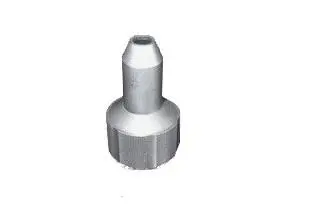
Fluid Compatibility and Wear
The fluid flowing through a nozzle might alter its life span. Water, oils, chemical solutions and abrasive mixes lead to varied needs on materials.
A356 may be successfully used in appropriate conditions, but the suitability of the alloy must be considered on the basis of the actual fluid composition, temperature, and length of exposure. Engineers may have to consider protective coatings or other alloys if erosion, chemical assault, or repetitive impact is envisaged.
Weight, Cost, and Manufacturing Requirements
Material selection is also influenced by weight limits, manufacturing volume, and machining needs. A356 may be designed to be lightweight and can be cast into more complicated forms, lowering the amount of material to be removed during machining.
Procurement teams should consider tooling costs, finishing requirements, inspection demands, anticipated production volumes, and delivery timelines. “It’s more useful to compare the total manufacturing cost than to just compare the raw material prices.”
Heat Treatment for Improved Mechanical Properties
The mechanical qualities of A356 castings may be improved by heat treatment for applications requiring increased strength or hardness. T6 is one of the most often utilized conditions and normally requires solution heat treatment, quenching, and artificial aging.
During solution heat treatment, the casting is kept at a regulated temperature to enable appropriate alloying materials to dissolve into the aluminum matrix. The part is quenched under defined circumstances, and artificial aging produces the appropriate mechanical characteristics.
Actual temperatures, duration to hold, and cooling conditions should be consistent with the appropriate material specification and a proven method. They should not be picked from a general schedule without regard to casting thickness, shape, and quality requirements.
T6 treatment, if properly regulated, may enhance tensile strength and hardness. However, heat treatment may also produce deformation or disclose previously invisible casting faults. Therefore, critical custom casting nozzle components must be checked for dimensional stability and the mechanical qualities of interest following processing.
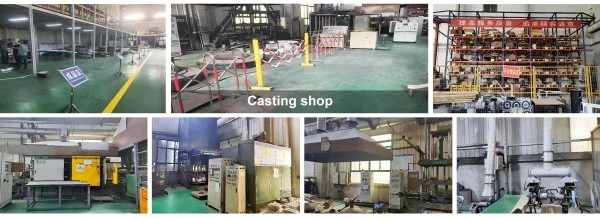
CNC Machining and Surface Finishing
Casting sets the general form of a nozzle, but it typically requires further machining to provide the requisite dimensions and functional characteristics.
- Can be used for making: CNC machining
- Accurate mounting faces and cylindrical surfaces
- Internal openings and drilling ports
- Assembly features and threaded connectors
- Seals and mating components with high precision interfaces
Machining allowances should take into consideration the casting process, the possibility of distortion, and the final tolerance needs. Cutting settings and tools should be chosen to minimize excess heat, poor surface polish, or dimensional fluctuation.
The surface treatment is governed by the service environment. Anodizing may provide a protective oxide layer. Chemical conversion coatings can aid in corrosion prevention and paint adherence. Where further surface protection is needed, powder coating or powder coating-compatible coating may be considered.
Shot-blasting is essentially a surface preparation or finishing procedure and is not a replacement for a protective covering. The choice of the right treatment should be based on the desired look, corrosion resistance, compatibility with the coating, and dimensional limitations.
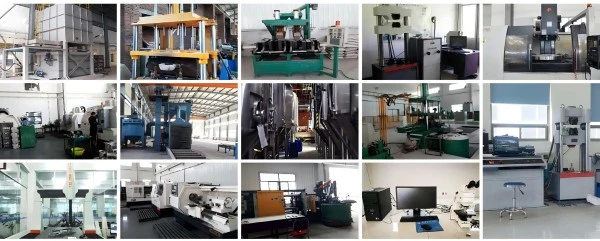
Dimensional Accuracy and Quality Inspection
Dimensional control is especially crucial when a nozzle must interface with pumps, pipelines, valves, seals, or other precision components. Small variations in mounting dimensions or internal channels might alter the assembly and fluid flow.
Fabricators must consider casting shrinkage, machining allowances, thermal expansion, and the tolerances needed for important interfaces. CMMs can examine complicated measurements. Threads, apertures, and mating surfaces may be checked using appropriate gages and other inspection instruments.
Quality criteria must be defined before manufacturing. Inspection may comprise material verification, dimensional checks, visual examination, surface inspection, and suitable casting integrity or pressure performance tests, depending upon the application.
If you get repeat orders, established inspection criteria and consistent process controls can assist you in maintaining dimensional consistency from batch to batch. Customers should provide key dimensions, appropriate material requirements, operating conditions, and acceptance criteria prior to manufacture.
Conclusion
A356 aluminum is a valuable material for various custom casting nozzle applications because of its castability, low-weight construction, machinability, and possibility for increased mechanical qualities via heat treatment. Its applicability will still rely upon operating circumstances, fluid compatibility, design requirements, and quality of the completed casting.
The choice of a manufacturing partner is just as crucial. All of the following must function together: Casting, heat treatment, CNC machining, finishing, and inspection to create a part that is in compliance with its intended specs.
If you are developing custom casting nozzles, Rongbao Casting can help you evaluate your design and manufacturing requirements. Share your drawings, material preferences, operating conditions, target quantities, and required tolerances to discuss a suitable production approach, finishing options, and quotation for your project.
FAQ
1. How does A356 compare to other aluminum alloys for custom casting nozzles?
A356 offers an excellent balance of castability, strength, and machinability compared to other aluminum alloys. It generally provides better mechanical properties than A319 or A380, making it ideal for applications requiring both strength and precision. However, for extremely high-temperature applications, alloys like 201 or 206 might be more suitable, albeit at a higher cost and with more challenging casting processes.
2. Can custom casting nozzles made from A356 be used in corrosive environments?
While A356 has good corrosion resistance, its suitability for highly corrosive environments depends on the specific conditions. In many cases, additional surface treatments like anodizing or specialized coatings can significantly enhance the corrosion resistance of A356 nozzles. For extremely corrosive environments, alternative materials like stainless steel or specialized alloys might be necessary.
3. What are the typical lead times for producing custom casting nozzles from A356?
Lead times can vary depending on the complexity of the design, quantity ordered, and current production capacity. Generally, for a new custom design, the process from initial design to finished product can take anywhere from 4 to 12 weeks. This includes time for design approval, tooling creation, casting, heat treatment, machining, and surface finishing. For repeat orders or simpler designs, lead times can be significantly shorter.
Custom Casting Nozzle Supplier: Rongbao Enterprise
For those seeking high-quality custom casting nozzles, Rongbao Enterprise stands out as a leading manufacturer with a proven track record. Founded in 2003, Rongbao specializes in aluminum alloy casting and precision processing, offering comprehensive solutions for equipment manufacturers across various industries.
With advanced production methods including high-pressure die casting, low-pressure die casting, and gravity casting, Rongbao Enterprise delivers integrated component supply solutions that meet the most exacting standards. Their commitment to quality is evidenced by their certifications:
- ISO 9001:2016 Quality Management System
- ISO 14001 Environmental Management System
- ISO 45001 Occupational Health and Safety Management System
Rongbao's dedication to environmental sustainability, innovation, and precision has earned them a global reputation, with 70% of their products exported to markets in the United States, Europe, Japan, and beyond. Their expertise in custom casting nozzles, particularly those made from A356 aluminum alloy, makes them an ideal partner for businesses seeking reliable, high-performance components.
To explore how Rongbao Enterprise can meet your custom casting nozzle needs, reach out to their team of experts. Contact Steve Zhou at steve.zhou@263.net or zhouyi@rongbaocasting.com for personalized assistance and to discuss your specific requirements.
In conclusion, the world of custom casting nozzles is complex and fascinating, with material selection playing a crucial role in performance and longevity. A356 aluminum alloy, with its excellent properties and versatility, continues to be a top choice for manufacturers across various industries. By partnering with experienced suppliers like Rongbao Enterprise, businesses can ensure they receive high-quality, precision-engineered components that meet their exact specifications and contribute to the success of their products.
References
1. ASM International. (2019). "Aluminum-Silicon Casting Alloys: Atlas of Microstructures and Properties." Materials Park, OH: ASM International.
2. Campbell, J. (2015). "Complete Casting Handbook: Metal Casting Processes, Metallurgy, Techniques and Design." Oxford: Butterworth-Heinemann.
3. Davis, J.R. (Ed.). (2001). "Aluminum and Aluminum Alloys." ASM International.
4. Kaufman, J.G., & Rooy, E.L. (2004). "Aluminum Alloy Castings: Properties, Processes, and Applications." ASM International.
5. Lumley, R. (Ed.). (2018). "Fundamentals of Aluminium Metallurgy: Recent Advances." Woodhead Publishing.
Learn about our latest products and discounts through SMS or email