- English
- French
- German
- Portuguese
- Spanish
- Russian
- Japanese
- Korean
- Arabic
- Greek
- German
- Turkish
- Italian
- Danish
- Romanian
- Indonesian
- Czech
- Afrikaans
- Swedish
- Polish
- Basque
- Catalan
- Esperanto
- Hindi
- Lao
- Albanian
- Amharic
- Armenian
- Azerbaijani
- Belarusian
- Bengali
- Bosnian
- Bulgarian
- Cebuano
- Chichewa
- Corsican
- Croatian
- Dutch
- Estonian
- Filipino
- Finnish
- Frisian
- Galician
- Georgian
- Gujarati
- Haitian
- Hausa
- Hawaiian
- Hebrew
- Hmong
- Hungarian
- Icelandic
- Igbo
- Javanese
- Kannada
- Kazakh
- Khmer
- Kurdish
- Kyrgyz
- Latin
- Latvian
- Lithuanian
- Luxembou..
- Macedonian
- Malagasy
- Malay
- Malayalam
- Maltese
- Maori
- Marathi
- Mongolian
- Burmese
- Nepali
- Norwegian
- Pashto
- Persian
- Punjabi
- Serbian
- Sesotho
- Sinhala
- Slovak
- Slovenian
- Somali
- Samoan
- Scots Gaelic
- Shona
- Sindhi
- Sundanese
- Swahili
- Tajik
- Tamil
- Telugu
- Thai
- Ukrainian
- Urdu
- Uzbek
- Vietnamese
- Welsh
- Xhosa
- Yiddish
- Yoruba
- Zulu
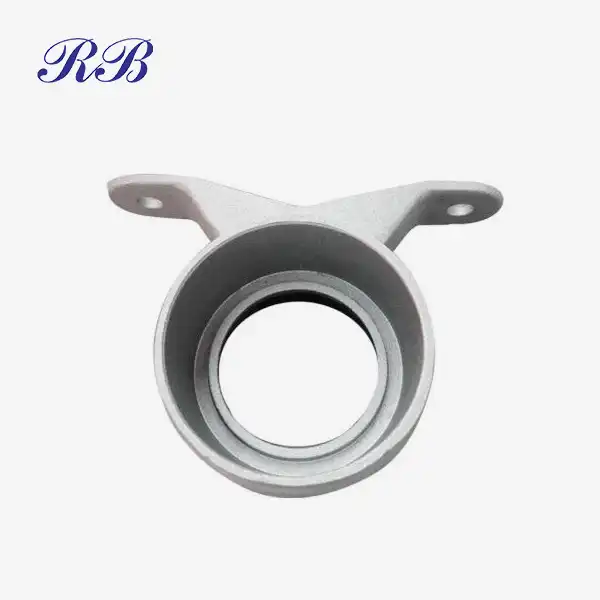
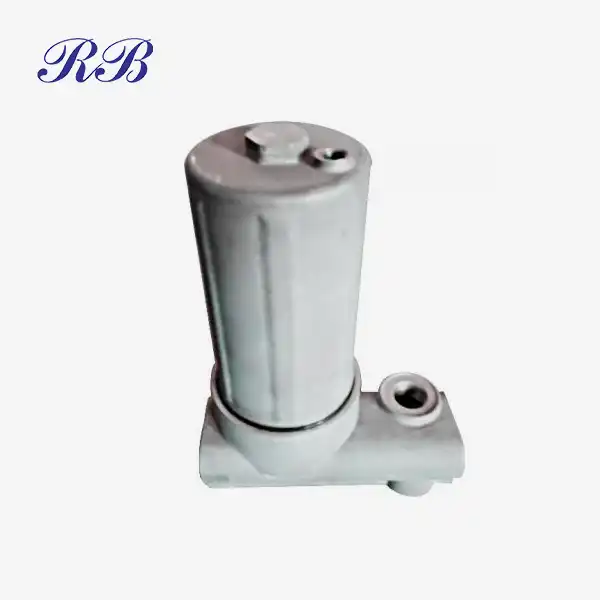
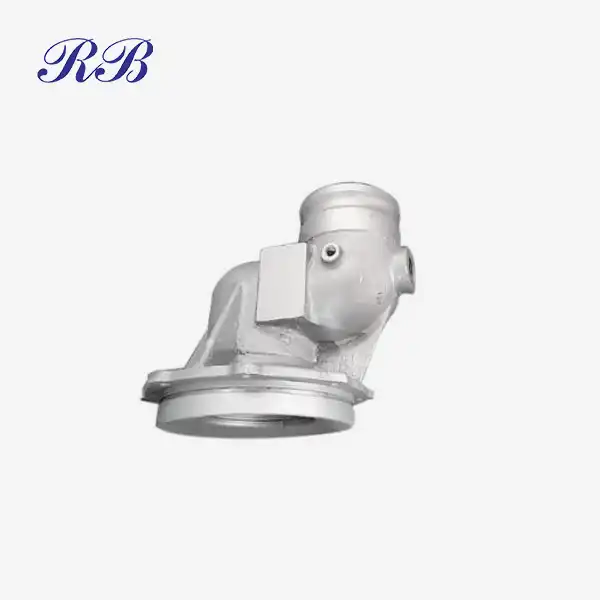
Connection Bracket Castings For Industrial robot support arm
The components for linking industrial robot support arms must be able to withstand frequent movement, mechanical pressures, and tough manufacturing conditions. Casting connection brackets connect structural sections of a robotic arm and help maintain alignment during operation. The performance depends on the material, the quality of the casting, the machining precision, and the surface polish of the completed equipment. For industrial robot makers, choosing the proper bracket is not just a question of picking the right form. It concerns the assessment of load demands, mounting interfaces, operational environments, and consistency in production. Knowing these parameters allows engineering and procurement teams to specify components that match their application requirements.
How Connection Brackets Support Industrial Robot Performance
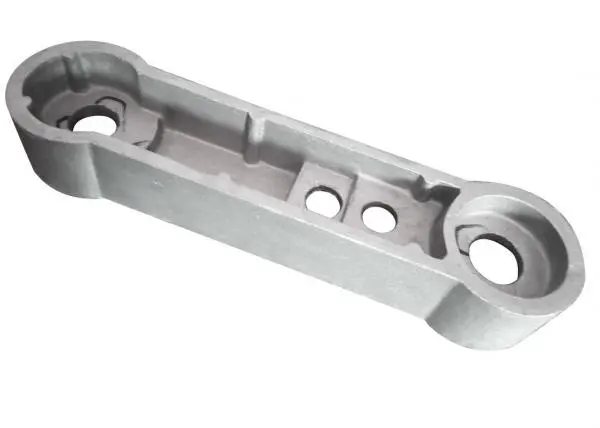
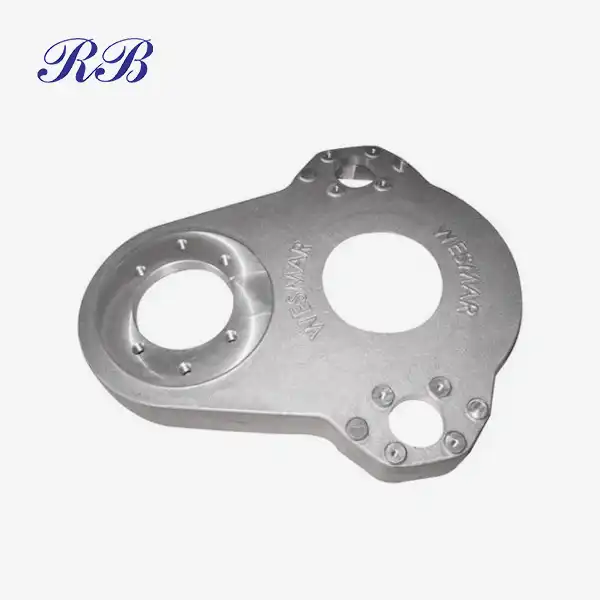
Connection casting connection brackets are used to provide structural support for sections of a robot support arm, mounting assemblies or other mechanical components. Depending on design, they may be capable of supporting static loads, resisting vibration, and holding the relative position of connected objects.
Dimensional accuracy is particularly important for robotic applications. Misaligned mounting holes or uneven contact surfaces may cause assembly problems and affect the location of related components. The size of the brackets must thus lie within the limits shown in the technical drawings.
Engineers should know the following while evaluating the design of a bracket:
- Load-bearing capabilities - the component should be capable of carrying the necessary operating forces and stresses.
- Structural Rigidity: Good geometry and material selection may avoid unwanted deformation.
- Weight requirements: In moving robot assemblies, it might be desirable to reduce the weight of components.
- Assembly Design: Machined interfaces and hole placements should be considered in assembly design.
- Service environment: Temperature, moisture, vibration, and exposure to industrial contaminants influence material and finishing selections.
These parameters provide the basis for selection of an appropriate casting technique and inspection strategy.
Selecting Materials for Robot Support Arm Brackets
The material selection has an effect on component weight, mechanical performance, machinability, and cost of manufacture. The best approach depends on the geometry of the bracket and the operating condition.
Aluminum Alloy for Lightweight Structures
The A356 aluminum alloy is a contender for casting connection brackets for weight reduction and corrosion resistance. Its casting qualities allow the maker to produce components with integrated features, while following CNC machining may offer accurate mounting surfaces and threaded holes.
The final mechanical properties of gravity cast A356 components are influenced by the quality of the casting, heat treatment, and design. Prior to production, buyers must check the desired alloy specification, applicable mechanical property requirements, and inspection norms.
Cast Iron for Rigidity and Vibration Damping
Cast iron is also good for larger supporting structures or when rigidity, compressive strength, and vibration damping are more significant. The applicability is determined by the individual slope, component geometry, and operating loads.
However, cast iron is often heavier than aluminum. This tradeoff is important for engineers to consider when building moving robot assemblies, since the extra mass might influence the driving requirements and dynamic performance.
Steel Alloys for Demanding Load Conditions
Steel alloys may be utilized if a bracket requires very high strength, fatigue resistance, or unique mechanical properties which are difficult to achieve with conventional materials. The grade selected should be suitable for the casting process to be used and any further machining or heat treatment.
Engineering teams should consider the necessary load capacity, weight, ease of manufacture, corrosion protection, and total component cost before choosing a material.
Gravity Casting and Secondary Manufacturing Operations
Gravity casting is a manufacturing option for metal casting connection brackets that are suitable, notably for aluminum components that are produced in reproducible volumes. The molten metal is poured by gravity into the reusable mold and, on solidification, adopts the shape of the mold cavity.
This procedure depends on the wall thickness, complexity of the geometry, alloy characteristics, and the amount of manufacture. Dimensional homogeneity and susceptibility to defects such as porosity or partial filling may be affected by the design of the mold and the control of the casting process.
CNC Machining and Heat Treatment
Once cast, CNC machining may offer critical dimensions, mounting faces, bolt holes, and alignment features. The machining plan should specify those surfaces that require tight tolerances and which features may be left as-cast.
Additional heat treatment might be required to attain the mechanical properties of the selected alloy and part specification. It must be used and processed to suit material needs and not to a general assumption that all castings are to be handled the same.
Inspection and Quality Control
The practical inspection plan should take into account the function of the component and the requirements of the customer’s design. Depending on the application, quality checks may include:
- Alloys & Material Documentation
- Critical feature dimensional inspection and interface assembly.
- Visual examination of surface flaws
- Additional non-destructive testing if required.
- Review applicable heat treatment and surface finish records.
Agreement on acceptance criteria before manufacturing might help minimize misunderstandings during sampling, approval, and repeat orders.
Surface Finishing and Shot Blasting Requirements
Surface treatment was used to prepare the casting connection brackets for finishing and use. Loose scale, residual molding material, and certain surface contamination may be removed by shot blasting or other abrasive blasting procedures. How you accomplish this correctly relies on the alloy, the surface finish you desire, and the geometry of the item.
Preparing Castings for Protective Coatings
Blasting will provide a better, more consistent surface for subsequent painting or finishing. But the surface profile and cleanliness should be as per the needs of the coating system.
In blasting aluminum brackets, care must be taken in the management of the blasting media and the operating conditions to avoid undesirable surface damage or dimensional changes. Masking may be required to protect precision machined interfaces and threaded features.
Distinguishing Cleaning from Surface Strengthening
Controlled shot peening is not abrasive blasting. Shot peening is done under controlled settings to impart compressive residual stresses. Abrasive blasting is used for surface cleaning. The two procedures are for different reasons and should not be used interchangeably.
Blasting alone does not provide corrosion resistance. Where corrosion protection is needed, the full finishing system, including any conversion treatment, primer, paint or powder coating, should be assessed.
Custom Casting Connection Brackets from Rongbao Enterprise
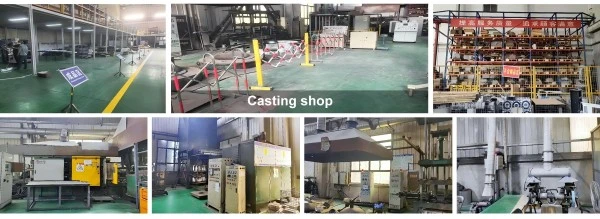
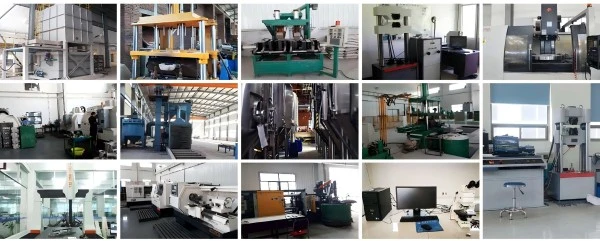
Rongbao Enterprise provides casting and precision machining services for industrial components, such as robot support arm brackets. The company, established in 2003, is a specialist in aluminum alloys and gravity casting technologies, with secondary machining available for components that need flawlessly polished surfaces.
Manufacturing for OEM projects should be produced according to the client’s drawings, material demand, production volume, and quality inspection standards. Check for necessary quality management certifications and supporting documentation for the specific project.
When requesting a price, buyers may provide the following facts:
- 2D engineering drawings or 3D CAD files.
- Alloy Grade and Desired Mechanical Properties.
- Key Dimensions and Machining Tolerances
- Specifications for Surface Finishing and Coating
- Order quantity and estimated demand in a year.
- Packing, inspection, and documentation requirements.
This information allows the provider to assess the possibility of manufacturing, recommend potential changes in design, and deliver more appropriate pricing.
Conclusion
Reliable robot support arm casting connection brackets need the right design of the casting, precise machining and surface finishing, and must be made of suitable material. If parts can be created to the process standards, gravity casting may be the best way to go. CNC machining with a well-defined inspection strategy may help you get the fit and consistency you require.
For engineering teams and industrial customers, early interaction with the casting supplier may assist in establishing tolerances, finishing demands, and production expectations prior to tooling and manufacturing.
Rongbao Enterprise may be contacted for your project to provide custom connecting brackets. Please provide us with your drawings, required material, target quantity, and quality standards to obtain a production assessment and quote for your application.
Contact Rongbao Enterprise's staff at zhouyi@rongbaocasting.com or steve.zhou@263.net to discuss your unique needs or to find out more about their casting connection bracket options. Rongbao Enterprise is well positioned to fulfill your demands for industrial robot support arm components because of its history of successful international collaborations and dedication to innovation.
References
1. ASM International. (2008). Casting Design and Performance. ASM International.
2. Stefanescu, D. M. (2015). Science and Engineering of Casting Solidification. Springer International Publishing.
3. Campbell, J. (2015). Complete Casting Handbook: Metal Casting Processes, Metallurgy, Techniques and Design. Butterworth-Heinemann.
4. Brown, J. R. (1999). Foseco Non-Ferrous Foundryman's Handbook. Butterworth-Heinemann.
5. Momber, A. (2008). Blast Cleaning Technology. Springer Berlin Heidelberg.
Learn about our latest products and discounts through SMS or email