- English
- French
- German
- Portuguese
- Spanish
- Russian
- Japanese
- Korean
- Arabic
- Greek
- German
- Turkish
- Italian
- Danish
- Romanian
- Indonesian
- Czech
- Afrikaans
- Swedish
- Polish
- Basque
- Catalan
- Esperanto
- Hindi
- Lao
- Albanian
- Amharic
- Armenian
- Azerbaijani
- Belarusian
- Bengali
- Bosnian
- Bulgarian
- Cebuano
- Chichewa
- Corsican
- Croatian
- Dutch
- Estonian
- Filipino
- Finnish
- Frisian
- Galician
- Georgian
- Gujarati
- Haitian
- Hausa
- Hawaiian
- Hebrew
- Hmong
- Hungarian
- Icelandic
- Igbo
- Javanese
- Kannada
- Kazakh
- Khmer
- Kurdish
- Kyrgyz
- Latin
- Latvian
- Lithuanian
- Luxembou..
- Macedonian
- Malagasy
- Malay
- Malayalam
- Maltese
- Maori
- Marathi
- Mongolian
- Burmese
- Nepali
- Norwegian
- Pashto
- Persian
- Punjabi
- Serbian
- Sesotho
- Sinhala
- Slovak
- Slovenian
- Somali
- Samoan
- Scots Gaelic
- Shona
- Sindhi
- Sundanese
- Swahili
- Tajik
- Tamil
- Telugu
- Thai
- Ukrainian
- Urdu
- Uzbek
- Vietnamese
- Welsh
- Xhosa
- Yiddish
- Yoruba
- Zulu
Custom spray nozzle solutions - deluge fire protection
A deluge fire prevention system is intended to release water via a number of open custom-cast nozzles at the same time upon activation of the system. The performance relies on a number of elements, such as the capacity of the water supply, the position of the nozzles, the discharge characteristics, and the structure of the covered area. For manufacturers and engineering teams sourcing a custom casting nozzle, selecting the right component requires more than matching dimensions. The dependable design is based on material selection, casting quality, machining precision, and performance testing. This article will review the key aspects for designing custom cast nozzles for deluge applications and what the purchaser should look for in a manufacturing partner.
How Custom Nozzles Support Deluge Fire Protection
Deluge systems are different from traditional sprinkler systems that usually activate individual sprinkler heads when they sense heat. Deluge systems will open the discharge devices to allow water to flow when the accompanying detection and control system is activated. This configuration is often utilized in industrial locations where fast fire growth is a problem, due to the needs of the particular installation.
The configuration of the nozzle determines how the water is spread across the region to be protected. An improper pattern of discharge, an inaccurate angle of installation, or insufficient flow may cause sections of the target area to be insufficiently covered.
In the design of nozzles, a number of aspects must be considered:
- Protected area: The size, shape, and arrangement of the equipment determine the location and coverage of the nozzles.
- Installation conditions: Water delivery depends on mounting height, orientation, surrounding buildings, and any impediments.
- Operating pressure – the pressure available at each nozzle affects the rate of discharge and spray characteristics.
- Environmental exposure. The suitability of materials and surface treatments is affected by temperature, moisture, corrosion and water quality.
Special dimensions and installation requirements may be met via custom manufacture. However, upon completion of the nozzle, it still must be assessed against the appropriate system design and fire protection criteria.
Matching Water Coverage With the Required Flow Rate
Flow rate and coverage are strongly connected, although more water discharge does not always mean better fire prevention. The aim is to meet the demand as necessary within the capacity and design constraints of the water supply system.
Engineers need to consider the required spray pattern, nozzle spacing, discharge direction, and operating pressure together. The final layout may be affected by equipment, walls and other impediments. Depending on the application, adjacent nozzles may require overlapping coverage.
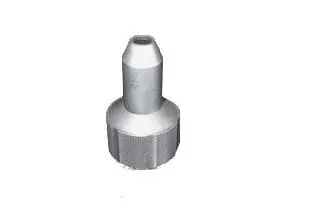
Flow rate is also a function of the custom casting nozzle aperture and internal shape. Changes to these elements may impact discharge performance, and changes in dimension should be considered rather than merely cosmetic changes.
Engineers may employ hydraulic calculations, design models, and controlled testing during development to determine whether a given configuration would fulfill the necessary requirements. The final acceptance criteria should be agreed upon before going into production.
Pressure, Water Quality, and Long-Term Reliability
A nozzle designed for one pressure range may not work well under other operating circumstances. So when asking for a quote, buyers should offer the estimated operating pressure, available water supply, desired discharge rate, and essential installation parameters.
Pressure drop across the pipe network also has to be accounted for. The pressure available at the nozzle may not be the same as the pressure that is recorded at the point of supply, especially in systems with lengthy pipe runs or many discharge devices.
Another practical concern is water quality. Suspended particles and mineral deposits might cause problems with narrow holes or internal channels, depending on the nozzle design and water conditions. The system design should include determination of appropriate techniques for filtration, inspection, and maintenance.
The material choice is also important. Aluminum alloys are available for lightweight components; however, a material may only be certified for fire protection use after the compatibility with the working environment, mechanical requirements, and relevant criteria have been evaluated.
This gives you the possibility to have a custom cast, which means you have the flexibility you want for manufacturing. Ultimately, dependability is a function of the whole design, quality of production, verification process, and maintenance plan.
Performance Specifications to Review Before Ordering
A clear technical specification helps buyers compare suppliers and reduces the risk of costly changes after production starts.
K-factor and discharge rate
The K-factor is a coefficient showing the connection between discharge flow and pressure. This connection is often written in fire protection as Q = K√P, where Q is the flow, and P is the pressure. The K-factor values rely on the unit system used. The suitable units and standard must be established. System design should dictate the required values and the suitable tests used to verify them.
Spray angle and distribution
The spray angle determines the area covered by the discharge, although actual coverage also varies with installation height, custom casting nozzle orientation, operating pressure, and surrounding impediments. Buyers should not be expecting that a given nominal angle would provide uniform coverage, but rather specify the desired distribution characteristics.
Opening geometry and internal passages
Discharge behavior may be affected by nozzle aperture, internal flow route, and surface finish. The characteristics must be specified on engineering drawings or authorized design specification and shall be inspected throughout manufacture.
Material and dimensional tolerances
The design should include the material grade, crucial dimensions, tolerance, connection details and any surface treatment requirements. Material certifications and dimensional inspection records may assist to establish supplied components are in accordance with the authorized specification.
Testing and acceptance requirements
Prior to ordering, the relevant inspection techniques, sample strategy, performance testing and documentation should be agreed upon by the customer and supplier. Where the component is to be used in a regulated fire prevention system, the appropriate standards and approval requirements should be verified with the authorized system designer or authority.
Custom Casting Nozzle Manufacturing at Rongbao Enterprise
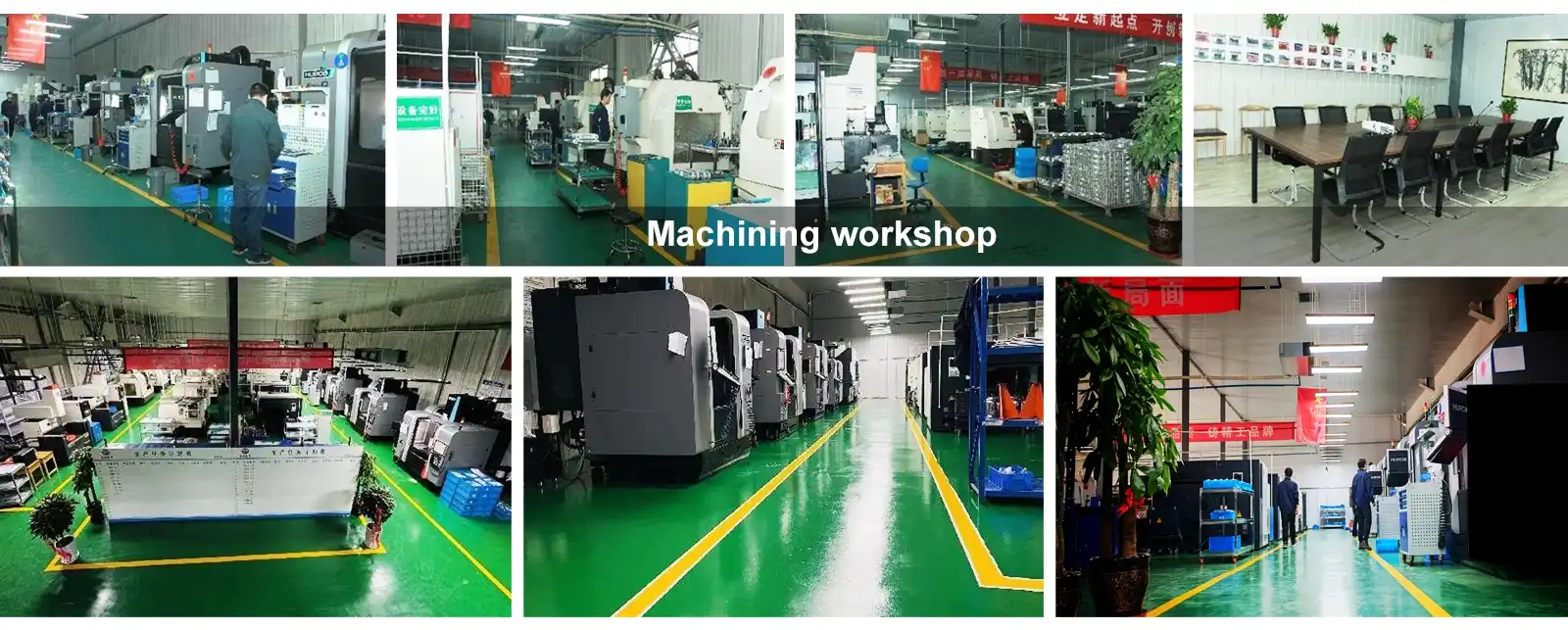
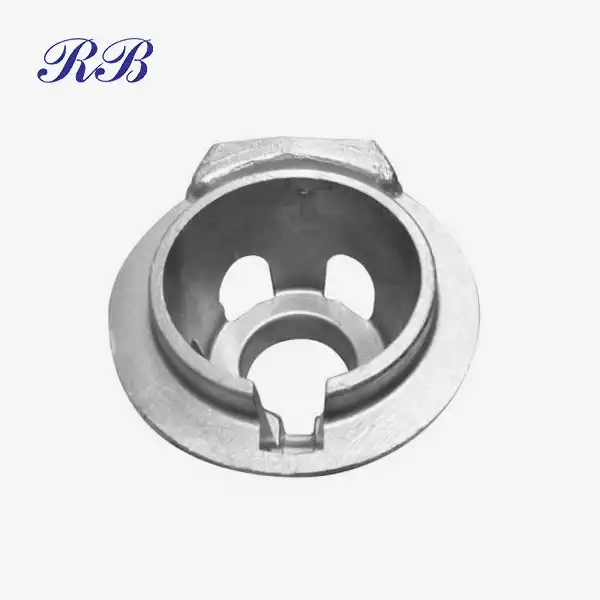
Rongbao Enterprise is a specialized enterprise in aluminum alloy casting and precision machining, established in 2003. The manufacturing method includes high-pressure die casting, low-pressure die casting, and gravity casting to provide solutions for components of diverse geometries and production needs.
The right technique for bespoke custom casting nozzle projects relies on the component design, alloy requirements, dimensional tolerances, estimated production volume, and downstream machining demands. Gravity casting may be explored for aluminum alloy for acceptable geometries, and CNC machining can be utilized to provide specific dimensions and connecting characteristics.
Rongbao can provide A356 aluminum alloy parts, shot blasting surface treatment, and OEM/ODM customisation. These services may be used to assist projects that need components to be made to client designs, rather than chosen from a standard catalog.
When choosing a provider, buyers should validate the following information for their particular project:
- Supporting Material Documentation and Material Availability.
- Suitability of the casting process and machining capabilities.
- Agreed tolerances and dimensional inspection techniques.
- Procedures for sample availability and prototype approval.
- Production quantities, lead times, packing and delivery requirements.
- Any testing records or compliance paperwork necessary for the targeted application.
The manufacturing quantity of 500 pieces is to be viewed as a project-specific number until it is verified directly with the manufacturer as to its significance, availability, and delivery timetable. Similarly, any necessary fire protection clearances should be confirmed for the exact component and application.

Conclusion
The right custom casting nozzle for a deluge fire prevention system must be chosen based on system design, hydraulic performance, material compatibility, and manufacturing quality. Prior to the commencement of production, the coverage, discharge rate, pressure conditions, internal geometry, and inspection needs must be determined.
A certified manufacturing partner can assist in transforming engineering drawings into cast and machined components to agreed standards. The final part, however, must be verified for its intended application, and the whole fire prevention system must meet the required design and approval standards.
Rongbao Enterprise provides customized aluminum alloy parts casting, CNC machining, and OEM/ODM production services. Prepare your technical drawings, material requirements, essential dimensions, projected order quantity, and appropriate inspection criteria to negotiate a project.
Contact Rongbao Enterprise to get a production appraisal and an estimate for your custom casting nozzle project. Please send us your designs and project specifications so the team may assess the appropriateness of the process, clarify the specifics of the production, and discuss the next steps for sample and manufacture.
For inquiries about custom casting nozzles tailored to your deluge fire protection needs, contact Rongbao Enterprise at steve.zhou@263.net or zhouyi@rongbaocasting.com. Their team of experts is ready to help you design and manufacture the perfect nozzle solution for your fire protection system.
References
1. National Fire Protection Association. (2022). NFPA 15: Standard for Water Spray Fixed Systems for Fire Protection. NFPA.
2. Liu, Z., Kim, A.K., & Su, J.Z. (2001). Examination of performance of water mist fire suppression systems under ventilation conditions. Journal of Fire Protection Engineering, 11(3), 164-193.
3. Heskestad, G., & Bill, R.G. (1988). Quantification of thermal responsiveness of automatic sprinklers including conduction effects. Fire Safety Journal, 14(1-2), 113-125.
4. Grant, G., Brenton, J., & Drysdale, D. (2000). Fire suppression by water sprays. Progress in Energy and Combustion Science, 26(2), 79-130.
5. Yu, H.Z. (2012). Sprinkler droplet size measurement, Part I: Single droplet experiments. Fire Technology, 48(2), 331-362.
Learn about our latest products and discounts through SMS or email