- English
- French
- German
- Portuguese
- Spanish
- Russian
- Japanese
- Korean
- Arabic
- Greek
- German
- Turkish
- Italian
- Danish
- Romanian
- Indonesian
- Czech
- Afrikaans
- Swedish
- Polish
- Basque
- Catalan
- Esperanto
- Hindi
- Lao
- Albanian
- Amharic
- Armenian
- Azerbaijani
- Belarusian
- Bengali
- Bosnian
- Bulgarian
- Cebuano
- Chichewa
- Corsican
- Croatian
- Dutch
- Estonian
- Filipino
- Finnish
- Frisian
- Galician
- Georgian
- Gujarati
- Haitian
- Hausa
- Hawaiian
- Hebrew
- Hmong
- Hungarian
- Icelandic
- Igbo
- Javanese
- Kannada
- Kazakh
- Khmer
- Kurdish
- Kyrgyz
- Latin
- Latvian
- Lithuanian
- Luxembou..
- Macedonian
- Malagasy
- Malay
- Malayalam
- Maltese
- Maori
- Marathi
- Mongolian
- Burmese
- Nepali
- Norwegian
- Pashto
- Persian
- Punjabi
- Serbian
- Sesotho
- Sinhala
- Slovak
- Slovenian
- Somali
- Samoan
- Scots Gaelic
- Shona
- Sindhi
- Sundanese
- Swahili
- Tajik
- Tamil
- Telugu
- Thai
- Ukrainian
- Urdu
- Uzbek
- Vietnamese
- Welsh
- Xhosa
- Yiddish
- Yoruba
- Zulu
What Makes Folded Joints Suitable for Space-Saving Industrial Machinery?
Modern industry is always trying to be more efficient and make things smaller. One problem that keeps coming up is how to fit more power and usefulness into less space. The floors of factories are increasing busier, robotic cells are getting smaller, and portable equipment needs to be smaller than ever before. The answer is often not to completely redesign the machine, but to add a little, clever part called the folded joint. This isn't just a regular hinge; it's a masterclass in mechanical engineering that opens up new ways to create things that save space. But what is it about this part that makes it so important? Let's look at how the folding joint works, what its benefits are, and how it is made by experts.
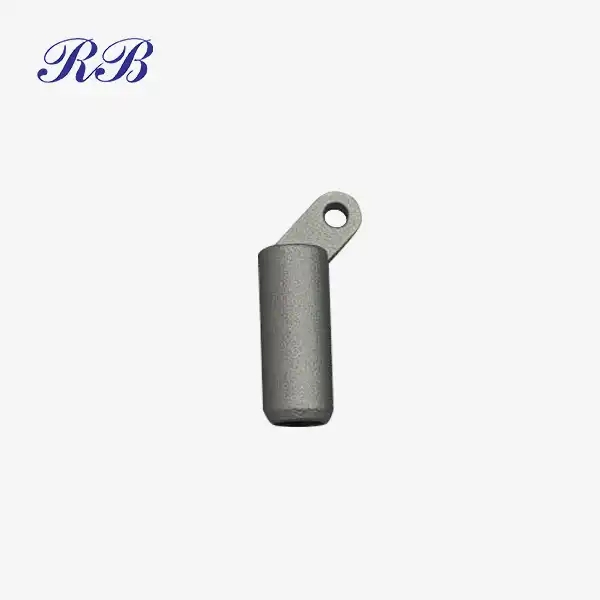
The Anatomy of a Folded Joint: More Than Just a Hinge
A folded joint may look like a regular hinge at first. But the way it works is far more complicated. A hinge usually lets things rotate easily along a single fixed axis, whereas a folding joint is designed to move in a more complicated way. It often has a multi-link mechanism, which is also known as a pantograph or Z-fold design. This lets it fold and unfold with amazing accuracy. This basic difference is what makes it so good at saving space. It doesn't just swing open; it stacks neatly on top of itself, taking up less room than a regular hinge would while it is open.
The Core Mechanism: Articulation and Stability
The brilliance of a folded joint is that it stays stiff and stable no matter how far it moves. When stretched out, it becomes a strong, rigid structure that can support heavy loads and withstand large pressures and moments. It becomes very little when it is folded. This is possible because the pivot points and links are accurately machined to guide the movement. The design makes sure that the center of gravity moves in a predictable way, which keeps it from binding or wobbling. This dual nature, strong when needed and small when not, is what makes it a key part of current compact gear, such folding work platforms and robotic arms that can be folded up.
Material Science: The Backbone of Strength in a Small Package
The materials used to make a great design are just as important as the design itself. Choosing the right materials is very important for folding joints. High-strength aluminum alloys are a popular choice since they are strong, light, and resistant to corrosion. Aluminum's low density is important for things like aeronautical equipment and portable medical gadgets, where every gram matters. The material must be able to fold and unfold several times without getting tired, which shows how well it was made and how strong its molecules are. These qualities can often be improved by using advanced materials and heat treatments, which make sure the joint works well for years even under tough environments.
Unlocking Space: The Core Advantages in Compact Machinery Design
The primary driver for adopting folded joints is clear: space. But the benefits extend far beyond simple space-saving. They create a cascade of positive effects that improve the entire machinery system, from its performance to its cost-effectiveness. By integrating a folded joint, engineers can fundamentally rethink how a machine is constructed and operates.
Maximizing Work Envelopes in Minimal Footprints
Imagine a robotic arm that needs a wide reach but is mounted in a tight corner. A traditional arm would require a massive, sweeping circular area to operate. An arm with a folded joint, however, can retract into a small, compact bundle against the wall. When it needs to work, it unfolds, achieving its full reach without ever needing a large operational footprint. This ability to maximize the work envelope while minimizing the installation space is revolutionary for high-density manufacturing environments. It allows for more machines in the same factory area, directly boosting productivity per square meter.
Enhancing Portability and Deployment Speed
For field service equipment, military applications, or emergency response tools, portability is paramount. A bulky piece of machinery is difficult to transport and slow to deploy. Folded joints are the enabling technology for rapid deployment systems. A communication mast, a surveillance tower, or a mobile crane can be collapsed into a manageable size for transport. Once on-site, a single actuator can unfold the entire structure in seconds. This speed and efficiency are not just convenient; they can be mission-critical. The folding joint is the linchpin that makes complex, large-scale equipment portable.
Improving Ergonomics and Safety
Cluttered workspaces are not just inefficient; they are hazardous. Cables and hoses snaking around bulky machine parts create trip hazards. Moving parts with large, unpredictable swings pose a risk to operators. By containing a machine's movement within a defined, compact zone, folded joints create a cleaner, safer, and more ergonomic work environment. This leads to fewer accidents, less downtime, and a more comfortable experience for the personnel operating the machinery. A well-designed folded joint system moves smoothly and predictably, eliminating the "wild swing" of traditional linkages.
Engineering Excellence: How Rongbao Forges High-Performance Folded Joints
A theoretically ideal folded joint is meaningless if you don't know how to make it work. The real test of engineering brilliance is when a CAD model becomes a perfect, high-performance physical part. This method needs accuracy, quality control, and a thorough knowledge of materials. At Rongbao Enterprise, we have mastered this skill, making complicated designs into practical things that work.
Precision Forging and CNC Machining: The Foundation of Quality
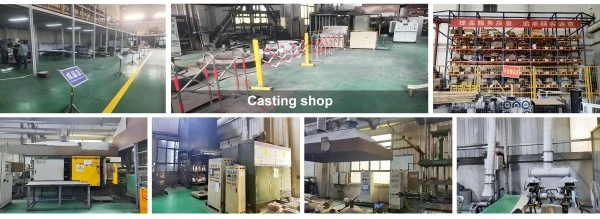
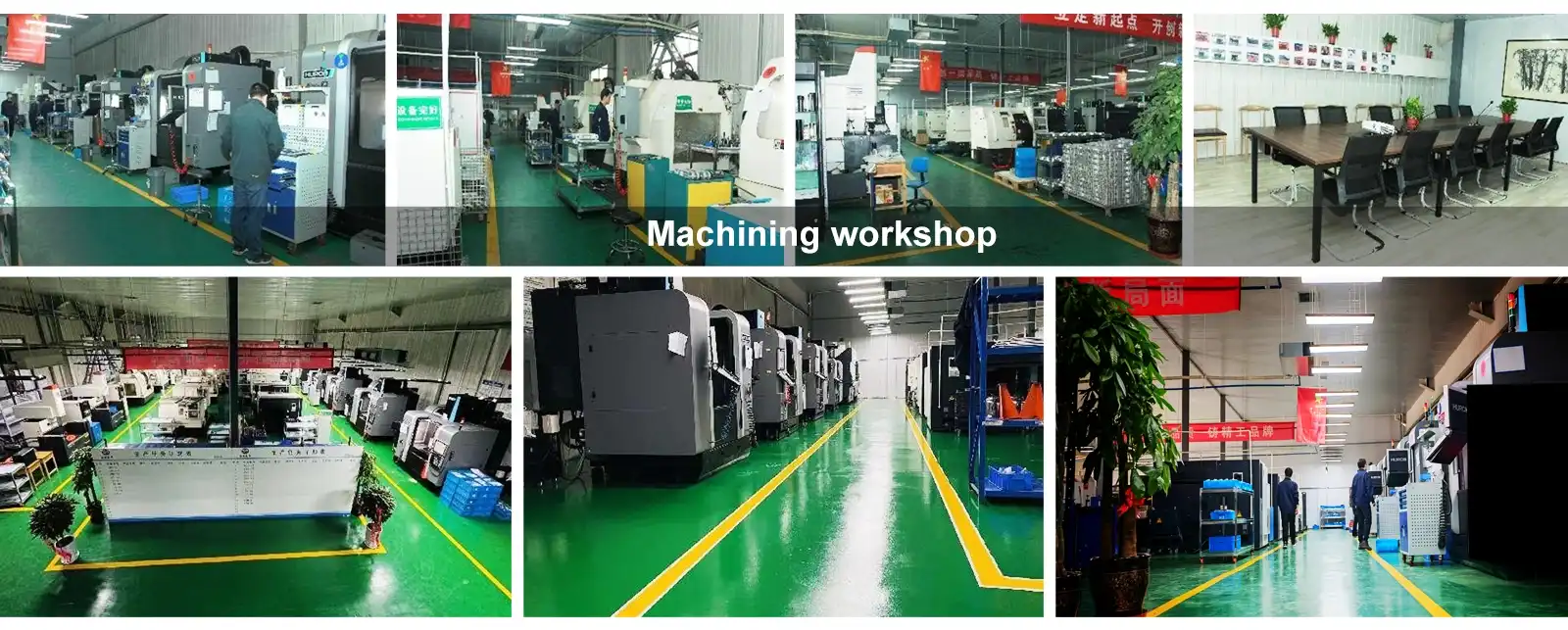
The first step in the trip is forging. Forging, on the other hand, puts a lot of pressure on the aluminum billet, which lines up its grain structure. This treatment makes the part stronger and less likely to break or wear out over time. It is the first and most important thing you can do to make sure the joint lasts a long time. After the forging, each part is machined on several axes using CNC. This is where you can get accuracy down to the microscopic level. Every pivot hole, mounting surface, and linkage interface is cut to very tight tolerances. This makes sure that it fits perfectly, moves smoothly, and works the same way every time, which is what our consumers want. We can consistently deliver tens of thousands of these high-quality items because of our production capabilities.
Rigorous Surface Treatment for Uncompromising Durability
A part's surface is its armor. For folded joints that operate in harsh industrial environments, protection against wear and corrosion is non-negotiable. Our process includes shot blasting, a technique that bombards the surface with small, hard media. This not only cleans the part but also creates a compressive stress layer on the surface, further enhancing its fatigue resistance. This prepares the joint for any final coatings, ensuring superior adhesion and a robust defense against the elements. The result is a folded joint that looks good and performs reliably, even in the most challenging conditions.
Your Vision, Our Expertise: The Power of Customization
We know that ready-made solutions don't always fit exactly. Every problem with saving space is different. That's why we focus on partnerships with OEMs and ODMs. Our engineers will work with you directly to learn about your individual load needs, space limitations, and environmental variables. We then make changes to every part of the joint, including the material specifications, overall size, linkage geometry, and surface finish. We offer customized solutions that make your creative designs into usable goods, whether you need one prototype or a full-scale production run. Our ISO9001:2015, ISO14001, and ISO45001 certifications show that we care about quality, the environment, and safety at work in every custom item we make.
Folded Joint Supplier: Rongbao Enterprise
Your search for the perfect space-saving solution ends here. Rongbao Enterprise is not just a manufacturer; we are your engineering partner. With deep expertise in forging, CNC machining, and custom design, we deliver folded joints that are stronger, more reliable, and precisely tailored to your most demanding applications. We pride ourselves on our quality certifications (ISO9001, ISO14001, ISO45001) and our ability to scale from prototypes to mass production.
Don't let spatial constraints limit your innovation. Let us help you build smarter, more compact machinery.
Ready to discuss your project? Contact our expert team today.
Email us at: steve.zhou@263.net or zhouyi@rongbaocasting.com
FAQs
Q1: What is the main difference between a folded joint and a universal joint?
A: A universal joint (or U-joint) is a type of joint that lets two shafts that aren't in a straight line move around a circle. A folded joint, on the other hand, is mostly a structural, moving connection. Its goal is to make a stiff arm that can fold up into a small package, not merely to send rotation. Some complicated folded joints may have rotating parts, but their main job is to allow for positional articulation.
Q2: Can a folded joint be used for continuous, high-speed motion?
A: Yes, but it depends heavily on the design, material, and application. For high-cycle applications, the joint must be engineered for low friction and high fatigue resistance. This involves using advanced materials, precision-ground pivot pins, and sometimes specialized lubrication. We work closely with clients to analyze their dynamic load requirements and design folded joints that can withstand millions of cycles without failure.
Q3: How do I decide between an aluminum and a steel folded joint?
A: The choice comes down to a trade-off between weight and strength. Aluminum folded joints are significantly lighter, making them ideal for robotics, aerospace, and portable equipment where weight is a critical factor. Steel joints offer superior absolute strength and wear resistance, making them better suited for heavy-duty construction, mining, or applications involving extreme impact loads. We can produce both and will help you select the optimal material for your project's specific needs.
References
- [1] "Kinematic Design of Machinery" by Robert L. Norton, discussing linkage and articulation principles.
- [2] "ASM Handbook, Volume 14A: Metalworking: Bulk Forming," for material properties in forged components.
- [3] "Robotics: Science and Systems" (RSS) conference papers on compact robotic design.
- [4] "International Journal of Mechanical Engineering and Robotics Research," articles on deployable structures.
- [5] "ISO 9001:2015 Quality Management Systems — Requirements."
Learn about our latest products and discounts through SMS or email