- English
- French
- German
- Portuguese
- Spanish
- Russian
- Japanese
- Korean
- Arabic
- Greek
- German
- Turkish
- Italian
- Danish
- Romanian
- Indonesian
- Czech
- Afrikaans
- Swedish
- Polish
- Basque
- Catalan
- Esperanto
- Hindi
- Lao
- Albanian
- Amharic
- Armenian
- Azerbaijani
- Belarusian
- Bengali
- Bosnian
- Bulgarian
- Cebuano
- Chichewa
- Corsican
- Croatian
- Dutch
- Estonian
- Filipino
- Finnish
- Frisian
- Galician
- Georgian
- Gujarati
- Haitian
- Hausa
- Hawaiian
- Hebrew
- Hmong
- Hungarian
- Icelandic
- Igbo
- Javanese
- Kannada
- Kazakh
- Khmer
- Kurdish
- Kyrgyz
- Latin
- Latvian
- Lithuanian
- Luxembou..
- Macedonian
- Malagasy
- Malay
- Malayalam
- Maltese
- Maori
- Marathi
- Mongolian
- Burmese
- Nepali
- Norwegian
- Pashto
- Persian
- Punjabi
- Serbian
- Sesotho
- Sinhala
- Slovak
- Slovenian
- Somali
- Samoan
- Scots Gaelic
- Shona
- Sindhi
- Sundanese
- Swahili
- Tajik
- Tamil
- Telugu
- Thai
- Ukrainian
- Urdu
- Uzbek
- Vietnamese
- Welsh
- Xhosa
- Yiddish
- Yoruba
- Zulu
What Key Features Define a Reliable Medical Rehabilitation Robot?
Medical rehabilitation robots are a revolutionary development in today's healthcare, changing the way clinicians treat their patients recovering from stroke, spinal cord injuries and other mobility affecting conditions. These advanced systems utilize robotics, artificial intelligence and biomechanical engineering to deliver structured, repeatable therapy sessions that enhance patient outcomes. If you are a procurement professional looking at robotic rehabilitation solutions, it is important to understand the technical specifications, safety certifications and practical implementation factors. In this guide, you’ll learn the key features that distinguish good rehabilitation robotics from simple assistive devices, how these systems stack up against traditional therapy modalities, and the important factors to consider for procurement to ensure you maximize your investment, obtain meaningful clinical and financial benefits, and remain compliant with medical device regulations.
Core Features of Medical Rehabilitation Robots
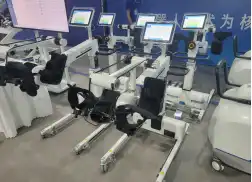
Medical rehabilitation robots are advanced therapeutic devices that are used to help people with neurological injuries or degenerative disorders to restore their motor function. They have accurate sensors and reactive actuators as well as flexible control algorithms to assist in specific types of workouts such as strengthening, limb movement, and gait training. So how does the technology work? It uses bioelectric signals or force sensors to know how the patient wants to move. Then it provides the right amount of support to encourage active participation without hurting or straining the patient.
The best systems have realtime feedback loops that adjust the amount of assistance based on how well the patient is doing. This ability to adapt is very important in the lower limb rehabilitation training since everyone recovers at different paces. For instance, wearable exoskeletons can adjust their level of assistance to patients as they regain strength, eventually offering less mechanical help to promote natural movement patterns. This kind of response allows for faster recovery times without relying too much on robotic assistance.
Reliable rehabilitation robots keep up their performance over long therapy sessions. This gets around a problem that often happens in traditional manual therapy: tired therapists can lower the quality of treatment. The accuracy of automated systems makes sure that every movement follows set limits for range of motion and force levels. This creates conditions that can be repeated, which makes it easier to track progress accurately and measure outcomes objectively.
Key Technological Features That Ensure Reliability and Effectiveness
Advanced Control Systems and Multi-Axis Movement Capability
The control architecture of a medical rehabilitation robot is what makes it reliable. Better systems use complex formulas that can handle many degrees of freedom at once, which lets the joints move naturally during treatment. To make responsive help profiles, these control systems use sensor data from force detectors, position encoders, and sometimes electromyography. These technologies allow for very high levels of accuracy, which is needed for medical uses and usually meets CT4–CT6 casting standards for structural parts.
Contemporary robotic platforms are being augmented with machine learning techniques to recognize patient-specific movement patterns and adapt therapy protocols accordingly. The intelligent adjustment is not only about modulating force but also involves changes in timing, trajectory changes and variable resistance levels that challenge patients appropriately along the course of their recovery.
Comprehensive Safety Architecture
In medical robotics, safety measures are standards that cannot be changed. Reliable systems have many safety features, such as collision detection algorithms that stop movement when unexpected resistance happens, emergency stop controls that patients and therapists can use, and fail-safe mechanical brakes that engage when the power goes out. These features have to meet strict international standards. ISO 13485 approval shows that they are in line with medical device quality management systems.
Just as important are the actual design factors that keep people from getting hurt while the machine is in use. This includes surfaces that are smooth thanks to special etching processes, edges that are rounded on all surfaces that patients touch, and mechanical limits that stop joints from hyperextending. This is where the choice of material is very important. Aluminum alloy parts are the best combination of strength and biocompatibility, while still being light enough for practical uses.
Data Integration and Clinical Documentation
Contemporary rehabilitation robots function as data collection platforms in addition to therapy delivery systems. Integrated software captures detailed session metrics including range of motion achieved, force exerted by patients, repetition counts, and therapy duration. This quantitative data supports evidence-based treatment adjustments and provides objective documentation for insurance authorization and regulatory compliance.
Standard healthcare data protocols make it possible for the most advanced platforms to connect easily to hospital electronic health records. This connectivity speeds up clinical processes and makes sure that therapy data is added to full patient records. Remote monitoring capabilities have gained prominence, allowing clinicians to review patient progress between sessions and adjust protocols without requiring facility visits.

Comparing Medical Rehabilitation Robots with Traditional Therapy Approaches
In manual therapy, the skill of the therapist and physical support of the patient during post-injury rehabilitation exercises are heavily relied upon. Although this human-centric approach provides personalized care and emotional support, it is fundamentally limited in terms of consistency, quantification, and scalability. During long training sessions the therapist can tire, and this can lead to variation in the amount of support given and in the movement patterns and hence to variation in the quality of the therapy over long periods of treatment.
Medical rehabilitation robots get around these problems by providing standardized treatment routines that always work the same way. Each movement cycle exactly copies parameters that have already been set. This takes away any human variability from the mechanical parts of therapy delivery. This consistency is especially helpful when different therapists work different shifts with the same patient or when comparing outcomes for different groups of patients.
Robotic systems offer numerical feedback in an effort to translate subjective clinical assessments into reliable measures. Clinicians can see accurate data that indicate changes in a patient’s force production, balance control and movement coordination, so they don’t have to guess how much they’ve improved based on what they see. These metrics help doctors track outcomes better, and catch recovery plateaus or problems earlier so they can make changes to the protocol.
Clinical evidence shows that robot-assisted therapy is generally more effective than manual therapy alone, especially in patients with severe mobility impairments . Robotic systems seem to better induce neuroplastic changes than the lower frequency of manual therapy sessions by providing repetitive practice intensity. But often the best solution is a combination of robotic therapy and traditional hands-on approaches, using the consistency of automation together with the intuitive problem-solving ability and emotional support of human therapists.
Conclusion
Choosing a dependable medical rehabilitation robot involves an in-depth assessment of technical capabilities, safety features, and supplier credentials. The best systems combine accurate motion control, full safety features and solid data handling with parts built to strict medical industry norms. To be successful in procurement, we need to partner with suppliers that can demonstrate end-to-end manufacturing capabilities, quality certifications and a track record servicing international medical device markets. With rehabilitation robotics becoming more advanced with AI capabilities and portability, opting for versatile platforms supported by proactive manufacturers places healthcare facilities in a favourable position to provide cutting-edge therapy while protecting the long-term value of investments.
FAQs
How do I evaluate whether a rehabilitation robot meets clinical effectiveness standards?
How do I evaluate whether a medical rehabilitation robot meets clinical effectiveness standards? Ask for clinical validation data, such as records of patient safety, functional growth studies that have been reviewed by experts in the field, and comparisons of performance to standard treatment standards. Test results from reputable research institutions that are not provided by the manufacturer are more reliable than testimonials from customers. Also, look for proof of FDA clearance or CE marking, which need strong clinical proof before they can be approved by the government.
What material certifications should I require from component suppliers?
Demand complete material traceability documentation including alloy composition certificates, biocompatibility test results conforming to ISO 10993 standards, and proof of mechanical properties. Suppliers should provide batch-specific documentation that links delivered components to qualified material lots, enabling regulatory compliance and quality assurance throughout your device's lifecycle.
Can rehabilitation robots accommodate different patient sizes and conditions?
Quality systems incorporate adjustable mechanical interfaces that accommodate varying patient heights, weights, and limb lengths. Customization capabilities become particularly important, allowing modifications for specialized applications beyond standard configurations. Discuss specific patient population requirements with suppliers during specification development to ensure adequate accommodation ranges.
Partner with Experienced Medical Device Component Specialists
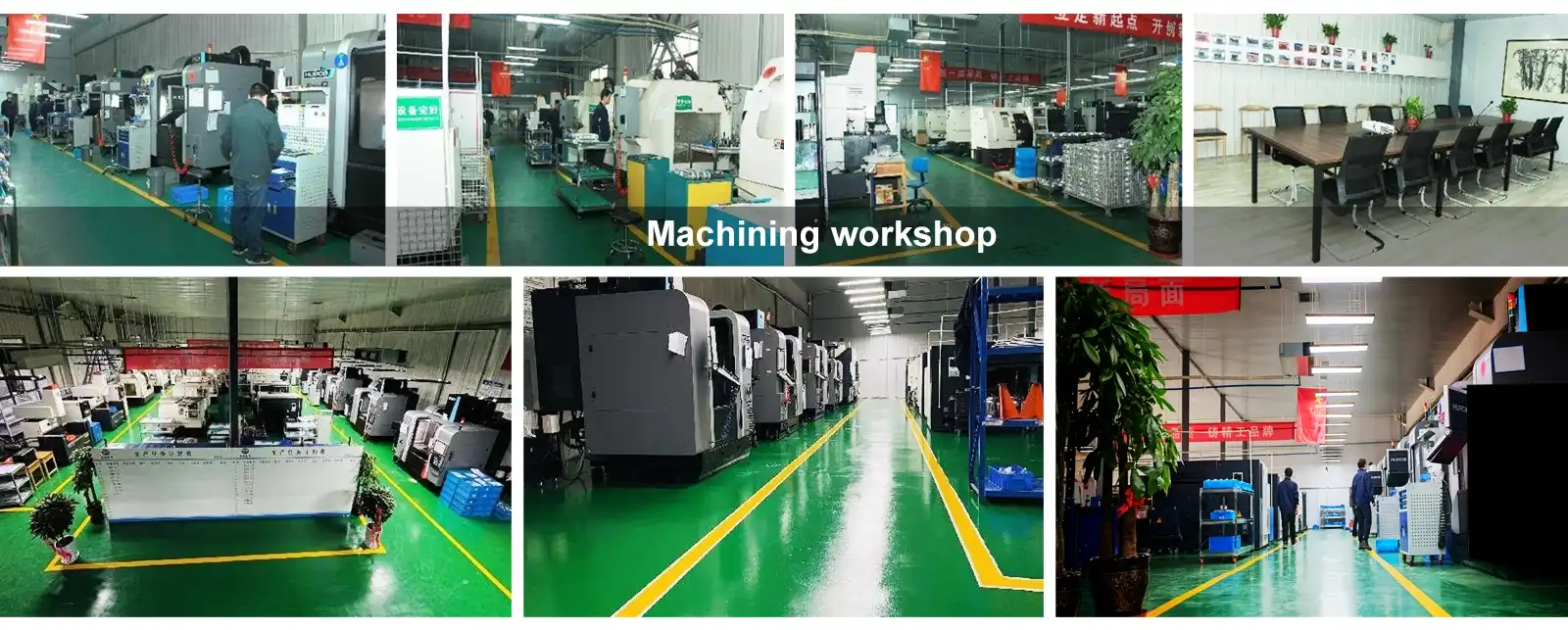
Rongbao Enterprise brings two decades of precision manufacturing expertise specifically suited to demanding medical rehabilitation robot applications. Our comprehensive capabilities—from high-pressure die casting and CNC machining to electroplating surface treatment—deliver the tight tolerances and biocompatible finishes essential for lower limb rehabilitation systems. Certified under ISO9001:2015, ISO14001, and ISO45001 standards, we maintain the quality management rigor medical device manufacturers require throughout component development and volume production.
Our Xi'an facility handles customized aluminum alloy components from prototype through 500-unit production runs, supporting your development timeline from initial concept validation through commercial manufacturing. With 70% of production exported to established markets in Europe, America, and Japan, we understand international compliance requirements and provide complete material documentation supporting regulatory submissions. Whether you need precision-cast structural frames or CNC-machined joint assemblies for your medical rehabilitation robot platform, our engineering team collaborates closely to optimize designs for manufacturability without compromising performance specifications.
Contact our technical sales team at steve.zhou@263.net or zhouyi@rongbaocasting.com to discuss your component requirements with an experienced medical rehabilitation robot supplier committed to quality, precision, and partnership success. Visit rongbaocasting.com to explore our full manufacturing capabilities.
References
- Hobbs, B., & Artemiadis, P. (2020). A Review of Robot-Assisted Lower-Limb Stroke Therapy: Unexplored Paths and Future Directions in Gait Rehabilitation. Frontiers in Neurorobotics, 14, 19.
- Díaz, I., Gil, J. J., & Sánchez, E. (2011). Lower-Limb Robotic Rehabilitation: Literature Review and Challenges. Journal of Robotics, 2011, 759764.
- Maciejasz, P., Eschweiler, J., Gerlach-Hahn, K., Jansen-Troy, A., & Leonhardt, S. (2014). A Survey on Robotic Devices for Upper Limb Rehabilitation. Journal of NeuroEngineering and Rehabilitation, 11, 3.
- Colombo, R., Pisano, F., Mazzone, A., Delconte, C., Micera, S., Carrozza, M. C., Dario, P., & Minuco, G. (2007). Design Strategies to Improve Patient Motivation During Robot-Aided Rehabilitation. Journal of NeuroEngineering and Rehabilitation, 4, 3.
- Krebs, H. I., & Hogan, N. (2006). Therapeutic Robotics: A Technology Push. Proceedings of the IEEE, 94(9), 1727-1738.
- Basteris, A., Nijenhuis, S. M., Stienen, A. H., Buurke, J. H., Prange, G. B., & Amirabdollahian, F. (2014). Training Modalities in Robot-Mediated Upper Limb Rehabilitation in Stroke: A Framework for Classification Based on a Systematic Review. Journal of NeuroEngineering and Rehabilitation, 11, 111.



Learn about our latest products and discounts through SMS or email