- English
- French
- German
- Portuguese
- Spanish
- Russian
- Japanese
- Korean
- Arabic
- Greek
- German
- Turkish
- Italian
- Danish
- Romanian
- Indonesian
- Czech
- Afrikaans
- Swedish
- Polish
- Basque
- Catalan
- Esperanto
- Hindi
- Lao
- Albanian
- Amharic
- Armenian
- Azerbaijani
- Belarusian
- Bengali
- Bosnian
- Bulgarian
- Cebuano
- Chichewa
- Corsican
- Croatian
- Dutch
- Estonian
- Filipino
- Finnish
- Frisian
- Galician
- Georgian
- Gujarati
- Haitian
- Hausa
- Hawaiian
- Hebrew
- Hmong
- Hungarian
- Icelandic
- Igbo
- Javanese
- Kannada
- Kazakh
- Khmer
- Kurdish
- Kyrgyz
- Latin
- Latvian
- Lithuanian
- Luxembou..
- Macedonian
- Malagasy
- Malay
- Malayalam
- Maltese
- Maori
- Marathi
- Mongolian
- Burmese
- Nepali
- Norwegian
- Pashto
- Persian
- Punjabi
- Serbian
- Sesotho
- Sinhala
- Slovak
- Slovenian
- Somali
- Samoan
- Scots Gaelic
- Shona
- Sindhi
- Sundanese
- Swahili
- Tajik
- Tamil
- Telugu
- Thai
- Ukrainian
- Urdu
- Uzbek
- Vietnamese
- Welsh
- Xhosa
- Yiddish
- Yoruba
- Zulu
What is the Role of Casting Connecting Frame Manufacturers?
Casting connecting frames are the building blocks of modern manufacturing. They provide long-lasting, accurate, and effective ways to join things in many different industries. Metal parts like these are made using special casting methods that turn molten metal into complicated shapes that can withstand huge loads and hard working conditions. Connecting frame suppliers make it possible to make reliable structure parts that meet high performance standards. These parts are used in everything from car assembly lines to construction equipment and industrial robots. To help procurement workers in the US make smart choices about which sources and technologies to use, this book takes the mystery out of the casting process for connecting frames. Finding out about the technical skills, quality controls, and production methods of casting suppliers has a direct effect on the success, cost-effectiveness, and long-term dependability of your project.
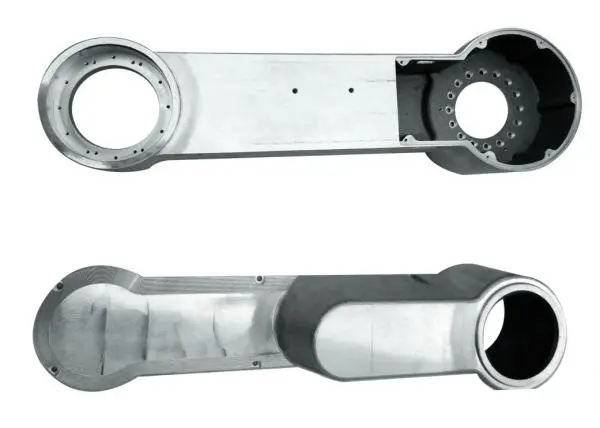
Understanding Casting Connecting Frames in Manufacturing
Casting connecting frames are structural parts made by casting metal in molten metal and are intended to join and support bigger frame assemblies in tough uses. In tools where strength, accuracy in measurements, and material consistency cannot be sacrificed, these parts play important load-bearing roles.
What Defines a Casting Connecting Frame
A casting connecting frame is a carefully designed metal part that holds together several structural elements while keeping them in place and spreading mechanical loads among assembly points. Fabricated frames are made by gluing or bolting together different pieces. Cast frames, on the other hand, come out of the mold as one structure, so there are no weak spots where joints would be. With the casting process, manufacturers can make intricate mounting surfaces, complex internal channels, and walls with different thicknesses all in one production cycle. Automotive, construction equipment, and robotics industries depend on these parts because they offer better strength-to-weight ratios and design flexibility that can't be achieved with traditional manufacturing methods.
Common Casting Methods for Frame Components
Manufacturers use different casting methods based on the amount of work they need to do, the material they choose, and the tolerances for size. Gravity casting, which is used to make things like support arms for industrial robots, uses gravity to fill mold cavities with molten aluminum alloy. With this method, parts are made that have great mechanical properties and almost no internal porosity. High-pressure die casting uses very high pressure to push liquid metal into steel molds. This process has short cycle times and tight limits that make it perfect for mass production. Low-pressure die casting uses controlled pressure to slowly fill molds from below. This keeps the molds' dimensions accurate while reducing turbulence and gas trapping. Larger parts and more complicated shapes can be cast in sand, but the surfaces need to be machined more to be precise. There are different benefits to each method when it comes to cost, wait time, and quality that procurement managers need to weigh against the needs of the project.
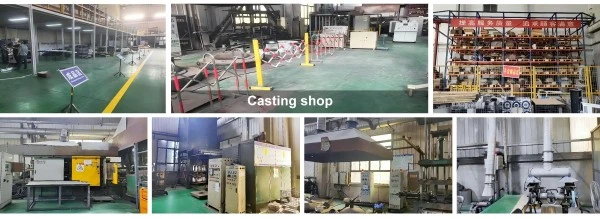
Material Selection and Performance Characteristics
Because they are so strong for their weight, don't rust, and carry heat well, aluminum alloys are the most common materials used to make casting connecting frames. A356 aluminum alloy is often used for industrial robot support arms and precision machinery parts. It has silicon and magnesium in it, which make it more fluid when it's being poured and improve its mechanical qualities after it's been heated. This alloy has tensile strengths higher than 280 MPa while still being lightweight, which is important for automated equipment. Cast iron is still used a lot in big machinery where better resistance to wear and shaking is more important than weight. When choosing a material, you have to think about how well it will work mechanically, how it will react to the surroundings, how much it will cost to make, and how it will be treated afterward, using CNC machines and other methods.
The Role of Casting in Enhancing Frame Manufacturing Efficiency
Traditional frame manufacturing methods have a lot of problems that casting connecting frame technology solves. It makes production more efficient, structures work better, and costs are managed better. Having these benefits in mind helps procurement teams see how valuable it is to work with experienced casting manufacturers.
Reducing Component Complexity and Assembly Costs
In traditional frame construction, many machined or stamped parts have to be put together using welding, bolting, or riveting, which makes the assembly more complicated and increases the chance of failure. Casting brings together what would normally be a dozen separate parts into a single structure that works together. This consolidation gets rid of the need for secondary joining operations, makes it easier to manage inventory, and streamlines the procedures for quality inspection. This efficiency is shown by the fact that a 9.5 kg industrial robot support arm was made using gravity casting. A part that would normally need to be put together from seven different machined parts comes out of the mold whole, needing only finish machining and surface treatment. Less complicated manufacturing directly leads to lower labor costs, shorter production cycles, and better performance on the assembly line.
Achieving Precise Structural Performance
Casting lets engineers get the best spread of material throughout a frame component by putting the most weight where structural analysis shows it needs to be for maximum strength and removing material from areas that won't be under as much stress. This careful placement of materials makes parts that meet performance requirements while weighing as little as possible. This is an important factor to consider in robotics, aerospace, and automobile uses where every kilogram affects energy economy and costs. Casting also makes sure that the part's grain structures and mechanical properties are the same all the way through. This means that there are no weld quality issues or heat-affected areas, which can happen with fabricated assemblies. When parts are made using ISO9001:2015 quality management systems, they are put through a lot of tests to make sure that the engineering requirements for material properties, dimensional accuracy, and structural integrity are met across all production batches.

Scalability and Production Capacity
Once the investment in tools is over, casting methods allow for production that can be scaled up or down, from small prototypes to large production runs. Manufacturers who can make 5,000 pieces a year can adapt to growth paths while keeping quality standards and delivery dates constant. When CNC machining centers, coordinate measuring machines, and automated casting cells work together, they make production systems that can run without lights. This makes the most of the tools and cuts down on wait times. This scalability is especially helpful for procurement managers who are looking to build long-term relationships with suppliers, since qualified casting suppliers can increase production capacity to meet market demand without customers having to find other sources or lower quality standards.
Casting Connecting Frame Manufacturing Strategies for 2026
Recent technological advances are turning casting connecting frame operations from craft activities that require a lot of manual labor into precise manufacturing systems with automation, data analytics, and process control that are on par with the best in any advanced manufacturing field.
Industry 4.0 Integration and Process Monitoring
Leading casting companies now use sensor networks on all of their production tools to get real-time information on things like melt temperature, mold filling speed, cooling rates, and changes in size. This information is sent to analytical systems that find process drift before it leads to parts that don't meet standards. This lets operators make changes that keep process windows tight. Statistical process control charts keep track of important factors across production runs. They give solid proof of how well and consistently the process works. Manufacturers with ISO9001:2015, ISO14001, and ISO45001 certifications show they are committed to systematic quality management, protecting the environment, and keeping workers safe. These are all things that procurement professionals are thinking about more and more when they are managing supplier risk and corporate responsibility obligations.
Simulation Software and Defect Mitigation
Casting modeling software lets engineers simulate mold filling, solidification patterns, and thermal stresses before they cut the first tool. This cuts down on development times and gets rid of the need for expensive trial-and-error repeats. These virtual prototypes find flaws like shrinkage porosity, gas entrapment, and hot tearing before they happen in production. This lets designers make changes that stop problems before they happen. Simulation cuts down on time to market and raises first-article yield rates when used with design for manufacturability reviews. Suppliers who invest in modeling tools show that they are technically advanced and dedicated to providing quality that is right the first time. This lowers the number of inspections you have to do and speeds up project timelines.

Surface Treatment and Finishing Technologies
Shot blasting has become the best way to treat the surface of cast aluminum frames because it cleans the surfaces, gets rid of oxide layers, and adds compressive stresses that make the frames more resistant to fatigue. This mechanical process evens out the surface roughness, making it perfect for coating later on. It also gets rid of the chemical waste that comes with acid pickling. When important features are CNC machined, they are guaranteed to meet certain standards for mounting surfaces, bearing bores, and threaded connections, even if there are small variations in the casting. Companies that offer combined casting, machining, and surface treatment services make transportation easier and cheaper by sending finished parts that are ready to be put together instead of rough castings that need to be done by multiple suppliers.
Conclusion
Casting connecting frame manufacturers are an important part of modern manufacturing supply chains because they make structural parts that make equipment work well, be reliable, and be cost-effective. The casting process has benefits that can't be found in any other way of making things. These benefits include design freedom, material efficiency, production scalability, and structural stability. When purchasing professionals look at casting suppliers, they should check their technical abilities, such as their ability to handle casting processes, machining integration, and quality systems. They should also make sure that the suppliers' capacity is aligned and that they can communicate effectively. When buyers are clear about what they want in terms of performance and suppliers show they are knowledgeable, responsive, and dedicated to always getting better, the partnership works. When procurement teams know the technical details of casting technology, choosing the right materials, and manufacturing strategies, they can make decisions that improve product quality, keep costs down, and build reliable long-term supply relationships that are necessary for a competitive edge.
FAQ
1. What is the difference between casting and traditional frame assembly?
In traditional frame construction, different parts are joined together by welding, bolting, or riveting, which makes structures out of many parts. This way of doing things could make joints weaker and needs a lot of extra work to be done. Casting makes integrated frames in a single step of the production process. This gets rid of any gaps between the joints and combines what could be many different parts into one structure with the same material properties all over. Most of the time, cast frames have better strength-to-weight ratios and are easier to make.
2. How does casting enhance frame strength and durability?
Casting lets engineers find the best way to distribute materials, putting more mass in areas that are under a lot of stress and less weight in areas that aren't being used much. The process makes sure that all of the parts have the same grain structures and mechanical qualities. This keeps the units from having heat-affected zones and weld defects. When you choose the right metal and heat treat it properly, it develops mechanical qualities like tensile strength, yield strength, and fatigue resistance that meet the needs of demanding applications while keeping the same size across a range of operating temperatures.
3. What should I consider when choosing a casting manufacturer?
Check the specialized skills of the company, such as the casting methods, machining tools, and testing tools that can be used to meet your needs. Check for quality standards like ISO9001:2015 that show organized ways of managing quality. Figure out how much production you can handle based on your number needs and growth predictions. Check how they communicate, how quickly they respond, and how willing they are to offer technical support during the design and production phases. Ask for references from customers in the same industry, and think about doing facility audits to see how things are made for yourself.
Partner with Rongbao Enterprise for Your Casting Connecting Frame Manufacturing Needs
Rongbao Enterprise has more than 20 years of experience in precision casting and combined production solutions, which can help you with your needs for structural parts. Gravity casting, low-pressure die casting, high-pressure die casting, and CNC cutting are just some of the many techniques we use to make parts. From raw materials to final testing and surface treatment, we can deliver finished parts. Xi'an, China, factories have ISO9001:2015, ISO14001, and ISO45001 certifications, which make sure that the quality is always the same, that the factories are environmentally friendly, and that workers are safe. We keep the ability to make 5,000 pieces a year, with specs that can be changed to fit your exact needs. These parts are used in everything from heavy machinery to industrial robotics.
Our technical team offers full design support, analysis of how well the product can be made, and fast prototyping services that shorten the time it takes to develop a product while improving the performance of each part and the cost of production. Rongbao Enterprise offers high-quality frames made of A356 aluminum alloy with CNC-machined details and shot-blasted surfaces, as well as custom solutions made from other materials. Their prices are competitive, and they respond quickly to customer needs. As a well-known provider of casting connecting frames, 70% of our products are sent to markets in North America, Europe, and Japan. This means we know what quality standards and rules are expected around the world. Email our team at steve.zhou@263.net or zhouyi@rongbaocasting.com to talk about the details of your project and get a detailed quote. You can learn more about what we can do at rongbaocasting.com and how our approach to integrated production can help your supply chain and make your products more competitive.
References
1. Campbell, J. (2015). Complete Casting Handbook: Metal Casting Processes, Metallurgy, Techniques and Design. Butterworth-Heinemann.
2. American Foundry Society (2019). Aluminum Casting Technology: A Comprehensive Guide for the Modern Foundry. AFS Publications.
3. Kaufman, J.G. and Rooy, E.L. (2004). Aluminum Alloy Castings: Properties, Processes, and Applications. ASM International.
4. International Organization for Standardization (2015). ISO 9001:2015 Quality Management Systems – Requirements. ISO Publications.
5. Davis, J.R. (2001). Alloying: Understanding the Basics. ASM International Materials Park.
6. Brown, J.R. (2000). Foseco Ferrous Foundryman's Handbook. Butterworth-Heinemann.
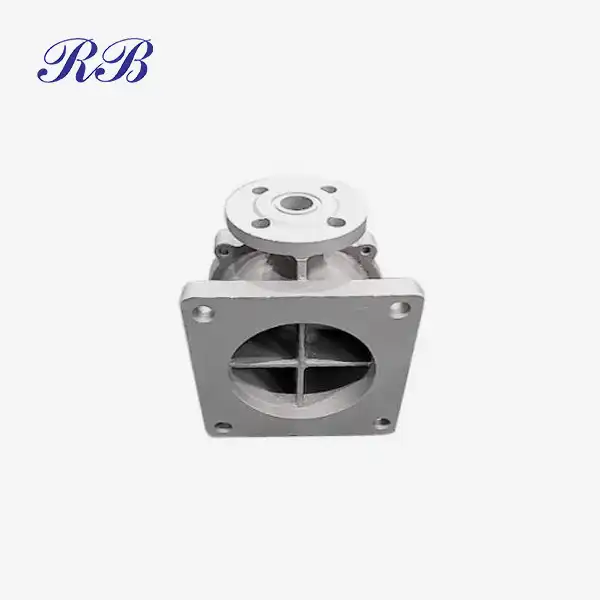
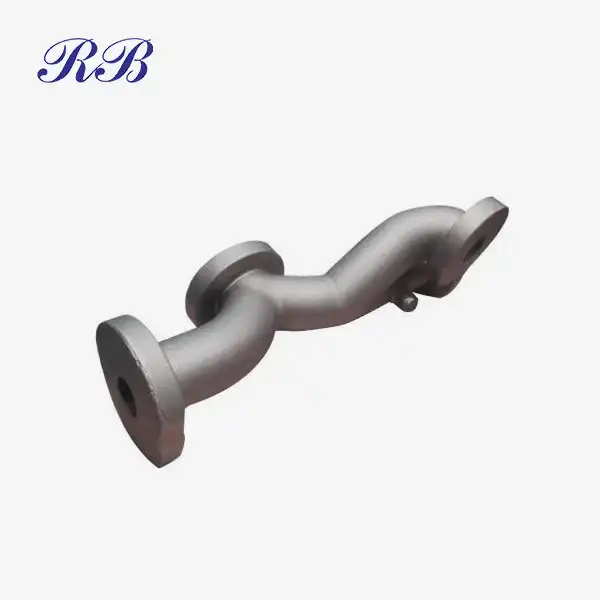
_1751074553490.webp)
Learn about our latest products and discounts through SMS or email