- English
- French
- German
- Portuguese
- Spanish
- Russian
- Japanese
- Korean
- Arabic
- Greek
- German
- Turkish
- Italian
- Danish
- Romanian
- Indonesian
- Czech
- Afrikaans
- Swedish
- Polish
- Basque
- Catalan
- Esperanto
- Hindi
- Lao
- Albanian
- Amharic
- Armenian
- Azerbaijani
- Belarusian
- Bengali
- Bosnian
- Bulgarian
- Cebuano
- Chichewa
- Corsican
- Croatian
- Dutch
- Estonian
- Filipino
- Finnish
- Frisian
- Galician
- Georgian
- Gujarati
- Haitian
- Hausa
- Hawaiian
- Hebrew
- Hmong
- Hungarian
- Icelandic
- Igbo
- Javanese
- Kannada
- Kazakh
- Khmer
- Kurdish
- Kyrgyz
- Latin
- Latvian
- Lithuanian
- Luxembou..
- Macedonian
- Malagasy
- Malay
- Malayalam
- Maltese
- Maori
- Marathi
- Mongolian
- Burmese
- Nepali
- Norwegian
- Pashto
- Persian
- Punjabi
- Serbian
- Sesotho
- Sinhala
- Slovak
- Slovenian
- Somali
- Samoan
- Scots Gaelic
- Shona
- Sindhi
- Sundanese
- Swahili
- Tajik
- Tamil
- Telugu
- Thai
- Ukrainian
- Urdu
- Uzbek
- Vietnamese
- Welsh
- Xhosa
- Yiddish
- Yoruba
- Zulu
What is the purpose of a bearing cap?
A bearing cap cast iron casting is a structural member that fixes a bearing in a split bearing housing. It keeps the bearing in place with the bottom housing piece yet allows the shaft to spin as it should. It is more than just a cover for industrial equipment. Its size, mounting position, material, and machining quality may all impact the performance of the bearing assembly. For heavy-duty applications, bearing cap cast iron casting is one manufacturing option for producing strong, rigid housing components. Cast iron has effective vibration damping and compressive strength. Casting enables producers to create designs that would need more material and processing if built from all bar stock. The proper bearing cap, however, is dependent upon bearing type, operating load, installation arrangement, and the tolerances necessary. The function of the component is the first step in choosing the correct design and production technique.
What does a bearing cap do?
A bearing cap is often the top half of a split bearing housing. The bearing is located between the top and lower halves of the housing, and the assembly is clamped together by means of bolts or other fastening devices.
The primary function is to maintain the bearing in the correct position during operation. A carefully constructed cap also helps to disperse the clamping force and preserve the interaction between the bearing, housing, and spinning shaft.
Bearing location and alignment
The bearing has to keep its position at the destination point while the shaft rotates. This placement is achieved by utilizing the cap as a controlled contact with the bearing housing.
The crucial dimensions are not only the outward form. Control of the bore size, mounting surfaces, bolt-hole placements, and the relationship between the top and lower housing portions may be needed.
For this reason, bearing caps should be constructed around the actual bearing and housing assembly, and not as a separate metal cover.
Load distribution
The bearing housings transmit loads from the spinning assembly to the supporting framework. The cap is part of this load route.
Therefore, its wall thickness, fastening arrangement, and contact regions should be chosen according to the predicted working circumstances. Static loads may be somewhat predictable; however, spinning machinery may also generate fluctuating or shock loads.
For larger equipment, the design should consider the total burden and not only the equipment nameplate weight.
Access for maintenance
One practical benefit of a split bearing housing is simpler maintenance. The technicians will be able to check or replace the bearing cap cast iron casting more easily if the cap can be removed without disassembling the complete shaft assembly.
This makes bolt access, lifting provisions, alignment features, and working clearance key design concerns.
A cap that is technically sound but difficult to remove might add to maintenance time. For industrial equipment, it may add up to a large expense throughout the equipment’s lifetime.
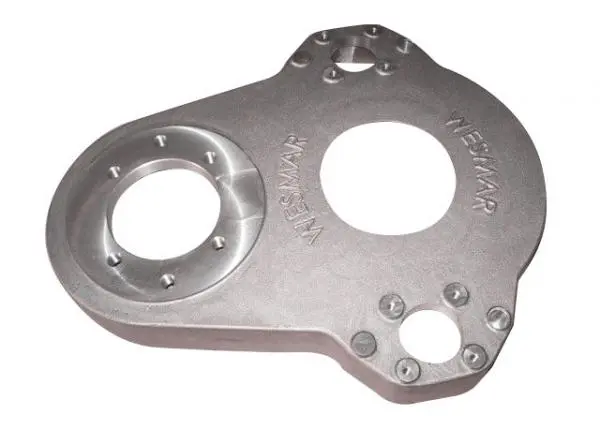
Why is cast iron used for bearing caps?
The material choice depends on the application; however, cast iron is often selected for bearing housing parts due to its stiffness, castability, and vibration damping qualities.
Performance in practice will rely on the grade picked and the final part design. So “cast iron” should not be thought of as a single material with the same qualities in every application.
Gray iron for general industrial applications
The matrix of gray iron includes graphite particles. This structure results in beneficial vibration dampening properties for the material, which may be of use in equipment with spinning parts.
It also has strong compressive strength and can be cast in somewhat complicated housing designs.
Gray iron is a viable material for bearing caps and other housing parts when the loading is modest, and the environment permits.
Ductile iron for higher mechanical demands
Ductile iron has a distinct graphite structure and may give stronger tensile strength and impact resistance than many standard gray iron types.
This might make it worthwhile to examine where the component could be exposed to greater mechanical stresses, vibration, or occasional impact.
The selection of the right material is based on the actual design needs and not on the presumption that a more powerful material is always needed.
Material selection should follow the working conditions
Engineers should consider the following when specifying a cast iron bearing cap:
- type and size of bearing, static and dynamic loads, shaft speed, vibration and probable shock, operating temperature, moisture or chemicals, needed machining tolerances, anticipated manufacturing quantity.
- This offers the foundry a better foundation to select an appropriate material grade and casting design.
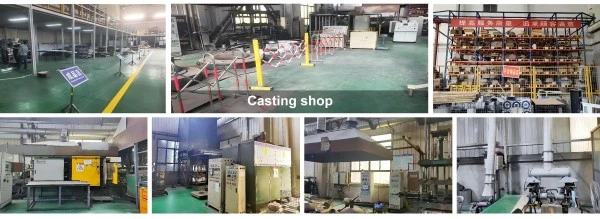
How is a cast iron bearing cap manufactured?
The casting process is used if the component has a form that would be costly or wasteful to produce from solid material.
Typically, the production path begins with the engineering drawing. The foundry will analyze the geometry, wall thickness, machining allowances, parting arrangement, and other casting concerns before production.
From pattern to casting
A pattern or mold is created to the desired geometry. Allowances may be included to make up for metal shrinkage and subsequent machining.
The prepared mold is then filled with molten iron. The metal assumes the necessary fundamental form during solidification. Later, the casting is taken from the mold and cleaned.
The casting process is not the last step. Any flash, gates, risers, or other superfluous material may have to be eliminated before machining and inspection.
Machining critical surfaces
Some bearing cap cast iron casting surfaces are more critical in dimensional control than others.
CNC machining may be utilized for bearing-related surfaces, mounting faces, bolt holes, and other dimensions as called for in the engineering design.
This is especially crucial when the cap must fit precisely with a bearing, lower housing, shaft assembly, or other machined component.
There must be a clearance between the casting and the machining. Basic geometry is done by casting; essential features are machined to precise specifications.
Inspection after production
Inspection criteria are by component and per customer standard.
Supplier should utilize the following whenever applicable: dimensional inspection, visual inspection, material verification, and non-destructive testing. Techniques like X-ray examination may assist in uncovering internal discontinuities in key castings that cannot be validated by visual inspection alone.
A good supplier should be able to tell you what inspection procedures are utilized and what inspection records may be delivered with the order.

What should engineers consider when designing a bearing cap?
A good bearing cap design starts with the complete assembly rather than the cap alone.
Wall thickness and transitions
Any sudden change in wall thickness might complicate casting and can influence solidification. Good transitions and proper fillets may make a casting design more functional.
It's not only to make the walls thicker. Extra material adds weight, expense, and trouble to the casting without commensurate return.
Bolt holes and mounting features
The bolt-hole location directly influences the connection of the cap to the bottom housing piece.
The design should clearly specify hole diameter, location, thread requirements (if applicable), and machining tolerances. Consideration should be given to enough tool clearance if personnel will be removing the cap on a frequent basis for maintenance.
Lubrication and inspection features
The component may be designed with lubricating passageways, inspection apertures, drain features, or sensor provisions depending on the housing design.
These elements should be specified by the bearing cap cast iron casting and lubrication system, not only as general characteristics.
Before casting, a manufacturer should check these characteristics since certain internal geometries may need cores or modifications to the mold design.
How to evaluate a bearing cap casting supplier
For buyers, selecting a provider is not only a simple price comparison. The key concern is whether the supplier can consistently convert the authorized design into a usable part.
An assessment of suppliers should include numerous categories.
Manufacturing and quality control
Ask the supplier how they manage the casting process, machining processes, and final inspection.
While the ISO 9001:2015 certification may be used as proof of a written quality management system, purchasers should also check the inspection procedure used by the supplier.
Depending on the project, important paperwork might include material certifications, dimensional inspection reports, casting inspection records, and other quality documentation needed by the purchase specification.
Engineering support
A provider with casting expertise should be able to anticipate possible difficulties before production begins.
For example, the engineering team could consider wall thickness, parting lines, machining allowances, cores, and draft requirements. Early design evaluation may help limit the likelihood of costly pattern changes after manufacturing has begun.
Production and finishing capability
If the supplier can handle casting, machining, surface finishing, inspection, and packaging in one production system, the communication between different production stages may be reduced.
It is also helpful for purchasers to verify:
- manufacturing quantity available;
- material grades;
- CNC machining capabilities;
- inspection equipment;
- surface treatment choices;
- packaging technique;
- lead time; sample approval procedure;
- OEM and bespoke manufacturing capability.
Rongbao Enterprise for custom bearing cap castings
China Xi'an Rongbao Enterprise Cast and Machined Parts for Industrial Applications. Its bearing cap manufacturing is based on casting followed by machining and finishing processes, which enables customers to order parts per their designs and application requirements.
The firm asserts that it works with grades of cast iron and other materials according to the project needs. Manufacturing capabilities include CNC machining on essential dimensions, shot blasting for surface preparation, and wooden box packing for foreign shipping.
Rongbao also claims to have ISO 9001:2015, ISO 14001, and ISO 45001 certifications. When buyers are looking at a supplier, these certifications may be taken into account along with manufacturing capabilities, inspection methods, sample approval, and project quality needs in particular.
For bespoke bearing caps, the engineering conversation should start with the drawing and operating circumstances. Rongbao’s technical staff can work with clients on unique designs, OEM/ODM needs, and production specifics before production.
Conclusion
The function of a bearing cap is clear. It serves to hold and position the bearing in a split housing, and sustain the mechanical stresses passing through the assembly. Its design also impacts maintenance access, alignment, fastening, and general convenience of the bearing housing.
If the mechanical and casting properties of cast iron are appropriate to the service conditions, it may be used for industrial applications. The overall outcome, however, is not just a matter of choosing the materials. The quality of the completed component is influenced by casting design, machining precision, inspection, and supplier process control.
If you buy a bespoke bearing cap, you should provide the design, bearing details, material requirements, operating circumstances, quantity, and inspection parameters to the supplier. This allows the foundry to have enough information to assess the design and make a part for the real machine, instead of just providing a generic cast part.
Easy & Fast Start with a Rongbao Enterprise. Our skilled sales staff will react swiftly to your inquiry with full technical information and competitive prices. You can reach them directly via email at steve.zhou@263.net or zhouyi@rongbaocasting.com to discuss your bearing cap cast iron casting requirements. Whether you need standard components or custom designs, Rongbao Enterprise delivers the quality, service, and value that industrial buyers demand.
References
1. American Foundry Society. (2020). "Casting Design and Performance." Des Plaines, IL: American Foundry Society Publications.
2. Budinski, K. G., & Budinski, M. K. (2021). "Engineering Materials: Properties and Selection" (10th ed.). Upper Saddle River, NJ: Pearson Education.
3. International Organization for Standardization. (2015). "ISO 9001:2015 Quality Management Systems - Requirements." Geneva: ISO.
4. Machinery's Handbook. (2020). "Bearings and Bearing Housings" (31st ed.). New York: Industrial Press.
5. Steel Founders' Society of America. (2019). "Engineering Guide for Cast Iron and Steel Castings." Crystal Lake, IL: SFSA Technical Publications.
6. Campbell, J. (2018). "Complete Casting Handbook: Metal Casting Processes, Techniques and Design" (2nd ed.). Oxford: Butterworth-Heinemann.
Learn about our latest products and discounts through SMS or email