- English
- French
- German
- Portuguese
- Spanish
- Russian
- Japanese
- Korean
- Arabic
- Greek
- German
- Turkish
- Italian
- Danish
- Romanian
- Indonesian
- Czech
- Afrikaans
- Swedish
- Polish
- Basque
- Catalan
- Esperanto
- Hindi
- Lao
- Albanian
- Amharic
- Armenian
- Azerbaijani
- Belarusian
- Bengali
- Bosnian
- Bulgarian
- Cebuano
- Chichewa
- Corsican
- Croatian
- Dutch
- Estonian
- Filipino
- Finnish
- Frisian
- Galician
- Georgian
- Gujarati
- Haitian
- Hausa
- Hawaiian
- Hebrew
- Hmong
- Hungarian
- Icelandic
- Igbo
- Javanese
- Kannada
- Kazakh
- Khmer
- Kurdish
- Kyrgyz
- Latin
- Latvian
- Lithuanian
- Luxembou..
- Macedonian
- Malagasy
- Malay
- Malayalam
- Maltese
- Maori
- Marathi
- Mongolian
- Burmese
- Nepali
- Norwegian
- Pashto
- Persian
- Punjabi
- Serbian
- Sesotho
- Sinhala
- Slovak
- Slovenian
- Somali
- Samoan
- Scots Gaelic
- Shona
- Sindhi
- Sundanese
- Swahili
- Tajik
- Tamil
- Telugu
- Thai
- Ukrainian
- Urdu
- Uzbek
- Vietnamese
- Welsh
- Xhosa
- Yiddish
- Yoruba
- Zulu
6 Key Benefits of Gravity Sand Casting Parts: Wear Resistance and Cost Control
When a cast component has to handle repeated loads, outdoor exposure, vibration, or contact with other metal parts, buyers usually have two concerns: how long the component will remain serviceable and how much the complete project will cost. The manufacturing process has a direct influence on both. Gravity sand casting parts are produced by pouring molten metal into a sand mold under gravity. Compared with high-pressure injection or significant machining from solid stock, sand casting provides a practical mix of tooling flexibility, material choices, and manufacturing cost. This is especially helpful for components with a somewhat complicated form, internal cavities, or for low- to medium-volume production. Aluminum alloys like A356 are frequent choices for applications requiring low weight, castability, and a suitable mix of strength and corrosion resistance. But the benefits of Gravity sand casting parts do not derive from the procedure itself. The final performance relies on the alloy, as well as mold and pattern design, pouring technique, cooling circumstances, heat treatment, machining, and inspection. A good casting will have a long life and predictable manufacturing costs. Poor process control might lead to porosity, variance in dimensions, or needless finishing. Six practical advantages make the technique valuable for engineers and procurement teams: wear resistance, cost management, design flexibility, mechanical performance, production scalability, and quality consistency.
Better Wear Performance Starts With Material and Structure
Engineers pay special attention to the selection and quality of the casting for a variety of reasons, chief among them wear resistance. A component that regularly meets another surface, conveys vibration, or endures mechanical friction requires more than a proper form. Its long-term behavior is affected by the alloy, the microstructure, the hardness, the surface condition, and the working environment.
A356 Can Offer a Useful Balance for Aluminum Castings
One of the aluminum alloys that may be used for sand-cast components when low density and useful mechanical properties are required is A356. The final performance is a consequence of alloy condition and any heat treatment selected.
That is, the material should be selected for the specific load and service environment, not just because A356 is a commonly employed material.
A casting for a structural bracket may have requirements that are considerably different from a casting for recurring sliding contact. It is thus vital that the required alloy and, if suitable, heat-treatment condition must be indicated on the design or material specification.
Surface Condition Also Affects Service Life
The surface of a casting may be shot blasted or otherwise cleaned prior to machining or coating. This may remove any lingering sand and scale. It will also provide a more homogeneous surface.
Shot blasting, however, must not be viewed as an alternative to proper alloy selection or casting design. If a component is wearing too much, engineers may have to consider coatings, heat treatment or a replacement material (at the actual site of contact), or machining.
If the wear resistance is a key demand, contact condition and the projected service environment should be reported to the providers for the load supply.
The Casting Process Can Reduce Total Production Cost
The cost of metal is seldom the only driver of the cost of a completed component. The ultimate purchase cost is influenced by tooling, machining, scrap, inspection, finishing, packing, and shipment.
Gravity sand casting parts might be desirable in that their tooling needs are often less demanding than those of permanent die methods. A pattern may be made and changed without the commitment to a complicated permanent steel die.
Lower Tooling Commitment Helps With Design Changes
This is very helpful in product development.
If a new component is still in the testing stage, the engineering team may make revisions to a mounting hole, rib, flange, or connection point after the initial production trial. A sand casting pattern is frequently easier to modify than a permanent die.
That flexibility may help offset the cost of early design adjustments.
It also makes the method worth considering for applications when the yearly demand is not strong enough to warrant a major die investment. The shape, material, quantity, dimensional requirements, and estimated product life still dictate the optimal procedure.
Near-Net-Shape Production Can Reduce Machining
Machining a part from bar or billet all the way may provide outstanding dimensional precision but can also waste a lot of material.
Casting may get the metal closer to its ultimate shape before the CNC procedures begin. Critical holes, faces, bores, and mating surfaces may therefore be machined to tighter tolerances with less material removal.
If you’re making many thousands of anything, the difference in machining time and scrap material might be substantial.
The issue is not that sand casting is always cheaper than machining. The greater the amount of volume, complexity, or material removal a part demands, the more desirable casting is as a way of initially creating a near-net form.

Complex Shapes Can Be Consolidated Into One Casting
Another practical benefit is the flexibility to create.
Sand molds may also deal with cores and rather intricate shapes without the same tooling approach as certain permanent mold techniques. That means engineers may mix features that previously would have to be made from numerous different parts.
Ribs, Bosses, and Internal Cavities Can Be Integrated
The part might have reinforcing ribs, mounting bosses, curved portions, cable channels, or other integrated elements.
For example, say in power transmission applications, a casting might integrate mounting pads and connecting points as one component, rather than having to use many manufactured parts.
Having fewer distinct components may make assembling easier. It may also decrease the number of welded, bolted, or mechanically attached connections.
Design freedom is not to be mistaken for infinite geometry, however. Design of the casting still involves wall thickness, draft, fillet radii, cores, feeding, and solidification.
Pattern Design Has a Direct Cost Impact
The pattern should be designed with the casting process in mind.
A suitable separating line may ease the molding. Draft angles, if applicable, may facilitate pattern elimination. Providing a good transition between thick and thin portions may also assist in preventing issues of localized shrinking.
Early contact with the foundry by the customer may save time. A supplier reviewing the design before pattern creation might find aspects that may raise machining, core needs, or casting risk.
Mechanical Performance Depends on Process Control
Gravity sand casting parts is suitable for aluminum alloys, cast irons, and a broad spectrum of steel grades. The decision relies on the mechanical requirements, weight constraints, corrosion conditions, temperature, and the production specification.
The ultimate attributes are influenced by both the material and the heat-treatment condition in A356, for example.
Heat Treatment Can Change the Final Properties
The heat treatment must be managed, and a record should be maintained for alloys supplied in a defined temper. The same alloy may have varied mechanical characteristics depending on its state.
If necessary, tensile testing may be used to check qualities such as ultimate tensile strength, yield strength, and elongation. The appropriate testing technique and acceptance limits shall be as defined in the material standard or customer specification.
This is more dependable than just assuming mechanical performance based on the name of the alloy.
Casting Quality Matters Under Repeated Loads
Internal porosity, shrinkage, inclusions, and other discontinuities might harm components subjected to cyclic stress.
For this reason, important castings may need further inspection using radiography, ultrasonic testing or other non-destructive procedures.
The test to be used relies on the component and the kind of discontinuity examined. A supplier must not use the same inspection package on every casting. The inspection strategy must be based on the actual function and danger of the part.
Production Volumes Can Be Scaled Without Excessive Tooling
Gravity sand casting is typically used for prototype work, replacement parts, and low- to medium-volume manufacturing. It also enables bigger production needs when the foundry has the proper molding, core forming, pouring, and inspection capabilities.
Medium-Volume Projects Can Benefit From the Process
The high initial cost of permanent die casting may not be needed if the project needs a few thousand components.
As manufacturing volume rises, the supplier also has the ability to standardize patterns, cores, fixtures, and inspection methods.
The key concern for the purchasers is whether the supplier has adequate capacity to achieve the desired delivery schedule while keeping the same material and dimensional standards across the batch.
Therefore, a quote should not be judged on price per casting alone. The purchase estimate should incorporate lead time, tooling cost, machining cost, inspection, packing, and delivery.
Capacity Should Be Matched to the Actual Order
A supplier may be able to make a small trial batch but may run into problems with a much bigger repeat order. Buyers should inquire about molding capacity, machining equipment, inspection equipment, and timing of production before signing a long-term supply agreement.
This is particularly true for industrial components, where manufacturing disruptions may impact the whole assembly or installation timeline.
Consistent Quality Requires More Than Skilled Operators
The expertise of a traditional foundry is still important, but contemporary manufacturing now has quantitative process controls.
Gravity sand casting part characteristics may be checked, the temperature of the molten metal can be detected, and chemical composition can be validated. Critical dimensions may be evaluated using calibrated instruments or CMM equipment. Non-destructive testing may be incorporated in the inspection plan when appropriate.
Inspection Should Follow the Drawing
The starting point of a quality system is the customer’s needs.
The provider should be aware of:
- what dimensions are important;
- what surfaces are to be machined;
- what alloy is needed;
- whether heat treatment is necessary;
- what surface condition is acceptable;
- whether NDT is required;
- what inspection documentation is required.
This avoids a typical purchase difficulty in the case of a part that passes the internal standard of the supplier but does not satisfy the real drawing of the client.
Traceability Adds Value to Repeat Orders
In industrial situations, traceability might be more beneficial than a general quality statement.
Material certifications, chemical analysis, heat-treatment records, dimensional reports, and NDT reports may be attached to the appropriate manufacturing batch, if applicable.
This enables a buyer to trace a quality problem without losing sight of the material or manufacturing batch involved.
Where Gravity Sand Casting Parts Make the Most Sense
This technique is especially worth considering when numerous criteria overlap:
- The component geometry is complicated and uneven.
- Internal cavities or cores are needed.
- The production volume is modest to medium.
- The project lacks justification for the cost of permanent tooling.
- Only stringent machining tolerances are required on certain surfaces.
- Aluminum or any other castable alloy fits the application requirements.
- Design adjustments could be made during product development.
- The final component requires Gravity sand casting parts, machining, and inspection as one single package.
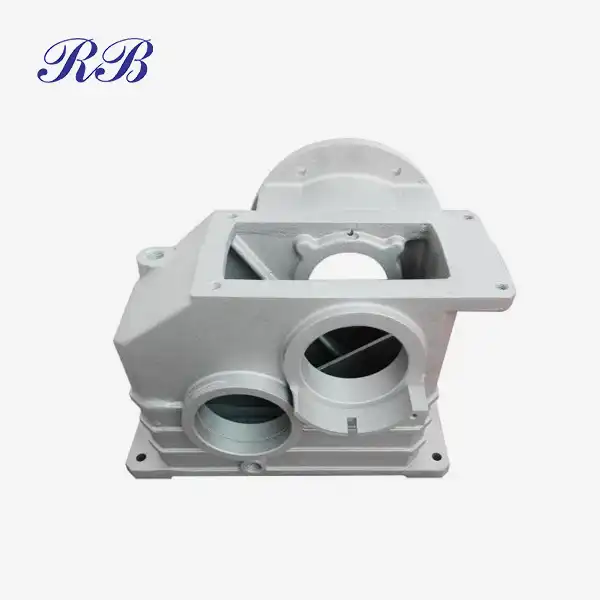
One example is power transmission components. The first application emphasis is on industrial components such as conductors, clamps, brackets, and housings. The parts are exposed to vibrations, outside conditions, mechanical stresses, and temperature fluctuations; thus, the choice of material and the quality of the castings are critical concerns.
Supplier expertise is important for certain applications. A foundry that knows what to expect from power transmission components is more likely to comprehend the relevance of connecting surfaces, mounting features, dimensional consistency, material documentation, and batch traceability.
How to Compare Suppliers Before Placing an Order
Price should be only one part of the comparison.
Before selecting a supplier, procurement teams should review several practical points.
Ask About Engineering Support
Is the supplier allowed to see the drawing before production?
Does it suggest adjustments to the parting line, draft, fillets, cores, or machining allowance?
Can it discover traits that can predispose casting?
Often, a supplier that is involved in the engineering phase may head off difficulties before tooling is built.
Review the Complete Quality Process
Ask about the supplier’s controls on:
- Raw materials recognition
- Melting and chemical composition
- Molding Preparation
- Poursings
- Heat-treatment
- Machining Cleaning
- Dimensional examination
- NDT as and when needed
- Last-minute packing
Certifications, like ISO 9001, might be proof of a structured quality management system. Certification is not evidence that every single casting will fulfill a specific design. The technological requirements still have to be explicitly stated and confirmed.
Consider the Complete Delivered Cost
A low casting price can become less attractive if the project requires extensive machining, additional inspection, rework, special packaging, or repeated tooling changes.
A better comparison considers the complete cost of obtaining an acceptable component.
This is particularly important for Gravity sand casting parts supplied for overseas industrial projects, where packaging and transportation can also influence the final landed cost.
Conclusion
The major benefits of gravity sand casting stem from the way the method balances the materials, tooling investment, shape, production volume, and post-casting processing.
Casting is a realistic production approach for parts where wear resistance is important, but ultimate performance still relies on alloy selection, microstructure, heat treatment, surface condition, and service requirements. Sand casting may save tooling investment and machining needs, especially when the components are complicated in form, and the production volume is medium.
Another key advantage is design freedom. Often, cores, ribs, bosses, and other characteristics may be included in one casting, eliminating the requirement for many produced components. In addition, appropriate process control, inspection, and traceability are functions of mechanical performance and quality consistency.
For consumers considering Gravity sand casting parts, the most helpful question is not whether the method is economical. A more relevant concern is whether the casting process, the material, the supplier’s capacity, the inspection plan, and the overall cost of manufacturing are suitable for the particular use.
For bespoke casting projects requiring coordination of casting, machining, inspection and delivery, Rongbao Enterprise is a good choice. By supplying the design, alloy specification, anticipated quantity, key dimensions, machining needs, and quality documentation requirements at the quote stage, the supplier has a better foundation to assess the project and to put together a proper production plan.
FAQ
Q1: How do gravity sand casting parts differ from high-pressure die cast parts?
A: Both processes shape molten metal, yet they do so very differently. In high-pressure die casting, machines inject metal into hardened steel dies under high pressure and at high speed. This can produce excellent surface finish and thin walls, but the tooling cost is high, and alloy choices are somewhat restricted.
In gravity sand casting, metal flows into sand molds under its own weight. Filling speed is lower, and molds are single-use. This reduces turbulence and can improve internal integrity for some geometries, especially when gating is well designed. Tooling costs are lower, and pattern changes are easier. Gravity sand casting parts therefore suit medium volumes and applications that value robust microstructures, good wear resistance, and controlled cost more than ultra-thin walls.
Q2: How can I judge if gravity sand casting suits my power transmission components?
A: Start with three questions. First, does your geometry allow reasonable wall thickness and draft angles that work with sand molds and gravity flow? If you need extremely thin walls or very sharp corners, other methods may fit better. Second, does your annual volume fall in the low to medium range, for example, thousands rather than hundreds of thousands of pieces? If yes, gravity sand casting often offers better economics than high-pressure dies.
Third, do you require wear resistance, structural reliability, and outdoor durability more than cosmetic perfection? Gravity-cast A356 parts, combined with correct surface treatment, handle heavy loads and resist corrosion well. If you still doubt, you can share drawings and load cases with a foundry that has experience in power transmission hardware. They can run simulations and propose sample castings to confirm fit, strength, and cost.
Gravity Sand Casting Parts Supplier: Rongbao Enterprise
When you look for a supplier of gravity sand casting parts, you need more than a price list. You need a partner who understands how your components work in real grids and installations. Rongbao Enterprise supplies gravity casting products for conductors and fittings in power transmission systems and brings that field experience into every project.
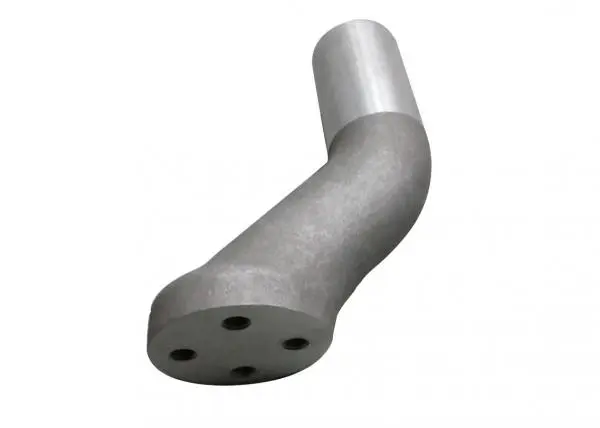
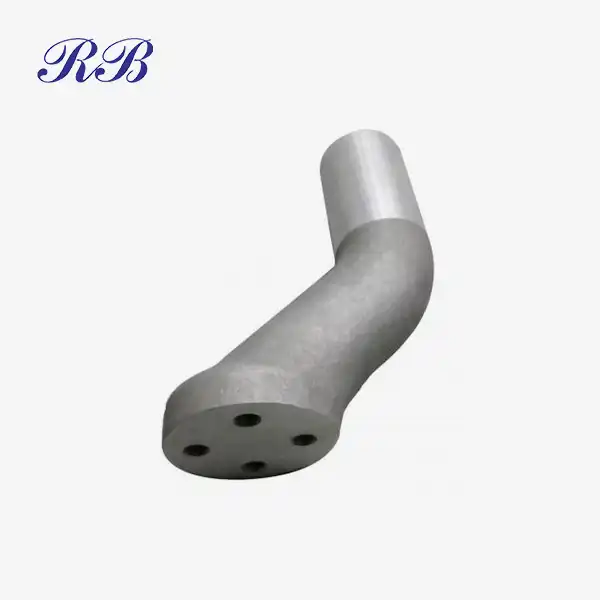
The company produces aluminum A356 gravity-cast conductors with a typical single part weight of around 2.3 kilograms. These parts serve as conductors for power transmission, where they face continuous loads, vibration, and changing weather. Rongbao uses gravity casting combined with CNC machining to achieve the required geometry and functional surfaces. Shot blasting delivers a clean, uniform surface that prepares the parts for assembly and, where needed, further finishing.
Rongbao holds ISO 9001:2015, ISO 14001, and ISO 45001 certifications, which confirm structured control of quality, environment, and safety. Production lots for one design can reach 5 000 pieces, while specifications remain fully customized to your drawings. OEM and ODM cooperation are both available, so you can bring either a complete design or a concept that still needs refinement. Each shipment is packed in sturdy wooden boxes that protect castings during long-distance transport from Xi’an, China, to your site.
If you plan a new power transmission project or wish to optimize an existing conductor design, you are welcome to contact Rongbao Enterprise directly. You can reach the team at steve.zhou@263.net and zhouyi@rongbaocasting.com. When you write, include your drawings, expected volumes, alloy preferences, and any special testing or documentation needs. The engineers will review your requirements, propose suitable gravity sand casting solutions, and provide a clear quotation and lead time.
By choosing a supplier that combines gravity casting expertise, machining capability, and export experience, you protect more than your budget. You protect the reliability of your lines and the trust your own customers place in you. Rongbao Enterprise invites you to turn interest into a concrete discussion and see how disciplined casting and honest communication can support your next project.
References
1. ASM International. ASM Handbook, Volume 15: Casting. ASM International, Materials Park, OH.
2. Stefanescu, D. M. Science and Engineering of Casting Solidification. 3rd ed., Springer, 2015.
3. American Foundry Society. Introduction to Sand Casting. Technical resources and guides on molding materials and processes.
4. MatWeb Material Property Data. A356.0 Aluminum Casting Alloy Data. Accessed for typical property ranges and alloy behavior.
5. Harrison Castings Ltd. Gravity Die Casting Process and Applications. Overview of gravity casting benefits and industrial uses.
6. Ravi, B. “Casting Simulation and Optimization: Benefits, Bottlenecks, and Best Practices.” Journal of Materials Processing Technology, Vol. 203, 2008, pp. 9–13.

Learn about our latest products and discounts through SMS or email