- English
- French
- German
- Portuguese
- Spanish
- Russian
- Japanese
- Korean
- Arabic
- Greek
- German
- Turkish
- Italian
- Danish
- Romanian
- Indonesian
- Czech
- Afrikaans
- Swedish
- Polish
- Basque
- Catalan
- Esperanto
- Hindi
- Lao
- Albanian
- Amharic
- Armenian
- Azerbaijani
- Belarusian
- Bengali
- Bosnian
- Bulgarian
- Cebuano
- Chichewa
- Corsican
- Croatian
- Dutch
- Estonian
- Filipino
- Finnish
- Frisian
- Galician
- Georgian
- Gujarati
- Haitian
- Hausa
- Hawaiian
- Hebrew
- Hmong
- Hungarian
- Icelandic
- Igbo
- Javanese
- Kannada
- Kazakh
- Khmer
- Kurdish
- Kyrgyz
- Latin
- Latvian
- Lithuanian
- Luxembou..
- Macedonian
- Malagasy
- Malay
- Malayalam
- Maltese
- Maori
- Marathi
- Mongolian
- Burmese
- Nepali
- Norwegian
- Pashto
- Persian
- Punjabi
- Serbian
- Sesotho
- Sinhala
- Slovak
- Slovenian
- Somali
- Samoan
- Scots Gaelic
- Shona
- Sindhi
- Sundanese
- Swahili
- Tajik
- Tamil
- Telugu
- Thai
- Ukrainian
- Urdu
- Uzbek
- Vietnamese
- Welsh
- Xhosa
- Yiddish
- Yoruba
- Zulu
What is the pressure range for low pressure die casting?
Low-pressure die casting (LPDC) is a precision casting process widely used in manufacturing high-integrity metal components, particularly for aluminum, magnesium, and zinc alloys. Unlike high pressure die casting, which relies on high-velocity metal injection (often exceeding 50 m/s), LPDC uses moderate gas pressure to drive molten metal into a closed mold cavity, enabling controlled filling and solidification.
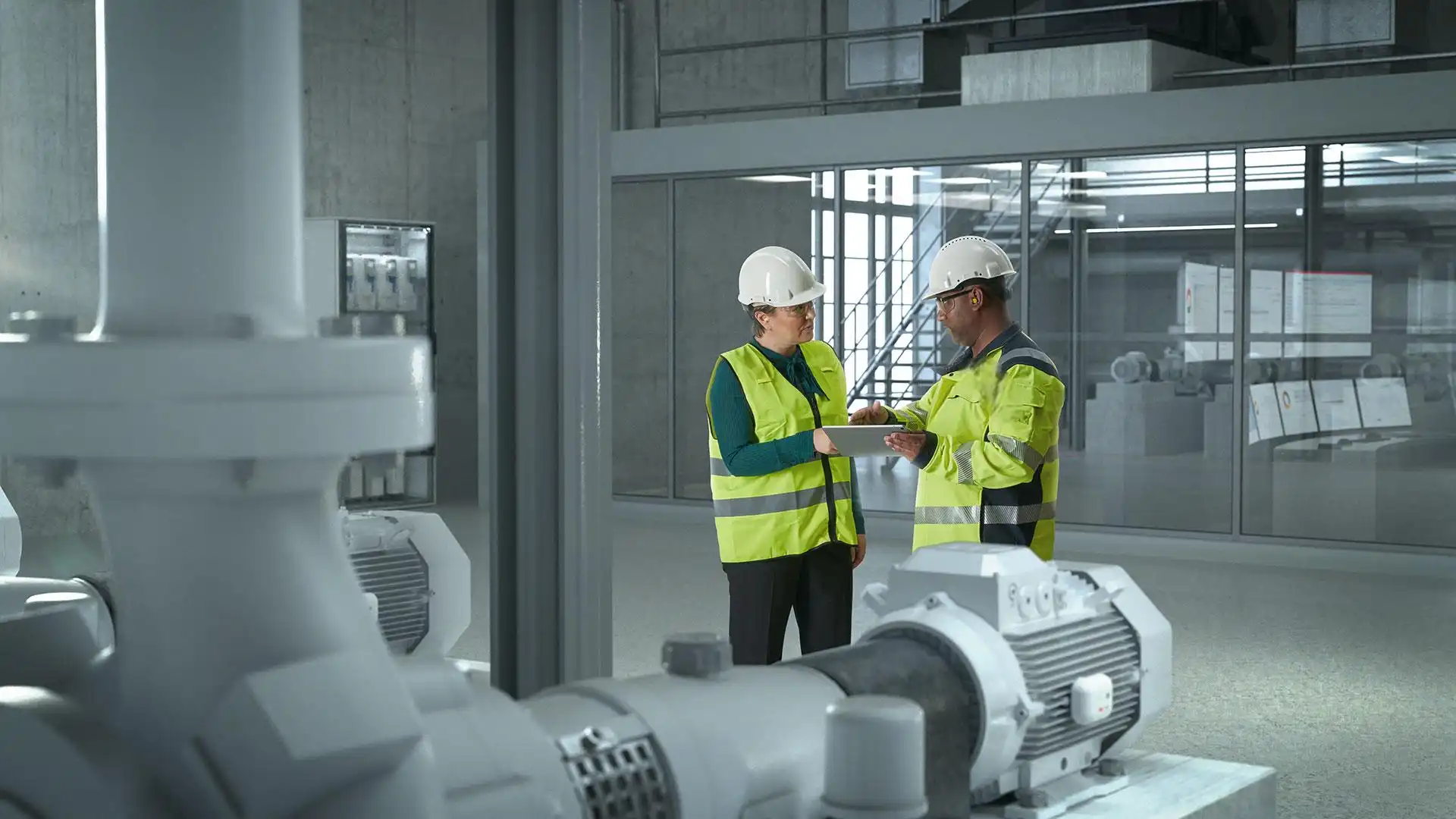
Pressure Range is Relatively Low
Understanding the Unique Pressure Dynamics
As the name suggests, low pressure die casting operates at significantly lower pressures compared to other casting methods, such as high pressure die casting. Typically, the pressure range for low pressure die casting falls between 0.2 to 0.7 MPa (29 to 101 psi). This relatively gentle pressure application is one of the defining characteristics of the process and contributes to its ability to produce high-quality parts with minimal defects.
The low pressure is applied to molten metal in a sealed, pressurized furnace located beneath the die. This pressure forces the metal upwards through a feed tube and into the die cavity. The gradual filling of the mold under low pressure allows for a more controlled solidification process, resulting in castings with improved mechanical properties and reduced porosity.
Benefits of Lower Pressure Application
The lower pressure range in this casting method offers several advantages:
- Reduced turbulence: The gentle flow of metal into the die minimizes turbulence, leading to fewer defects such as air entrapment or oxide inclusions.
- Enhanced fill control: Lower pressures allow for better control over the mold filling process, enabling the production of more intricate and thin-walled components.
- Improved surface finish: The controlled flow of metal results in smoother surfaces, often reducing or eliminating the need for post-casting finishing operations.
- Lower die wear: The reduced pressure exerted on the die during the casting process leads to longer die life and lower maintenance costs.
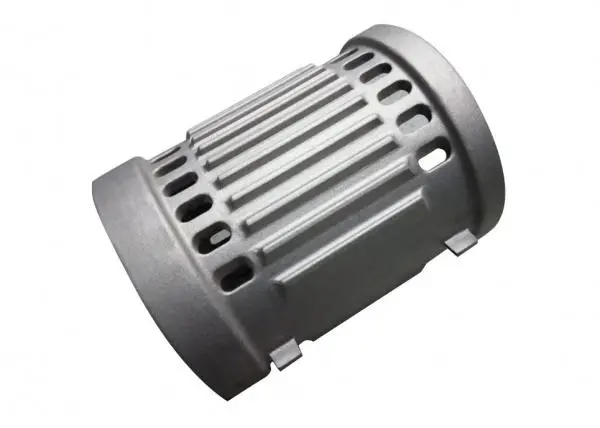
Type of Metal Alloy
Compatibility with Various Alloys
Low pressure die casting is versatile in terms of the metal alloys it can accommodate. While it is most commonly associated with aluminum alloys, the process is also suitable for other non-ferrous metals. The choice of alloy can significantly impact the pressure range and overall casting parameters. Here's a closer look at some of the most frequently used alloys in low pressure die casting:
- Aluminum alloys: These are by far the most popular choice for low pressure die casting. Alloys such as A356, A357, and 319 are widely used due to their excellent fluidity, low melting point, and good mechanical properties. The pressure range for aluminum alloys typically falls between 0.3 to 0.5 MPa.
- Magnesium alloys: With their lightweight properties and high strength-to-weight ratio, magnesium alloys are gaining popularity in industries like aerospace and automotive. The pressure range for magnesium alloys in low pressure die casting is usually slightly lower than aluminum, around 0.2 to 0.4 MPa.
- Zinc alloys: Although less common, zinc alloys can also be cast using the low pressure method. These alloys offer excellent dimensional stability and surface finish. The pressure range for zinc alloys is typically higher, ranging from 0.5 to 0.7 MPa.
Alloy Selection Considerations
When choosing an alloy for low pressure die casting, several factors need to be considered:
- Desired mechanical properties of the final product
- Thermal characteristics of the alloy
- Fluidity and castability
- Cost and availability
- Specific industry requirements or regulations
The selected alloy will influence not only the pressure range but also other casting parameters such as die temperature, cooling rate, and cycle time. Therefore, a thorough understanding of alloy properties and their interaction with the low pressure die casting process is essential for achieving optimal results.
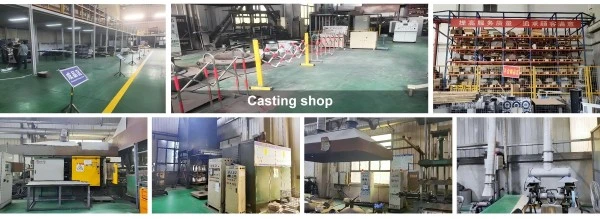
Complexity and Thickness of the Casting
Achieving Intricate Designs
One of the standout features of low pressure die casting is its ability to produce complex, thin-walled components with high dimensional accuracy. The controlled filling of the die under low pressure allows for the creation of intricate details and fine features that might be challenging to achieve with other casting methods.
The pressure range plays a crucial role in determining the level of complexity that can be achieved. Generally, for more complex designs with thin walls or intricate details, a slightly higher pressure within the typical range (0.4 to 0.6 MPa) may be used to ensure complete filling of all cavities. However, it's important to note that the pressure should not exceed the upper limit of the low pressure range, as this could lead to turbulence and defects.
Managing Casting Thickness
Low pressure die casting excels in producing parts with varying wall thicknesses, from thin-walled components (as thin as 2-3 mm) to thicker sections (up to 20-30 mm or more). The ability to manage different thicknesses within the same casting is one of the process's key advantages.
For thinner sections, the pressure range is typically kept towards the lower end (0.2 to 0.4 MPa) to prevent excessive turbulence and ensure a smooth fill. As the thickness increases, slightly higher pressures may be employed to maintain proper filling and solidification control.
It's worth noting that the relationship between pressure, complexity, and thickness is not linear. Skilled engineers and operators must carefully balance these factors, often through computer simulations and practical experience, to achieve optimal results for each specific part design.
Overcoming Challenges in Complex Castings
While low pressure die casting is adept at producing complex parts, certain challenges may arise when pushing the boundaries of design complexity or extreme thickness variations:
- Premature solidification in thin sections
- Incomplete filling of intricate details
- Porosity in thicker sections due to slower cooling
- Residual stresses from uneven cooling rates
To address these challenges, manufacturers may employ various techniques such as:
- Optimizing gating and venting systems
- Implementing advanced thermal management in the die
- Utilizing computer-aided simulation for process optimization
- Fine-tuning pressure profiles throughout the casting cycle
By carefully considering the interplay between pressure, alloy properties, and part geometry, manufacturers can leverage the full potential of low pressure die casting to produce high-quality, complex components efficiently.
The relatively low pressure range, typically between 0.2 to 0.7 MPa, is a key factor in its success, allowing for controlled filling and solidification that results in superior castings with minimal defects.
Low Pressure Die Casting Supplier: Rongbao Enterprise
For those seeking a reliable partner in low pressure casting, Rongbao Enterprise stands out as a professional manufacturer with nearly two decades of experience.
Rongbao's expertise extends to a wide range of low pressure die casting products, including:
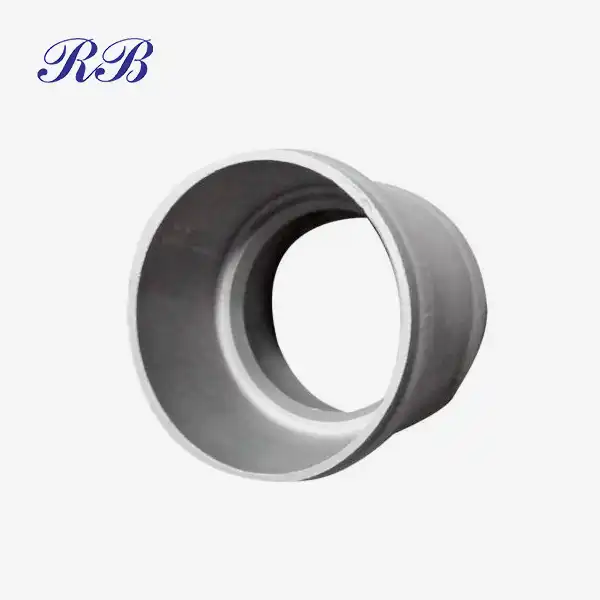
- Motor Cover Casting
- Stator Housing
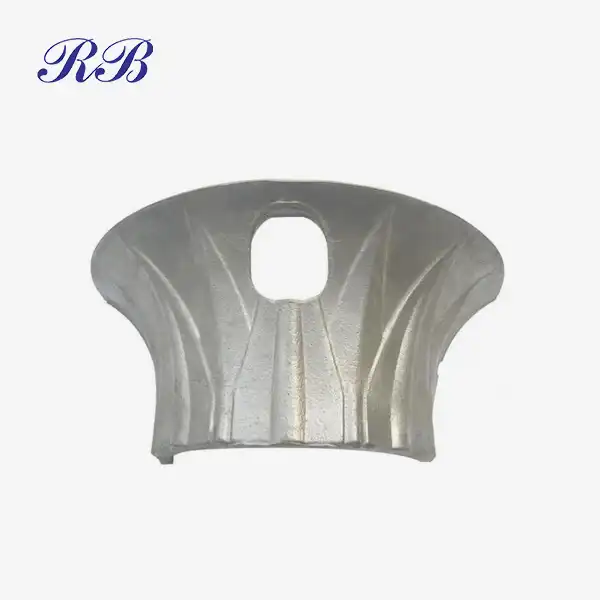
- Casting Decorative Ornaments
- Cast Axial Flow Fan Accessories
- Cast Impeller
- Low Pressure Casting Gear Parts
- Aluminum Housing Casting
- Motor Housing Casting
With certifications in ISO 9001:2016 for Quality Management, ISO 14001 for Environmental Management, and ISO 45001 for Occupational Health and Safety Management, Rongbao demonstrates its commitment to excellence and responsible manufacturing practices.
If you're looking for customized low pressure casting solutions with competitive pricing and a focus on quality, Rongbao Enterprise is ready to assist you. For free samples or to discuss your specific needs, don't hesitate to reach out to their expert team.
Contact Rongbao Enterprise today:
Email: steve.zhou@263.net or zhouyi@rongbaocasting.com
References
- Campbell, J. (2015). Complete Casting Handbook: Metal Casting Processes, Metallurgy, Techniques and Design. Butterworth-Heinemann.
- Jorstad, J., & Rasmussen, W. M. (2013). Aluminum Casting Technology. American Foundry Society.
- ASM International. (2008). ASM Handbook, Volume 15: Casting. ASM International.
- Kaufman, J. G., & Rooy, E. L. (2004). Aluminum Alloy Castings: Properties, Processes, and Applications. ASM International.
- Beeley, P. (2001). Foundry Technology. Butterworth-Heinemann.
Learn about our latest products and discounts through SMS or email