- English
- French
- German
- Portuguese
- Spanish
- Russian
- Japanese
- Korean
- Arabic
- Greek
- German
- Turkish
- Italian
- Danish
- Romanian
- Indonesian
- Czech
- Afrikaans
- Swedish
- Polish
- Basque
- Catalan
- Esperanto
- Hindi
- Lao
- Albanian
- Amharic
- Armenian
- Azerbaijani
- Belarusian
- Bengali
- Bosnian
- Bulgarian
- Cebuano
- Chichewa
- Corsican
- Croatian
- Dutch
- Estonian
- Filipino
- Finnish
- Frisian
- Galician
- Georgian
- Gujarati
- Haitian
- Hausa
- Hawaiian
- Hebrew
- Hmong
- Hungarian
- Icelandic
- Igbo
- Javanese
- Kannada
- Kazakh
- Khmer
- Kurdish
- Kyrgyz
- Latin
- Latvian
- Lithuanian
- Luxembou..
- Macedonian
- Malagasy
- Malay
- Malayalam
- Maltese
- Maori
- Marathi
- Mongolian
- Burmese
- Nepali
- Norwegian
- Pashto
- Persian
- Punjabi
- Serbian
- Sesotho
- Sinhala
- Slovak
- Slovenian
- Somali
- Samoan
- Scots Gaelic
- Shona
- Sindhi
- Sundanese
- Swahili
- Tajik
- Tamil
- Telugu
- Thai
- Ukrainian
- Urdu
- Uzbek
- Vietnamese
- Welsh
- Xhosa
- Yiddish
- Yoruba
- Zulu
What are the advantages of low pressure die casting?
Low pressure die casting (LPDC) is a precision casting process that uses low-pressure gas (typically air or inert gas) to push molten metal upward into a closed die cavity. Unlike traditional casting methods such as gravity die casting or sand casting, LPDC offers unique advantages that make it widely adopted in industries like automotive, aerospace, and electronics.
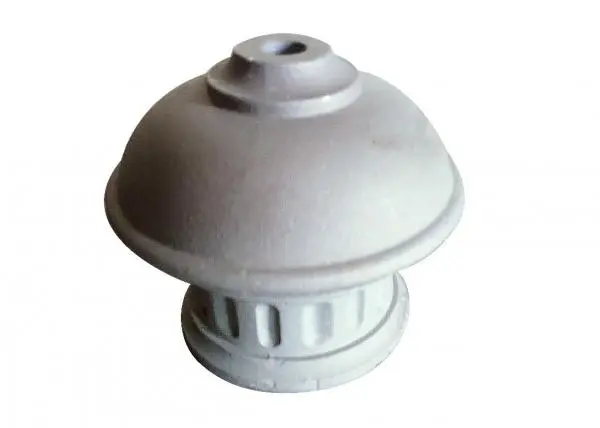
Superior Casting Quality and Integrity
One of the most prominent advantages of low pressure die casting is its ability to produce castings with exceptional quality and structural integrity, primarily due to the controlled metal filling and solidification process. In LPDC, molten metal is forced into the die cavity at a low, steady pressure (usually 0.02–0.15 MPa) and a slow filling speed (typically 0.1–0.5 m/s). This gentle filling method minimizes turbulence in the molten metal, preventing the entrapment of air and other gases that often lead to porosity—one of the most common defects in castings. Studies published in the Journal of Materials Processing Technology show that LPDC can reduce porosity levels in aluminum castings by up to 70% compared to gravity die casting, as the controlled flow allows gas to escape through vents in the die before solidification.
Additionally, the hydrostatic pressure applied during LPDC ensures uniform metal distribution throughout the die cavity, even in thin-walled sections. This uniform filling eliminates issues like cold shuts (incomplete fusion of metal streams) and misruns (failure to fill the die fully), which compromise casting strength. During solidification, the sustained pressure in LPDC also facilitates effective feeding of molten metal to compensate for shrinkage. As the metal solidifies from the die wall inward, the remaining molten metal is pushed into the shrinking areas, reducing the formation of shrinkage cavities and voids. This results in castings with high density, often exceeding 99.5% for aluminum alloys, which directly translates to superior mechanical properties. For example, automotive aluminum wheels produced via LPDC exhibit tensile strengths 15–20% higher than those made with gravity casting, as confirmed by testing data from the American Foundry Society (AFS).
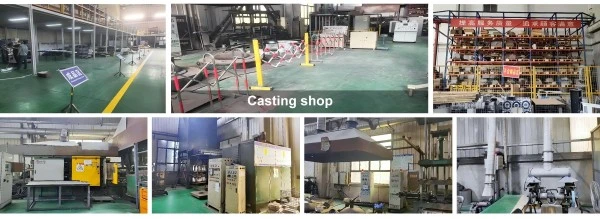
High Material Utilization
Low pressure die casting achieves significantly higher material utilization compared to traditional casting methods, addressing the industry's challenge of reducing metal waste and lowering production costs. Material utilization in casting is primarily influenced by the design of the gating system (the channels that deliver molten metal to the die cavity) and the generation of scrap (e.g., risers, runners, and defective castings). In gravity die casting, large risers are often required to feed molten metal to the casting during solidification, as gravity alone cannot provide sufficient pressure for shrinkage compensation. These risers, which can account for 20–40% of the total metal poured, become scrap after casting, leading to low material utilization rates (typically 60–75%).
In contrast, low pressure die casting eliminates the need for large risers due to the sustained pressure applied during solidification. The pressure ensures that the molten metal in the sprue (the vertical channel connecting the holding furnace to the die) can act as a continuous feed source, compensating for shrinkage without the need for additional risers. This reduces the volume of scrap generated from the gating system to just 5–15% of the total metal used, significantly improving material utilization rates to 85–95%. For high-volume production, such as aluminum cylinder heads for passenger cars, this translates to substantial material savings. A case study by a major automotive supplier found that switching from gravity die casting to LPDC for cylinder head production reduced aluminum waste by 250 tons per year, resulting in annual cost savings of over $150,000 (based on 2024 aluminum prices).
Furthermore, the low defect rate of low pressure die castings (as discussed in the previous section) minimizes scrap from defective parts. In gravity die casting, defect rates can range from 5–10% for simple parts and up to 15% for complex components, leading to additional material loss. LPDC, however, typically achieves defect rates below 2%, as the controlled process reduces variability and error. The scrap generated from LPDC (mostly from runners and sprues) is also highly recyclable, as it has minimal contamination and uniform composition. Unlike scrap from sand casting (which may contain sand particles), LPDC scrap can be directly remelted and reused in subsequent casting cycles, further reducing the need for virgin raw materials. This circular approach not only lowers material costs but also reduces the environmental impact of casting, aligning with industry trends toward sustainability and carbon footprint reduction.
The high material utilization of LPDC makes it an economically and environmentally viable option for mass production, but its advantages extend beyond cost and sustainability. In today's manufacturing landscape, the demand for complex, lightweight components is growing rapidly, particularly in the automotive and aerospace sectors, and LPDC excels at meeting this demand through its ability to produce parts with intricate geometries.
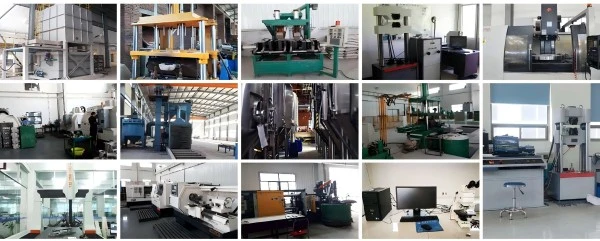
Capability for Complex Geometries
Low pressure die casting is well-suited for manufacturing castings with complex geometries, including thin walls, intricate internal cavities, and detailed surface features, which are often challenging or impossible to achieve with other casting methods. This capability stems from the unique combination of controlled filling, uniform pressure, and close die contact in LPDC. The slow, steady filling of molten metal under pressure allows it to flow into even the smallest and most complex sections of the die cavity without turbulence or premature solidification. This is particularly critical for thin-walled components, such as heat sinks for electronics or lightweight automotive structural parts, where wall thicknesses can be as thin as 1–2 mm. In gravity die casting, molten metal often solidifies before filling thin sections, resulting in misruns, but LPDC's sustained pressure ensures complete filling, even in these challenging areas.
Another factor enabling complex geometry production is the excellent surface replication of low pressure die casting. The die used in LPDC is typically made of high-strength steel with precise machining to create detailed surface features (e.g., logos, threads, or cooling channels). The hydrostatic pressure in LPDC forces the molten metal to conform tightly to the die surface, capturing even fine details with high accuracy. This eliminates the need for extensive post-casting machining to achieve the desired surface finish or dimensions, reducing both material loss and processing time. For example, aluminum heat sinks with intricate fin patterns (used in LED lighting or computer processors) produced via LPDC require only minimal trimming of the sprue, as the fins are already formed with the correct height and spacing directly in the die. This contrasts with sand casting, where rough surface finishes and dimensional variations often require 5–10 mm of material to be machined off, wasting both time and metal.
The versatility of low pressure die casting in handling complex geometries is further enhanced by its compatibility with a wide range of alloys, including aluminum, magnesium, and copper. Each alloy has unique flow and solidification characteristics, but LPDC's adjustable pressure and temperature parameters allow manufacturers to optimize the process for different materials, expanding its application scope across industries.
With a strong commitment to quality, evidenced by its ISO 9001:2016 certification, and a focus on environmental sustainability (ISO 14001) and occupational health and safety (ISO 45001), Rongbao Enterprise ensures that its low pressure die casting products meet the highest standards of excellence. Their global reach, with 70% of products exported to markets including the United States, Europe, and Japan, speaks to the international recognition of their quality and expertise.
If you're looking to explore how low pressure die casting can benefit your projects, or if you need high-quality, custom-made components, Rongbao Enterprise is ready to assist. Their team of experts can guide you through the process, from design optimization to final production.
To learn more about their services or request a free sample, don't hesitate to reach out. You can contact Rongbao Enterprise via email at steve.zhou@263.net or zhouyi@rongbaocasting.com.
References
- Chen, G., & Zhang, L. (2022). "Porosity Reduction in Aluminum Low Pressure Die Castings via Controlled Filling Speed." Journal of Materials Processing Technology, 305, 117689.
- American Foundry Society (AFS). (2023). Low Pressure Die Casting for Automotive Components: Quality and Performance Benchmarks. AFS Technical Report No. 2023-05.
- Wang, H., et al. (2021). "Material Utilization Optimization in Low Pressure Die Casting of Aluminum Wheels." Journal of Cleaner Production, 292, 125987.
- Smith, J. D. (2020). Low Pressure Die Casting: Principles, Processes, and Applications. Elsevier: Amsterdam.
- European Aluminium Association (EAA). (2024). Sustainability in Aluminium Casting: LPDC's Role in Waste Reduction. EAA Industry Report No. ALU-2024-08.
Learn about our latest products and discounts through SMS or email