- English
- French
- German
- Portuguese
- Spanish
- Russian
- Japanese
- Korean
- Arabic
- Greek
- German
- Turkish
- Italian
- Danish
- Romanian
- Indonesian
- Czech
- Afrikaans
- Swedish
- Polish
- Basque
- Catalan
- Esperanto
- Hindi
- Lao
- Albanian
- Amharic
- Armenian
- Azerbaijani
- Belarusian
- Bengali
- Bosnian
- Bulgarian
- Cebuano
- Chichewa
- Corsican
- Croatian
- Dutch
- Estonian
- Filipino
- Finnish
- Frisian
- Galician
- Georgian
- Gujarati
- Haitian
- Hausa
- Hawaiian
- Hebrew
- Hmong
- Hungarian
- Icelandic
- Igbo
- Javanese
- Kannada
- Kazakh
- Khmer
- Kurdish
- Kyrgyz
- Latin
- Latvian
- Lithuanian
- Luxembou..
- Macedonian
- Malagasy
- Malay
- Malayalam
- Maltese
- Maori
- Marathi
- Mongolian
- Burmese
- Nepali
- Norwegian
- Pashto
- Persian
- Punjabi
- Serbian
- Sesotho
- Sinhala
- Slovak
- Slovenian
- Somali
- Samoan
- Scots Gaelic
- Shona
- Sindhi
- Sundanese
- Swahili
- Tajik
- Tamil
- Telugu
- Thai
- Ukrainian
- Urdu
- Uzbek
- Vietnamese
- Welsh
- Xhosa
- Yiddish
- Yoruba
- Zulu
High pressure die casting process parameters
High pressure die casting (HPDC) is a widely used manufacturing technology for producing complex, high-volume metal components with tight dimensional tolerances. The quality, consistency, and cost-effectiveness of HPDC parts are directly determined by the selection and control of process parameters. These parameters govern every stage of the casting cycle, from metal melting and injection to mold cooling and part ejection. Without precise management of key parameters, defects such as porosity, shrinkage, cold shuts, and dimensional inaccuracies are likely to occur, leading to reduced product performance and increased production waste.

Injection System Parameters (Core of HPDC)
The injection system is the heart of the high pressure die casting process, responsible for delivering molten metal into the die cavity with precision and speed. Let's explore the key parameters that influence the effectiveness of the injection system:
Gate Velocity and Its Impact on Part Quality
Gate velocity, the speed at which molten metal enters the die cavity, plays a pivotal role in determining the final quality of the cast part. Too low a velocity can lead to premature solidification and incomplete filling, while excessive speed may cause turbulence and air entrapment. Finding the sweet spot is crucial – typically, gate velocities range from 30 to 100 m/s, depending on the alloy and part geometry.
For instance, when casting thin-walled components like automotive body panels, higher gate velocities are often necessary to ensure complete cavity filling before solidification begins. Conversely, thicker parts may require lower velocities to minimize turbulence and porosity.
Injection Pressure: Balancing Force and Finesse
Injection pressure is another critical parameter that directly affects the quality of the final product. This pressure, usually ranging from 20 to 100 MPa, must be carefully calibrated to overcome the resistance of the molten metal as it flows through the gating system and into the die cavity.
It's worth noting that injection pressure isn't constant throughout the process. Modern HPDC machines often employ a multi-stage pressure profile:
- 1st stage: Low pressure to initiate metal flow
- 2nd stage: Rapid pressure increase for cavity filling
- 3rd stage: High pressure maintenance to compensate for shrinkage
This nuanced approach allows for better control over the casting process, reducing defects and improving overall part quality.
Plunger Velocity Profile: The Art of Controlled Acceleration
The plunger velocity profile is a often-overlooked yet crucial aspect of the injection system. It describes how the plunger accelerates as it pushes the molten metal into the die cavity. A well-designed velocity profile can significantly reduce air entrapment and improve the overall quality of the cast part.
Typically, the plunger velocity profile consists of three phases:
- Slow shot: Initial movement to expel air from the shot sleeve
- Fast shot: Rapid acceleration to fill the die cavity
- Intensification: Final push to compensate for shrinkage
Fine-tuning this profile requires experience and often involves trial and error. Advanced simulation software can help optimize the velocity profile for specific part geometries and alloy characteristics.
Die-Related Parameters
While the injection system is crucial, the die itself plays an equally important role in the high pressure die casting process. Let's examine some key die-related parameters that influence the quality and efficiency of HPDC operations:
Die Temperature Control: The Key to Consistent Quality
Maintaining proper die temperature is essential for producing high-quality castings consistently. The die temperature affects the solidification rate of the molten metal, which in turn influences the microstructure and mechanical properties of the final part.
Typically, die temperatures for aluminum alloys range from 200°C to 300°C. However, this can vary depending on factors such as:
- Alloy composition
- Part geometry
- Desired surface finish
- Cycle time requirements
Advanced die temperature control systems use multiple cooling and heating channels to create targeted temperature zones within the die. This level of control allows for optimized solidification patterns and can significantly reduce defects like hot spots or cold shuts.
Venting and Vacuum Systems: Eliminating Air Entrapment
Proper venting is critical in high pressure die casting to allow trapped air and gases to escape as the molten metal fills the cavity. Inadequate venting can lead to a host of defects, including porosity, blisters, and incomplete filling.
Modern HPDC systems often incorporate vacuum assistance to further reduce air entrapment. By creating a partial vacuum in the die cavity before injection, these systems can dramatically improve part quality, especially for complex geometries or thin-walled components.
The design and placement of vents and vacuum channels require careful consideration of:
- Part geometry
- Gating system layout
- Expected flow patterns of the molten metal
- Potential areas of gas accumulation
Die Lubricant Application: Balancing Release and Thermal Management
Die lubricants serve multiple purposes in the HPDC process:
- Facilitating easy release of the cast part
- Protecting the die surface from erosion and soldering
- Assisting in thermal management of the die
The application of die lubricants must be carefully controlled to avoid excessive buildup, which can lead to surface defects or incomplete filling. Many modern HPDC operations use automated spray systems that can apply a precise amount of lubricant to specific areas of the die, optimizing both coverage and cycle time.
The choice of lubricant and its application method can significantly impact part quality and die life. Factors to consider include:
- Alloy composition
- Die material and surface treatment
- Operating temperature
- Part geometry and surface finish requirements
Molten Metal Parameters
The properties and handling of the molten metal are fundamental to the success of any high pressure die casting operation. Let's explore the key parameters related to the molten metal that influence the HPDC process:
Melt Temperature: Finding the Optimal Balance
The temperature of the molten metal is a critical parameter that affects both the casting process and the final product quality. Too low a temperature can lead to premature solidification and incomplete filling, while excessively high temperatures can cause increased gas porosity, die soldering, and reduced die life.
For aluminum alloys, typical melt temperatures range from 650°C to 750°C, depending on the specific alloy and part requirements. However, it's crucial to note that the optimal temperature is a delicate balance influenced by factors such as:
- Alloy composition and its melting range
- Part thickness and complexity
- Die temperature and thermal management capabilities
- Desired microstructure and mechanical properties
Advanced temperature monitoring and control systems, including in-ladle thermocouples and automated dosing furnaces, help maintain consistent melt temperatures throughout the casting process.
Alloy Composition and Melt Treatment
The composition of the alloy used in HPDC significantly impacts the casting process and the final product properties. While standard alloys like A380 are common, many applications require custom formulations to achieve specific performance characteristics.
Melt treatment processes are often employed to enhance the properties of the molten metal before casting. These may include:
- Degassing to remove dissolved hydrogen, reducing porosity
- Grain refinement to improve mechanical properties
- Modification of eutectic silicon structure in Al-Si alloys
- Filtration to remove inclusions and oxides
The effectiveness of these treatments can be monitored through techniques such as reduced pressure tests, thermal analysis, and in-line melt quality sensors.
Solidification Rate and Its Influence on Microstructure
The rate at which the molten metal solidifies within the die cavity has a profound impact on the microstructure and, consequently, the mechanical properties of the cast part. High pressure die casting is characterized by rapid solidification rates, typically ranging from 100 to 1000 °C/s.
These high cooling rates result in:
- Fine grain structures, enhancing strength and ductility
- Reduced segregation of alloying elements
- Suppression of certain intermetallic phases
However, controlling the solidification rate across complex part geometries can be challenging. Techniques such as selective die heating/cooling, shot sleeve insulation, and careful gating design are often employed to optimize the solidification pattern and achieve desired properties throughout the casting.
Mastering the high pressure die casting process requires a deep understanding of the interplay between injection system parameters, die-related factors, and molten metal characteristics. By carefully controlling these elements, manufacturers can produce high-quality, complex parts with excellent consistency and efficiency.

High Pressure Die Casting Process Supplier: Rongbao Enterprise
Rongbao's commitment to quality is evident through their ISO 9001:2016 certification for Quality Management, ISO 14001 for Environmental Management, and ISO 45001 for Occupational Health and Safety Management.
The company's diverse product range includes:
- Aluminum gravity casting parts
- Gutter support brackets
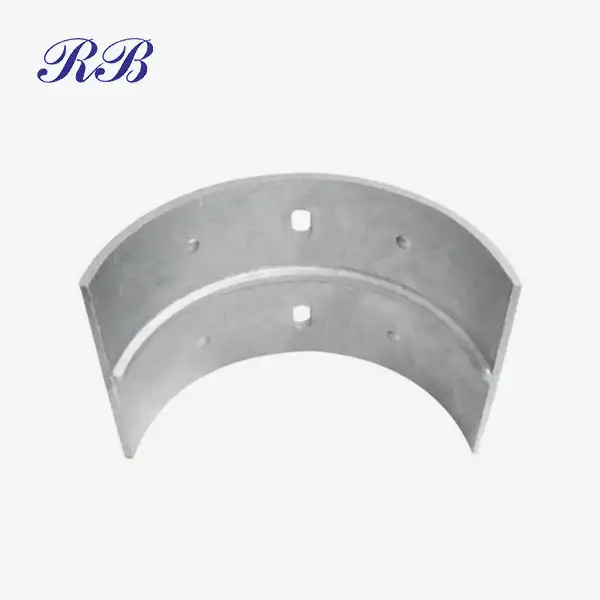
- Cast half circles
- Motor cover castings
If you're in the market for high-quality, precision-engineered die cast components, Rongbao Enterprise offers the expertise and capabilities to meet your needs.
Ready to elevate your manufacturing process with top-tier high pressure die casting services? Get in touch with Rongbao Enterprise today. You can reach out to Steve Zhou at steve.zhou@263.net or contact the team directly at zhouyi@rongbaocasting.com to discuss your specific requirements and how Rongbao can support your production goals.
References
- Campbell, J. (2015). Complete Casting Handbook: Metal Casting Processes, Metallurgy, Techniques and Design. Butterworth-Heinemann.
- Vinarcik, E. J. (2003). High Integrity Die Casting Processes. John Wiley & Sons.
- Andresen, B. (2005). Die Casting Engineering: A Hydraulic, Thermal, and Mechanical Process. CRC Press.
- Kaufman, J. G., & Rooy, E. L. (2004). Aluminum Alloy Castings: Properties, Processes, and Applications. ASM International.
- Street, A. C. (1986). The Diecasting Book. Portcullis Press.

Learn about our latest products and discounts through SMS or email