- English
- French
- German
- Portuguese
- Spanish
- Russian
- Japanese
- Korean
- Arabic
- Greek
- German
- Turkish
- Italian
- Danish
- Romanian
- Indonesian
- Czech
- Afrikaans
- Swedish
- Polish
- Basque
- Catalan
- Esperanto
- Hindi
- Lao
- Albanian
- Amharic
- Armenian
- Azerbaijani
- Belarusian
- Bengali
- Bosnian
- Bulgarian
- Cebuano
- Chichewa
- Corsican
- Croatian
- Dutch
- Estonian
- Filipino
- Finnish
- Frisian
- Galician
- Georgian
- Gujarati
- Haitian
- Hausa
- Hawaiian
- Hebrew
- Hmong
- Hungarian
- Icelandic
- Igbo
- Javanese
- Kannada
- Kazakh
- Khmer
- Kurdish
- Kyrgyz
- Latin
- Latvian
- Lithuanian
- Luxembou..
- Macedonian
- Malagasy
- Malay
- Malayalam
- Maltese
- Maori
- Marathi
- Mongolian
- Burmese
- Nepali
- Norwegian
- Pashto
- Persian
- Punjabi
- Serbian
- Sesotho
- Sinhala
- Slovak
- Slovenian
- Somali
- Samoan
- Scots Gaelic
- Shona
- Sindhi
- Sundanese
- Swahili
- Tajik
- Tamil
- Telugu
- Thai
- Ukrainian
- Urdu
- Uzbek
- Vietnamese
- Welsh
- Xhosa
- Yiddish
- Yoruba
- Zulu
What is the investment casting process?
Copper investment casting represents one of the oldest yet most precise metal forming techniques still utilized in modern manufacturing. Dating back to ancient civilizations, this process has evolved into a sophisticated method for creating intricate copper components with exceptional dimensional accuracy and surface finish. In 2023, the global investment casting market surpassed $19.7 billion, with copper alloy castings comprising approximately 18% of this figure according to industry reports from the Investment Casting Institute.
Unlike traditional sand casting or die casting methods, copper investment casting (sometimes called "lost wax" casting) offers manufacturers the ability to produce complex geometries with minimal machining requirements. This capability makes it particularly valuable for industries demanding both precision and cost-effectiveness, including automotive systems, aerospace components, medical instruments, and advanced electrical applications.
The technique involves several distinct phases, each critical to achieving the quality standards modern industries require. Let's examine how raw copper transforms into precision-engineered components through this remarkable process.
Wax Pattern Creation and Assembly (Building the Casting "Prototype")
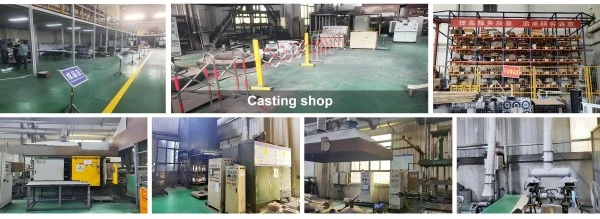
The journey of copper investment casting begins not with metal, but with wax. At Rongbao's production facility in Xi'an, the process starts with designing and manufacturing injection molds based on client specifications. These aluminum or steel molds serve as negatives of the desired part, creating what foundry specialists call the "first generation pattern."
Specialized wax compounds—typically blends of paraffin, microcrystalline wax, and various additives—are heated to 74-79°C before being injected into these molds under controlled pressure (typically 275-550 kPa). During a 2019 industry conference in Shanghai, metallurgical engineers noted that injection parameters must be precisely calibrated to prevent common defects like air entrapment or incomplete pattern formation.
Once cooled and solidified, these wax patterns are carefully removed and inspected. Minor imperfections can be repaired at this stage, but patterns with significant defects are typically recycled. The accepted patterns then undergo assembly into tree-like structures called "clusters" or "gates." This assembly process involves attaching multiple patterns to a central wax sprue using heated tools, creating a network that will eventually channel molten copper to each cavity.
Dr. Zhang Wei of the Beijing Institute of Materials Research explains: "Pattern assembly represents more than simple attachment—it's engineering the metal flow dynamics. The orientation, gating angles, and spacing between patterns determine filling characteristics that directly impact final casting quality." This stage requires both technical knowledge and considerable hands-on experience to balance production efficiency with quality requirements.
Ceramic Shell Preparation (Creating a "Copper Molten Container")
With wax pattern assemblies complete, the process moves to creating the ceramic shell—the actual mold that will contain molten copper. This multi-step procedure combines materials science with precision application techniques to form shells capable of withstanding temperatures exceeding 1085°C (copper's melting point).
The shell building begins with a primary slurry coat consisting of colloidal silica binder mixed with fine refractory materials (often zircon flour for copper applications). Pattern assemblies are dipped into this mixture, ensuring complete coverage while preventing air bubbles. After draining excess slurry, the coated patterns receive a "stucco" application—finer grained refractory materials applied through rainfall sanding or fluidized bed immersion.
This initial coat defines surface quality and must dry under controlled humidity (50-65%) and temperature (21-24°C) conditions for 3-8 hours. Following this crucial first layer, subsequent coats use increasingly coarser materials to build shell thickness and strength. Each foundry typically employs 6-8 coating cycles, with drying periods between applications. The entire shell-building process may span 2-3 days at Rongbao's facility.
A technical paper presented at the 2021 International Foundry Forum documented that properly constructed shells for copper casting should achieve compressive strength of 5.5-7.0 MPa while maintaining permeability to allow gases to escape during casting. Shell permeability becomes particularly important with copper alloys like H62 (used in Rongbao's kitchen products), as trapped gases can create detrimental porosity in the final casting.
Once fully dried, the shell-encased patterns undergo dewaxing—typically through flash firing or autoclave methods. In autoclave dewaxing, shells are subjected to pressurized steam (around 550 kPa) that rapidly melts the internal wax patterns. This creates hollow cavities precisely mirroring the desired copper components, complete with gating systems for metal flow.

Copper Melting, Pouring, and Subsequent Processing
With ceramic shells prepared, attention shifts to the metallurgical aspects of copper investment casting. The quality of the final product depends significantly on proper metal preparation and pouring techniques. For products like Rongbao's H62 brass kitchen components, material composition control becomes especially critical.
Modern copper casting typically employs induction furnaces operating at frequencies between 1-10 kHz. These systems heat metal through electromagnetic induction, providing excellent temperature control while minimizing oxidation risks. For H62 brass (containing approximately 62% copper, 38% zinc), melting temperatures generally range from 900-950°C, with pouring temperatures slightly higher to ensure proper mold filling.
Metallurgist Liu Feng from the Shanghai Nonferrous Metals Research Institute notes that "temperature management represents one of the most critical variables in copper alloy casting. Excessive temperatures accelerate zinc volatilization and oxide formation, while insufficient heat leads to cold shuts and incomplete filling—particularly problematic in thin-walled sections common in kitchen fittings."
Pre-heated shells (typically to 850-900°C) receive the molten copper through either gravity pouring or vacuum-assist methods. The latter has gained popularity for complex components, as negative pressure helps draw metal into intricate cavities and reduces gas-related defects. Immediately after pouring, the filled shells enter controlled cooling cycles designed to optimize metallurgical structure while minimizing thermal stresses.
Following solidification and initial cooling, shells undergo knockout—mechanical removal of the ceramic material through vibration or water blasting. The resulting copper castings, still connected via gating systems, then proceed to cut-off operations where components are separated from sprues using abrasive wheels or specialized sawing equipment.
Rongbao's copper investment castings then undergo a series of finishing operations. For their H62 kitchen components weighing 0.23kg, this typically includes shot blasting for surface preparation followed by CNC machining to achieve final dimensional specifications. Their ISO9001:2015, ISO14001, and ISO45001 certifications ensure these processes meet international quality and environmental standards.
Copper investment casting is a beautiful way to make complex, precise parts with little waste and extra work. From the initial wax pattern to the final finished product, each step in this sophisticated process builds upon centuries of metallurgical knowledge enhanced by modern materials science.
It is still a very useful way to cast things in fields that need both complicated forms and qualities that are only found in that material. This is how Rongbao makes food parts. It shows that old ways of making things can be used to solve new problems and make things that look good and last a long time.
For more information about copper investment casting solutions or custom components, contact Rongbao at steve.zhou@263.net or zhouyi@rongbaocasting.com. With a production capacity of 5,000 pieces and customization capabilities, their Xi'an facility stands ready to transform your design concepts into precision copper castings.
References
1. Campbell, J. (2022). Complete Casting Handbook: Metal Casting Processes, Metallurgy, Techniques and Design. Butterworth-Heinemann.
2. Zhang, W., & Liu, F. (2021). "Advances in Copper Alloy Investment Casting for Precision Components." International Journal of Metalcasting, 15(3), 867-882.
3. Investment Casting Institute. (2023). Global Market Analysis and Industry Outlook 2023-2028. ICI Publications.
4. Beeley, P. R., & Smart, R. F. (2020). Investment Casting. Institute of Materials.
5. Wang, H., & Chen, X. (2022). "Thermal Analysis of Shell Materials for Copper Alloy Investment Casting." Materials Science and Engineering: A, 824, 141782.
Learn about our latest products and discounts through SMS or email