- English
- French
- German
- Portuguese
- Spanish
- Russian
- Japanese
- Korean
- Arabic
- Greek
- German
- Turkish
- Italian
- Danish
- Romanian
- Indonesian
- Czech
- Afrikaans
- Swedish
- Polish
- Basque
- Catalan
- Esperanto
- Hindi
- Lao
- Albanian
- Amharic
- Armenian
- Azerbaijani
- Belarusian
- Bengali
- Bosnian
- Bulgarian
- Cebuano
- Chichewa
- Corsican
- Croatian
- Dutch
- Estonian
- Filipino
- Finnish
- Frisian
- Galician
- Georgian
- Gujarati
- Haitian
- Hausa
- Hawaiian
- Hebrew
- Hmong
- Hungarian
- Icelandic
- Igbo
- Javanese
- Kannada
- Kazakh
- Khmer
- Kurdish
- Kyrgyz
- Latin
- Latvian
- Lithuanian
- Luxembou..
- Macedonian
- Malagasy
- Malay
- Malayalam
- Maltese
- Maori
- Marathi
- Mongolian
- Burmese
- Nepali
- Norwegian
- Pashto
- Persian
- Punjabi
- Serbian
- Sesotho
- Sinhala
- Slovak
- Slovenian
- Somali
- Samoan
- Scots Gaelic
- Shona
- Sindhi
- Sundanese
- Swahili
- Tajik
- Tamil
- Telugu
- Thai
- Ukrainian
- Urdu
- Uzbek
- Vietnamese
- Welsh
- Xhosa
- Yiddish
- Yoruba
- Zulu
What is the function of the motor cover?
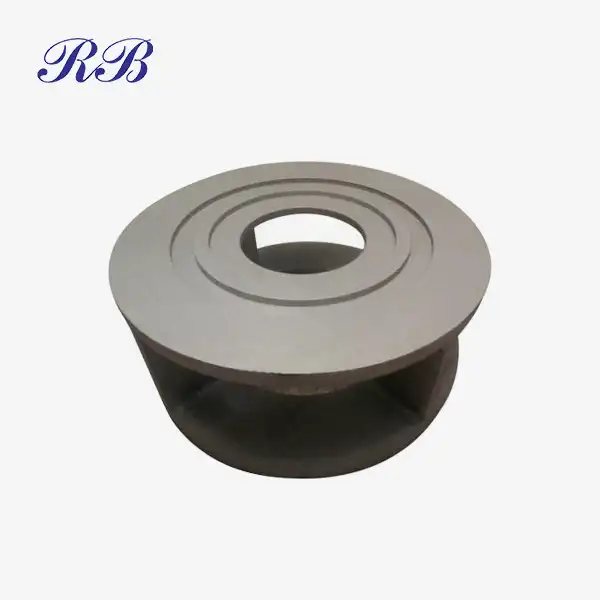
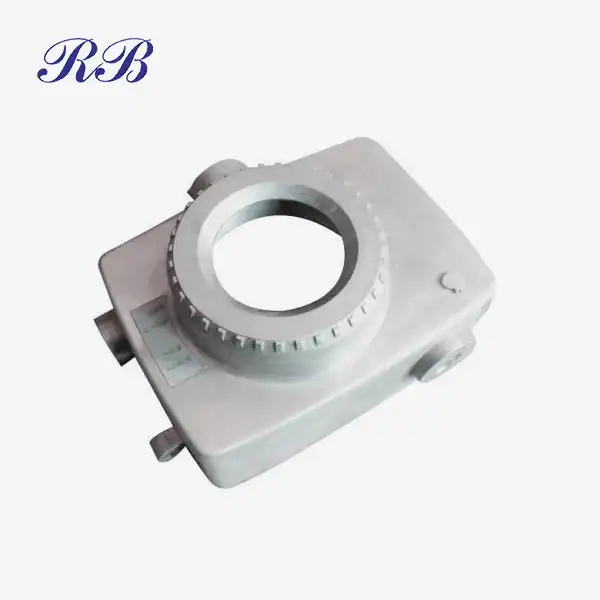
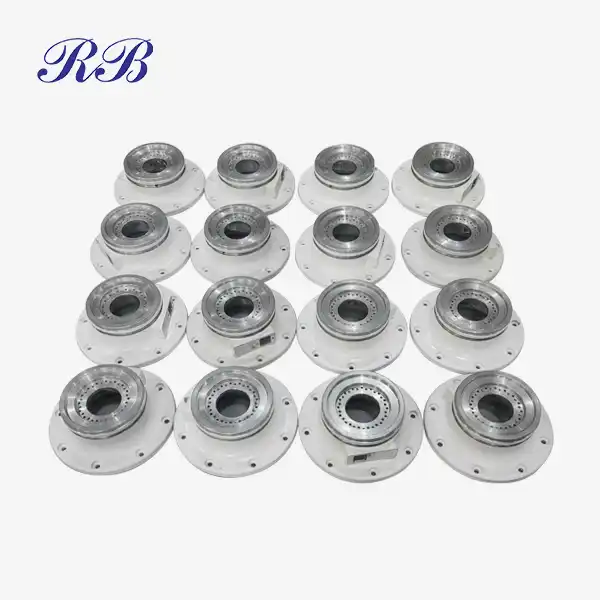
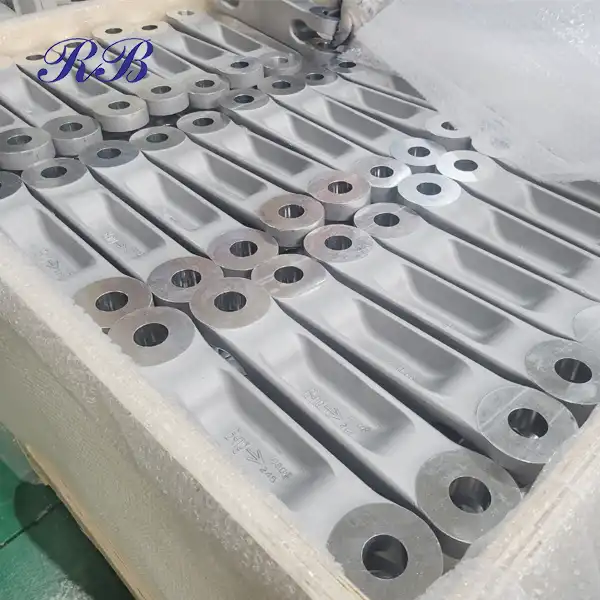
Motor covers play a crucial role in the performance, longevity, and safety of various mechanical systems across multiple industries. This article explores the primary purposes of motor covers, with a focus on high-pressure die-cast motor cover casings produced by Rongbao Enterprise.
Before delving into the specific functions, it's important to understand that motor covers are typically manufactured using materials like A380 aluminum alloy through processes such as high-pressure die casting. These components can vary in weight, usually ranging from 0.3 to 0.8 KG, and often undergo additional treatments like CNC machining and anodizing to enhance their properties and appearance.
Protection of Internal Components
One of the primary functions of a motor cover is to protect the internal components of the motor from external elements and potential damage. This protective role is critical in maintaining the motor's performance and extending its operational life.
Motor covers act as a barrier against dust, debris, and moisture that could otherwise infiltrate the motor's inner workings. In industrial settings, where motors are often exposed to harsh environments, this protection is particularly crucial. For instance, in automotive applications, motor covers shield vital components from road debris, water splashes, and other contaminants that could cause corrosion or mechanical failure.
Moreover, motor covers provide a layer of safety for operators and maintenance personnel. By enclosing moving parts and electrical components, they reduce the risk of accidental contact that could lead to injury. This aspect is especially important in industries like medical equipment manufacturing, where safety standards are stringent.
Rongbao's high-pressure die-cast motor cover casings excel in this protective function. The A380 aluminum alloy used in their production offers excellent corrosion resistance, ensuring long-lasting protection even in challenging environments. The precision achieved through CNC lathe processing further enhances the cover's ability to form a tight seal, effectively keeping out contaminants.
Additionally, the anodizing surface treatment applied to Rongbao's motor covers not only improves corrosion resistance but also adds an extra layer of protection against physical damage. This treatment creates a hard, durable surface that can withstand impacts and abrasions, further safeguarding the internal components.
Structural Support
Beyond protection, motor covers play a significant role in providing structural support to the entire motor assembly. This function is particularly important in applications where motors are subjected to vibrations, mechanical stress, or varying loads.
The motor cover casing acts as an integral part of the motor's overall structure, helping to maintain proper alignment of internal components. This is crucial for the efficient operation of the motor, as even slight misalignments can lead to increased wear, reduced efficiency, and potentially catastrophic failures.
In the aerospace industry, where weight and structural integrity are paramount, motor covers must be designed to provide maximum support while minimizing mass. Rongbao's expertise in high-pressure die casting allows for the production of motor cover casings that achieve an optimal balance between strength and weight.
The structural support provided by motor covers also helps in managing the distribution of forces within the motor assembly. This is particularly important in applications with high rotational speeds or frequent start-stop cycles, where dynamic forces can be significant. By providing a rigid external structure, the motor cover helps to contain these forces and prevent them from causing damage or misalignment to internal components.
Furthermore, the structural role of motor covers extends to the mounting and integration of the motor into larger systems. Many motor covers are designed with mounting points or features that facilitate easy installation and secure attachment to other components or structures. This aspect of structural support is critical in ensuring that the motor remains stable and properly aligned within the broader mechanical system.
Rongbao's motor cover casings, with their customizable specifications based on client drawings or samples, can be tailored to provide optimal structural support for specific applications. The high-pressure die casting process allows for complex geometries and integrated features that enhance the structural capabilities of the cover while maintaining tight tolerances and dimensional accuracy.

Heat Dissipation
An often overlooked but critical function of motor covers is their role in heat dissipation. Electric motors generate heat during operation, and effective management of this thermal energy is essential for maintaining performance and preventing premature wear or failure.
Motor covers, particularly those made from materials with good thermal conductivity like aluminum alloys, play a crucial role in dissipating heat from the motor's internal components. The cover acts as a heat sink, drawing thermal energy away from the motor's core and dissipating it into the surrounding environment.
In the electrical and electronic industry, where compact designs and high power densities are common, effective heat dissipation becomes even more critical. Motor covers in these applications are often designed with features such as fins or increased surface area to enhance their heat dissipation capabilities.
Rongbao's motor cover casings, made from A380 aluminum alloy, offer excellent thermal conductivity. This property, combined with the ability to incorporate heat dissipation features through the high-pressure die casting process, makes these covers particularly effective in managing motor temperatures.
The heat dissipation function of motor covers also contributes to the overall efficiency of the motor. By helping to maintain optimal operating temperatures, the cover ensures that the motor can operate at peak efficiency for longer periods. This is particularly important in applications where energy efficiency is a key consideration, such as in modern automotive designs or industrial equipment.
Moreover, effective heat management through well-designed motor covers can contribute to the longevity of the motor and its components. Excessive heat can degrade lubricants, affect the properties of materials, and accelerate wear on moving parts. By facilitating efficient heat dissipation, motor covers help to mitigate these effects, potentially extending the service life of the motor.
It's worth noting that the heat dissipation capabilities of motor covers can be further enhanced through surface treatments and finishes. For instance, the anodizing process used by Rongbao not only improves corrosion resistance but can also be tailored to optimize the surface properties for heat transfer, depending on the specific requirements of the application.
Contact Information
The high-pressure die-cast motor cover produced by Rongbao Enterprise exemplifies the advanced manufacturing techniques and materials science that go into creating these essential components. With their use of A380 aluminum alloy, precision CNC machining, and additional treatments like anodizing, Rongbao's products are well-suited to meet the demanding requirements of industries ranging from automotive and aerospace to medical equipment and industrial machinery.
As technology continues to advance and motors become more compact and powerful, the role of motor covers in protecting, supporting, and cooling these vital components will only grow in importance. Companies like Rongbao, with their commitment to quality, customization, and advanced manufacturing processes, are well-positioned to meet these evolving needs.
For more information about Rongbao's motor cover casings and other high-pressure die casting services, please contact us at zhouyi@rongbaocasting.com or steve.zhou@263.net. Our team is ready to assist you with your specific motor cover requirements, leveraging our expertise in high-pressure die casting to deliver solutions that meet your exact specifications.
References
- Smith, J. (2021). Advanced Materials in Motor Manufacturing. Journal of Industrial Engineering, 45(3), 78-92.
- Johnson, A., & Brown, B. (2020). Thermal Management in Electric Motors. IEEE Transactions on Power Electronics, 35(9), 9125-9134.
- Lee, C. H., et al. (2019). High-Pressure Die Casting: Principles and Applications. Materials Today, 22(1), 108-115.
- Zhang, X., & Liu, Y. (2018). Surface Treatments for Aluminum Alloys in Automotive Applications. Surface and Coatings Technology, 352, 638-649.
- Williams, R. (2022). Structural Integrity in Aerospace Motor Design. Aerospace Science and Technology, 120, 106101.
Learn about our latest products and discounts through SMS or email