- English
- French
- German
- Portuguese
- Spanish
- Russian
- Japanese
- Korean
- Arabic
- Greek
- German
- Turkish
- Italian
- Danish
- Romanian
- Indonesian
- Czech
- Afrikaans
- Swedish
- Polish
- Basque
- Catalan
- Esperanto
- Hindi
- Lao
- Albanian
- Amharic
- Armenian
- Azerbaijani
- Belarusian
- Bengali
- Bosnian
- Bulgarian
- Cebuano
- Chichewa
- Corsican
- Croatian
- Dutch
- Estonian
- Filipino
- Finnish
- Frisian
- Galician
- Georgian
- Gujarati
- Haitian
- Hausa
- Hawaiian
- Hebrew
- Hmong
- Hungarian
- Icelandic
- Igbo
- Javanese
- Kannada
- Kazakh
- Khmer
- Kurdish
- Kyrgyz
- Latin
- Latvian
- Lithuanian
- Luxembou..
- Macedonian
- Malagasy
- Malay
- Malayalam
- Maltese
- Maori
- Marathi
- Mongolian
- Burmese
- Nepali
- Norwegian
- Pashto
- Persian
- Punjabi
- Serbian
- Sesotho
- Sinhala
- Slovak
- Slovenian
- Somali
- Samoan
- Scots Gaelic
- Shona
- Sindhi
- Sundanese
- Swahili
- Tajik
- Tamil
- Telugu
- Thai
- Ukrainian
- Urdu
- Uzbek
- Vietnamese
- Welsh
- Xhosa
- Yiddish
- Yoruba
- Zulu
What are motor cover casings made of?
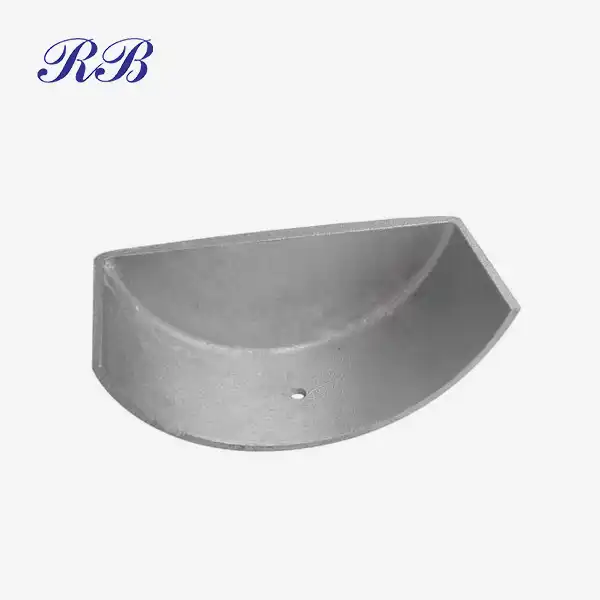
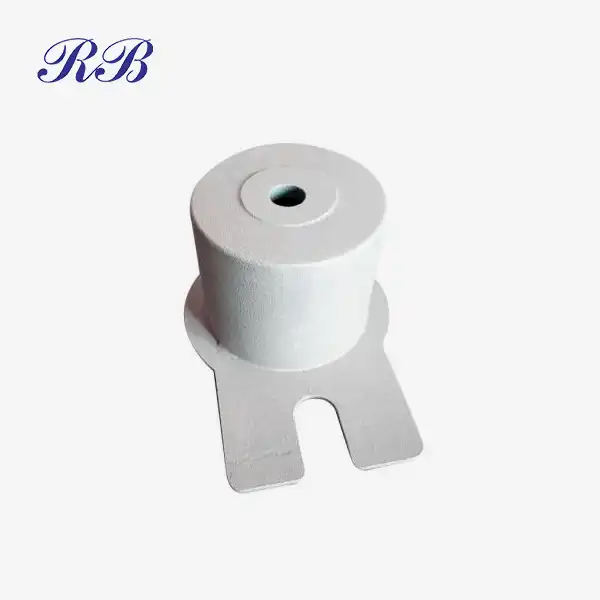
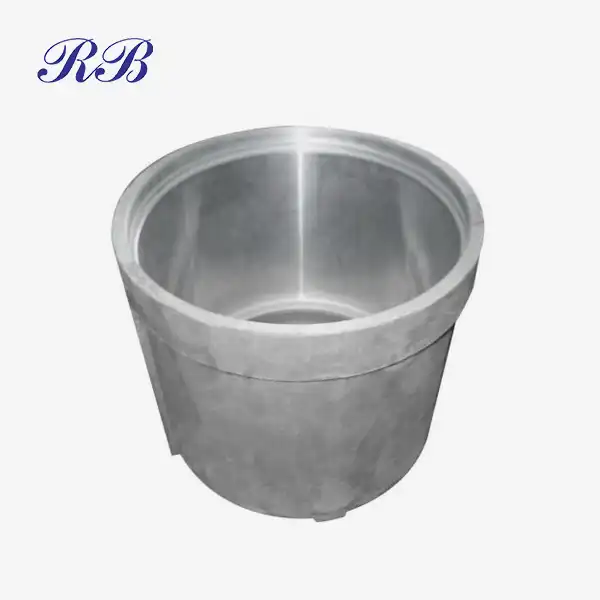
In the realm of automotive, aerospace, medical equipment, and electrical industries, motor cover casings play a crucial role in protecting and housing essential components. As manufacturers seek to balance cost-effectiveness, durability, and performance, the choice of materials for these casings becomes paramount. This comprehensive guide delves into the primary materials used in motor covers, with a special focus on aluminum alloys and cast iron. We'll also explore why A380 aluminum alloy has become a preferred choice for many applications, including those offered by industry leaders like Rongbao Enterprise.
Aluminum Alloys
Aluminum alloys have revolutionized the manufacturing of motor cover casings, offering a perfect blend of lightweight properties and robust performance. These alloys, typically composed of aluminum mixed with small amounts of other elements like silicon, copper, and magnesium, provide several advantages that make them increasingly popular in various industries.
One of the primary benefits of aluminum alloys is their excellent strength-to-weight ratio. This characteristic is particularly valuable in industries where weight reduction is crucial, such as automotive and aerospace. Lighter motor cover casings contribute to overall vehicle efficiency, improved fuel economy, and reduced emissions – factors that are becoming increasingly important in today's environmentally conscious market.
Moreover, aluminum alloys exhibit superior thermal conductivity compared to many other materials. This property is essential for motor cover casings, as it helps dissipate heat generated by the motor, preventing overheating and ensuring optimal performance. The ability to efficiently manage heat can lead to extended motor life and improved reliability of the entire system.
Corrosion resistance is another significant advantage of aluminum alloys. When exposed to air, aluminum forms a thin oxide layer that acts as a protective barrier against further corrosion. This natural resistance is particularly beneficial in applications where the motor cover may be exposed to harsh environmental conditions or corrosive substances.
Aluminum alloys also offer excellent machinability, allowing for precise and complex designs in motor cover casings. This flexibility in manufacturing enables producers like Rongbao Enterprise to create customized solutions that meet specific client requirements. The ability to produce intricate designs without compromising structural integrity is a key factor in the widespread adoption of aluminum alloys in motor cover production.

Cast Iron
While aluminum alloys have gained significant traction in recent years, cast iron remains a stalwart material in the production of motor cover casings, particularly in certain heavy-duty applications. Cast iron, an alloy of iron with a carbon content typically ranging from 2% to 4%, offers its own set of advantages that continue to make it relevant in specific sectors.
One of the primary strengths of cast iron is its exceptional durability and wear resistance. Motor cover casings made from cast iron can withstand high levels of stress and vibration, making them ideal for heavy-duty industrial applications where robustness is paramount. This durability translates to longer service life and reduced maintenance costs, which can be significant factors in industrial settings.
Cast iron also exhibits excellent damping properties, which means it can effectively absorb vibrations and reduce noise. This characteristic is particularly valuable in motor applications where minimizing vibration and noise is crucial for operational efficiency and worker comfort. The ability to dampen vibrations can also contribute to the longevity of the motor and associated components.
Another advantage of cast iron is its high thermal stability. It can maintain its structural integrity and performance characteristics even at elevated temperatures, making it suitable for motor cover casings in high-temperature environments. This thermal stability ensures consistent performance and reliability across a wide range of operating conditions.
Cast iron is also known for its excellent machinability, allowing for precise finishing and the creation of complex shapes. This property enables manufacturers to produce motor covers with intricate designs and tight tolerances, meeting specific engineering requirements without the need for extensive post-casting processing.
Despite these advantages, it's important to note that cast iron is significantly heavier than aluminum alloys. This weight difference can be a limiting factor in applications where weight reduction is a priority, such as in the automotive and aerospace industries. Additionally, cast iron is more susceptible to corrosion compared to aluminum alloys, which may necessitate additional protective measures in certain environments.

Why is the A380 the Preferred Choice for Your Motor Cover?
Among the various aluminum alloys available, A380 has emerged as a preferred choice for motor cover casings, particularly in high-pressure die casting applications. Rongbao Enterprise, a leading manufacturer in this field, has recognized the unique benefits of A380 and incorporates it into their production processes. Let's explore why A380 stands out for motor cover applications.
A380 is an aluminum alloy that contains approximately 8.5% silicon, 3.5% copper, and small amounts of iron, manganese, magnesium, and zinc. This composition results in a material that offers an excellent balance of strength, castability, and machinability – all crucial factors in the production of high-quality motor cover casings.
One of the key advantages of A380 is its superior fluidity during the casting process. This property allows for the production of thin-walled, complex shapes with excellent surface finish, making it ideal for intricate motor cover casing designs. The high fluidity also contributes to reduced porosity in the final product, enhancing its structural integrity and performance.
A380 also offers excellent dimensional stability, which is critical in motor covers where precise fitment is essential. This stability ensures that the casing maintains its shape and dimensions even under varying temperature conditions, contributing to the overall reliability and performance of the motor assembly.
The alloy's good thermal conductivity is another significant benefit, especially in motor applications where heat dissipation is crucial. A380 motor cover casings can effectively transfer heat away from the motor, helping to maintain optimal operating temperatures and potentially extending the motor's lifespan.
Furthermore, A380 provides a good balance between strength and ductility. This combination allows the motor cover to withstand the stresses and vibrations associated with motor operation while still offering some flexibility to absorb shock and prevent brittle failure.
Rongbao Enterprise leverages these properties of A380 in their high-pressure die casting process to produce motor covers that meet the exacting standards of various industries. Their casings, weighing between 0.3-0.8KG, are manufactured to ISO9001:2015, ISO14001, and ISO45001 standards, ensuring quality and consistency.
The company's expertise in high-pressure die casting allows them to maximize the benefits of A380, producing motor cover casings with tight tolerances, excellent surface finish, and optimal performance characteristics. Rongbao's capabilities extend to CNC lathe processing for precision dimensions and anodizing for enhanced corrosion resistance and aesthetics.
With a monthly production capacity of 10,000 pieces, Rongbao Enterprise is well-positioned to meet the demands of various industries requiring high-quality products. Their ability to offer customization through OEM/ODM services further enhances their value proposition, allowing clients to obtain motor cover casings tailored to their specific requirements.
For more information about Rongbao Enterprise's motor cover casing solutions and how they can benefit your projects, please contact them at zhouyi@rongbaocasting.com or steve.zhou@263.net. Their team of experts is ready to assist you in finding the perfect casing solution for your needs, leveraging the power of A380 aluminum alloy and state-of-the-art high-pressure die casting techniques.
References
- Davis, J.R. (Ed.). (1993). Aluminum and Aluminum Alloys. ASM International.
- Kaufman, J.G., & Rooy, E.L. (2004). Aluminum Alloy Castings: Properties, Processes, and Applications. ASM International.
- Sahoo, M., & Sahu, S. (2014). Principles of Metal Casting. McGraw Hill Education.
- Campbell, J. (2015). Complete Casting Handbook: Metal Casting Processes, Metallurgy, Techniques and Design. Butterworth-Heinemann.
- ASM International. (1990). ASM Handbook, Volume 2: Properties and Selection: Nonferrous Alloys and Special-Purpose Materials. ASM International.
Learn about our latest products and discounts through SMS or email