- English
- French
- German
- Portuguese
- Spanish
- Russian
- Japanese
- Korean
- Arabic
- Greek
- German
- Turkish
- Italian
- Danish
- Romanian
- Indonesian
- Czech
- Afrikaans
- Swedish
- Polish
- Basque
- Catalan
- Esperanto
- Hindi
- Lao
- Albanian
- Amharic
- Armenian
- Azerbaijani
- Belarusian
- Bengali
- Bosnian
- Bulgarian
- Cebuano
- Chichewa
- Corsican
- Croatian
- Dutch
- Estonian
- Filipino
- Finnish
- Frisian
- Galician
- Georgian
- Gujarati
- Haitian
- Hausa
- Hawaiian
- Hebrew
- Hmong
- Hungarian
- Icelandic
- Igbo
- Javanese
- Kannada
- Kazakh
- Khmer
- Kurdish
- Kyrgyz
- Latin
- Latvian
- Lithuanian
- Luxembou..
- Macedonian
- Malagasy
- Malay
- Malayalam
- Maltese
- Maori
- Marathi
- Mongolian
- Burmese
- Nepali
- Norwegian
- Pashto
- Persian
- Punjabi
- Serbian
- Sesotho
- Sinhala
- Slovak
- Slovenian
- Somali
- Samoan
- Scots Gaelic
- Shona
- Sindhi
- Sundanese
- Swahili
- Tajik
- Tamil
- Telugu
- Thai
- Ukrainian
- Urdu
- Uzbek
- Vietnamese
- Welsh
- Xhosa
- Yiddish
- Yoruba
- Zulu
What is an example of low pressure die casting?
Low pressure die casting is a versatile manufacturing process that has gained significant traction in various industries, particularly in the production of complex, high-quality components. This article will explore three prime examples of low-pressure casting applications: stator housing, cast impeller, and low pressure casting gear parts. By delving into these specific use cases, we'll gain a comprehensive understanding of how this innovative casting technique is revolutionizing manufacturing processes across multiple sectors.
Stator Housing: Precision and Efficiency in Electrical Components
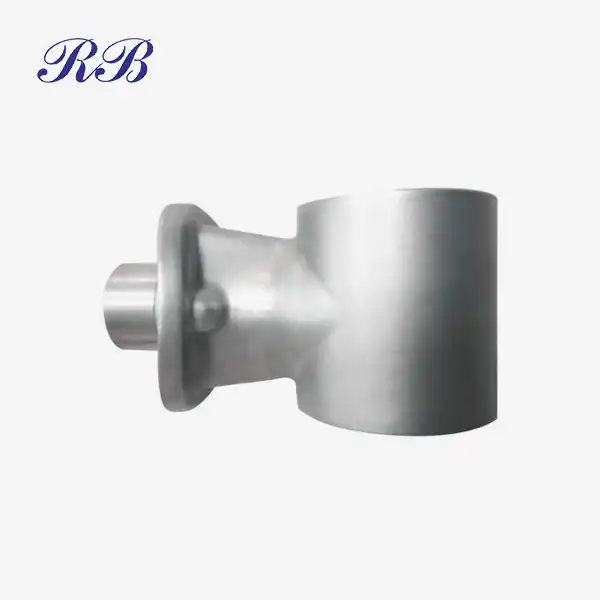
Stator housing, an essential component in electric motors and generators, is a prime example of the capabilities of low pressure die casting. The process offers several advantages in the production of these crucial parts, making it a preferred choice for manufacturers in the electrical and electronic industry.
Low pressure die casting enables the production of stator housings with exceptional dimensional accuracy and surface finish. This is particularly important for electrical components, as precise geometry is crucial for optimal performance. The process allows for the creation of complex internal structures and cooling channels, which are essential for heat dissipation in high-performance motors.
One of the key benefits of using low pressure die casting for stator housings is the ability to produce thin-walled components with uniform thickness. This results in lighter weight parts without compromising on strength or durability. The process also minimizes porosity, ensuring excellent electrical insulation properties and reducing the risk of short circuits or other electrical failures.
Furthermore, low pressure die casting allows for the integration of mounting features and other functional elements directly into the stator housing design. This reduces the need for secondary machining operations, leading to cost savings and improved production efficiency. The process also offers excellent repeatability, ensuring consistent quality across large production runs – a crucial factor for equipment manufacturers in the automotive and aerospace industries.
Cast Impeller: Enhancing Performance in Fluid Dynamics
Cast impellers are another excellent example of components that benefit significantly from low pressure die casting. These crucial parts are used in various applications, including pumps, compressors, and turbines, where efficient fluid or gas movement is paramount.
Low pressure die casting is particularly well-suited for producing cast impellers due to its ability to create complex, three-dimensional shapes with high accuracy. The process allows for the precise formation of impeller blades, including intricate curves and varying thicknesses, which are essential for optimal fluid dynamics performance.
One of the primary advantages of using low pressure die casting for impellers is the ability to achieve excellent surface finishes. This is crucial for minimizing friction and turbulence in fluid flow, thereby improving overall efficiency and performance. The process also allows for the incorporation of internal flow passages and balancing features, which can be challenging to achieve with other manufacturing methods.
Moreover, low pressure die casting enables the production of impellers with consistent material properties throughout the part. This is particularly important for applications that involve high rotational speeds or exposure to corrosive fluids, as it ensures uniform strength and durability across the entire component.
The process also offers significant advantages in terms of material selection. Low pressure die casting can be used with a wide range of aluminum alloys, allowing manufacturers to choose the optimal material for specific performance requirements, such as corrosion resistance, strength-to-weight ratio, or thermal conductivity.

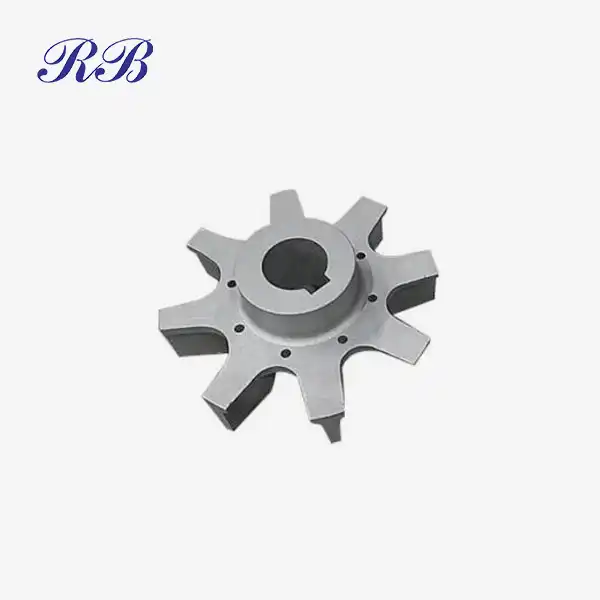
Low Pressure Casting Gear Parts: Precision and Strength in Power Transmission
Gear parts are critical components in numerous mechanical systems, and low pressure die casting has emerged as an effective method for producing high-quality, precision gear components. This process offers several advantages over traditional gear manufacturing techniques, particularly for certain types of gears and applications.
One of the primary benefits of using low pressure die casting for gear parts is the ability to produce near-net-shape components. This means that the cast parts require minimal machining to achieve final dimensions, resulting in significant time and cost savings. The process is particularly well-suited for producing larger gear blanks or gear housings, where traditional machining from solid stock would be time-consuming and wasteful.
Low pressure die casting also allows for the creation of complex gear geometries, including internal splines, lightening holes, and integrated mounting features. This level of design freedom enables manufacturers to optimize gear designs for specific applications, potentially improving performance and reducing overall system weight.
Another advantage of low-pressure casting for gear parts is the ability to achieve excellent material properties. The controlled filling and solidification process results in a fine-grained microstructure, which contributes to improved strength and wear resistance. This is particularly beneficial for gears that operate under high loads or in challenging environments.
Furthermore, the process offers good dimensional stability and repeatability, ensuring consistent quality across production runs. This is crucial for gear manufacturing, where precise tolerances are essential for proper meshing and smooth operation. The ability to produce gear parts with consistent quality also contributes to improved reliability and longevity of the final assembled products.
In conclusion, low pressure die casting has proven to be an invaluable manufacturing process for a wide range of components, including stator housings, cast impellers, and gear parts. Its ability to produce complex, high-quality parts with excellent dimensional accuracy, surface finish, and material properties makes it an attractive option for manufacturers across various industries.
The examples discussed in this article highlight the versatility and benefits of low-pressure casting, demonstrating its potential to revolutionize manufacturing processes and drive innovation in product design. As industries continue to demand higher performance, greater efficiency, and more cost-effective production methods, low pressure die casting is likely to play an increasingly important role in meeting these challenges.
For manufacturers looking to leverage the advantages of low pressure die casting for their components, partnering with experienced specialists like Rongbao Enterprise can be highly beneficial. With their expertise in aluminum alloy casting and precision processing, Rongbao Enterprise can provide tailored solutions to meet specific manufacturing requirements. For more information or to discuss your casting needs, please contact Rongbao Enterprise at zhouyi@rongbaocasting.com or steve.zhou@263.net.
References
- Campbell, J. (2015). Complete Casting Handbook: Metal Casting Processes, Metallurgy, Techniques and Design. Butterworth-Heinemann.
- Zolotorevsky, V. S., Belov, N. A., & Glazoff, M. V. (2018). Casting Aluminum Alloys. Elsevier.
- ASM International. (2008). ASM Handbook, Volume 15: Casting. ASM International.
- Jorstad, J., & Rasmussen, W. M. (2013). Aluminum Casting Technology. American Foundry Society.
- Rao, P. N. (2018). Manufacturing Technology: Foundry, Forming and Welding. McGraw Hill Education.
_1750923522843.webp)
_1751078338779.webp)
Learn about our latest products and discounts through SMS or email