Understanding stator housing functionality requires examining the complex interplay between electromagnetic forces, mechanical stresses, and environmental challenges that these components must withstand throughout their operational lifespan. Modern electric motors generate substantial electromagnetic fields, mechanical vibrations, and thermal loads that would quickly destroy unprotected internal components without the comprehensive protection and support provided by properly designed housing assemblies.
While the basic concept of enclosing electromagnetic components within a protective structure appears straightforward, the engineering reality encompasses three fundamental functional categories that collectively determine motor performance, reliability, and service life. Each functional aspect presents unique design challenges and performance requirements that must be carefully balanced to achieve optimal system-level performance.
Physical Protection of Internal Stator Components
The primary protective function of a stator housing centers on shielding delicate electromagnetic windings and lamination assemblies from environmental hazards that would otherwise compromise electrical insulation, magnetic properties, and mechanical integrity. Copper windings, typically insulated with polymer films measuring only micrometers in thickness, require complete protection from moisture infiltration, particulate contamination, and chemical exposure that could initiate insulation breakdown and subsequent motor failure.
Environmental sealing represents one of the most challenging aspects of housing design, particularly for applications in harsh industrial environments where exposure to corrosive chemicals, extreme temperatures, and high humidity levels occurs regularly. The development of effective sealing systems requires careful consideration of thermal expansion characteristics, manufacturing tolerances, and long-term material stability under cyclic loading conditions that accompany normal motor operation.
Electromagnetic interference (EMI) shielding has become increasingly important as modern motors integrate sophisticated electronic control systems that must coexist with high-frequency switching components. The conductive properties of aluminum housings provide natural EMI attenuation, though proper grounding techniques and careful attention to joint conductivity remain essential for achieving adequate interference suppression levels required in sensitive applications.
Material Science Breakthrough: Recent advances in A356 aluminum alloy compositions have achieved remarkable improvements in corrosion resistance through precise control of silicon and magnesium content ratios. These metallurgical refinements enable housing designs that maintain protective integrity for decades in marine environments where traditional materials would fail within months.
Thermal protection extends beyond simple heat dissipation to encompass management of thermal gradients that could induce mechanical stresses within winding assemblies. The thermal conductivity of aluminum housings enables efficient heat transfer from internal components to external cooling surfaces, though proper thermal path design requires sophisticated analysis to prevent hot spot formation that could accelerate insulation degradation.
Impact resistance and mechanical protection become particularly critical in mobile applications where shock loads and vibration inputs exceed typical stationary motor environments. The structural design of housing walls must provide adequate protection against external impacts while maintaining dimensional stability under internal electromagnetic forces that can generate substantial mechanical loads during transient operating conditions.
Structural Support and Precision Positioning
The structural support function of stator housings encompasses far more than simple mechanical containment, extending to precision positioning of electromagnetic components within tolerances measured in hundredths of millimeters. Air gap tolerances between stator and rotor assemblies directly influence motor efficiency, torque characteristics, and electromagnetic noise generation, making housing dimensional accuracy a critical performance parameter rather than merely a manufacturing convenience.
Bearing support systems integrated within housing structures must maintain precise alignment throughout temperature cycling, mechanical loading, and extended operational periods that may span multiple decades in commercial applications. The thermal expansion characteristics of A356 aluminum alloy require careful compensation in bearing seat designs to prevent interference fits from becoming too tight at elevated temperatures or too loose during cold startup conditions.
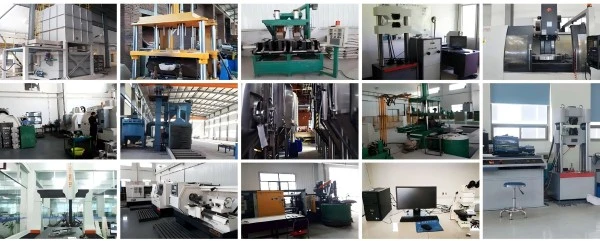
Precision Manufacturing Data: Modern CNC machining centers achieve bearing seat tolerances of ±0.005mm on aluminum housings, while low-pressure casting processes maintain wall thickness variations within ±0.3mm across complex geometries. These precision levels enable electromagnetic air gaps as small as 0.5mm in high-performance applications.
Load distribution represents a fundamental structural challenge where housing designs must transfer electromagnetic forces, mounting loads, and external mechanical inputs into supporting structures without inducing excessive stress concentrations or dimensional distortions. The integration of mounting flanges, lifting provisions, and connection interfaces requires careful stress analysis to prevent fatigue failures that could compromise long-term reliability.
Thermal expansion management becomes particularly complex in large motor applications where temperature differences between operating and ambient conditions can induce dimensional changes exceeding several millimeters. Housing design must accommodate these thermal movements while maintaining electromagnetic air gap tolerances and bearing alignment within acceptable limits throughout the complete temperature range.
Magnetic flux containment and shaping represent often-overlooked structural functions where housing geometry influences electromagnetic field distributions that determine motor performance characteristics. The magnetic permeability of aluminum housings provides minimal flux shaping compared to ferrous materials, though careful geometric design can optimize field distributions while maintaining the weight and thermal advantages of aluminum construction.

Vibration Damping and Noise Reduction
Vibration control and noise reduction functions of stator housings have gained increasing importance as modern applications demand quieter operation and reduced mechanical vibration transmission to supporting structures. Electromagnetic forces within motor assemblies generate vibrational energy at frequencies ranging from low-frequency torque pulsations to high-frequency switching harmonics that require comprehensive damping strategies to achieve acceptable noise levels.
The structural dynamics of aluminum housings provide natural vibration damping through material hysteresis and geometric design features that can be optimized to attenuate specific frequency ranges where electromagnetic excitation occurs. Wall thickness optimization, ribbing patterns, and mounting configurations significantly influence the modal characteristics of housing assemblies and their effectiveness in controlling vibration transmission.
Acoustic Engineering Insight: Shot blasting surface treatments commonly applied to aluminum housings provide unexpected acoustic benefits beyond corrosion protection. The controlled surface roughness created by shot blasting reduces acoustic reflections and provides modest sound absorption that contributes to overall noise reduction in motor assemblies.
Resonance avoidance represents a critical design consideration where housing natural frequencies must be positioned away from electromagnetic excitation frequencies to prevent amplification of vibrational inputs. Finite element modal analysis enables optimization of housing geometry to achieve favorable dynamic characteristics while maintaining structural adequacy and manufacturing feasibility.
Mounting isolation strategies integrated within housing designs can significantly reduce vibration transmission to supporting structures, though these approaches must be carefully balanced against the need for rigid electromagnetic positioning and thermal conduction paths. The use of elastomeric mounting elements or compliant interfaces requires consideration of long-term material stability and environmental compatibility.
The ability of housing parts to absorb sound and block out noise helps lower system noise in a number of ways, such as through direct sound absorption, acoustic reflection, and interference effects. To get the best out of these sound qualities, you need to know how sounds travel and how they are absorbed at different frequencies, which can change depending on the shape of the housing and how the surface is treated.

Rongbao's Advanced Stator Housing Engineering
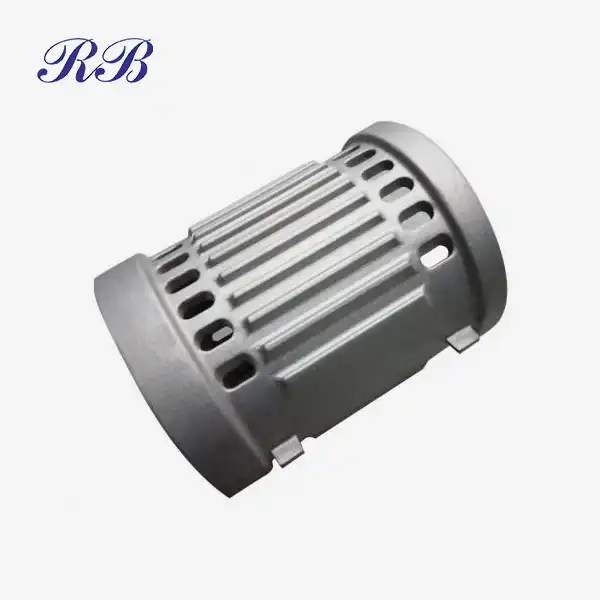
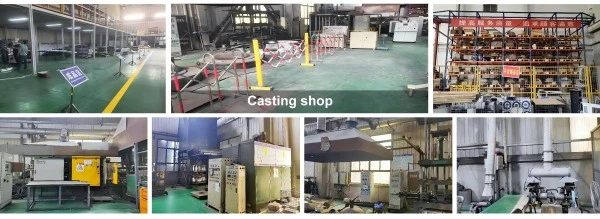
Our comprehensive understanding of stator housing functionality drives innovative design solutions that optimize protective, structural, and acoustic performance simultaneously. Through advanced low-pressure casting techniques combined with precision CNC machining, we deliver A356 aluminum housings that excel in all three critical functional areas while maintaining the 15.8KG weight efficiency essential for lift lifting cylinder applications.
Each housing undergoes rigorous shot blasting surface preparation that enhances both corrosion protection and acoustic performance, while our ISO9001:2015 certified quality systems ensure consistent dimensional accuracy critical for electromagnetic positioning requirements. Our Xi'an manufacturing facility's 1000-piece production capacity supports both prototype development and volume production while maintaining the customization flexibility essential for specialized applications.
For expert consultation regarding stator housing functional requirements and design optimization for your specific applications, contact our engineering team at steve.zhou@263.net or zhouyi@rongbaocasting.com. Our experts can give you a full breakdown of the protective, structural, and acoustic performance needs that are specific to your work setting and performance goals.
References
1. Chapman, S.J. (2021). Electric Machinery Fundamentals. 6th Edition. McGraw-Hill Education Series in Electrical Engineering.
2. Krause, P.C., Wasynczuk, O., Sudhoff, S.D., & Pekarek, S. (2020). Analysis of Electric Machinery and Drive Systems. 4th Edition. IEEE Press Wiley.
3. Gieras, J.F., Wang, C., & Lai, J.C. (2018). Noise of Polyphase Electric Motors. 2nd Edition. CRC Press Taylor & Francis.
4. ASM International. (2019). ASM Handbook Volume 2: Properties and Selection of Nonferrous Alloys and Special-Purpose Materials. ASM International.
5. IEEE Standards Association. (2020). IEEE Std 112-2017: IEEE Standard Test Procedure for Polyphase Induction Motors and Generators. Institute of Electrical and Electronics Engineers.