- English
- French
- German
- Portuguese
- Spanish
- Russian
- Japanese
- Korean
- Arabic
- Greek
- German
- Turkish
- Italian
- Danish
- Romanian
- Indonesian
- Czech
- Afrikaans
- Swedish
- Polish
- Basque
- Catalan
- Esperanto
- Hindi
- Lao
- Albanian
- Amharic
- Armenian
- Azerbaijani
- Belarusian
- Bengali
- Bosnian
- Bulgarian
- Cebuano
- Chichewa
- Corsican
- Croatian
- Dutch
- Estonian
- Filipino
- Finnish
- Frisian
- Galician
- Georgian
- Gujarati
- Haitian
- Hausa
- Hawaiian
- Hebrew
- Hmong
- Hungarian
- Icelandic
- Igbo
- Javanese
- Kannada
- Kazakh
- Khmer
- Kurdish
- Kyrgyz
- Latin
- Latvian
- Lithuanian
- Luxembou..
- Macedonian
- Malagasy
- Malay
- Malayalam
- Maltese
- Maori
- Marathi
- Mongolian
- Burmese
- Nepali
- Norwegian
- Pashto
- Persian
- Punjabi
- Serbian
- Sesotho
- Sinhala
- Slovak
- Slovenian
- Somali
- Samoan
- Scots Gaelic
- Shona
- Sindhi
- Sundanese
- Swahili
- Tajik
- Tamil
- Telugu
- Thai
- Ukrainian
- Urdu
- Uzbek
- Vietnamese
- Welsh
- Xhosa
- Yiddish
- Yoruba
- Zulu
Typical materials and coatings for stator housings
The manufacturing landscape for electric motors has undergone substantial transformation in recent decades, with stator housing design becoming increasingly critical across automotive, aerospace, and medical equipment sectors. A stator housing serves as the fundamental structural component that encases the electromagnetic windings while providing mechanical support and thermal management. The selection of appropriate materials and surface treatments directly influences motor performance, longevity, and operational reliability under varying environmental conditions.
Engineering teams in many different fields have to make tough choices about which materials to use, especially when they have to balance cost with performance needs. The change from old-fashioned cast iron housings to newer aluminum alloy ones is in line with a larger trend in the industry toward designs that are light and good at keeping heat in. However, material selection represents only one aspect of the equation—surface preparation and protective coatings play equally crucial roles in determining long-term reliability.
Purchasing managers and engineers who are in charge of specifying parts need to know how base materials, surface treatments, and working environments affect each other. The next section looks at three important parts of stator housing construction that have a direct effect on both the initial prices and the performance metrics over the lifecycle.
Aluminum Alloys (Most Widely Used for Modern Stator Housings)
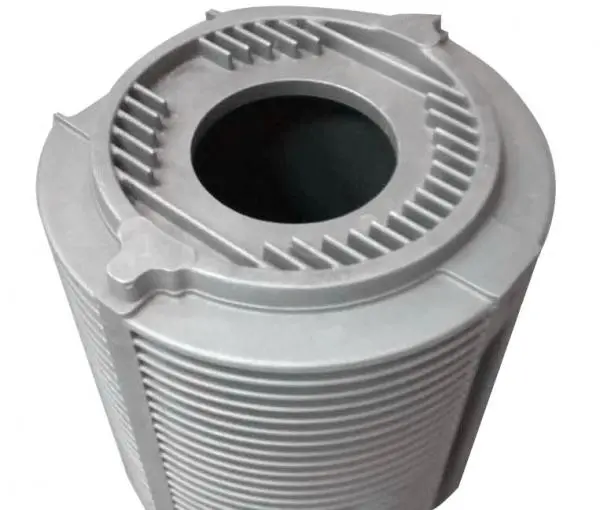
Aluminum alloys have emerged as the predominant choice for contemporary stator housing applications, driven by their exceptional strength-to-weight ratio and superior thermal conductivity properties. The A356 aluminum alloy, in particular, has gained widespread acceptance due to its excellent casting characteristics and mechanical properties that align well with motor housing requirements. This alloy composition, containing silicon and magnesium as primary alloying elements, provides optimal fluidity during low-pressure casting processes while maintaining dimensional stability throughout temperature cycling.
The thermal management advantages of aluminum become particularly pronounced in high-performance applications where heat dissipation directly affects motor efficiency and component lifespan. Unlike traditional ferrous materials, aluminum's thermal conductivity coefficient of approximately 200 W/m·K enables more effective heat transfer from internal windings to the external environment. This characteristic proves especially valuable in aerospace and automotive applications where thermal cycling occurs frequently and ambient operating temperatures may vary significantly.
Manufacturing processes for aluminum stator housing components have evolved to accommodate complex geometries while maintaining tight dimensional tolerances. Using low-pressure casting methods, thin-walled sections can be made without affecting the structure's strength, and then CNC machining is used to make sure that bearing assemblies and mounting surfaces fit perfectly. When manufacturers combine casting with precise machining, they can get the best distribution of materials. For example, they can put aluminum exactly where it's needed to support structures while keeping the total weight of the part as low as possible.
When you look at the cost of both the raw materials and how quickly they can be processed, aluminum alloys are a good choice. Aluminum can also be recycled, which fits with green goals that are becoming more important to equipment makers. To make it work, though, you have to pay close attention to which alloys you choose, how you treat them with heat, and how well they work with other processes that improve corrosion protection.
Anti-Corrosion Coatings (Most Critical for Outdoor/Harsh Environments)
Environmental protection represents a critical design consideration for stator housing applications, particularly in outdoor installations or harsh operating conditions where exposure to moisture, salt spray, or chemical contaminants can compromise component integrity. It is important to have anti-corrosion coating systems because they protect equipment and keep the electrical insulation qualities that are needed for motor safety and performance.
The selection of appropriate coating systems depends heavily on specific environmental challenges encountered in end-use applications. Marine environments demand coatings with exceptional salt spray resistance, while industrial installations may require protection against chemical vapors or extreme temperature fluctuations. More and more people like powder coating systems because they cover evenly and are safe for the environment. However, liquid coating systems may work better in some situations.
How the covering is applied has a big effect on how well it works and how long it lasts. Electrostatic spray techniques make sure that complicated geometries are evenly covered, and paying close attention to cure temperatures and duration stops coating degradation that could weaken long-term protection. To keep coatings from failing too soon or coming apart under heat stress, it's important to fully understand how the base aluminum alloy composition and coating adhesion processes work together.
Quality control protocols for anti-corrosion coatings typically include adhesion testing, thickness measurement, and accelerated environmental exposure testing to validate performance expectations. These validation procedures help establish realistic service life predictions and maintenance intervals that inform total cost of ownership calculations. For critical applications, redundant coating systems or specialized barrier layers may justify additional initial investment through extended maintenance intervals and improved reliability.
Shot Blasting (Surface Pretreatment, Not a Coating—but Critical for Adhesion)
Surface preparation through shot blasting represents a fundamental prerequisite for achieving optimal coating adhesion and long-term performance in stator housing applications. This mechanical surface treatment process removes oxide layers, casting scale, and other surface contaminants while creating the controlled surface roughness profile necessary for mechanical bonding of subsequent protective coatings.
The shot blasting process involves propelling abrasive media at high velocity against the aluminum surface using compressed air or centrifugal wheel systems. Media selection—typically steel shot, aluminum oxide, or glass beads—depends on the desired surface profile and subsequent coating requirements. Steel shot provides aggressive cleaning action suitable for heavy scale removal, while aluminum oxide offers precise control over surface roughness without risk of ferrous contamination that could compromise corrosion resistance.
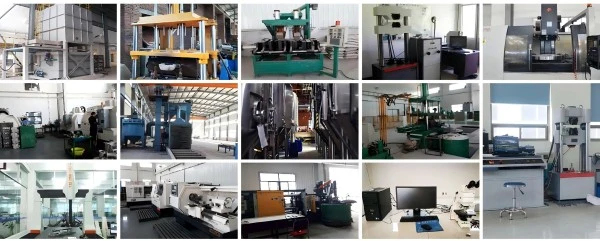
Process parameters including media size, blast pressure, and exposure duration require careful optimization to achieve consistent surface preparation without compromising dimensional tolerances or creating excessive surface roughness that could interfere with precision assembly operations. Modern shot blasting equipment incorporates automated handling systems and dust collection infrastructure that ensure consistent treatment while maintaining workplace safety standards.
The economic benefits of proper shot blasting extend well beyond initial surface preparation costs. Adequate surface preparation significantly reduces coating failure rates and extends service life, translating to lower warranty costs and improved customer satisfaction. For manufacturers processing multiple stator housing variants, automated shot blasting systems provide consistent surface preparation while accommodating production volume requirements and maintaining competitive processing costs.

Rongbao Enterprise - Your Stator Housing Partner
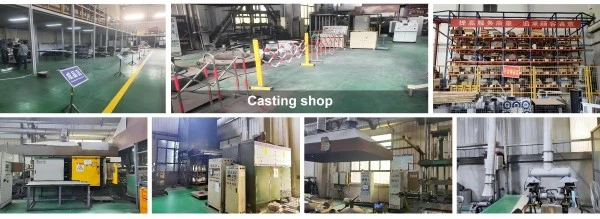
Rongbao specializes in precision manufacturing of stator housing components using advanced A356 aluminum alloy casting techniques. Our comprehensive manufacturing capabilities include low-pressure casting, CNC precision machining, and professional shot blasting surface preparation, all certified under ISO9001:2015, ISO14001, and ISO45001 quality management systems.
Our stator housing goods are used in a wide range of situations, such as lift lifting cylinders, and have been shown to work well in tough conditions. Each part goes through strict quality control steps to make sure it meets international standards for accuracy in measurements and consistency in surface finish.
Production capacity of 1000 pieces supports both prototype development and volume production requirements, while customized specifications accommodate unique design parameters across automotive, aerospace, and medical equipment applications. Components are carefully packaged in wooden boxes to ensure protection during transportation, maintaining quality integrity from manufacturing facility to end-user installation.
For technical inquiries regarding stator housing specifications and manufacturing capabilities, contact our engineering team at steve.zhou@263.net or zhouyi@rongbaocasting.com. Our specialists can provide detailed consultation on material selection, surface treatment options, and customization requirements for your specific applications.
References
1. ASTM B26/B26M-18e01 (2021). Standard Specification for Aluminum-Alloy Sand Castings.
2. Corrosion Tests in Artificial Atmospheres – Salt Spray Tests.
3. Viking Corporation (2020). Tips for Using Shot-Blasting in Metal Surface Preparation.
4. Manufacturing Processes & Case Studies
Learn about our latest products and discounts through SMS or email