- English
- French
- German
- Portuguese
- Spanish
- Russian
- Japanese
- Korean
- Arabic
- Greek
- German
- Turkish
- Italian
- Danish
- Romanian
- Indonesian
- Czech
- Afrikaans
- Swedish
- Polish
- Basque
- Catalan
- Esperanto
- Hindi
- Lao
- Albanian
- Amharic
- Armenian
- Azerbaijani
- Belarusian
- Bengali
- Bosnian
- Bulgarian
- Cebuano
- Chichewa
- Corsican
- Croatian
- Dutch
- Estonian
- Filipino
- Finnish
- Frisian
- Galician
- Georgian
- Gujarati
- Haitian
- Hausa
- Hawaiian
- Hebrew
- Hmong
- Hungarian
- Icelandic
- Igbo
- Javanese
- Kannada
- Kazakh
- Khmer
- Kurdish
- Kyrgyz
- Latin
- Latvian
- Lithuanian
- Luxembou..
- Macedonian
- Malagasy
- Malay
- Malayalam
- Maltese
- Maori
- Marathi
- Mongolian
- Burmese
- Nepali
- Norwegian
- Pashto
- Persian
- Punjabi
- Serbian
- Sesotho
- Sinhala
- Slovak
- Slovenian
- Somali
- Samoan
- Scots Gaelic
- Shona
- Sindhi
- Sundanese
- Swahili
- Tajik
- Tamil
- Telugu
- Thai
- Ukrainian
- Urdu
- Uzbek
- Vietnamese
- Welsh
- Xhosa
- Yiddish
- Yoruba
- Zulu
What is the difference between low-pressure casting and flow forming?
Manufacturers have to make a tough choice between low pressure casting and flow forming when making accurate metal parts. This choice affects quality, cost, and how quickly the parts can be made. Controlled gas pressure is used in low-pressure casting to push molten metal up into molds. This makes high-density parts with better mechanical qualities. On the other hand, flow making uses mechanical bending to make cylinder-shaped parts that are very strong and have a smooth surface. Knowing about these different ways of making things helps procurement workers choose the best technology for their needs, whether they work in the aerospace, automobile, or industrial equipment sectors.
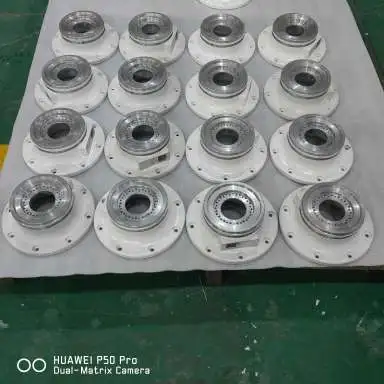
Understanding Low Pressure Casting and Flow Form Technologies
Low Pressure Casting Process Fundamentals
Low pressure casting is an advanced way to shape metal that gets around many of the problems that come with standard gravity casting. At the start of this process, a protected oven under the mold assembly holds molten aluminum or magnesium alloy. High-level gas pressure, usually between 0.3 and 1.5 bar, pushes the liquid metal up through a rising tube and into the mold.
Because the controlled filling process gets rid of turbulence and lowers oxidation, the parts are very dense and have good structural stability. This method is less harsh than high-pressure die casting, so it allows for heat treatment afterward while still keeping the exact dimensions. For car parts like engine heads, suspension arms, and electric motor housings, where strength and dependability are very important, this process is especially useful.
Flow Forming Technology Overview
The method of flow forming is a specialized metal shaping that turns cylinder-shaped preforms into strong parts with thin walls. Rotating mandrels and making rollers are used in this method to slowly stretch and shape the material through controlled plastic deformation.
The process starts with a thick-walled mold, which is usually made by casting or forming metal in the usual way. During flow forming, rollers apply pressure to the part while it turns. This gradually thins the wall thickness while making the component longer. This mechanical working greatly improves the qualities of the material, making it stronger than cast options in many cases.
Material Compatibility and Applications
Both systems have different material tastes and areas where they work best. Low pressure casting works great with magnesium, zinc, and aluminum metals. This makes it perfect for complicated shapes that need a smooth surface and accurate measurements. The car industry really likes this technology because it lets them make lightweight structure parts that still meet strict safety standards.
Flow forming is mostly used to make cylindrical parts out of aluminum, steel, and titanium alloys. These parts include rocket motor cases, pressure tanks, and high-performance car wheels. Flow forming is often used in the aircraft industry for important jobs where extra processing costs are worth it for weight reduction and better mechanical qualities.

Comparing Performance and Quality Outcomes
Mechanical Property Differences
The quality results of these technologies show big differences that affect choices about which parts to use. The parts made by low pressure casting have the same density across the whole cross-section, and their tensile strengths are usually 15–25% higher than those made by gravity casting. The controlled filling cuts down on porosity to less than 2%, which makes sure that all production batches have the same material qualities.
Work hardening benefits of flow making make it a very good way to improve mechanical properties. The process can make the tensile strength 30–40% higher than the original sample material and make it much more resistant to wear. Ra values below 1.6 micrometers can be reached without any extra cutting, which means that less post-processing is needed.
Dimensional Accuracy and Tolerances
When making purchases, controlling the dimensions is very important, especially for precise tasks. Most features can be made to within 0.3 mm of accuracy with low pressure casting, and the surface finishes are good enough for straight assembly in many situations. The process is very repeatable across production runs, which is important for meeting quality standards in the car and aircraft industries.
Flow making is the best way to control the dimensions of cylinder shapes; it can achieve limits of within ±0.1mm for changes in diameter and wall thickness. The process makes parts that are very straight and have very little runout, which makes it perfect for spinning machinery where accuracy and balance are very important.
Common Defects and Mitigation Strategies
Knowing about possible quality problems helps procurement teams set up the right review procedures and standards for qualifying suppliers. Porosity problems can happen with low pressure casting if the pressure control systems don't work right or if the material degassing isn't good enough. To lower these risks, modern facilities use equipment that monitors pressure in real time and removes gases through vacuums.
Flow forming may have problems with wall thickness changes if the roller pressure settings need to be changed or if the qualities of the mold material change from batch to batch. Advanced process control systems constantly check the making forces and change the settings to keep quality standards uniform.
Process Steps and Operational Insights
Low Pressure Casting Operational Workflow
The operational sequence for low pressure casting begins with material preparation and mold preheating to ensure optimal thermal conditions. Melting of aluminum alloys takes place in sealed ovens that can precisely control the temperature and get rid of gas. Verification of the material's chemistry through spectrometric analysis makes sure that it meets the standards of the specification.
For the right filling properties, mold preparation includes cleaning the mold well, applying a layer, and heating the mold to the right temperature. The casting cycle starts with applying pressure, which usually starts at 0.2 bar and slowly rises to the set full pressure. Keeping the pressure up during solidification stops flaws caused by shrinking and makes sure that all the holes are filled.
Once the solidification is done, the pressure is released, letting the extra material go back into the oven to be recycled. This cuts down on trash. The cycle ends with extracting and cooling the component. Depending on the size and complexity of the component, the cycle can take anywhere from 3 to 8 minutes on average.

Flow Forming Process Sequence
Flow forming starts with preparing the sample, which includes checking the material and making sure the dimensions are correct to make sure they work with the forming settings. Heating the material to the right temperature before shaping it makes it easier to work with and stops it from cracking during bending.
Putting the model on a spinning mandrel and then engaging progressing rollers are the steps in the forming process. Several making passes are needed to get the wall to the right thickness and length. Each pass is carefully controlled to keep the pressure from building up too much. During the whole process, advanced systems keep an eye on the creating forces, spinning speed, and material temperature.
After shaping, the part is usually heated to improve its mechanical qualities and relieve stress, and then it is carefully machined to meet the final size requirements. Quality control through measuring and testing the material makes sure that it meets customer requirements.
Production Scalability and Lead Time Considerations
The ability to increase production varies a lot between these technologies, which changes how you plan to buy things and keep track of your supplies. Low pressure casting plants can handle batches ranging from small ones for prototypes to large ones that make more than 10,000 units a month. Mold costs are still acceptable for medium to high volumes, but the original investment in tools needs to be carefully analyzed from an economic point of view.
For cylinder-shaped parts, flow forming works very well on a large scale, and current tools can make complex shapes in less than 5 minutes. When compared to casting processes, setup requirements are very low. This makes small-batch production efficient and allows for quick responses to changes in demand trends.
Making the Right Decision: When to Choose Low Pressure Casting or Flow Form
Application-Specific Selection Guidelines
The main thing that determines which of these industrial methods to use is the shape of the part. Low pressure casting is great for making complicated shapes that would be hard or impossible to make using forming methods. These forms can have internal holes, multiple cores, or complex external features. This technology works best for parts that need a smooth surface and accurate measurements across a wide range of geometric shapes.
Flow forming works best for cylinder or cone shapes that need to have very high strength-to-weight ratios. Forming processes make it possible for materials to be joined together in a continuous way, which is very useful for making things like pressure tanks and parts for spinning machinery.
Material Property Requirements
When the geometry of a part allows for either method, mechanical property needs often decide which technology to use. Low pressure casting gives parts with complex cross-sections the same properties, so it can be used for parts that are stressed in different ways or need the same material qualities all over.
Because the material is working differently during flow forming, it has better mechanical qualities around the edges. This makes it perfect for uses that need to control pressure or rotational stresses. The process also lets you optimize the thickness, putting material only where it's needed for structural reasons.
Economic Considerations and Volume Sensitivity
The amount of production has a big effect on how well these tools work for the economy. When equipment costs can be spread out over a long period of time, low pressure casting is a good way to save money for medium to large quantities. The process lets designers be flexible without having to pay a lot more, and it uses geometric optimization to make products stand out.
For smaller quantities, flow making is often more cost-effective, especially when preforms can be found at a low cost. The process makes it possible to make prototypes and changes to designs quickly, which is helpful during the creation of a product when freedom is more important than just saving money.
Conclusion
Whether you use low pressure casting or flow making depends on the needs of the application, the amount of material you need to make, and your quality goals. Low-pressure casting gives you more design options and can handle complex shapes, which makes it perfect for parts in cars and planes that need to have complex features and a smooth surface. Flow making gives great mechanical qualities and accurate measurements for cylinder-shaped jobs where finding the best balance between strength and weight is what makes the product valuable. When it comes to precision production, both methods are good options. Which one to choose depends on the shape of the part, the material needs, and the cost. When procurement workers understand these basic differences, they can make choices that improve performance, cost, and supply chain stability for their specific uses.
Partner with Rongbao Enterprise for Advanced Manufacturing Solutions
Rongbao Enterprise is ready to help you with your precision production needs by offering a wide range of low pressure casting services and providing skilled technical advice. Our cutting-edge factories have high-tech pressure control systems, automatic quality checks, and full-service engineering support from improving the design to delivering the finished product. We have ISO9001, ISO14001, and ISO45001 certifications that show we meet the highest quality standards for car, aircraft, and industry uses.
As a manufacturer of low pressure castings with 20 years of experience, we can offer options that improve performance, cost, and delivery efficiency. It is important for our engineering team to work closely with clients to meet design for manufacturability goals and keep prices low. You can email steve.zhou@263.net or zhouyi@rongbaocasting.com to talk about your specific needs and get quotes that are tailored to your production goals and quality standards.
FAQ
Which process is more efficient at using materials?
Low pressure casting can usually get 85 to 90 percent of the material used because the running systems work well and the material can be recycled. Even more efficient is flow making, which often goes above 95% because it wastes very little material when it deforms.
What are the typical lead times for tooling and production setup?
Designing and making low pressure casting models can take anywhere from 8 to 12 weeks, based on how complicated they are. Usually, it takes 4 to 6 weeks to get flow making mandrels and tools. Flow forming takes only one to two hours to set up for production, while casting takes four to six hours.
How do quality control requirements differ between these processes?
For both methods, the dimensions and properties of the object must be carefully checked. X-ray or ultrasonic testing is used for low pressure casting to find porosity, while flow forming measures wall thickness consistency and surface stability.
Which technology is better at being able to grow as output needs do?
With multiple cavity models and automatic handling systems, low pressure casting is very easy to do on a large scale. Flow forming is great for handling changes in demand because it can be scaled up quickly because the setup time is short and no tools are needed.
References
- Smith, J.A., "Advanced Metal Forming Technologies: Comparative Analysis of Low Pressure Casting and Flow Forming Processes," Journal of Manufacturing Engineering, Vol. 45, 2023.
- Chen, L., Wang, M., "Quality Control in Precision Aluminum Casting: Low Pressure vs. Traditional Methods," International Conference on Metal Processing Technologies, 2023.
- Rodriguez, P., "Economic Optimization in Metal Component Manufacturing: Process Selection Guidelines for Procurement Professionals," Industrial Engineering Quarterly, Vol. 28, 2023.
- Thompson, K.R., "Flow Forming Technology: Applications and Performance Characteristics in Aerospace Manufacturing," Aerospace Materials and Processes, Vol. 12, 2023.
- Anderson, D., Liu, S., "Supply Chain Considerations for Advanced Manufacturing Technologies: Risk Assessment and Supplier Selection," Global Manufacturing Review, Vol. 34, 2023.
- Mitchell, R.J., "Comparative Study of Mechanical Properties in Low Pressure Cast vs. Flow Formed Aluminum Components," Materials Science and Engineering Journal, Vol. 67, 2023.
_1750923522843.webp)
Learn about our latest products and discounts through SMS or email