- English
- French
- German
- Portuguese
- Spanish
- Russian
- Japanese
- Korean
- Arabic
- Greek
- German
- Turkish
- Italian
- Danish
- Romanian
- Indonesian
- Czech
- Afrikaans
- Swedish
- Polish
- Basque
- Catalan
- Esperanto
- Hindi
- Lao
- Albanian
- Amharic
- Armenian
- Azerbaijani
- Belarusian
- Bengali
- Bosnian
- Bulgarian
- Cebuano
- Chichewa
- Corsican
- Croatian
- Dutch
- Estonian
- Filipino
- Finnish
- Frisian
- Galician
- Georgian
- Gujarati
- Haitian
- Hausa
- Hawaiian
- Hebrew
- Hmong
- Hungarian
- Icelandic
- Igbo
- Javanese
- Kannada
- Kazakh
- Khmer
- Kurdish
- Kyrgyz
- Latin
- Latvian
- Lithuanian
- Luxembou..
- Macedonian
- Malagasy
- Malay
- Malayalam
- Maltese
- Maori
- Marathi
- Mongolian
- Burmese
- Nepali
- Norwegian
- Pashto
- Persian
- Punjabi
- Serbian
- Sesotho
- Sinhala
- Slovak
- Slovenian
- Somali
- Samoan
- Scots Gaelic
- Shona
- Sindhi
- Sundanese
- Swahili
- Tajik
- Tamil
- Telugu
- Thai
- Ukrainian
- Urdu
- Uzbek
- Vietnamese
- Welsh
- Xhosa
- Yiddish
- Yoruba
- Zulu
What is the difference between high pressure die casting and forging?
The main difference between forging and high pressure die casting is how they are made. Forging uses compressive forces to shape solid metal to make it stronger and last longer, while high pressure die casting uses molten metal injected into steel molds under extreme pressure to make precise, thin-walled parts. Purchasing managers, engineers, wholesalers, and OEM clients who want to make the best buying decisions need to understand these differences.
Choosing the right manufacturing method based on specific needs is a big part of modern component production. Knowing about the features of a process, how well it works, and how much it costs helps people involved in the supply chain make decisions about which techniques to use based on accuracy, stability, and cost-effectiveness. Making an educated choice between these ways has a direct effect on the quality of the product, the cost of production, and the time it takes to deliver.
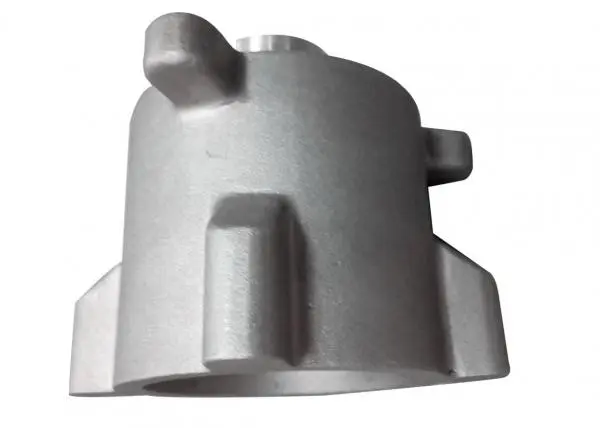
Understanding High Pressure Die Casting (HPDC)
High pressure die casting is a complex way to make things. Melting metal is poured into specially designed steel molds while being under a lot of pressure, usually between 1,500 and 30,000 psi. This method is great for making complicated, thin-walled parts with a great surface finish and precise measurements that meet the tight limits needed by modern businesses.
Materials and Applications in HPDC
Aluminum, zinc, and magnesium metals are often used in this method because they flow easily and have good mechanical qualities when molten. Aluminum alloys are mostly used in cars because they make engine blocks, transmission housings, and structural parts that are strong but not too heavy. Zinc alloys are better for keeping their shape in electronic housings and accurate hardware, while magnesium alloys are better for aircraft uses that need to keep weight as low as possible.
Production Advantages and Cycle Efficiency
HPDC has very fast production cycles that are good for making a lot of things. Depending on the complexity of the part, cycle times can be anywhere from 30 seconds to several minutes. Because it is so efficient, it works great in fields like electronics, consumer goods, and car that need to make a lot of products with uniform quality. Modern HPDC technology is fully automatic, so the same results can be achieved over and over with little help from an operator.
Quality Challenges and Control Measures
Even though it has benefits, problems like porosity formation and cold shuts mean that strict quality controls and best practices in design are needed. Porosity happens when trapped air or gases make holes in the casting, which could weaken its structure. When melted metal streams don't bond properly, weak spots form, which is called a cold shut. Real-time tracking and vacuum-assisted casting methods are two examples of advanced process control systems that help solve these problems and make sure that parts are always reliable and complete across production runs.
Overview of Forging Processes
Forging is very different from casting because it shapes metal by using controlled plastic distortion and compression forces. Forging is an old process that is always changing. It can be done in different ways, such as open-die forging for big, simple shapes, closed-die forging for precise geometries, and impression-die forging for complex shapes that need to be made to exact specs.
Material Properties and Strength Enhancement
Mostly steel and other high-strength metals are used in this method, and their grain structure is changed by controlled bending. The mechanical properties are greatly improved by this method, resulting in better tensile strength, fatigue resistance, and structural stability compared to cast options. Forging aligns the grains of metal, which makes it stronger in certain directions. This is important for making heavy-duty and safety-critical parts.
Process Variations and Applications
Open-die forging is best for making big parts like rings and shafts where the qualities of the metal are more important than their exact size. Closed-die forging makes parts with a near-net form and great accuracy in their dimensions. It is often used to make connecting rods for cars, parts for airplane landing gear, and valve bodies for factories. Which forging method to use relies on the shape of the part, the tolerances that need to be met, and the amount of output that is needed.
Production Considerations and Limitations
Forging is a great way to make strong parts with better mechanical qualities, but it usually takes longer and costs more to make the tools than high pressure die casting. It's harder to make complicated shapes with this method, especially ones with thin walls or lots of different features inside. Material loss can be big, especially in open-die operations. However, because of its near-net-shape production, closed-die forging makes this less of a problem.
Key Differences Between High Pressure Die Casting and Forging
The main operational differences between these ways of making things create clear pros and cons that affect choices about buying. By knowing about these differences, engineers and buying managers can choose the process that works best for each application and output need.
Process Mechanics and Material States
High pressure die casting uses molten metal injection at temperatures between 1,200°F and 1,400°F, which makes it possible to fill complicated mold holes very quickly, in just seconds. When you mix the high-pressure setting with quick solidification, you get parts with a smooth surface and accurate measurements. Forging, on the other hand, starts with solid metal being heated to forging temperatures, which for steel are usually between 2,000°F and 2,300°F. The metal is then shaped by pressing it down with hammers, presses, or other special forging tools.
Mechanical Performance and Structural Integrity
Forged parts have better mechanical qualities because the deformation process smooths out the grains and creates linear fiber flow. Tensile strength, resistance to impact, and wear life are usually 20% to 50% higher than those of cast parts, though this can vary by metal and use. Die-cast parts are strong enough for many uses, and the surface quality and uniformity of their dimensions are better right out of the mold.

Production Volume and Economic Considerations
When a lot of parts need to be made, die casting is the best method because the cost of the tools is spread out over thousands or millions of parts. Setup costs for HPDC tools can be anywhere from $50,000 to $500,000. The costs per part go down a lot as the number of parts made goes up. Forging tooling costs range from $10,000 for simple open-die processes to $200,000 for complicated closed-die setups. Forging usually breaks even at lower volumes than die casting.
Decision-Making Guide for Selecting HPDC or Forging in B2B Procurement
When procurement experts have to choose between manufacturing methods, they have to look at a lot of different factors that affect the total cost of ownership, the quality of the results, and the stability of the supply chain. Strategic selection factors help make sure that the best results are achieved in production while reducing risks and keeping a competitive edge.
Cost Analysis and Volume Considerations
To figure out the total cost, you have to look at the costs of tools, the costs of making each part, secondary activities, and quality-related costs. When making more than 5,000 to 10,000 pieces a year, high pressure die casting usually has lower per-part costs. Forging, on the other hand, may be cheaper when making fewer pieces or when maximum strength is needed. Take a look at how much material is used. Depending on the method, die casting is 85% to 95% efficient, while forging is only 60% to 80% efficient.
Quality Requirements and Performance Specifications
Choosing the right material is a key part of choosing the right process. For example, die casting works best for aluminum and zinc metals, while forging is more common for steel. Decisions are often based on the surface finish requirements, since die casting provides better cosmetic quality with fewer finishing processes. Because forged parts always have better strength and fatigue resistance, the mechanical property standards must match the process capabilities.
Supplier Selection and Partnership Criteria
To be successful, you need to choose suppliers with a good reputation and approved manufacturing skills. Look for ISO 9001 certification, industry-specific certifications like IATF 16949 for automotive uses, and clear tooling rules that spell out who owns the tools, who is responsible for upkeep, and how to make changes. Check the ability to make prototypes, the length of time it takes to make a product, and the flexibility of the minimum order number to make sure they meet your business needs and the needs of the market.

High Pressure Die Casting in Modern Manufacturing – Trends and Innovations
New technologies in high pressure die casting keep making it more productive, better at using energy, and better at making things. These technologies include better machinery designs, more advanced process control systems, and new ways to make tools. These changes make HPDC a production process that is ready for the future and can meet the needs of an industry that is becoming more and more demanding.
Technological Advancements and Automation
These days, die casting tools have servo-driven systems, real-time process tracking, and predictive maintenance features that make the process more consistent while cutting energy use by up to 30%. Vacuum-assisted die casting (VADC) technology gets rid of porosity problems by removing air from mold spaces before metal is injected. This lets die-cast parts be heated, which wasn't possible before because of the holes inside them.
Quality Control Integration and Standards Compliance
In-line checking, automatic dimensional verification, and statistical process control that finds trends before errors happen are now all part of integrated quality control systems. Manufacturers who follow international safety standards, like ISO 14001 for environmental management and ISO 45001 for workplace health, show they care about using sustainable and responsible methods to make things.
Emerging Applications and Market Expansion
As the need for strong, lightweight parts grows, the company is expanding into new areas like medical devices, advanced technology, and green energy. For electric vehicles, die casting is especially useful because it can make big structure parts like battery housings and motor cases that do more than one thing while making the vehicle easier to put together and lighter overall.
Conclusion
The choice between forging and high pressure die casting relies on the needs of the application, the amount of output, and the performance goals. Die casting is great for making a lot of complicated, thin-walled parts with a perfect finish and accurate measurements. It works especially well with aluminum, zinc, and magnesium metals. Forging gives better mechanical qualities and strength, which are needed for safety-critical uses, but it costs more per part and takes longer to make. To make good procurement choices, you need to carefully look at the total cost, quality standards, and supplier skills to get the best results for your manufacturing needs.
Partner with Rongbao Enterprise for Your High Pressure Die Casting Needs
You can trust Rongbao Enterprise as a high pressure die casting maker. They offer complete solutions that blend 20 years of experience in the field with the latest technology and strict international quality standards. We can do everything from high-pressure die casting to low-pressure die casting, gravity casting, and precision cutting. This means that we can work with a wide range of materials and meet your specific output needs. Our ISO 9001, ISO 14001, and ISO 45001 standards make sure that our management is uniform and that we follow all global rules. We serve clients in Europe, the United States, and Japan, with a focus on exports (70% of our business).
Our automated production centers and experienced engineering team offer complete manufacturing solutions, from improving designs to delivering finished goods. This helps procurement workers meet their quality, cost, and delivery goals. Get in touch with our team at steve.zhou@263.net or zhouyi@rongbaocasting.com to talk about your unique needs and find out how our track record can help your supply chain succeed.
FAQ
Can high pressure die casting replace forged components in all applications?
Due to basic changes in mechanical properties and material features, high pressure die casting cannot always be used instead of forging. Die casting gives you very accurate measurements and a smooth surface, but forged parts usually have 20% to 50% higher tensile strength, better wear resistance, and better impact hardness. Forging is the only way to get better mechanical properties for safety-critical uses in aircraft, heavy machinery, and high-stress car parts. This is done by refining the grains and directing the flow of fibers.
What are typical lead times for HPDC versus forging projects?
Lead times depend a lot on how complicated the part is, how many tools are needed, and how much is being made. For initial manufacturing and sample production, high pressure die casting usually takes 8 to 16 weeks. Once established, production processes range from 30 seconds to several minutes per part. Forging wait times for equipment development can be as long as 12 to 20 weeks. Depending on the size and complexity of the part, the cycle time for each part can be anywhere from minutes to hours. For well-known parts, high-volume HPDC production lets you get them made faster.
How do I select reliable suppliers for die casting projects?
To find trustworthy HPDC providers, you need to look at a number of factors, such as their certifications, professional skills, and services they provide. Look for certifications like ISO 9001 for quality management, industry-specific certifications like IATF 16949 for car uses, and clear cost models for tools. Check out the ability to make prototypes, the design's support for manufacturability, and the minimum order quantity's freedom. Ask for examples from companies that have worked on similar projects before and look at their quality control systems, track record of delivery, and ability to provide process documentation and material certifications.
References
1. Campbell, John. "Complete Casting Handbook: Metal Casting Processes, Metallurgy, Techniques and Design." Second Edition, Butterworth-Heinemann, 2015.
2. Altan, Taylan, and Gracious Ngaile. "Cold and Hot Forging: Fundamentals and Applications." ASM International Materials Park, 2005.
3. Vinarcik, Edward J. "High Integrity Die Casting Processes." John Wiley & Sons, 2003.
4. Groover, Mikell P. "Fundamentals of Modern Manufacturing: Materials, Processes, and Systems." Sixth Edition, John Wiley & Sons, 2016.
5. ASM International Handbook Committee. "ASM Handbook Volume 15: Casting." ASM International, 2008.
6. Lange, Kurt. "Handbook of Metal Forming." Society of Manufacturing Engineers, 1985.
Learn about our latest products and discounts through SMS or email