- English
- French
- German
- Portuguese
- Spanish
- Russian
- Japanese
- Korean
- Arabic
- Greek
- German
- Turkish
- Italian
- Danish
- Romanian
- Indonesian
- Czech
- Afrikaans
- Swedish
- Polish
- Basque
- Catalan
- Esperanto
- Hindi
- Lao
- Albanian
- Amharic
- Armenian
- Azerbaijani
- Belarusian
- Bengali
- Bosnian
- Bulgarian
- Cebuano
- Chichewa
- Corsican
- Croatian
- Dutch
- Estonian
- Filipino
- Finnish
- Frisian
- Galician
- Georgian
- Gujarati
- Haitian
- Hausa
- Hawaiian
- Hebrew
- Hmong
- Hungarian
- Icelandic
- Igbo
- Javanese
- Kannada
- Kazakh
- Khmer
- Kurdish
- Kyrgyz
- Latin
- Latvian
- Lithuanian
- Luxembou..
- Macedonian
- Malagasy
- Malay
- Malayalam
- Maltese
- Maori
- Marathi
- Mongolian
- Burmese
- Nepali
- Norwegian
- Pashto
- Persian
- Punjabi
- Serbian
- Sesotho
- Sinhala
- Slovak
- Slovenian
- Somali
- Samoan
- Scots Gaelic
- Shona
- Sindhi
- Sundanese
- Swahili
- Tajik
- Tamil
- Telugu
- Thai
- Ukrainian
- Urdu
- Uzbek
- Vietnamese
- Welsh
- Xhosa
- Yiddish
- Yoruba
- Zulu
What is the difference between a cast armor plate and a welded armor plate?
The difference between cast armor plates and welded armor plates starts on the shop floor. One route pours molten metal into a mold and takes out a monolithic component whose curvature and ribs the mold formed. The other cuts, forms and joins rolled plate until the assembly matches the drawing. That difference decides the grain structure, the hardness distribution and where the structure fails first.
Armor steel is a specification driven purchase. Wrought homogeneous armor plate is bought to MIL DTL 12560, and high hardness plate to MIL DTL 46100; both are rolled, quenched and tempered products with hardness bands written into the specification. This article is about the manufacturing logic of cast versus welded construction: where cast armor plates earn their place in a protection assembly, and where certified plate is the only purchase.
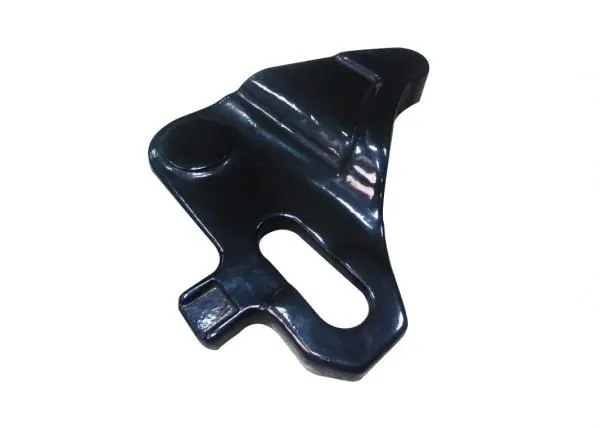
Process and Forming Mode: The Manufacturing Divide
The introduction framed the choice as a specification question, but the forming route comes first and fixes the material condition that every later inspection measures. A buyer comparing cast armor plates with fabricated assemblies is comparing two different starting points for the same drawing, and knowing what each route does to the metal makes the test reports easier to read.
Pouring a Monolithic Component in One Step
Cast armor plates begin as liquid metal poured into a mold carrying the negative of the finished geometry. The component solidifies as one piece: no joints, no splices, no fastener boundaries. The mold, not a press brake, creates the double curvature, internal ribs and integral bosses, which is why cast armor plates hold protective housings and enclosures that would otherwise be assembled from many formed sections.
The one armor adjacent family that is genuinely a cast product is austenitic manganese steel to ASTM A128/A128M-19, the work hardening steel of impact faces: its surface hardens under repeated impact while the core stays tough, and shapes such as crusher liners are cast because the alloy and the geometry belong together. ASTM A958/A958M-17 covers structural steel castings with tensile requirements and chemistry similar to wrought grades, so an engineer can order a casting against a familiar bar grade. Cast armor plates are not a substitute for certified plate; they are its monolithic complement.
Cutting, Forming and Joining Rolled Plate
A welded armor plate structure starts from quenched and tempered rolled plate that already carries the hardness its specification demands. Fabricators cut panels to shape, form them to curvature and weld them together, and each joint becomes a permanent metallurgical feature. The route has real strengths: plate is certified to the governing specification, thickness and grade can vary panel by panel, and a damaged panel can be replaced in service.
The price of that flexibility sits at the joints. Welding re heats the metal on both sides of the fused zone, and that heat affected zone is the hinge of the whole comparison. The table below places cast armor plates and welded assemblies side by side.
| Attribute | Cast construction | Welded construction |
|---|---|---|
| Forming route | Metal poured into a mold; cast armor plates take geometry from the cavity | Quenched and tempered rolled plate, cut and welded |
| Structural character | Monolithic; no weld seam in the component | Panel assembly; a heat affected zone beside every weld |
| Curvature and ribs | Formed by the mold, including internal ribs | Limited by bending; ribs welded on |
| Certified ballistic plate | Not a foundry product; bought as certified rolled plate | Plate certified to MIL DTL 12560 and MIL DTL 46100 |
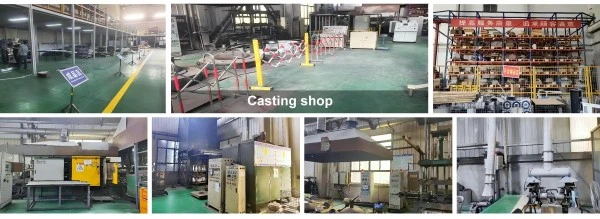
Structural Integrity: Seamless Strength vs. Weld Vulnerability
Section 1 established that the forming route fixes the material condition before anyone inspects it. Structural integrity is where that becomes measurable, because a structure is only as strong as its weakest zone, and welding is the deliberate creation of weak zones in sound metal; cast armor plates sidestep that burden at the source. Crouch and Hazell both treat armor performance as a property measured by test.
The Heat Affected Zone: Where Hardness Is Lost
Armor plate earns its ballistic performance through quenching and tempering, the microstructure to property chain Callister and Rethwisch set out. MIL DTL 46100 high hardness plate runs 477 to 534 HBW with tensile strength of at least 1,400 MPa, yield of at least 1,180 MPa and elongation of at least 8 percent; class 1 plate under MIL DTL 12560 sits around 340 to 390 HBW. Welding disturbs exactly that condition: beside each weld the metal is re heated and cools uncontrolled, or is over tempered, and either path drops the local hardness out of band. The hardness, and with it the ballistic performance, is lost next to the weld.
This is the mechanism that separates the two products. A welded armor structure carries a heat affected zone beside every joint, so the designer must place those zones where a strike is least likely and verify recovery with post weld hardness mapping. Cast armor plates have no weld seam: the component is monolithic, its heat treatment applies to the whole section at once, and soundness is proven by radiographic and surface inspection.
How Toughness Is Actually Measured
Hardness alone does not describe survival under shock; the standard method for the missing property is ASTM E23-23a, notched bar impact testing of metallic materials. A notched specimen is broken by a calibrated pendulum, and the absorbed energy is compared against the requirement. A buyer of cast armor plates or welded assemblies should ask for Charpy data at the lowest expected service temperature, and tensile results on the actual cast section to ASTM A958/A958M-17.
Both routes can pass these tests and both can fail them, which is the honest position. The cast route concentrates its risk in solidification defects that radiographic inspection catches; the welded route in heat affected zones that hardness mapping and weld procedure qualification catch. A supplier of cast armor plates who volunteers both records is one worth quoting.
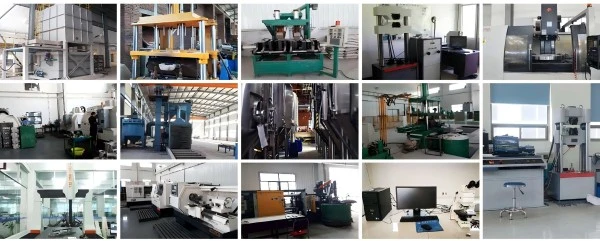
Adaptability and Design Freedom for Complex Shapes
The integrity argument assumed the component could be made in the required shape at all. Geometry is the third divider, because the shapes that cast armor plates form in one pour are exactly the shapes a rolling mill and a welding torch only approximate at the cost of many joints. Design freedom, not raw strength, usually decides the route on a real vehicle program.
Curvature, Internal Ribs and Features the Mold Forms in One Pour
Cast armor plates earn their design freedom where the geometry turns three dimensional. The mold forms in one pour what a fabricator must otherwise add as separate parts, each with its own joint and its own inspection. The features below are routine in a casting and expensive in a weldment:
- double curvature skins that would otherwise need many small formed plate sections
- internal ribs and gussets that stiffen without fasteners or welds
- integral mounting bosses that give clean machined interfaces to adjacent structure
- cored internal passages for wiring, fluids or ventilation
- section thickness that follows the load path, heavy where the case demands
Consolidation is the quiet advantage behind that list. A housing that arrives as one casting replaces an assembly carrying a weld or fastener at every feature boundary, and each eliminated joint removes one inspection point and one possible failure origin. That is also why cast armor plates shorten assembly time on the customer's line wherever geometry is complex.
Where Welded Construction Is the Better Answer
The welded route also wins clear cases. Large flat panels are cheaper cut from certified stock plate than cast, because tooling must be amortized where plate needs none; below a modest break even quantity, a fabricated shield beats any casting quote. When the requirement is certified ballistic plate itself, cast armor plates are the wrong answer: certified plate is a rolled, quenched and tempered product bought with mill certification to MIL DTL 12560 or MIL DTL 46100, not cast. The correct division of work is certified plate where the threat model demands it, cast components for the monolithic structures around it.
Conclusion
The difference between the two products reduces to one mechanism. A welded armor structure puts a heat affected zone next to every weld, and that zone is where hardness, and therefore ballistic performance, is lost; placing and verifying those zones is the fabricator's burden. Cast armor plates are monolithic, carry curvature and internal ribs a rolled plate cannot, and consolidate assemblies. The purchase logic follows: buy certified plate to the governing defense specification where the threat model demands it, and specify cast armor plates where complex geometry and structural protection govern instead.

FAQs
Can a casting foundry supply certified ballistic armor plate?
No. Certified plate is a wrought product, rolled and quenched and tempered, purchased to MIL DTL 12560 or MIL DTL 46100 with hardness, tensile and impact requirements in the specification. The honest scope for suppliers of cast armor plates is the monolithic housings, enclosures and vehicle structures around the plate, plus their machined interfaces.
How do buyers verify toughness instead of trusting a datasheet?
Ask for notched bar impact results to ASTM E23-23a at the lowest expected service temperature, not at room temperature only, plus tensile results on the actual section. For welded assemblies, add hardness mapping across representative welds. A supplier who produces these records unprompted is demonstrating a quality system rather than a marketing one.
Are cast armor plates more expensive than welded assemblies?
It depends on volume and geometry, not on a general rule. Tooling amortizes over the order quantity, so cast armor plates win once volumes rise or once the weldment they replace carries many joints and inspections. For a handful of flat panels, cutting and welding stock plate is cheaper and faster than any casting route.
Why is austenitic manganese steel the classic cast armor material?
Because it work hardens under impact. Cast armor plates in ASTM A128/A128M-19 austenitic manganese steel keep a tough core while the surface hardens each time it is struck, exactly the behavior wanted on an impact face. Shapes such as crusher liners are cast because the alloy and the geometry belong to the mold.
Cast Armor Plate Supplier: Rongbao Enterprise
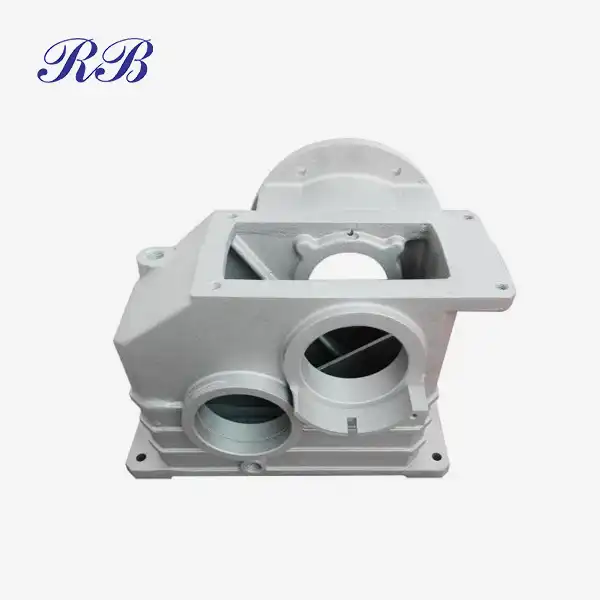
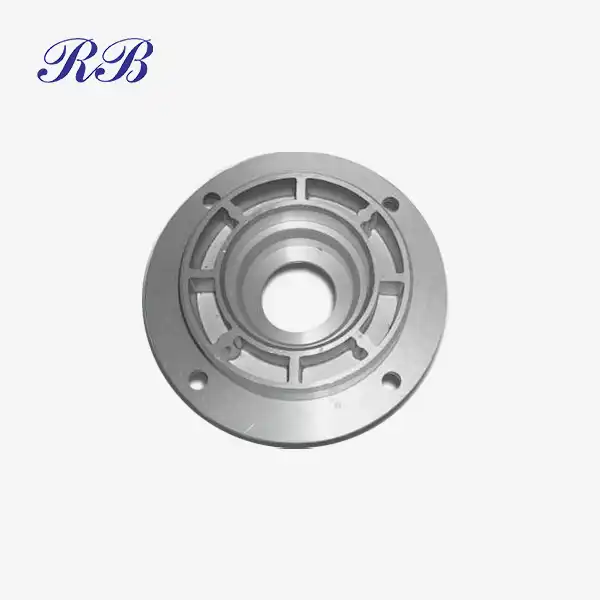
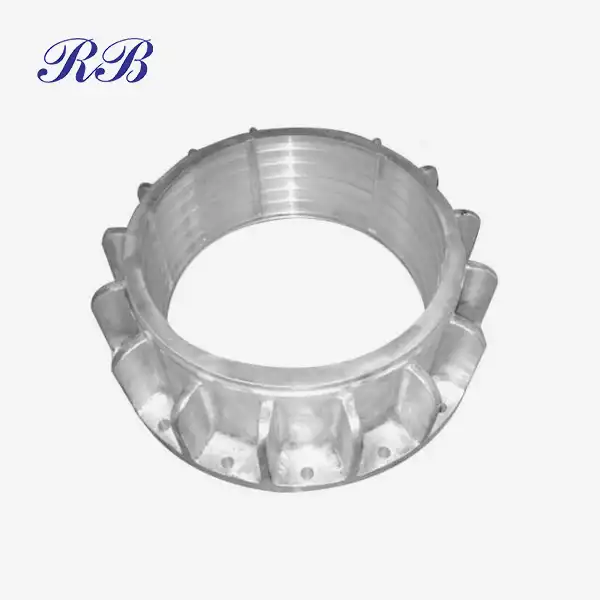
Rongbao Enterprise was founded in 2003 and casts and machines across over 6,000 square meters in Xi'an, China. We are an aluminum alloy foundry running high pressure die casting, low pressure die casting, gravity casting, precision CNC machining and shot blasting, registered to ISO 9001:2015, ISO 14001 and ISO 45001. To be direct about scope: certified ballistic plate is a rolled, quenched and tempered product bought to the governing defense specification, and we do not supply it. What we supply are the monolithic, curvature carrying and rib carrying cast components around it: protective housings, enclosures and vehicle structures, plus the machined interfaces that bolt to certified plate.
Send us the drawing or 3D model, the annual volume and the service environment. In return we provide a manufacturability review, a material and process recommendation and a written quotation. Email zhouyi@rongbaocasting.com or steve.zhou@263.net with your drawing and your annual volume.
References
- ASTM International. ASTM A128/A128M-19, Standard Specification for Steel Castings, Austenitic Manganese. ASTM International, 2019.
- ASTM International. ASTM E23-23a, Standard Test Methods for Notched Bar Impact Testing of Metallic Materials. ASTM International, 2023.
- ASTM International. ASTM A958/A958M-17, Standard Specification for Steel Castings, Carbon and Alloy, with Tensile Requirements, Chemical Requirements Similar to Standard Wrought Grades. ASTM International, 2017.
- Crouch, Ian G., editor. The Science of Armour Materials. Woodhead Publishing, 2016. ISBN 978-0-08-101002-0
- Hazell, Paul J. Armour: Materials, Theory, and Design. CRC Press, 2015. ISBN 978-1-4822-3830-3
- Callister, William D., and David G. Rethwisch. Materials Science and Engineering: An Introduction. Wiley, 2018. ISBN 978-1-119-40549-8
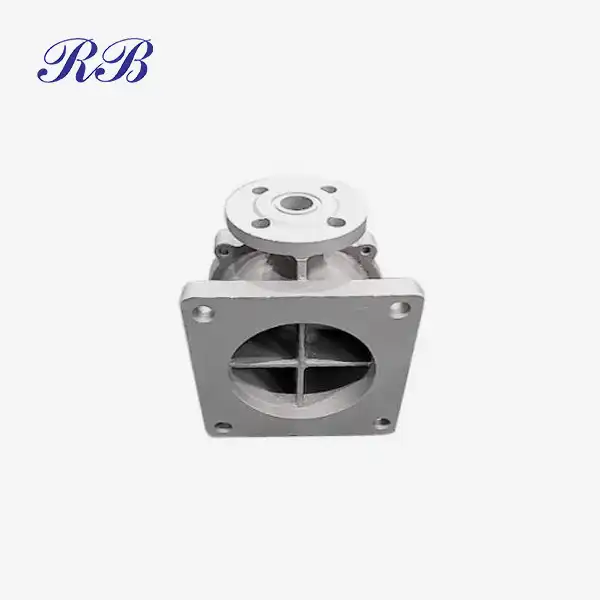
Learn about our latest products and discounts through SMS or email