- English
- French
- German
- Portuguese
- Spanish
- Russian
- Japanese
- Korean
- Arabic
- Greek
- German
- Turkish
- Italian
- Danish
- Romanian
- Indonesian
- Czech
- Afrikaans
- Swedish
- Polish
- Basque
- Catalan
- Esperanto
- Hindi
- Lao
- Albanian
- Amharic
- Armenian
- Azerbaijani
- Belarusian
- Bengali
- Bosnian
- Bulgarian
- Cebuano
- Chichewa
- Corsican
- Croatian
- Dutch
- Estonian
- Filipino
- Finnish
- Frisian
- Galician
- Georgian
- Gujarati
- Haitian
- Hausa
- Hawaiian
- Hebrew
- Hmong
- Hungarian
- Icelandic
- Igbo
- Javanese
- Kannada
- Kazakh
- Khmer
- Kurdish
- Kyrgyz
- Latin
- Latvian
- Lithuanian
- Luxembou..
- Macedonian
- Malagasy
- Malay
- Malayalam
- Maltese
- Maori
- Marathi
- Mongolian
- Burmese
- Nepali
- Norwegian
- Pashto
- Persian
- Punjabi
- Serbian
- Sesotho
- Sinhala
- Slovak
- Slovenian
- Somali
- Samoan
- Scots Gaelic
- Shona
- Sindhi
- Sundanese
- Swahili
- Tajik
- Tamil
- Telugu
- Thai
- Ukrainian
- Urdu
- Uzbek
- Vietnamese
- Welsh
- Xhosa
- Yiddish
- Yoruba
- Zulu
Technical parameters of casing engine bearings for water drop channel
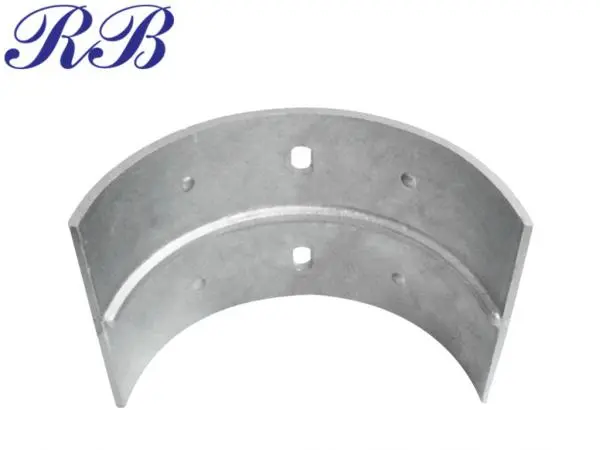
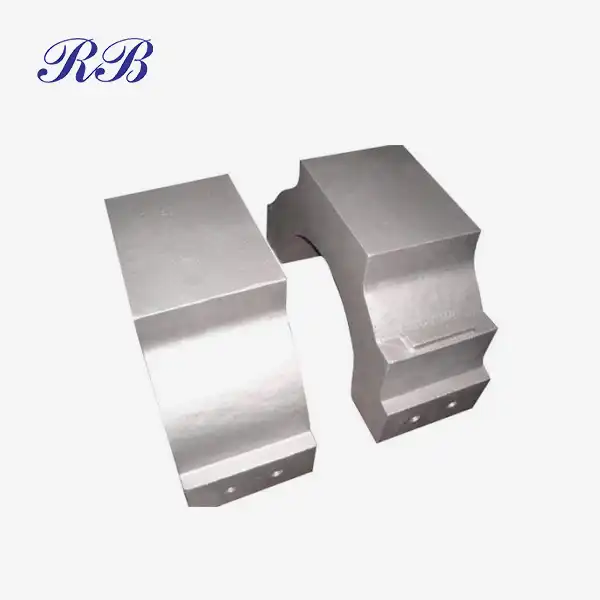
A casting engine bearing for a water drop channel is a single piece aluminum housing that carries a shaft or thrust collar inside a hydraulic structure such as a spillway gate or drop shaft. The casing sits in a water conveying structure where the engine bearing sees spray, splash, partial immersion, and often water as the working lubricant. The table below is the artefact this brief exists to deliver.
| Parameter | Value or condition | Source or governing standard |
|---|---|---|
| Material | ZL101A aluminum alloy, T6 temper | GB/T 1173-2013 (ZAlSi7MgA) |
| Density | 2.68 g/cm3 | GB/T 1173-2013 |
| T6 minimum tensile | 275 MPa (sand or shell), 295 MPa (permanent mould) | GB/T 1173-2013 |
| T6 minimum elongation | 2 percent (sand or shell), 3 percent (permanent mould) | GB/T 1173-2013 |
| T6 minimum Brinell | 80 HBW | GB/T 1173-2013 |
| Mould route | Sand or shell for complex casings, permanent mould above 200 pieces | ASTM B26/B26M-18, ASTM B108/B108M-19 |
| Machining allowance and bore tolerance | ISO 8062-3:2023 grade callout, 0.02 mm fine grade on bores | ISO 8062-3:2023 |
| Surface roughness | Ra 0.8 micrometers maximum on bearing seats | Project specification |
| Radiographic acceptance | ASTM E505-15 reference radiographs, severity on drawing | ASTM E505-15 |
| Operating temperature | minus 40 to plus 250 degrees Celsius | Project specification |
| Continuous immersion | Not recommended for bare aluminum without coating | Honesty clause, this article |
Material Excellence: The Foundation of ZL101A Aluminum Alloy Performance
The numbers above only make sense once the alloy is named. ZL101A is the Chinese designation for the cast aluminum family known internationally as A356.0. It sits in GB/T 1173-2013 under the code ZAlSi7MgA, the same AlSi7Mg family that ASTM B26/B26M-18 covers as A356.0. Chemistry is tight: Si 6.5 to 7.5 percent, Mg 0.25 to 0.45 percent, Ti 0.08 to 0.20 percent. Fe 0.20 max, Cu 0.10 max, Mn and Zn 0.10 max, Pb 0.03 max, Sn 0.05 max. The casting engine bearing weighs 2.68 g/cm3, about one third the weight of steel.
ZL101A T6 Temperatures for a Water Channel Casting Engine Bearing
T6 unlocks the strength buyers specify. In sand moulds, ZL101A T6 must reach 275 MPa tensile, 2 percent elongation, and 80 Brinell minimum. In permanent moulds the same chemistry rises to 295 MPa tensile and 3 percent elongation. The T6 schedule per GB/T 1173-2013 is solution treat at 535 plus or minus 5 degrees Celsius for 6 to 12 hours, water quench at 60 to 100 degrees Celsius, then age at 180 plus or minus 5 degrees Celsius for 3 to 8 hours and air cool. The 275 MPa figure sits above the ASTM B26/B26M-18 sand cast A356.0-T6 minimum of 234 MPa.
Where ZL101A Is the Wrong Choice
ZL101A is a strong answer for a casting engine bearing that sees spray, splash, wet and dry cycling, and water as a lubricant. It is the wrong answer in continuous immersion without a coating, and where the buyer needs a wear surface harder than 80 Brinell against abrasive silt. A buyer who needs a fully submerged, silt loaded housing should ask for a stainless or bronze housing, with the aluminum casting engine bearing used as structural support. A buyer who only needs splash resistance can stay with bare ZL101A.
Precision Manufacturing: From Sand Casting to CNC Machining Excellence
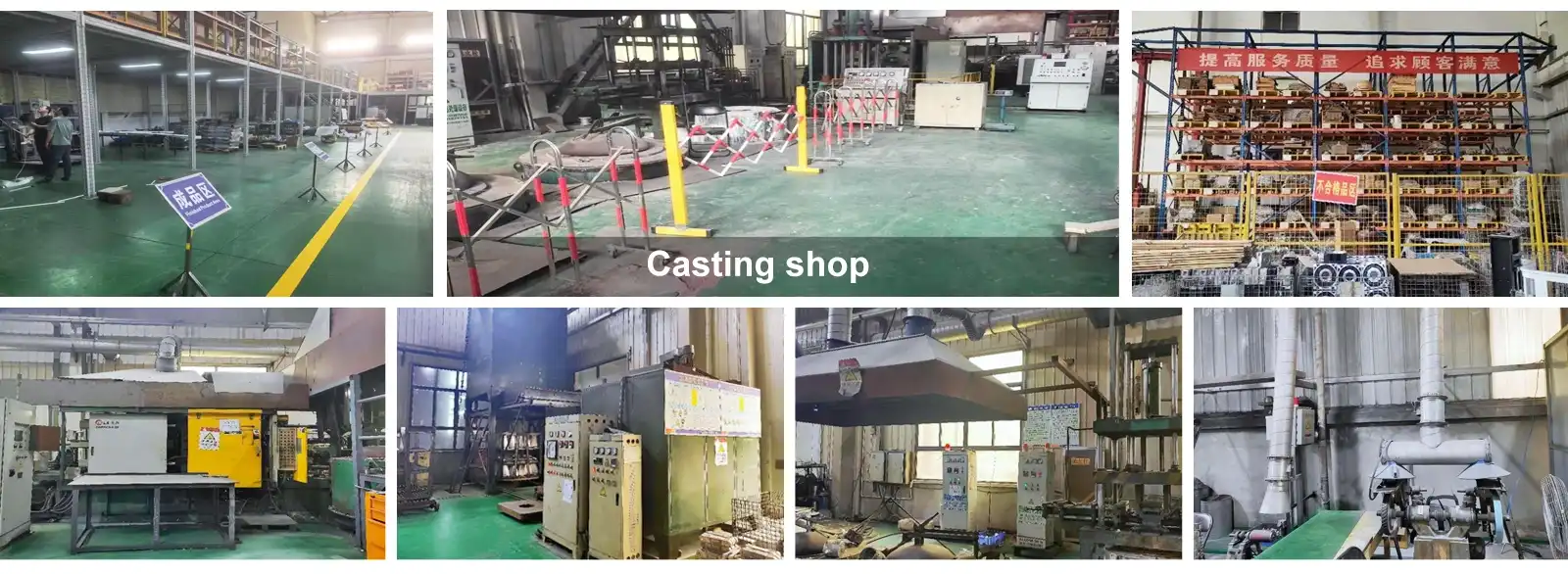
With the alloy and temper fixed, the next parameter block is the manufacturing route. The casting engine bearing has to pour cleanly, machine accurately, and inspect to a standard a hydraulic project engineer can sign off on.
- Name the mould standard: ASTM B26/B26M-18 for sand or ASTM B108/B108M-19 for permanent mould.
- Name the tolerance standard: ISO 8062-3:2023, with the grade spelled out per face.
- Name the inspection standard: ASTM E505-15 reference radiographs for internal soundness.
- Name the heat treatment standard: GB/T 1173-2013 T6 schedule.
- Name the surface finish: Ra 0.8 micrometers on bearing seats as the default.
Sand Casting or Permanent Mould for the Bearing Casing
Sand casting is the right starting point when the casting engine bearing is a one off or low volume prototype, when walls run thick above roughly 15 mm, or when internal passages turn through the body in three dimensions. ASTM B26/B26M-18 governs sand cast aluminum alloy products. For series production above roughly 200 pieces, permanent mould casting governed by ASTM B108/B108M-19 produces a denser grain, a thinner wall section, and a slightly higher tensile minimum. Both routes pour ZL101A in the same chemistry. The difference is the as cast soundness.
CNC Machining and Surface Finish
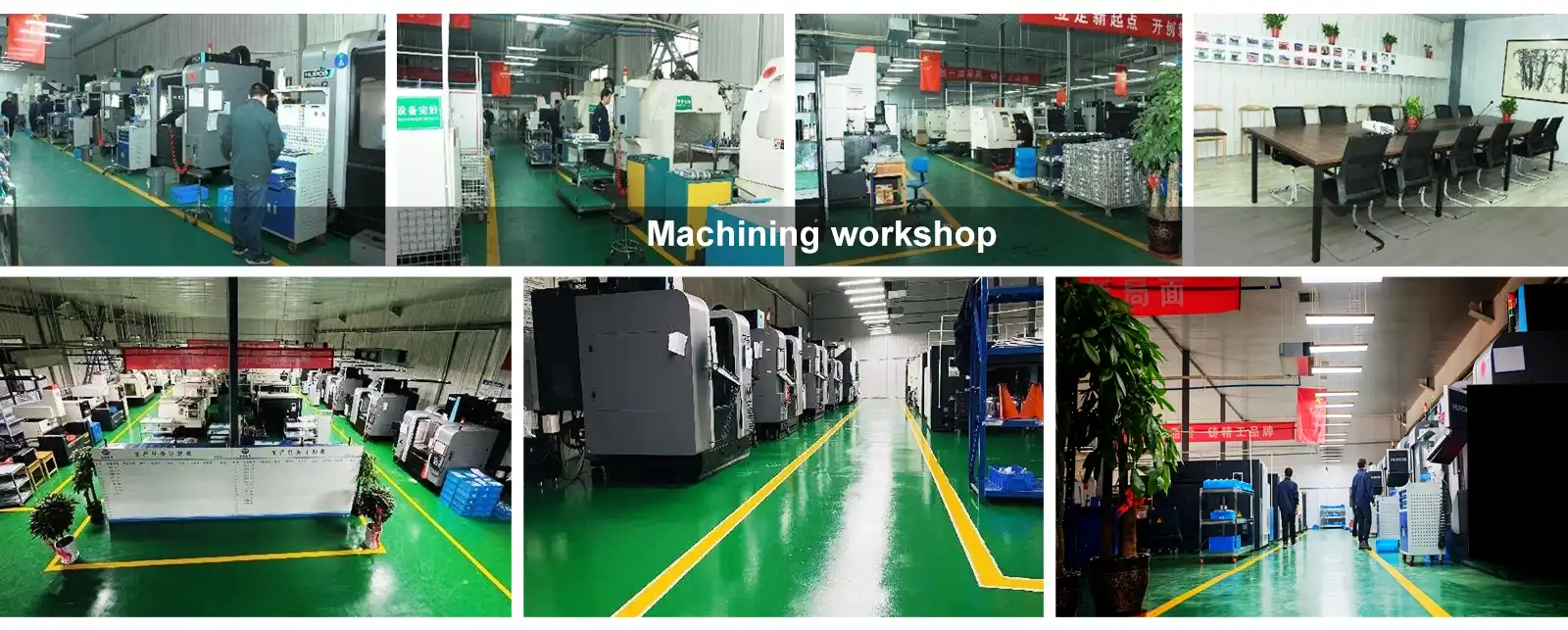
CNC machining takes the casting engine bearing from as cast geometry to fit interfaces. Bearing bores, seal grooves, and dowel holes are machined to the ISO 8062-3 fine grade. Mounting faces are milled flat to a parallelism the bolt pattern can preload. Surface roughness on bearing seats is held to Ra 0.8 micrometers or finer. ISO 8062-3:2023 quantifies how much stock the casting carries into the CNC cell.
Performance Specifications: Meeting Critical Operating Requirements
The third parameter block is the operating envelope. The casting engine bearing has to carry load, hold geometry across temperature, and resist corrosion.
Load Capacity Across Radial and Axial Paths
Load is split between radial load from shaft weight and hydraulic thrust, and axial load from the same thrust along the shaft axis. In a standard aluminum casting engine bearing the radial capacity sits in the 50 to 300 N/mm2 band, axial load at a maximum of 50 N/mm2. Where the load case pushes past the standard aluminum envelope, a bimetallic construction with a steel backing and an aluminum tin bearing layer pushes the radial capacity into the 150 to 250 N/mm2 band. The bimetallic route adds a joint that has to be metallurgically bonded, so it is reserved for documented load cases.
Temperature Range and Water as the Lubricant
The operating temperature window runs from minus 40 to plus 250 degrees Celsius. The lower end covers cold climate spillway installations. The upper end covers friction heating during gate closure. ZL101A in T6 holds mechanical properties across that range. A water lubricated PV value sits above 10 N/mm2 times meters per second, clearing the boundary between boundary and mixed lubrication. Water removes the oil contamination risk from grease or oil.
Inspection Chain and Corrosion Envelope
The inspection chain is the part of the parameter block the original never named. ASTM E505-15 reference radiographs are the acceptance picture set for an aluminum or magnesium casting, and the right reference when internal soundness matters on a casting engine bearing. For surface breaking defects the chain runs through ASTM E165/E165M, and for tensile testing through ASTM B557. The drawing names acceptance criteria, sampling frequency, and lot definition. Neutral salt spray testing to ASTM B117 is the corrosion workhorse, with 1,200 hours the typical floor. The pH window runs 3 to 11 for natural water.
Conclusion
The conclusion is that a casting engine bearing for a water drop channel is parameter driven, not a generic aluminum bracket. The alloy is ZL101A under GB/T 1173-2013, the mould route is sand or permanent mould per ASTM B26/B26M-18 or ASTM B108/B108M-19, the machining is sized to ISO 8062-3:2023, and the inspection chain runs through ASTM E505-15. The honesty clause sits inside the envelope: bare ZL101A is right for spray, splash, and water lubricated service, and wrong for continuous immersion without a coating or abrasive silt. A casting engine bearing ordered against these parameters will arrive with the right alloy, temper, tolerances, and inspection evidence.

FAQs
What is the difference between ZL101A and A356.0 for a casting engine bearing?
ZL101A and A356.0 are the same AlSi7Mg cast aluminum family under two different national standards. ZL101A is the designation in GB/T 1173-2013, and A356.0 is the designation in ASTM B26/B26M-18. The published tensile minimums differ only because the separately cast test bar is poured by a different mould process in each standard.
Why is ISO 8062-3:2023 referenced on the drawing?
ISO 8062-3:2023 sets the general dimensional and geometrical tolerance grade and the machining allowance grade for a casting. Naming a grade on the drawing tells the foundry how much stock to leave on the casting engine bearing.
What does ASTM E505-15 do in the inspection chain?
ASTM E505-15 is the reference radiograph set used to judge a radiograph of an aluminum or magnesium casting. The standard supplies the severity levels the inspector compares a production radiograph against. Naming ASTM E505-15 on the drawing fixes the acceptance picture set so the foundry and the buyer look at the same severity levels on the casting engine bearing.
When is bare ZL101A the wrong material for a casting engine bearing in a water drop channel?
Bare ZL101A is the wrong material in continuous immersion in untreated or chemically aggressive water without a coating, and where the bearing surface has to be harder than roughly 80 Brinell against abrasive silt. In both cases the right answer is a coating on the ZL101A casing or a different alloy class.
What T6 cycle do you actually run on a ZL101A casting engine bearing?
The GB/T 1173-2013 T6 schedule is solution treat at 535 plus or minus 5 degrees Celsius for 6 to 12 hours, quench in water held between 60 and 100 degrees Celsius, then age at 180 plus or minus 5 degrees Celsius for 3 to 8 hours and air cool. Water too cold drives residual stress, water too hot fails to capture the supersaturated solid solution the aging step depends on.
Casing Engine Bearing Supplier: Rongbao Enterprise
We are Rongbao Enterprise, an aluminum casting and precision machining supplier founded in 2003 in Xi'an, China. Our facility on Fengwu East Road in the Fengjing Industrial Park covers more than 6,000 square meters and houses high pressure die casting, low pressure die casting, gravity casting, precision CNC machining, and shot blasting under ISO 9001:2015, ISO 14001, and ISO 45001. We ship about seventy percent of output to the United States, Europe, Japan, and other markets, and routinely cast ZL101A per GB/T 1173-2013. Our machining cell works to ISO 8062-3:2023 and we run radiographic acceptance per ASTM E505-15 on request.
Send us your drawing or 3D model plus your annual volume and the service environment the casting engine bearing will sit in, and we will return a manufacturability review, a material and process recommendation, and a quotation. For parts that need a hardness above the ZL101A envelope, for parts in continuous immersion without a coating, or for parts that call for a forged or stainless housing, we will say so on the first reply. Email zhouyi@rongbaocasting.com or steve.zhou@263.net with your drawing and your annual volume.
References
- ASTM International. ASTM B26/B26M-18, Standard Specification for Aluminum Alloy Sand Castings. ASTM International, 2018.
- ASTM International. ASTM B108/B108M-19, Standard Specification for Aluminum Alloy Permanent Mold Castings. ASTM International, 2019.
- International Organization for Standardization. ISO 8062-3:2023, Geometrical Product Specifications (GPS): Dimensional and Geometrical Tolerances for Moulded Parts, Part 3: General Dimensional and Geometrical Tolerances and Machining Allowances for Castings. ISO, 2023.
- ASTM International. ASTM E505-15, Standard Reference Radiographs for Inspection of Aluminum and Magnesium Die Castings. ASTM International, 2015.
- Kaufman, J. Gilbert, and Elwin L. Rooy. Aluminum Alloy Castings: Properties, Processes, and Applications. ASM International, 2004. ISBN 978-0-87170-803-8
- Davis, Joseph R., editor. Aluminum and Aluminum Alloys, ASM Specialty Handbook. ASM International, 1993. ISBN 978-0-87170-496-2
_1750923522843.webp)
Learn about our latest products and discounts through SMS or email