- English
- French
- German
- Portuguese
- Spanish
- Russian
- Japanese
- Korean
- Arabic
- Greek
- German
- Turkish
- Italian
- Danish
- Romanian
- Indonesian
- Czech
- Afrikaans
- Swedish
- Polish
- Basque
- Catalan
- Esperanto
- Hindi
- Lao
- Albanian
- Amharic
- Armenian
- Azerbaijani
- Belarusian
- Bengali
- Bosnian
- Bulgarian
- Cebuano
- Chichewa
- Corsican
- Croatian
- Dutch
- Estonian
- Filipino
- Finnish
- Frisian
- Galician
- Georgian
- Gujarati
- Haitian
- Hausa
- Hawaiian
- Hebrew
- Hmong
- Hungarian
- Icelandic
- Igbo
- Javanese
- Kannada
- Kazakh
- Khmer
- Kurdish
- Kyrgyz
- Latin
- Latvian
- Lithuanian
- Luxembou..
- Macedonian
- Malagasy
- Malay
- Malayalam
- Maltese
- Maori
- Marathi
- Mongolian
- Burmese
- Nepali
- Norwegian
- Pashto
- Persian
- Punjabi
- Serbian
- Sesotho
- Sinhala
- Slovak
- Slovenian
- Somali
- Samoan
- Scots Gaelic
- Shona
- Sindhi
- Sundanese
- Swahili
- Tajik
- Tamil
- Telugu
- Thai
- Ukrainian
- Urdu
- Uzbek
- Vietnamese
- Welsh
- Xhosa
- Yiddish
- Yoruba
- Zulu
What is the best material for a gearbox housing?
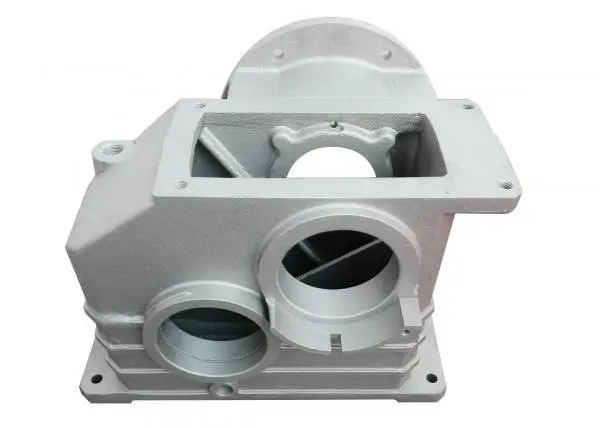
Choosing the right material for a gearbox housing requires more than comparing strength or weight. The housing supports the shafts and bearings, maintains the gears in line, retains lubricant, and helps control the heat and vibration generated during operation. As such the material must meet the mechanical requirements of the gearbox, environmental conditions in which it operates, the production process and the required service life. Aluminum alloys are frequently a suitable choice for low weight and good heat dissipation . Cast iron is still wanted for heavy duty machinery where vibration dampening and structural stiffness are of relevance. Steel is suitable for designs subjected to extreme loadings, impact and/or strict production constraints. Each solution has its own limitations and the optimum choice is dependent upon the actual use of the gearbox. Choosing materials for manufacturers of industrial motors, automotive parts, agricultural equipment or fire pump equipment, the choices should be based on what they need to do, not what they desire. Engineers need to understand the differences between the prevalent materials to balance performance, manufacturability and total cost.
What Should Engineers Consider Before Selecting a Housing Material?
Mechanical Loads and Structural Stability
The housing of the gearbox must be sturdy enough to carry the forces imparted by the gears, shafts, and bearings. It must also be rigid enough to keep crucial components aligned under operational loads. Excessive deformation causes reduced gear contact, higher noise levels, increased wear, and shortened bearing life.
The mechanical properties required are dependent on the torque applied to the gearbox, the gear arrangement, the location of the bearings, the design of the mounting, and the duty cycle. Aluminum can be used successfully for a small gearbox under moderate loading. Whereas, a large industrial gearbox, which is to be subjected to significant torques and stress loads, may best be supported by a cast iron or fabricated steel frame.
The housing should be regarded as a whole unit and not by the stated strength of the material. Structural performance is affected by wall thickness, internal ribs, filets, mounting bosses, and bearing-seat shape. Finite element analysis can be utilized to determine stress concentrations and high deformation prior to the final tooling.
Weight, Thermal Performance, and Vibration
Weight is critical for mobile machinery, robotics, equipment, and vehicle gearboxes, where handling and installation expenses are significant. Aluminum alloys are typically good for big weight savings over cast iron or steel and so favorable where overall equipment mass is important.
Another problem is the heat conductivity. When in use, gears and bearings get hot. Aluminum alloys frequently transmit heat better than the conventional cast irons and hence can help to conduct heat out through the housing walls. But the real temperature of the gearbox depends also on the lubricant used, the speed, the internal losses, the air flow for cooling, the surface area, and the operating conditions. The material alone does not dictate the decline in oil temperature at any given point.
The vibration behavior can indicate another manner to the engineers. Gray cast iron contains a microstructure of graphite that gives it useful vibration dampening qualities. This may help to limit the propagation of vibration through machine construction. Aluminum is also good, but its lower natural damping may require carefully designed structures, suitable mounting arrangements, and/or additional noise reduction measures.
Corrosion Resistance and Service Environment
The choice of material depends on the operating conditions of the product during its service life. Outdoor gear boxes located near water, coastal facilities, and industrial environments might be subject to moisture, salt, cleaning chemicals, or other corrosive elements.
Aluminum forms a protective oxide film by nature, but its susceptibility to corrosion is dependent upon the alloy, conditions of exposure, and contact with other materials. When aluminum is electrically linked to a more noble metal in the presence of an electrolyte, galvanic corrosion of the aluminum will occur. This may include proper coatings, insulation measures, and drainage design.
Normally cast iron will require protective coatings when exposed to humidity. A corrosion control strategy is also essential unless a corrosion-resistant grade of steel is used. Stainless steel can be justified in especially demanding conditions, but the cost and machining demands can make it less suitable for normal gearbox housings.
Aluminum Alloys for Lightweight Gearbox Designs
Why Is Cast Aluminum a Popular Option?
The research of aluminum alloys is very intense for applications where low mass, good heat dissipation, and advanced geometry of the components are crucial. A properly designed aluminum gearbox housing can be manufactured as a single casting with mounting features, ribs, bearing supports, inspection covers, and cooling surfaces, thus decreasing the number of separate parts.
The lighter completed machine since aluminum is less dense and larger housings are easier to handle. These advantages are of great importance in car systems, mobile equipment, industrial automation, and compact power transmission devices.
But aluminum should be the last choice due to its weight. The housing shall be sufficiently stiff to resist loads. Designers need to consider thread strength, local bearing loads, fatigue, wear at the mounting surfaces, and temperature effects. In some cases, steel inserts or reinforced mounting features can be appropriate.
Choosing an Appropriate Aluminum Alloy
A380 die-casting aluminum alloy is one of the most used aluminum alloys for die-casting parts with good castability, dimensional stability, and a fair balance of mechanical qualities. It is capable of filling complex dies and is suitable for a wide range of thin-walled housings and objects with integral structural features.
Depending on the design requirements and the casting process, other aluminum alloys may be more acceptable. For example, A356 is popular in sand and permanent-mold casting because its mechanical characteristics and heat treatability are favorable. In fact, the applicability of an alloy depends upon the qualities required, the quality of the casting, the specification, and the mode of manufacture.
Engineers must compare the material data with the technical data sheet of the supplier and the applicable standard. The strength numbers are not interchangeable between alloys, casting processes, and environments. For example, the qualities of a finished casting may be different from those reported for test specimens created separately.
Selecting the Right Aluminum Casting Process
Sand casting is a suitable alternative for prototypes, big parts, and applications where flexibility with geometry or less expensive initial equipment expenses are essential. This allows the engineer to build large housings without the costly initial investment in manufacturing dies. Depending on the design and quality of the casting, it may be necessary to process the bearing seats, mating surfaces, and mounting interfaces if you want to achieve a closer tolerance than possible by casting alone.
High pressure die casting is usually utilized for very high production quantities and particularly complex items. Once the tool and procedure are established, it can offer uniform dimensions, good surface quality, and rapid cycle times. However, the process selection must take into account tooling expenditure, the size of the item, alloy needs, and worries of internal porosity.
If a project needs to trade off tooling cost, manufacturing volume, and casting quality, permanent-mold casting may be the answer. There is no single method that is best for all aluminum housings. Manufacturers should consider part shape, mechanical requirements, annual demand, and downstream machining before selecting a manufacturing path.
Surface finish may be shot blasted, painted, powder coated, or other suitable treatment for the alloy and service environment. An alternative is anodizing, but this should be examined for the particular alloy, casting quality, and desired finish.
Steel Housings for High Loads and Demanding Applications
Fabricated Steel for Structural Flexibility
In particular, steel is well suited when a gearbox housing has to bear strong mechanical stresses or impacts or when the design is more suitable for fabrication than casting. Big housings comprising structural members and welded plates can be cast without complicated designs or dies.
This is an excellent choice for heavy industrial gear, huge drive systems, and specialist equipment produced in relatively small quantities. The thickness of the plates can be varied. You can place some reinforcement in there. Design can be adjusted to suit specific mounting or loading conditions. Depending on the application, localized machining can offer accurate bearing supports and mating surfaces.
However, it is necessary to pay attention to control the deformation, residual stress, and dimensional accuracy of the produced steel housing. Welding may require the machining of bearing bores and important alignment surfaces. Inspection protocols shall define requirements for weld quality and structural integrity based on appropriate design and service criteria.
Steel is also heavier than aluminum; therefore, a built home will usually be heavier than an equivalent aluminum structure. It is best justified for applications where structural capacity, manufacturing flexibility, or service conditions are more important than the benefits of decreased mass.
Stainless Steel for Corrosive Environments
If corrosion resistance is a big concern, you might want to choose stainless steel, particularly for equipment that is exposed to dampness, certain chemicals, or marine conditions. The grade of stainless steel required is determined by the particular environment, as different grades of stainless steel vary in their resistance to pitting, crevice corrosion, and other types of degradation.
Stainless steel does not remove the requirement for engineering evaluation. Considerations include material cost, machinability, weldability, performance under thermal stresses, and compatibility with other components. Using an adequately protected cast aluminum or cast iron housing for many vintage gearboxes can be a cheaper solution.
Thus, selection of materials should be based on the actual corrosion exposure and maintenance requirements rather than assuming stainless steel is a must.
How Magnesium and Composite Materials Compare?
Magnesium alloys can reduce weight more than aluminum, and weight is the key design restriction in some applications. Their use calls for careful consideration of alloy selection, corrosion protection, production controls, and fire-related considerations during machining and processing, suitable for specialist mobility, aerospace, or performance equipment.
Magnesium is not a direct substitute for aluminum. The application depends on the operating temperature, the mechanical loads, the environmental exposure, the rules applicable, and the producer’s capacity to control the production process.
Composite materials such as fiber-reinforced polymers can also offer weight reductions and helpful stiffness properties. They do, however, differ in behavior from ordinary metallic castings. Engineers must examine the direction of load, impact resistance, temperature restrictions, methods of connection, dimensional stability, and compatibility with lubricants and seals.
For most standard industrial gearbox applications, the most traditional materials are cast iron, aluminum alloys, and steel. The ideal application of magnesium and composites is where the extra issues of material, processing, or validation are justified by a clear design need.
Matching Housing Materials to Real Applications
The ideal method of selecting material for a gearbox housing is to correlate the material attributes with the operating circumstances of the device. Aluminum is attractive for lightweight automotive and robotic systems because of its reduced mass and ability to form complicated integrated designs. However, the final choice is still dependent on load path, fatigue requirements, production volume, and dimension stability.
Gray cast iron is often used for stationary industrial motors and machine tools due to its vibration damping, casting flexibility, and machining properties. If improved tensile strength and ductility are needed, ductile iron could be a better balanced choice. The flexibility and strength of fabricated steel can be used to build rugged equipment that will be subjected to harsh structural loads.
Agricultural machinery and fire pump equipment need to be inspected more thoroughly. The choice is determined by factors such as exposure to moisture, operating cycles, engine or motor torque, mounting loads, maintenance procedures, and the specifications of the equipment to be used. Lightweight housing can be faster to build, but you still need structural strength and accurate alignment.
These are starting points, not fixed laws. Two gearboxes in the same business may need different materials since they have varied torque ratings, sizes, production volumes, and working circumstances. The acceptance requirements should be in the design specification before the material and manufacturing process selection.
Manufacturing Quality Matters as Much as Material Selection
Casting Design and Dimensional Accuracy
Good material cannot make up for bad design or bad casting. Check wall thickness for excessive thickness but sufficient stiffness and structural strength. Load paths should follow ribs, filets, and transitions. Sudden shifts that can produce stress concentrations or casting issues should be eliminated.
Prior to releasing the production tooling, foundry engineers should assess the filling behavior, solidification, shrinkage concerns, and positioning of important features. Depending on components and needs, simulation and trial castings might help to uncover potential problems before they influence bigger production runs.
Machining is also necessary, as bearing seats, shaft openings, sealing surfaces, and mounting interfaces often demand tighter tolerances than can be achieved from the as-cast surfaces. The parameters controlled in finish machining and the parameters regulated in casting will be dictated by the manufacturing strategy.
Inspection and Supplier Evaluation
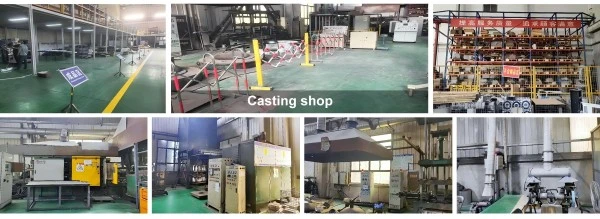
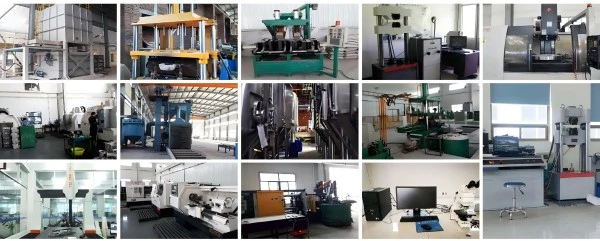
If you are looking for a gearbox housing, do not just look at the advertised material grade and unit pricing. Considerations include supplier casting experience, process controls, machining capability, inspection equipment, traceability systems, and the ability to maintain consistent quality throughout production batches.
Inspection criteria should be consistent with the component’s function. It may be necessary to verify the bearing locations and mounting interfaces. Surface flaws may be found by visual inspection. Depending on the design application and requirements, extra non-destructive testing or leak testing may be necessary.
Material certification inspection reports and traceability records must be part of pre-production agreements. Acceptability standards should be established on the basis of engineering requirements rather than informal supplier judgment when a housing is to be operated under significant loads or is required to contain lubricant under pressure.
And the prototype has to be validated as well. The sample housing can be examined for fit, alignment, quality of machining, and assembly compatibility before the design goes into serial production. Functional or endurance testing may also be performed if necessary to provide extra confidence that the complete gearbox is capable of meeting the intended operating conditions.
Total Cost Across the Product Lifecycle
The lowest material price is not usually the lowest total cost. All of these elements—tooling, casting yield, machining time, finishing, inspection, assembly, transportation, maintenance, and estimated service life—influence the final economics.
If you are making a part in limited numbers, sand casting or fabrication may be less expensive, since the tooling cost to start the process is modest. If you are doing huge volumes, you may find a die casting approach to be advantageous since the cycle time and reproducibility can outweigh the cost of the tooling. These comparisons should be made at actual production volumes and should include any additional machining or finishing required to satisfy the drawing.
The supplier should be able to explain the suggested method, its restrictions, and the quality controls connected to the component. Involvement of the design team and manufacturer at an early stage can help identify opportunities to simplify shape, improve castability, and minimize superfluous machining and costly revisions after tooling.
Conclusion
Best material for a gearbox housing depends on the tradeoff between mechanical loads, weight, thermal performance, vibration damping, corrosion resistance, manufacturing constraints and overall lifespan cost. Lightweight designs and complicated castings can serve aluminum alloys well. Gray cast iron has useful dampening qualities for industrial machinery. Ductile iron offers a more robust and more ductile alternative and steel continues to be the material of choice for substantially loaded or manufactured constructions.
A rigorous selection procedure starts with explicit engineering criteria and goes through the examination of the casting process, machining, inspection and prototype validation. Rather than relying on a single material attribute, engineers and purchasing teams can look at the entire application when selecting a gearbox housing to satisfy performance goals, as well as be manufacturable and maintainable.
FAQ
1: Is aluminum strong enough for heavy-duty gearbox housings?
Modern alloys like A380 exceed requirements in most cases. Proper design with ribs and gussets handles high torque safely. Automotive trucks prove this daily.
2: Why do some manufacturers still choose cast iron?
Vibration damping and low cost win in stationary equipment. Machine tools need the quietest operation possible. Iron delivers both perfectly.
3: Does aluminum gearbox housing corrode in wet environments?
Natural oxide layer prevents corrosion completely. Fire pumps work near water for decades without issues. Coatings add extra protection when needed.
4: Which material dissipates heat fastest?
Aluminum wins easily. Conductivity triple that of iron keeps oil temperatures lower. This extends seal and bearing life significantly.
Gearbox Housing Supplier: Rongbao Enterprise
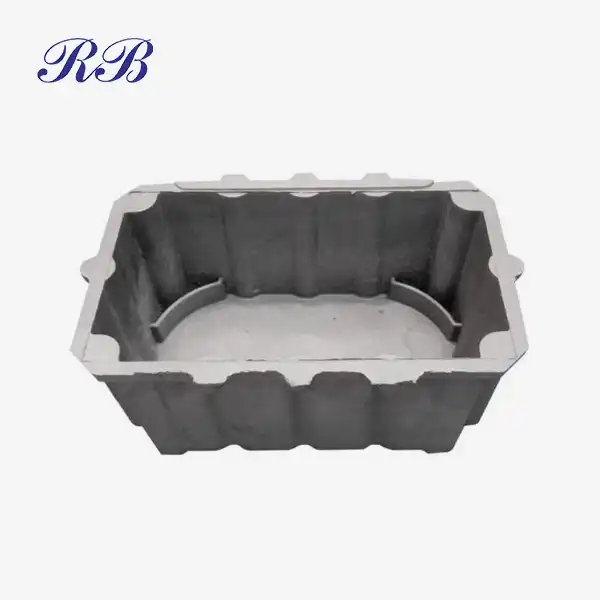
Rongbao Enterprise delivers premium aluminum gearbox housings from Xi'an, China. We specialize in fire pump reduction housings built for emergency reliability. Every piece uses A380 aluminum alloy chosen for perfect casting properties.
Our housings weigh just 14.8kg thanks to smart design. Sand casting creates complex internal passages flawlessly. CNC machining achieves precision tolerances throughout. Shot blasting prepares surfaces perfectly for any coating.
Wooden box packaging ensures safe arrival worldwide. We maintain ISO9001:2015, ISO14001, and ISO45001 certifications. These prove our commitment to quality and environment.
Annual capacity reaches 5000 pieces ready for your schedule. Full customization handles unique specifications. OEM/ODM partners trust our engineering team completely.
Experience matters in casting. Decades perfecting aluminum processes guarantee success. Fire departments depend on our housings during crises.
Contact us today for quotes. Email Steve Zhou at steve.zhou@263.net or Zhou Yi at zhouyi@rongbaocasting.com. Fast responses and competitive pricing await. Choose Rongbao Enterprise for gearbox housing that never fail when seconds count.
References
- Groschopp. "Gearmotor Selection: Gearbox Reducer Housing Materials."
- Wikipedia contributors. "Gear housing." Wikipedia, The Free Encyclopedia.
- Superior Gearbox. "Why Aluminum Housings Are a Better Choice Because of Heat Dissipation."
- Doncen Motor. "What is a Gearbox Housing (Gearbox Casing)."
- Konic Gearbox. "Choosing the Material for a Industrial Gearbox: Factors to Consider."
- Exxelmet. "Benefits of Cast Iron Gearbox Housing."
Learn about our latest products and discounts through SMS or email