- English
- French
- German
- Portuguese
- Spanish
- Russian
- Japanese
- Korean
- Arabic
- Greek
- German
- Turkish
- Italian
- Danish
- Romanian
- Indonesian
- Czech
- Afrikaans
- Swedish
- Polish
- Basque
- Catalan
- Esperanto
- Hindi
- Lao
- Albanian
- Amharic
- Armenian
- Azerbaijani
- Belarusian
- Bengali
- Bosnian
- Bulgarian
- Cebuano
- Chichewa
- Corsican
- Croatian
- Dutch
- Estonian
- Filipino
- Finnish
- Frisian
- Galician
- Georgian
- Gujarati
- Haitian
- Hausa
- Hawaiian
- Hebrew
- Hmong
- Hungarian
- Icelandic
- Igbo
- Javanese
- Kannada
- Kazakh
- Khmer
- Kurdish
- Kyrgyz
- Latin
- Latvian
- Lithuanian
- Luxembou..
- Macedonian
- Malagasy
- Malay
- Malayalam
- Maltese
- Maori
- Marathi
- Mongolian
- Burmese
- Nepali
- Norwegian
- Pashto
- Persian
- Punjabi
- Serbian
- Sesotho
- Sinhala
- Slovak
- Slovenian
- Somali
- Samoan
- Scots Gaelic
- Shona
- Sindhi
- Sundanese
- Swahili
- Tajik
- Tamil
- Telugu
- Thai
- Ukrainian
- Urdu
- Uzbek
- Vietnamese
- Welsh
- Xhosa
- Yiddish
- Yoruba
- Zulu
What grade of cast iron for the bearing cap?
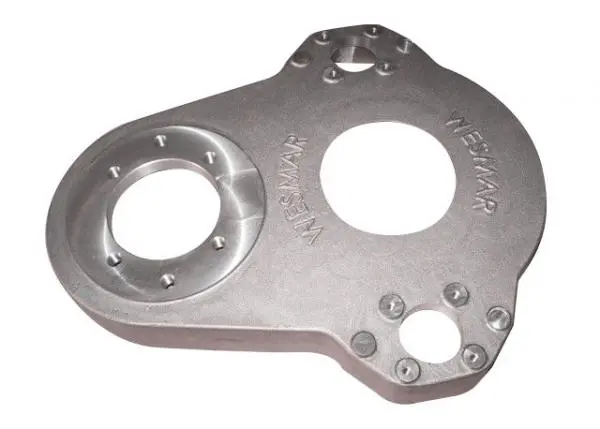
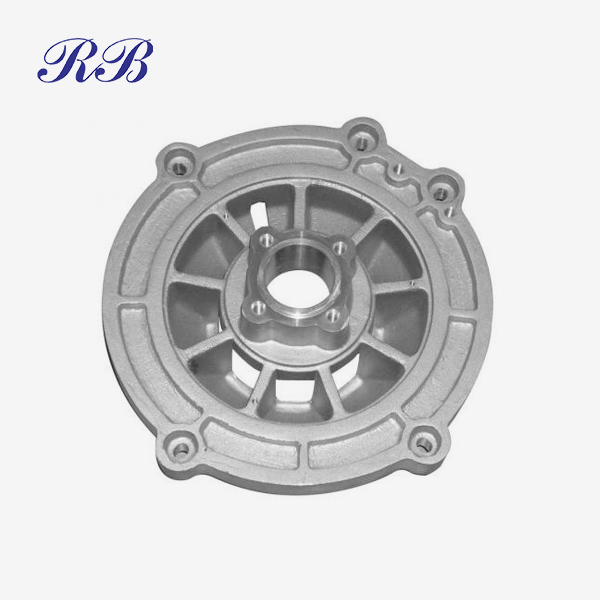
Choosing the right cast iron grade for a bearing cap requires more than comparing tensile strength values. The material must withstand operating loads, maintain dimensional stability, support accurate machining, and perform reliably throughout the component's service life. For engine blocks, industrial machinery, and other rotating equipment, these requirements depend on the shaft configuration, bearing arrangement, operating speed, lubrication conditions, and expected service loads. A material that works well in one application may not be the most economical or reliable option for another. For buyers evaluating a bearing cap cast iron casting, the main candidates are grey cast iron and ductile cast iron. Compacted graphite iron may also be worth considering when the application requires a particular balance of stiffness, thermal performance, and strength. Each material has different characteristics that influence casting design, machining, inspection, and final cost. Rongbao Enterprise supports casting projects that require material selection to be considered alongside component geometry and manufacturing requirements. Understanding the differences between cast iron grades helps engineers prepare more appropriate specifications and helps procurement teams compare suppliers on technical suitability rather than price alone.
Which Cast Iron Grade Fits Your Bearing Cap?
The choice of grade is dependent on the stresses on the bearing cap and the degree of dimensional stability required in use. Gray cast iron would be a good choice for many applications. Ductile iron has better tensile strength and ductility. Another alternative is compacted graphite iron, where the combination of thermal and mechanical properties justifies the additional manufacturing requirements.
Grey Cast Iron for General Machinery and Engine Components
Gray cast iron is commonly used in machinery due to its good machinability, excellent vibration dampening, and comparatively low cost of manufacture. The graphite flakes in the material also absorb vibration energy, thereby making it acceptable for components subjected to repetitive mechanical excitation.
For example, engineers may use gray cast iron categories ASTM A48 Class 30 and Class 35 for bearing cap applications. The numerical class is the tensile strength criteria of the applicable standard and test conditions. This is not a full measure of the load bearing capacity of the finished component.
If the geometry and stress distribution are good, a Class 30 material may be enough for a bearing cap under light loads. If you need a higher tensile strength requirement, you might want to have a look at Class 35. But the proper choice cannot be determined on the basis of the grade classification alone. The thickness of the segment. The quality of the casting. The preload on the bolts. The loading fatigue. Design of bearing housing.
Gray cast iron is also rather easy to fabricate in many applications. The graphite structure can contribute to chip formation and lower friction in cutting, but the actual machinability depends on the hardness, matrix structure, and consistency of the casting. The qualities allow many bearing cap manufacturers to control manufacturing time and tooling cost.
The main disadvantage is the somewhat poor tensile ductility. Gray iron is susceptible to stress concentrations and impact loadings, particularly where the form of the component produces high local stresses. Engineers should not assume that a commonly used grade is adequate for all designs, but rather should confirm that the grade selected is appropriate for the projected service conditions.
Ductile Cast Iron for Higher Mechanical Loads
Ductile or nodular cast iron is a strong candidate for a bearing cap cast iron casting where better tensile strength and fracture resistance are needed under harsh mechanical stresses.
Depending on the needed mechanical properties and the specification being used, grades of ASTM A536 such as 65-45-12 and 80-55-06 can be used. These designations represent combinations of tensile strength, yield strength, and elongation requirements. See the appropriate edition of the standard for specific requirements and the method of verification.
In ductile iron the graphite is nodular, i.e., almost spherical, as opposed to the flake graphite in gray iron. This morphology relieves the severe stress concentration of flake-like graphite and enables the material to endure more deformation before rupture.
Ductile iron can provide a useful margin of mechanical performance for bearing caps subjected to significant bolt loads, fluctuating operating forces, or tight structural requirements. The increased strength also allows designers more flexibility in evaluating section thickness and component weight; however, any reduction in material needs to be validated by engineering calculations and validation.
There are no complimentary meals. Ductile iron usually has less vibration dampening capacity than comparable gray iron. The machinability of ductile iron is based on the grade, matrix structure, and hardness. The casting process itself also has to control the melt chemistry, nodularization, and solidification to obtain the correct microstructure.
The description of ductile iron bearing caps should include the required grade and the mechanical parameters to be checked, not just “high-strength cast iron." In critical fatigue performance scenarios, component design, surface condition, casting integrity, and loading history must be evaluated in combination.
When Is Compacted Graphite Iron Worth Considering?
Compacted graphite iron (often abbreviated as CGI) is a kind of cast iron where the graphite particles are vermicular (interconnected) in shape as opposed to the flakes of gray iron or the mostly spherical nodules of ductile iron.
Its properties in many respects are important, being somewhere between gray and ductile iron, but the precise mixture is dependent on grade and microstructure. CGI can also be stronger than the standard gray iron and still have useful conductivity for heat. Such qualities provide a distinct engineering advantage for several engine and thermal-management applications.
So the real needs drive the potential value of CGI for a bearing cap. The stiffness, the heat transfer, the fatigue resistance, and the dimensional stability are to be verified in the whole assembly scope. This does not indicate immediately that it is the best option for high performance machinery.
CGI may have stricter production and machining requirements than conventional gray iron. Graphite morphology has to be regulated by careful management of melt treatment and casting process, and machining parameters may have to be adapted to the material.
Buyers have to assess ahead whether the application will gain sufficient benefit from its attributes to justify development costs associated with CGI. In many cases the design parameters can be met using gray or ductile iron with a more simple and affordable manufacturing procedure.
How Graphite Structure Influences Bearing Cap Performance?
The properties of the cast iron are significantly reliant on the form and distribution of graphite in the metallic matrix. The strength, crack propagation, vibration damping, thermal behavior, and machinability are all affected by the graphite morphology. The knowledge of these variables explains the differing behavior of two cast irons with similar nominal strength values.
Graphite Flakes and Vibration Damping
The gray cast iron contains graphite in the form of flakes distributed in the iron matrix. These flakes break the continuity of the metallic structure and have an effect on the propagation of forces in the material.
A big advantage of this type of arrangement is that it can very efficiently get rid of vibrational energy. The reduction of transmission of vibration can help the stable operation of spinning machinery and the regulation of noise. Gray iron is still used for applications such as engine blocks, machine bases, housings, and some bearing parts because of its damping qualities.
But these same graphite flakes can concentrate tension, too. Cracks may initiate and propagate more easily than in iron with spherical graphite when tensile loads accumulate near their sharp ends. The real hazard depends on material grade, loading direction, casting quality, and component geometry.
The big question with a bearing cap is whether the material can retain the required structural integrity under bolt preload, cyclic stresses, and in-service vibration. Good damping alone is not proof that a given grade of gray iron is suitable.
Graphite Nodules and Resistance to Fracture
Ductile iron is produced by treating the molten iron in such a way that the graphite takes a nodular form. Magnesium treatment is a common procedure, and process control is important to get the desired graphite structure.
The shape of graphite flakes is more unfavorable for stress concentration. Therefore, ductile iron can be made with better tensile strength and elongation. This combination is favorable if a component has to bear greater mechanical loads without brittle fracture.
But graphite nodularity is simply one part of the quality assessment. In the casting, the matrix structure, hardness, inclusions, shrinkage defects, and graphite distribution are crucial. An faulty casting process may lead to the final product not having the desired properties.
Buyers of ductile iron bearing caps should ask for material documentation showing the applicable grade and inspection criteria. Particularly complex designs may also require consideration of microstructure and casting integrity within the inspection process.
Solidification and Microstructural Consistency
Other factors than the nominal chemistry influence the final properties of a cast iron part. The solidification and microstructure are affected by mold design, section thickness, pouring conditions, cooling rate, and melt treatment.
Different regions of a bearing cap may cool at different speeds. Thick sections may solidify differently than thin walls. Local geometric changes may increase the chances of shrinkage or other difficulties. Changes of this kind can alter hardness, machinability, and mechanical qualities.
A good foundry controls these variables by inspecting and controlling the process. Quality methods may consist of chemical analysis, hardness testing, tensile testing on suitable test specimens, metallographic examination, and dimensional inspection depending on the component.
“The point is not simply to make a casting that looks alright. It is to confirm that the material and manufacturing process is always within the requirements established for the component.
Selecting a Grade for the Actual Operating Conditions
The selection of material for bearing cap cast iron casting should start with the function of the bearing cap in the assembly. A cap for a stationary industrial machine may experience a different set of loads and temperature variations than one used in a high-speed engine. It is more advantageous to compare the operating conditions than to select a grade on the basis of strength just.
Consider Loads, Speed, and Fatigue
The bearing caps are used to maintain the bearing parts in place and aligned under service loads. They may see static bolt preload. Cyclic stresses from shaft rotation. Vibration. Load fluctuations during startup or shutdown. Depending upon design.
Engineers should pinpoint potential stress concentration sites and the anticipated range of loads. Care should be taken with bolt holes, wall thickness variations, fillets, and machined interfaces since local geometry can influence fatigue performance.
A higher rotational speed does not mean ductile iron is necessary, nor does a lower speed mean gray iron is adequate. Torque, bearing reactions, dynamics of the shaft, lubrication, and stiffness of the complete assembly.
Material properties should be assessed, along with design calculations, relevant operational data, and appropriate validation tests for cases where fatigue is a major problem. A higher grade tensile strength cannot make up for bad geometry or uncontrolled casting flaws.
Account for Temperature and Dimensional Stability
The operating temperature influences the bearing cap and the surrounding assembly. Repeated heating and cooling can cause thermal strains. Temperature changes between components may affect clearances and alignment.
Gray iron, ductile iron, and CGI differ in thermal conductivity, thermal expansion behavior, stiffness, and strength retention. The properties should be evaluated with data corresponding to the accepted grade and operating range of interest.
Dimensional stability is especially critical when the bearing cap has precision machined connections. The component must maintain the appropriate shape after machining, assembly, and exposure to service conditions.
Buyers should convey projected operating temperatures and any particular thermal needs prior to finalization of material specification. If the application is subject to particularly high temperatures or extensive thermal cycling, the design engineer should validate the choice of material against the applicable service conditions.
Balance Machinability With Total Manufacturing Cost
The cost of a bearing cap is not just controlled by the price of the raw material. The unit cost will be a function of casting yield, machining time, tool wear, scrap rates, inspection needs, and production volume.
If the strength and structural properties of gray iron are suitable for the design, it can be a low-cost alternative. For ductile iron, where mechanical characteristics are important, the original cost of the material, or the processing, may be justified. CGI is a good choice when the set of properties it brings to the table has a measurable advantage.
A relevant quotation has to separate the cost of the raw casting from the cost of the completed machined component. Buyers also need to confirm whether machining allowances, drilling, tapping, surface finishing, and inspection are included.
But just as critical as process consistency on recurrent orders is getting the initial quote right. The supplier that understands the important dimensions and manufacturing sequence of the component can assist in reducing rework and enhancing production planning. Therefore, cost comparisons should be based on the entire spectrum of supply and not only the material price.
Conclusion
The quality of cast iron selected for a bearing cap is a function of the mechanical loads, vibration requirements, operating temperature, dimensional tolerances and production budget. If the strength and damping properties of gray cast iron, including the necessary grades of ASTM A48, satisfy the design criteria, it may be a cost efficient alternative. Ductile iron with the grades indicated in ASTM A536 provides better tensile strength and ductility for applications that require these properties. Where the combined properties justify more process constraints, then, compacted graphite iron may be more meeting of more specific needs.
The best approach of sourcing bearing cap cast iron casting for buyers is to determine the material specification from the actual usage, review the process controls of the foundry, and agree on inspection requirements before manufacturing. Working to authorized drawings, verifiable material documentation and clearly defined acceptance criteria means the final casting is fit for purpose of the machinery it serves.
FAQ
1: What is the most common grade for standard automotive bearing caps?
ASTM A48 Class 30 or Class 35 Grey Cast Iron is the most common choice. It offers excellent vibration damping, good machinability, and sufficient strength for standard passenger vehicle engines. It is also cost-effective for mass production.
2: When should I switch from Grey Iron to Ductile Iron?
You should switch when the engine load or torque output increases significantly. If the application involves shock loading or extreme RPMs, Ductile Iron (such as 65-45-12) provides the necessary tensile strength and ductility to prevent fracture.
3: Does the casting process affect the grade quality?
Yes, absolutely. The cooling rate and inoculation process during casting determine the graphite structure. Poor control can lead to carbides or irregular graphite, which weakens the material regardless of the specified grade.
4: Can a bearing cap cast iron casting be welded if it cracks?
Generally, no. Cast iron is difficult to weld reliably, especially for high-stress components like bearing caps. The heat from welding can create brittle zones. It is safer and more reliable to replace the component entirely.
Bearing Cap Cast Iron Casting Supplier: Rongbao Enterprise
Selecting the right partner is as crucial as selecting the right iron grade. You need a supplier who understands the intricacies of metallurgy and precision manufacturing. Rongbao Enterprise moves beyond simple fabrication. We provide comprehensive solutions that instill confidence. Our expertise ensures that every component meets rigorous international standards. When you browse our capabilities, you find a commitment to quality that turns hesitation into trust.
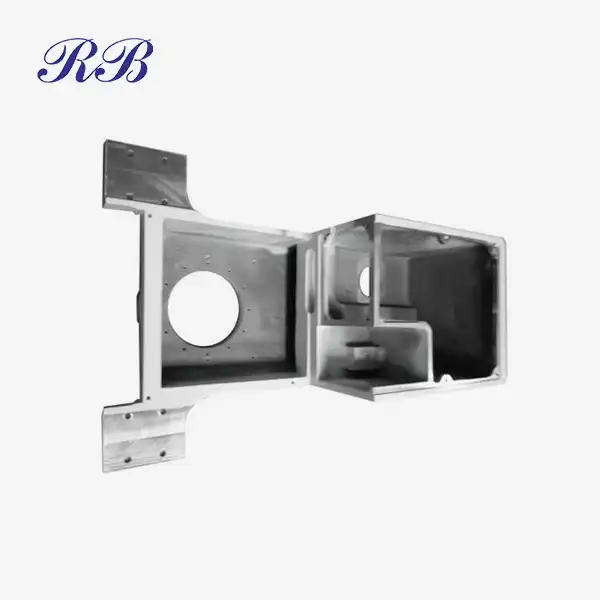
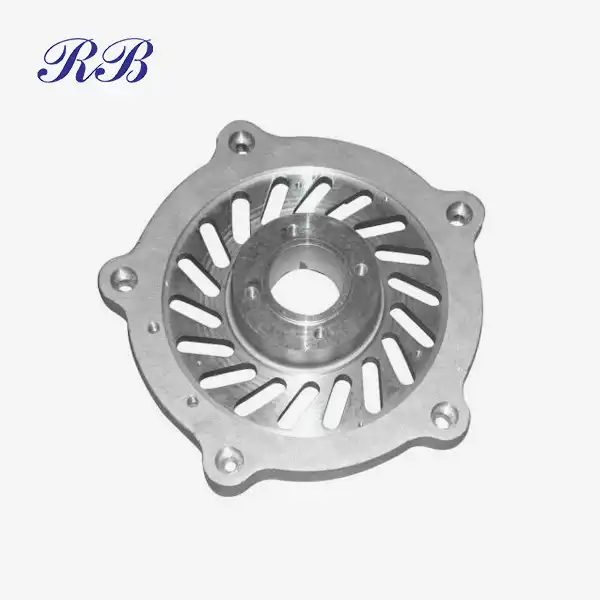
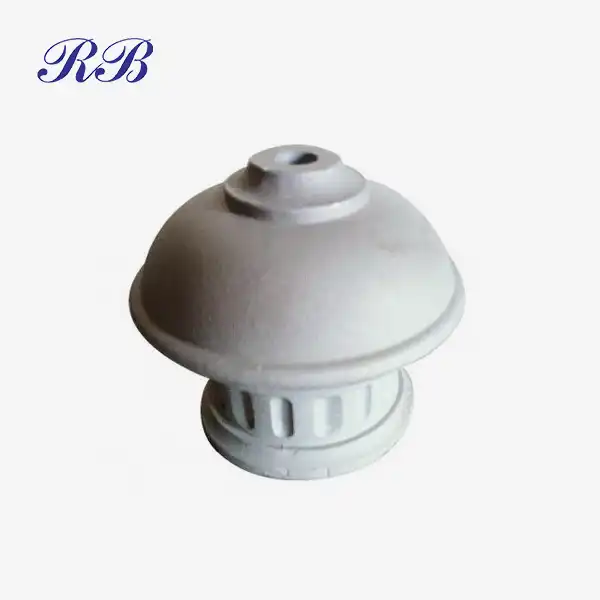
We cater to diverse industrial needs, including specialized connecting disk applications. While we discuss iron grades, our capabilities extend to advanced materials tailored for specific weight and performance requirements. Below is an example of our high-precision manufacturing specifications for bearing cap cast iron casting :
2. Certification: ISO9001:2015, ISO14001, ISO45001
3. Mechanical processing: CNC machining
4. OEM/ODM: Customized
5. Production capacity: 5000 pieces
Secure your supply chain with a partner dedicated to excellence. Whether you need standard iron grades or customized alloy solutions, we are ready to assist. Send your inquiry today to gain a competitive edge.
Contact Us:
Email: steve.zhou@263.net
Email: zhouyi@rongbaocasting.com
References
1. ASM International. (2008). ASM Handbook, Volume 15: Casting. ASM International. (Provides foundational data on grey and ductile iron properties).
2. American Society for Testing and Materials. (2021). ASTM A48 / A48M-03(2021), Standard Specification for Gray Iron Castings. ASTM International. (The definitive standard for grey iron grades).
3. American Society for Testing and Materials. (2019). ASTM A536-84(2019)e1, Standard Specification for Ductile Iron Castings. ASTM International. (The definitive standard for nodular iron grades).
4. Gundlach, R. B. (2015). "High-Strength Cast Irons for Automotive Applications." SAE International Journal of Materials and Manufacturing. (Discusses material selection for engine components).
5. Campbell, J. (2011). Complete Casting Handbook: Metal Casting Processes, Metallurgy, Techniques and Design. Butterworth-Heinemann. (Explores the relationship between casting defects and performance).
Learn about our latest products and discounts through SMS or email