- English
- French
- German
- Portuguese
- Spanish
- Russian
- Japanese
- Korean
- Arabic
- Greek
- German
- Turkish
- Italian
- Danish
- Romanian
- Indonesian
- Czech
- Afrikaans
- Swedish
- Polish
- Basque
- Catalan
- Esperanto
- Hindi
- Lao
- Albanian
- Amharic
- Armenian
- Azerbaijani
- Belarusian
- Bengali
- Bosnian
- Bulgarian
- Cebuano
- Chichewa
- Corsican
- Croatian
- Dutch
- Estonian
- Filipino
- Finnish
- Frisian
- Galician
- Georgian
- Gujarati
- Haitian
- Hausa
- Hawaiian
- Hebrew
- Hmong
- Hungarian
- Icelandic
- Igbo
- Javanese
- Kannada
- Kazakh
- Khmer
- Kurdish
- Kyrgyz
- Latin
- Latvian
- Lithuanian
- Luxembou..
- Macedonian
- Malagasy
- Malay
- Malayalam
- Maltese
- Maori
- Marathi
- Mongolian
- Burmese
- Nepali
- Norwegian
- Pashto
- Persian
- Punjabi
- Serbian
- Sesotho
- Sinhala
- Slovak
- Slovenian
- Somali
- Samoan
- Scots Gaelic
- Shona
- Sindhi
- Sundanese
- Swahili
- Tajik
- Tamil
- Telugu
- Thai
- Ukrainian
- Urdu
- Uzbek
- Vietnamese
- Welsh
- Xhosa
- Yiddish
- Yoruba
- Zulu
What is precision investment casting?
It is a high-tech way to make metal parts that are very exact, difficult, have great surface finishes, and are made with tight tolerances. Precision investment casting is also known as investment casting or lost-wax casting. First, a detailed wax model is made. Then, clay is used to cover it and make a strong shell. After that, the wax melts away, and liquid metal fills the empty area. This way of casting lets makers make complicated forms with exact sizes that would be hard or impossible to do with other methods. Precision casting is important to the success of many fields, such as aerospace, automobile, medical, and energy tools.
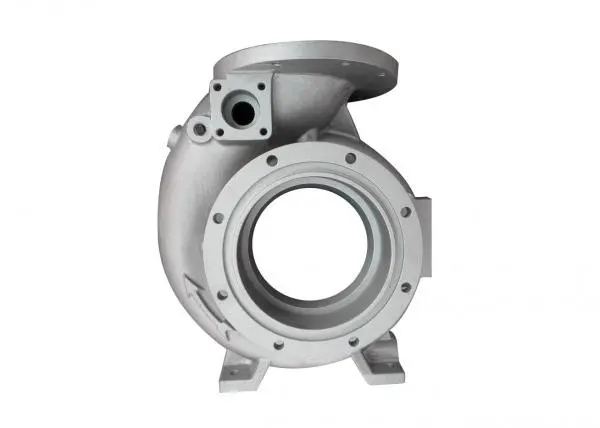
Understanding the Precision Investment Casting Process
A very well thought-out set of steps is used for precision casting to turn raw materials into very accurate finished parts. Workers who buy things can better understand how difficult this way of making things is and what it can do for them if they know each step.
Wax Pattern Creation and Assembly
The first step is to make perfect wax models that match the shape of the end part. Most of the time, these patterns are made by injection molding them with special wax mixes that don't melt and stay in shape. A central tube system is often used to place several wax models next to each other to make a "tree" shape. This makes it possible to make many parts at once. The best use of materials and production time is made with this method of putting things together. All parts are of the same quality.
Ceramic Shell Building and Dewaxing
The wax patterns are put together and then dipped many times in a clay mix. They are then stuccoed with refractory sand. When you pour melted metal, the temperature drops quickly, but this method makes a strong clay shell that can handle it. A hot autoclave or oven is used to melt the wax once the shell is thick enough. This leaves behind holes that are exactly the same as the ones on the originals. And then the shell is fired up very quickly to make it stable and strong enough to cast metal.
Material Selection and Quality Control
It is very important to pick the right material for a part if you want it to work well and look good. Many different types of metals are used in precision casting. These include stainless steel grades, superalloys like Inconel and Hastelloy, titanium alloys, aluminum alloys, and special materials like cobalt-chrome. To get the best results, you need to process each item in a certain way.
Quality control checks the structure of the shell, the metal's chemistry, the point at which it is dumped, and how fast it cools down as the process goes on. Advanced non-destructive testing methods, such as X-rays, ultrasounds, and penetrants, help find flaws in parts before they are sent to customers. These flaws can be holes, additions, or changes in size.
Precision Investment Casting vs Other Manufacturing Methods
People who work in buying need to compare how much precision casting costs, how well it works, and how flexible it is compared to other options.
Comparison with Traditional Casting Methods
Sand casting and die casting are how most parts that are bigger and less difficult are made. Precision casting, on the other hand, can produce thin-walled pieces with intricate interior forms and has a better surface finish and dimensional accuracy. When you think about how much less material needs to be machined and lost, precision casting is cheaper. Sand casting might be cheaper for making a lot of simple forms. With precision casting, forms can be made that are very close to net shapes, which can cut down on the number of extra steps that would need to be taken.
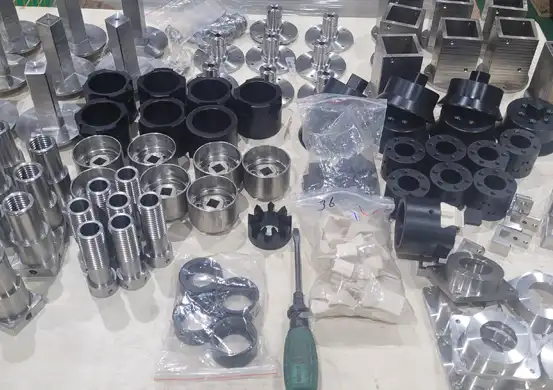
Precision Casting vs Machining and Forging
CNC cutting is great for making very accurate parts out of solid stock, but it gets too pricey for parts with complicated interiors or when a lot of material needs to be taken away. When there need to be a lot of internal holes, undercuts, or hollow areas, precision casting is the best way to do it. Forging is great for mechanics because it makes the grain move better, but it can't make very complicated shapes and needs pricey tools for small-scale production.
Cost-Efficiency Analysis for Procurement
It's easy to see that precision casting is good for business when you look at the total cost of ownership instead of just the price of the piece itself. Most of the time, overall costs are lower because less material needs to be lost and complex systems can be cast as single parts. When you need to finish a project quickly, it is a good choice because the production times are usually faster than those for machined options, especially for forms that are hard to make.
Applications and Advantages of Precision Investment Casting in B2B Industries
Investment casting is used in many areas that need precise, high-performance parts because it is so flexible and accurate.
Aerospace and Defense Applications
Many important parts used in aircraft are made with precision casting, such as turbine blades, structural brackets, valve bodies, and engine housings. It is very important to use this method when making jet engines today because it can make superalloys with complex cooling lines and exact airfoil shapes. Parts for rockets, tools for satellites, and other specialized gear that needs strong but light materials are all used for defense. It helps airplane manufacturers meet strict approval standards while also making the planes lighter and more powerful. It does this by keeping the material pure and making sure the sizes stay the same.
Automotive and Commercial Vehicle Components
The automotive business uses precision casting for parts of the engine, transmission, suspension, and exhaust system. This method can create intricate inside paths while adhering to strict rules, which is useful for turbocharger housings, valve bodies, and complicated manifolds. Heavy-duty parts for the gearbox, the hydraulic system, and the brake system are all used in industrial cars that need to last a long time and be accurate.
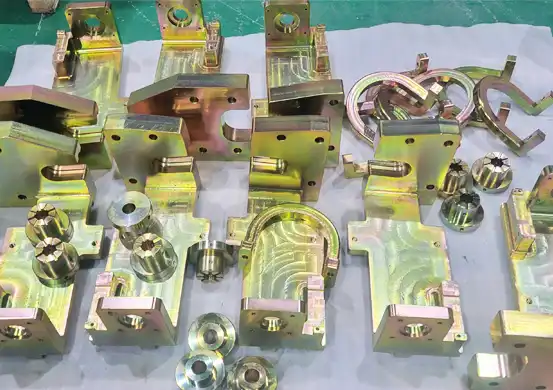
Industrial Equipment and Energy Sector
Precision casting is used by manufacturers of industrial equipment for pump parts, valve bodies, compressor parts, and specialized machinery parts. Oil and gas, nuclear power, and wind power are all in the energy field, so parts need to be able to work in harsh circumstances and still stay the same size. Because of precision casting, big, complex parts like valve bodies and pump cases can be made. These parts would be hard or expensive to machine from solid stock.
It can make complicated forms, but it can also do many other useful things. It also cuts down on wait times, saves money on supplies, and makes sure that quality stays high throughout production runs. If producers want to make their supply lines better and work better, these perks give them a clear edge over their rivals.
How to Procure Precision Investment Casting Services?
Before you hire precision casting services, you should make sure you know how to evaluate providers and set clear rules for how to contact them. This will help the project go smoothly.
Supplier Qualification and Certification Requirements
Follow the certification rules when looking at possible casting companies. This will help you figure out how skilled and dedicated they are to quality. ISO 9001 certification shows that the company has systematized quality management. Certifications that are specific to the business, like IATF 16949 for automotive or AS9100 for aerospace, show that the company knows what it's doing. Safety and health at work rules (ISO 45001) and environmental management systems (ISO 14001) show that a provider cares about making products in a way that is good for people and the environment.
In addition to permits, you should look at the supplier's understanding of the materials, testing facilities, output capacity, and past work with parts that are similar to yours. Ask for specific examples of their work, customer references, and descriptions of their skills to find out how skilled and trustworthy they are.
Pricing Models and Lead Time Considerations
When people who buy things know how prices are set, they can make better decisions and stick to their limits. Most of the time, the price of precision casting includes the cost of tools, ingredients, handling fees, patterns, and the final product. When people say they will buy a lot of something, unit prices often change because buying more often saves money. Depending on how hard the part is to make, how much material is needed, and how much space the seller has, lead times will vary. It takes eight to sixteen weeks to make a big order once the plan is accepted.
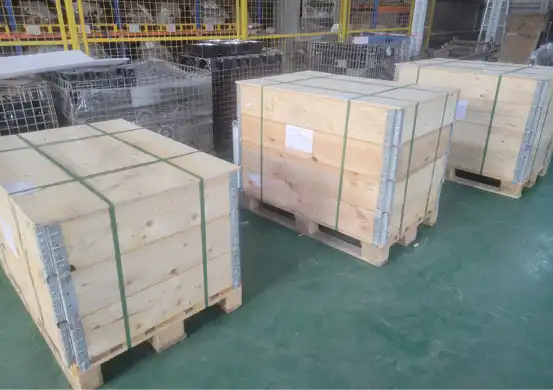
Establishing Long-Term Partnerships
When getting precision castings, it's often better to build long-term relationships than short-term ones. When suppliers work with customers for a long time, they can buy specific tools, learn more about what they want, and offer expert help before customers even ask for it. In the long run, it's better for everyone to work together to start programs that will help the business grow and cut costs.
Conclusion
Precision investment casting is a high-tech way to make things that can handle the complicated needs of today's businesses. The process gives very exact readings, a great finish on the outside, and physical properties that make it necessary in areas that need parts that work well. Those in charge of buying things can use precision casting to make their supply lines work better and make their goods better if they know about the technical skills, economic factors, and evaluation criteria for suppliers. This technology is growing in importance in the energy, industrial equipment, aircraft, and automotive businesses because it can make parts that are accurate, complicated, and affordable.
Partner with Rongbao Enterprise for Superior Precision Investment Casting Solutions
If you need precision casting, Rongbao Enterprise is ready to help you. They have been making good products for 20 years and can do many things, such as precision grinding, high-pressure die casting, low-pressure die casting, and gravity casting. We always have the same quality because we have ISO 9001, ISO 14001, and ISO 45001 certifications. These make sure that we follow international rules. Besides that, our full-chain manufacturing method makes sure that everything goes well, from helping with the design to sending the finished item. We know exactly what global companies need when they're looking for stable, high-quality precision casting options because 70% of what we make is sold in the US, Europe, and Japan. You can email our skilled staff at steve.zhou@263.net or zhouyi@rongbaocasting.com to talk about your specific needs and find out how our advanced manufacturing skills can help your supply chain work better.
FAQ
①What materials can be used in precision investment casting?
A lot of different metals can be used for precision casting, including carbon steels, aluminum alloys, titanium alloys, superalloys (like Inconel and Hastelloy), and specialty alloys like cobalt-chrome. The product's needs, like how strong it needs to be, how well it works in different temperatures, and how much it weighs, determine the choice of material.
②What are typical lead times for precision casting projects?
Delivery times change based on how hard the job is and how busy the service provider is. It can take 12 to 16 weeks to make the first things for a new project that needs a plan, but only 6 to 10 weeks to finish repeat production orders. If you need to handle things more quickly, you might be able to, but this could change the price and needs to be carefully planned and organized.
③How does precision casting compare to sand casting in terms of quality?
Tolerances for size are tighter with precision casting (±0.005" vs. ±0.030" for sand casting), and the surface finish is better (125–250 microinches Ra vs. 500+ microinches Ra for sand casting). Most of the time, these improvements in quality mean that extra work doesn't have to be done, which cuts the overall cost of production even though casting itself cost more.
④What minimum order quantities are typical for precision casting?
Usually, you need to buy at least 25 to 100 pieces for a new job. However, this can vary by provider and part complexity. Minimums may be lower for parts that are already being made, but they may need to be higher for parts that are very complicated or big in order for the tools to be worth the money.
References
- Campbell, J. "Complete Casting Handbook: Metal Casting Processes, Metallurgy, Techniques and Design." Butterworth-Heinemann, 2015.
- Beeley, P.R. "Foundry Technology." Newnes, 2001.
- ASM International. "ASM Handbook Volume 15: Investment Casting." ASM International, 2008.
- Brown, J.R. "Foseco Ferrous Foundryman's Handbook." Butterworth-Heinemann, 2000.
- Investment Casting Institute. "Investment Casting: Principles and Applications." Investment Casting Institute, 2019.
- Pattnaik, S., Karunakar, D.B., and Jha, P.K. "Developments in investment casting process: A review." Journal of Materials Processing Technology, 2012.
Learn about our latest products and discounts through SMS or email