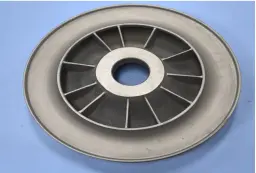
Gravity-driven Filling and Permanent Mold Reuse
The foundation of gravity casting lies in its elegant simplicity. Unlike pressure-assisted casting methods, this process relies entirely on gravitational force to fill mold cavities with molten metal. The metal flows naturally from a pouring basin through runners and gates into the mold cavity, creating a controlled filling pattern that minimizes turbulence and reduces the formation of defects such as air pockets or inclusions.
If you want to know how metal flows, this gravity-driven way is a good choice. As the rate of filling slows down, gases can leave more easily, which makes the casts inside more stable. Controlling the pressure doesn't need to be hard because the process usually works with air pressure. This also means that the filling patterns stay the same across multiple production cycles.
The permanent mold aspect distinguishes gravity casting from sand casting methods. These reusable molds, crafted from durable materials, can withstand hundreds or thousands of casting cycles before requiring replacement. You can save a lot of money on costs over long production runs because of this, especially when making things in medium to high volumes.
The economic benefits of mold reusability extend beyond material costs. Setup times between casting cycles are substantially reduced since the mold requires only cleaning and preparation rather than complete reconstruction. Because the permanent mold keeps the same cavity measurements over time, this efficiency gain is especially useful for parts that need to be made with very tight tolerances.
Temperature management plays a crucial role in the gravity-driven filling process. The mold temperature must be carefully controlled to ensure proper metal flow while preventing premature solidification in thin sections. Typically, molds are preheated to temperatures ranging from 200°C to 400°C, depending on the alloy being cast and the component geometry.
Step-by-Step Process
The gravity casting process follows a systematic sequence that ensures consistent results and optimal component quality. Each step requires precise execution and careful monitoring to achieve the desired outcomes while maintaining production efficiency.
Preparation begins with thorough mold cleaning and inspection. Any residue from previous castings must be removed, and the mold surfaces are examined for wear or damage that could affect casting quality. The mold halves are then assembled and secured, ensuring proper alignment to prevent flash formation or dimensional deviations.
Mold preheating follows the preparation phase. The assembled mold is heated to the predetermined temperature using various methods such as gas burners, electric heaters, or induction systems. This preheating serves multiple purposes: it prevents thermal shock when molten metal contacts the mold surface, promotes better metal flow into thin sections, and helps achieve the desired cooling rate for optimal microstructure development.
Metal preparation occurs simultaneously with mold heating. The selected alloy is melted in a furnace and brought to the appropriate pouring temperature, which varies depending on the material and component requirements. For aluminum alloys, this typically ranges from 700°C to 750°C, while other materials may require different temperature parameters.
The pouring operation represents the critical moment in the process. Molten metal is transferred from the furnace to the mold using ladles or automated pouring systems. The metal enters through the pouring basin and flows through the gating system into the mold cavity. The pouring rate must be controlled to maintain laminar flow and prevent turbulence that could introduce defects.
Solidification begins immediately as the molten metal contacts the mold walls. The cooling rate is influenced by mold temperature, metal temperature, and component thickness. This phase determines the final microstructure and mechanical properties of the casting. Proper cooling control ensures uniform solidification and minimizes internal stresses.
Demolding occurs once the casting has solidified sufficiently to maintain its shape. The mold is opened, and the casting is removed using appropriate handling equipment. The timing of this step is critical – premature removal can cause distortion, while excessive delay may result in thermal stress or hot tearing.
Post-casting operations complete the process cycle. These may include trimming excess material from gates and risers, heat treatment to achieve desired mechanical properties, machining to final dimensions, and quality inspection to verify conformance to specifications.
Mold Materials & Design
The selection of appropriate mold materials represents a fundamental decision that affects both casting quality and production economics. Steel emerges as the predominant choice for permanent molds due to its excellent thermal conductivity, mechanical strength, and resistance to thermal cycling. Different steel grades offer varying characteristics suited to specific applications and production volumes.
H13 tool steel has gained widespread acceptance for aluminum gravity casting applications. Because it is hot hard, doesn't wear at high temperatures, and can be machined easily, it is perfect for complicated shapes and long production runs. The material can be heated and cooled many times without losing much of its shape. This means that the casting dimensions will stay the same for as long as the mold is used.
Cast iron molds can be used instead of steel molds in some situations, especially when the molds need to be able to conduct heat differently. Gray cast iron is more cost-effective for some types of parts than steel because it is easier to work with and doesn't change much when it gets hot. But because it doesn't resist thermal wear as well, it might not be able to be used in high-volume production.
Designing gravity casting models involves more than just choosing the right material. There are also geometric factors that affect how the metal flows, how it solidifies, and the quality of the casting. Careful study of the gating system design is needed to make sure that the filling is uniform and that errors are kept to a minimum. Runner cross-sections must be sized appropriately to maintain adequate flow velocity without causing excessive turbulence.
Cooling system design within the mold structure plays a vital role in controlling solidification rates and achieving desired mechanical properties. Cooling channels are strategically positioned to provide uniform heat extraction while avoiding thermal gradients that could cause distortion or internal stresses. The cooling medium, typically water or oil, is selected based on the required cooling rate and temperature control precision.
Parting line design influences both casting quality and production efficiency. The parting line location affects surface finish quality and may impact the need for secondary machining operations. Additionally, the parting line design must accommodate easy mold opening and closing while ensuring proper sealing to prevent metal leakage during pouring.
Ejection systems integrated into the mold design facilitate casting removal while minimizing handling time and potential damage. Pin ejectors, sleeve ejectors, or stripper plates may be employed depending on the component geometry and demolding requirements. The ejection force must be sufficient to overcome shrinkage forces without causing casting distortion.
Simulation software is being used more and more in modern mold design to improve metal flow patterns, predict how solids will behave, and find possible defect sites before mold production starts. With this method, you can make something faster and with a better chance that the first one will work. This makes production more efficient and brings down prices everywhere.
Gravity casting is a great way to make strong metal parts that are used in many places. However, it's still being worked on to make it even better. When you mix gravity-driven filling with permanent mold reuse, you get an efficient way to make things that meets both quality and cost concerns.
Gravity casting is a good option for makers looking for reliable and inexpensive solutions because it is a simple process that has been improved with new mold materials and design methods. It appears that it can be utilized in parts of distinctive ways and meets tall execution benchmarks in parcels of them, like in parts for cars and planes.
Companies that are looking at casting options for their production needs should really think about gravity casting. This is especially true for middle to high-volume production situations where part quality and consistency in size are very important. Together, these steps let you make complicated forms that look good and work well. It's helpful in lots of places.

Contact Rongbao
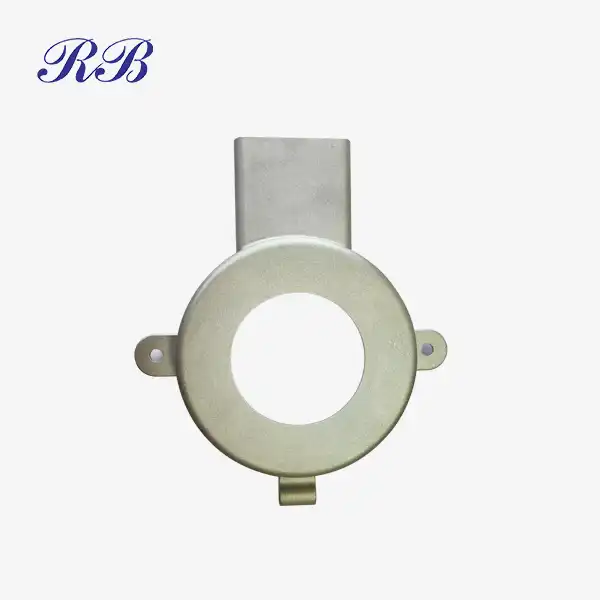
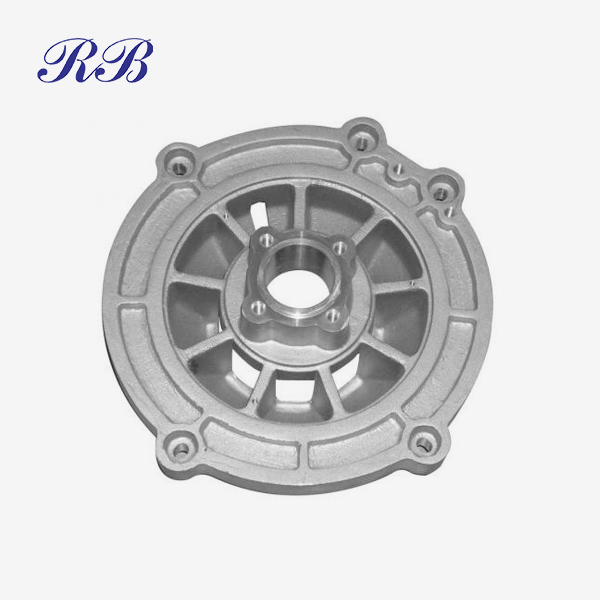
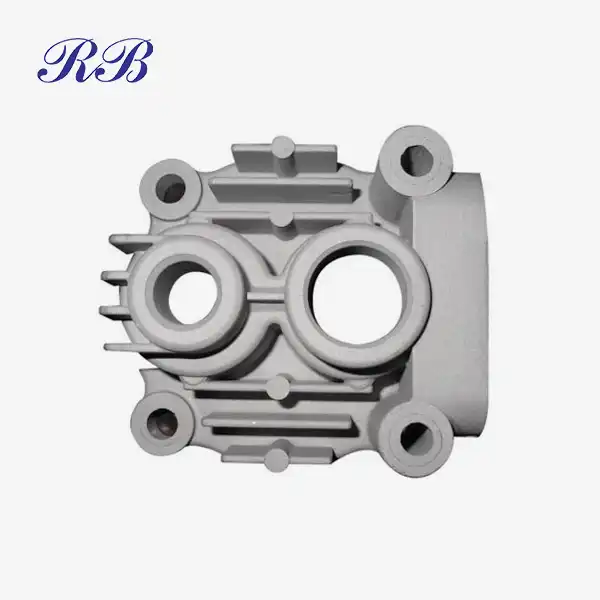
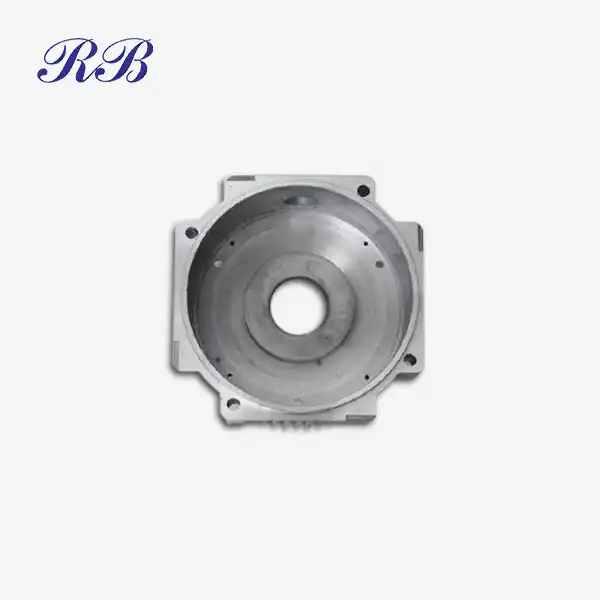
At Rongbao, we are experts at giving you professional gravity casting options that are made to fit your needs. Customized aluminum die casting robot arm parts for industrial use, aluminum gravity cast flanges, custom aluminum cast coupling flanges for fire pump bearing covers, and many other specialized parts for the automobile, aerospace, and industrial markets are all in our extensive range. We offer reasonable prices and stick to strict quality standards throughout the whole production process because we are experienced gravity casting manufacturers.
For detailed information about our gravity casting capabilities and to discuss your specific project requirements, please contact our technical team at steve.zhou@263.net or zhouyi@rongbaocasting.com. We provide free samples and comprehensive technical support to help you evaluate our capabilities for your manufacturing needs.
References
1. Campbell, J. (2015). Complete Casting Handbook: Metal Casting Processes, Metallurgy, Techniques and Design. 2nd Edition. Butterworth-Heinemann.
2. Brown, J.R. (2000). Foseco Non-Ferrous Foundryman's Handbook. 11th Edition. Butterworth-Heinemann.
3. Beeley, P.R. (2001). Foundry Technology. 2nd Edition. Butterworth-Heinemann.
4. ASM International. (2008). ASM Handbook Volume 15: Casting. ASM International.
5. Stefanescu, D.M. (2018). Science and Engineering of Casting Solidification. 3rd Edition. Springer International Publishing.