- English
- French
- German
- Portuguese
- Spanish
- Russian
- Japanese
- Korean
- Arabic
- Greek
- German
- Turkish
- Italian
- Danish
- Romanian
- Indonesian
- Czech
- Afrikaans
- Swedish
- Polish
- Basque
- Catalan
- Esperanto
- Hindi
- Lao
- Albanian
- Amharic
- Armenian
- Azerbaijani
- Belarusian
- Bengali
- Bosnian
- Bulgarian
- Cebuano
- Chichewa
- Corsican
- Croatian
- Dutch
- Estonian
- Filipino
- Finnish
- Frisian
- Galician
- Georgian
- Gujarati
- Haitian
- Hausa
- Hawaiian
- Hebrew
- Hmong
- Hungarian
- Icelandic
- Igbo
- Javanese
- Kannada
- Kazakh
- Khmer
- Kurdish
- Kyrgyz
- Latin
- Latvian
- Lithuanian
- Luxembou..
- Macedonian
- Malagasy
- Malay
- Malayalam
- Maltese
- Maori
- Marathi
- Mongolian
- Burmese
- Nepali
- Norwegian
- Pashto
- Persian
- Punjabi
- Serbian
- Sesotho
- Sinhala
- Slovak
- Slovenian
- Somali
- Samoan
- Scots Gaelic
- Shona
- Sindhi
- Sundanese
- Swahili
- Tajik
- Tamil
- Telugu
- Thai
- Ukrainian
- Urdu
- Uzbek
- Vietnamese
- Welsh
- Xhosa
- Yiddish
- Yoruba
- Zulu
High Pressure Die Casting Advantages And Disadvantages
High pressure die casting (HPDC) is a widely used manufacturing process in various industries, including automotive, aerospace, medical equipment, and electrical/electronic sectors. This method offers numerous benefits, but also comes with certain challenges. In this comprehensive guide, we'll explore the advantages and disadvantages of high-pressure die casting, focusing on its high production efficiency, ability to create complex geometries and thin walls, and the potential porosity issues that may arise.

High Production Efficiency & Volume
One of the most significant advantages of high pressure die casting is its exceptional production efficiency and high volume capacity. This process is particularly well-suited for manufacturers who require large quantities of parts with consistent quality and dimensional accuracy.
In HPDC, molten metal is injected into a mold cavity at high pressure, typically ranging from 10 to 175 MPa (1,450 to 25,400 psi). This high pressure allows for rapid filling of the mold, resulting in cycle times that can be as short as a few seconds per part. The quick solidification of the metal under pressure enables manufacturers to produce complex parts with excellent surface finish and tight tolerances.
The high production rates achievable with HPDC make it an economical choice for large-scale manufacturing. Automated systems can be implemented to further enhance efficiency, reducing labor costs and minimizing human error. This level of automation is particularly beneficial for industries like automotive and electronics, where high-volume production is essential to meet market demands.
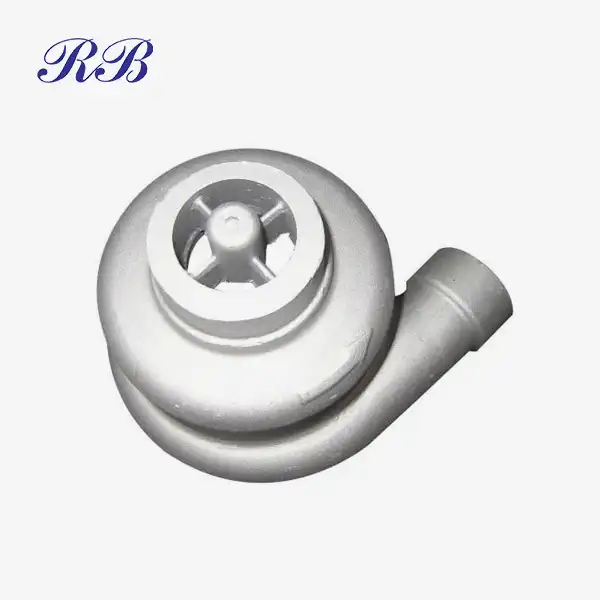
Moreover, the repeatability of the HPDC process ensures consistent quality across large production runs. This consistency is crucial for industries where parts must meet strict quality standards and perform reliably in critical applications. For example, in the automotive industry, HPDC is often used to produce engine components, transmission cases, and structural parts that require both high strength and dimensional accuracy.
However, it's important to note that while HPDC excels in high-volume production, it may not be the most cost-effective option for small production runs. The initial tooling costs for HPDC can be significant, as the molds must be designed to withstand high pressures and temperatures. These upfront costs are typically offset by the high production rates, but for low-volume parts, alternative casting methods might be more economical.

Complex Geometries & Thin Walls
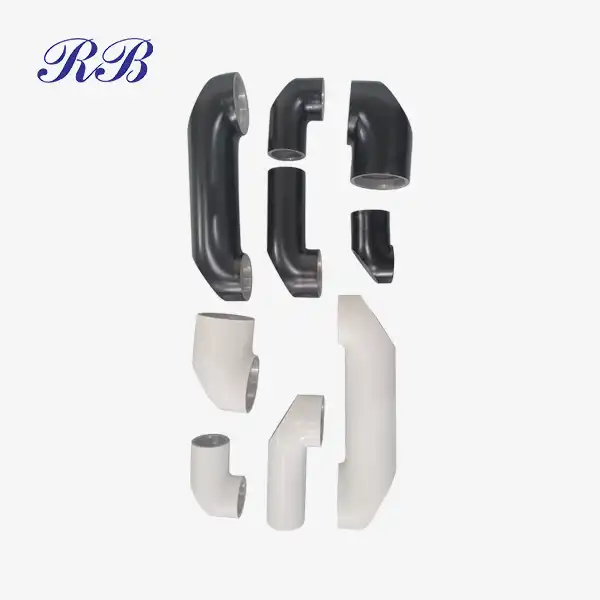
Another major advantage of high pressure die casting is its ability to produce parts with complex geometries and thin walls. This capability is particularly valuable in industries where weight reduction and intricate designs are crucial, such as aerospace and advanced electronics manufacturing.
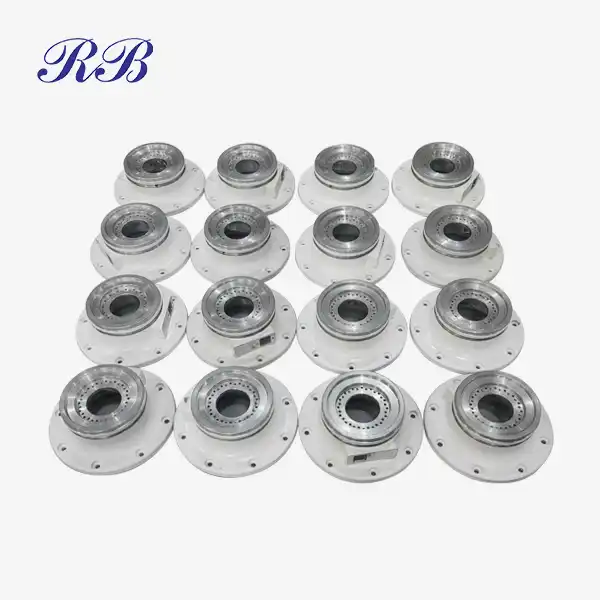
The high injection pressure used in HPDC allows molten metal to fill even the smallest cavities and features in the mold. This enables the production of parts with intricate details, undercuts, and internal passages that would be difficult or impossible to achieve with other manufacturing methods. For instance, in the medical equipment industry, HPDC can be used to create complex housings for diagnostic devices with integrated cooling channels and precise mounting points.
Thin-wall casting is another area where HPDC excels. The process can consistently produce parts with wall thicknesses as low as 0.5-0.8 mm, depending on the alloy and part design. This capability is crucial for industries striving for lighter, more efficient products. In the automotive sector, thin-wall die casting has played a significant role in lightweighting efforts, allowing manufacturers to produce components that are both strong and lightweight, contributing to improved fuel efficiency and reduced emissions.
The ability to cast thin walls also provides designers with greater freedom to optimize part geometry for strength and weight. By strategically varying wall thicknesses and incorporating ribs and gussets, engineers can create parts that offer excellent structural integrity while minimizing material usage. This design flexibility is particularly valuable in the aerospace industry, where every gram of weight reduction can translate to significant fuel savings over an aircraft's lifetime.
However, it's important to note that achieving complex geometries and thin walls in HPDC requires careful consideration of part design, gating systems, and process parameters. Factors such as metal flow, solidification patterns, and thermal management must be carefully controlled to ensure consistent part quality and avoid defects like incomplete filling or cold shuts.
Porosity Issues
While high pressure die casting offers numerous advantages, it's not without its challenges. One of the most significant issues that can arise in HPDC is porosity, which can affect the mechanical properties and performance of the cast parts.
Porosity in die castings can occur due to several factors:
- Gas Entrapment: During the high-speed injection of molten metal into the mold, air and other gases can become trapped, forming pores in the solidified part.
- Shrinkage: As the metal cools and solidifies, it contracts. If the casting design doesn't allow for proper feeding of molten metal to compensate for this shrinkage, voids can form.
- Dissolved Gases: Gases dissolved in the molten metal can come out of solution during solidification, creating pores.
- Turbulence: Excessive turbulence during mold filling can lead to oxide formation and gas entrapment.
The presence of porosity can significantly impact the mechanical properties of die-cast parts. It can reduce strength, ductility, and fatigue resistance, potentially leading to premature failure in service. In industries where part integrity is critical, such as automotive and aerospace, porosity can be a serious concern.
Addressing porosity issues in HPDC requires a multifaceted approach:
- Optimized Mold Design: Proper gating and venting systems can help reduce gas entrapment and ensure complete mold filling.
- Process Control: Careful control of injection parameters, including speed, pressure, and temperature, can minimize turbulence and gas entrapment.
- Vacuum Assistance: Some HPDC machines are equipped with vacuum systems that remove air from the mold cavity before injection, reducing the likelihood of gas porosity.
- Alloy Selection: Choosing alloys with lower gas solubility and optimized solidification characteristics can help reduce porosity.
- Post-Casting Treatments: In some cases, hot isostatic pressing (HIP) can be used to close internal pores and improve part density.
While porosity can be a challenge in HPDC, it's important to note that advances in process control, simulation software, and alloy development have greatly improved the ability to produce high-quality, low-porosity die castings. Many manufacturers, including Rongbao Enterprise, have developed expertise in managing these issues to consistently produce high-quality die-cast parts.
Partner With An Experienced And Capable High Pressure Die Casting Service Supplier
High-pressure casting is a versatile and efficient manufacturing process that offers significant advantages in terms of production efficiency, design flexibility, and the ability to create complex, thin-walled parts. While challenges like porosity exist, they can be effectively managed through careful process control and advanced techniques.
For industries requiring high-volume production of complex metal components, HPDC remains an indispensable manufacturing method. As technology continues to advance, we can expect further improvements in die casting processes, alloys, and equipment, leading to even higher quality and more capable die-cast parts.
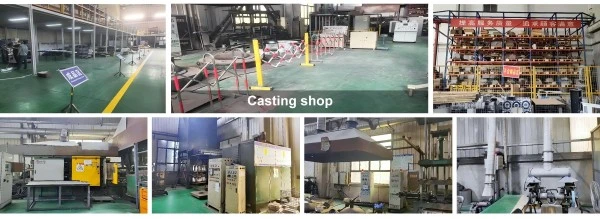
If you're considering high pressure die casting for your manufacturing needs, it's crucial to partner with an experienced and capable supplier. Rongbao Enterprise, founded in 2003, specializes in aluminum alloy casting and precision processing, offering advanced production methods including high-pressure die casting. With their ISO 9001:2016 quality management system, ISO 14001 environmental management system, and ISO 45001 occupational health and safety management system, Rongbao is well-equipped to meet the demanding requirements of various industries.
For more information or to discuss your specific die casting needs, please contact Rongbao Enterprise at zhouyi@rongbaocasting.com or steve.zhou@263.net. Their team of experts can provide valuable insights and solutions tailored to your unique manufacturing challenges.
References
- Jiang, W., Fan, Z., & Liu, D. (2016). Microstructure, Tensile Properties and Fractography of A356 Alloy Under High Pressure Die Casting. Transactions of Nonferrous Metals Society of China, 26(4), 1035-1043.
- Laukli, H. I., Lohne, O., & Arnberg, L. (2018). High Pressure Die Casting of Aluminum Alloys: The Effect of Process Parameters on Defect Formation. Materials Science Forum, 925, 70-77.
- Vinarcik, E. J. (2003). High Integrity Die Casting Processes. John Wiley & Sons.
- Górny, M., Sikora, G., & Tyrała, E. (2017). Effect of Cooling Rate on Microstructure and Mechanical Properties of Thin-Walled Ductile Iron Castings. Journal of Materials Engineering and Performance, 26(5), 2092-2099.
- Campbell, J. (2015). Complete Casting Handbook: Metal Casting Processes, Metallurgy, Techniques and Design. Butterworth-Heinemann.

Learn about our latest products and discounts through SMS or email